Subic Is Back The Philippines Is Building a Naval Powerhouse to Challenge China
For the Philippines, expanding its naval fleet is only one part of strengthening maritime security. Every new warship also creates a long-term need for maintenance, repairs, spare parts, fuel, technical support and suitable naval facilities. A country may have modern ships in its fleet, but those ships are valuable only when they can remain operational and available when needed. This is particularly important for the Philippines because of its geography as an archipelagic nation and its growing maritime security requirements in the South China Sea.
The Philippine Navy is already facing the challenge of supporting a growing number of modern vessels. Philippine defense officials have highlighted the need for additional naval bases and support facilities as more ships enter service. The source material also notes that a modern frigate can require up to one million liters of fuel for replenishment, illustrating how much infrastructure is required to keep major naval vessels operational. This is where Subic becomes increasingly important. Naval power is not measured only by the number of ships a country owns. It also depends on how effectively those ships can be maintained, repaired, supplied and kept at sea. For the Philippines, developing more maintenance and repair capabilities within the country could eventually reduce dependence on overseas facilities and give the Navy greater flexibility when its vessels require technical work.
The development at Subic therefore fits into a much larger cycle. The Philippines acquires modern ships, operates them in its waters, maintains and repairs them, and gradually develops more of the industrial capability required to support them domestically. The country is becoming more capable of acquiring advanced naval platforms, but the bigger long-term challenge is building the infrastructure and expertise necessary to sustain those platforms for decades. That is why HD Hyundai’s presence at Subic matters. The company is not only involved in commercial shipbuilding but also has an established maintenance and repair operation connected to Philippine Navy vessels. If this relationship continues to expand, Subic could become an increasingly important part of the Philippines’ wider maritime support network.
Korean-Built Warships to Philippine-Based Support
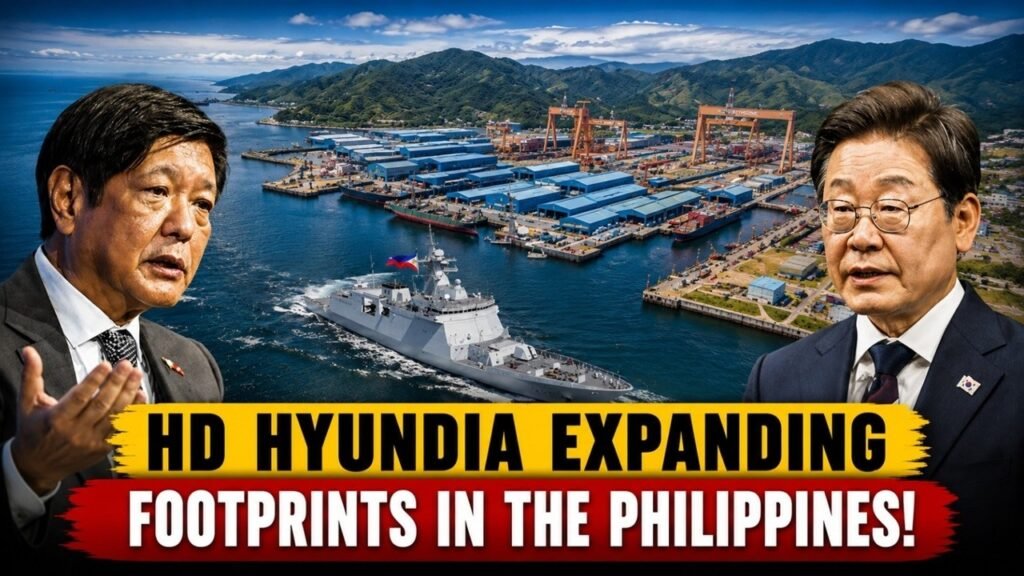
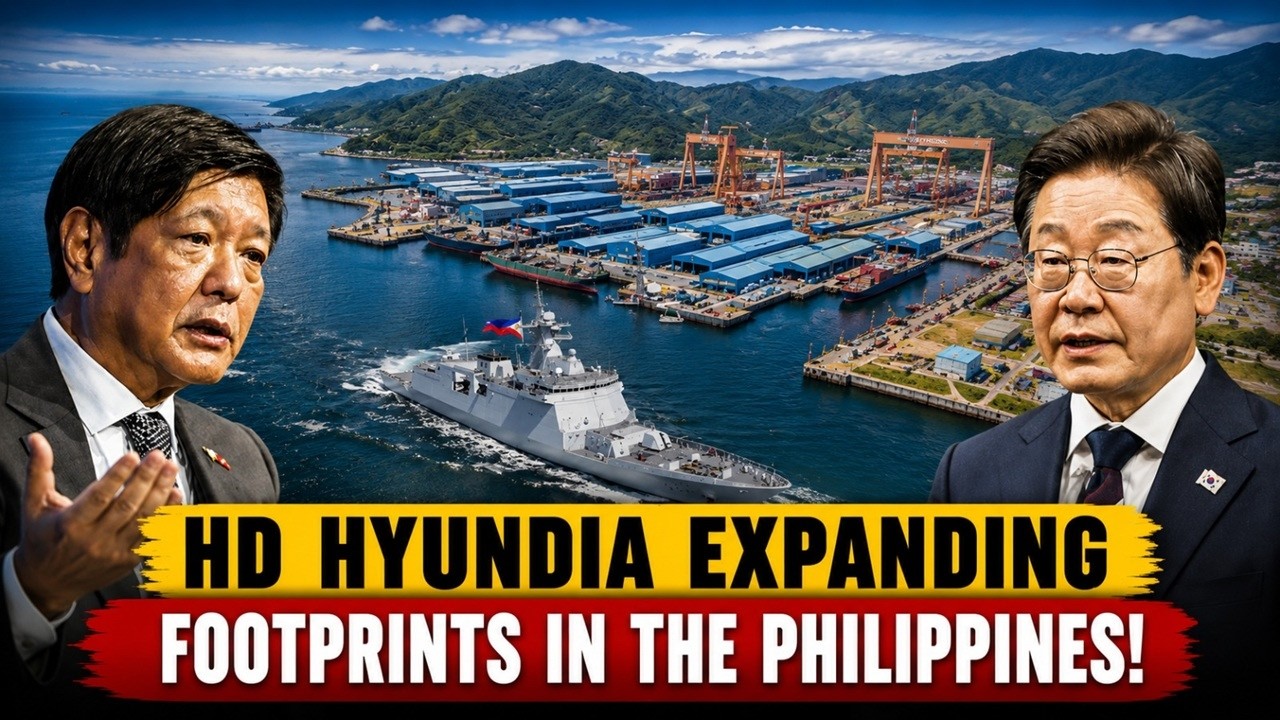
HD Hyundai’s relationship with the Philippine Navy did not begin with Orion Jade. The company already has a significant history of supplying vessels to the Philippines. According to the source material, HD Hyundai has delivered 10 vessels to the country since 2016, including two frigates, two corvettes and six offshore patrol vessels. This has created an established connection between the Philippine Navy and South Korean shipbuilding expertise. Among these vessels are the BRP Miguel Malvar and Diego Silang, while the newer Rajah Sulayman class is adding six offshore patrol vessels to the Philippine fleet. The first Rajah Sulayman entered service in 2026 under a ₱30-billion contract. These developments show how closely Philippine naval modernization has become connected with South Korean shipbuilding.
For many years, however, the basic model was simple: the Philippines ordered ships, South Korean shipyards built them, and the Philippine Navy operated them after delivery. Much of the construction expertise and industrial work therefore remained in South Korea, while the Philippines primarily became the operator of the finished vessels.
Philippine Navy’s Counter Strategy to Deter China’s Massive Fleet in SCS
That model began to change in 2022 when HD Hyundai established a logistics support center at Subic. The facility was intended to provide maintenance, repair and overhaul support for Philippine Navy vessels. This was an important development because it brought part of the naval support process into the Philippines rather than keeping the entire lifecycle of the vessels dependent on overseas facilities. The relationship can now be seen as developing in stages. Initially, South Korea built the ships and the Philippines operated them. Then Subic became part of the maintenance and support network. With the launch of Orion Jade, another layer has been added: Subic is once again building major vessels.
This does not mean that the Philippines has suddenly become capable of independently building advanced warships. Such a conclusion would go beyond the evidence. What the development does show is that the relationship between the Philippines and South Korean shipbuilders is becoming more integrated. Advanced shipbuilding expertise remains strongly connected to South Korea, while more industrial activity, maintenance work and workforce development are taking place inside the Philippines.
Why Subic Is the Key to the Philippines’ Shipbuilding Revival
Subic is particularly important because the Philippines is not starting its shipbuilding ambitions from an empty site. The area already has a significant industrial history. In 2006, South Korea’s Hanjin Heavy Industries transformed the Subic facility into one of the Philippines’ major shipbuilding centers. At its peak, the yard employed thousands of workers and demonstrated that large-scale commercial shipbuilding could take place in the country. That industrial story came to an end when the shipyard fell silent in 2019. Its closure left behind a large industrial complex and substantial shipbuilding infrastructure in one of the Philippines’ strategically important maritime locations. Instead of creating an entirely new shipbuilding site from scratch, the country therefore had an existing industrial foundation that could potentially be rebuilt and reused.
The next stage came in 2024, when HD Korea Shipbuilding announced plans to develop Subic into a broader maritime-industrial complex. Those plans included ship blocks, offshore-wind structures and maintenance, repair and overhaul capabilities. This suggests that the objective is not simply to use Subic as a location where complete commercial vessels are assembled. The broader ambition involves developing several parts of the maritime production and support chain.
By September 2025, steel was being cut for the first new vessel, and in July 2026 Orion Jade was launched. This sequence shows how the industrial revival moved from planning to actual production. The advantage of Subic is therefore not simply its physical infrastructure. Its real value comes from the combination of an existing shipyard, a strategic maritime location, Philippine Navy facilities, HD Hyundai’s MRO operations and a workforce that can continue to develop through practical shipbuilding experience.
This makes Subic different from a completely new industrial project. The Philippines is rebuilding on top of an industrial base that already existed. If production continues and more workers, suppliers and engineers become involved, the knowledge created at the site could become increasingly valuable. Over time, that could help turn Subic from a revived commercial shipyard into a broader maritime-industrial center with importance for both the Philippine economy and its long-term maritime security Absolutely. Below are Headings 5–13, with the source data incorporated into fluent, reader-friendly paragraphs. I’ve kept the analysis careful, especially where the source presents something as a possibility rather than an established fact.
HD Hyundai’s Bigger Plan for Subic
HD Hyundai’s return to Subic is about more than simply building commercial ships. The company’s wider plans include shipbuilding, ship-block production, offshore-wind structures and maintenance, repair and overhaul, or MRO. This suggests that Subic is being developed as a broader maritime-industrial facility rather than simply a yard for assembling finished vessels. That distinction matters because a modern shipbuilding industry depends on much more than the final vessel. It requires engineers, welders, technicians, suppliers, production specialists and managers who understand how different parts of the shipbuilding process work together. As these activities expand at Subic, the Philippines could gradually develop a wider industrial ecosystem around the shipyard.
The workforce element is particularly important. In March 2026, HD Hyundai and the Philippines’ Technical Education and Skills Development Authority, known as TESDA, agreed to strengthen shipbuilding training and make training programs more closely aligned with the actual skills required by the industry. The goal is to develop workers who can meet the technical requirements of the growing shipbuilding operation at Subic. If these efforts continue, Subic could eventually become more than a place where ships are assembled. It could become a center where industrial skills, engineering experience and maritime expertise accumulate over time. That knowledge could prove just as valuable as the physical infrastructure itself.
Workforce Could Be More Important Than the Ships
The most important investment at a shipyard may not always be the cranes, machinery or buildings. It may be the people who know how to use them. A shipyard can purchase equipment and bring in technology, but developing a highly skilled workforce requires years of practical experience and training.
This is why the partnership between HD Hyundai and TESDA is significant. Their cooperation is aimed at improving shipbuilding training and creating a workforce whose skills match the requirements of the industry. Instead of relying only on workers trained for general industrial jobs, the objective is to develop people with skills specifically suited to modern shipbuilding. Shipbuilding is an industry where practical experience matters enormously. A Filipino welder working on one vessel gains knowledge that can be applied to the next vessel. An engineer becomes more familiar with production systems, while technicians develop experience with specialized equipment. When another ship enters production, the workforce is no longer starting from zero.
HD Hyundai has already created almost 4,000 jobs at Subic, and Philippine officials expect that number to eventually increase significantly. As employment grows, the country is also building a larger pool of people with direct experience in modern shipbuilding. That is why the long-term impact of Subic may extend beyond the vessels leaving the shipyard. Each completed ship can leave behind something less visible but potentially more valuable: a workforce with greater knowledge, experience and confidence. Over many years, that accumulated knowledge could help strengthen the Philippines’ wider maritime industry.
Could Subic Become a Philippine Naval-Industrial Base?
The most ambitious question surrounding Subic is whether the revived shipyard could eventually contribute to a stronger Philippine naval-industrial base. Some of the necessary building blocks are already present. The site has Philippine Navy infrastructure, HD Hyundai’s MRO operation, commercial shipbuilding activity, plans for ship-block production and an expanding Filipino workforce.
However, it is important to distinguish between what exists today and what could develop in the future. There is currently no basis for saying that Subic is about to begin building advanced Philippine Navy frigates or other complex combat vessels. Such a claim would go beyond the evidence in the source material. A more realistic development could begin with maintenance and repair, followed by greater local production of components and ship blocks, and eventually the construction of simpler vessels. Support ships, logistics vessels or other less complex maritime platforms could potentially represent a more achievable step than immediately attempting to build sophisticated frontline warships.
This could create a useful division of capability between the Philippines and South Korea. South Korea could continue providing advanced shipbuilding expertise and complex vessel construction, while the Philippines gradually develops more capacity at home. Subic could then serve as a bridge between South Korean industrial expertise and Philippine maritime requirements. The strategic goal would not necessarily be complete self-sufficiency. For the Philippines, a more realistic objective could be having greater domestic control over maintenance, repair, support and eventually some ship construction. The ability to perform more of these activities locally could make the country’s maritime forces more resilient.
Orion Jade Really Proves About Philippine Shipbuilding
The launch of Orion Jade is an important milestone, but its significance needs to be understood correctly. The vessel is a 250-meter commercial ship and is not a Philippine Navy warship. Its launch therefore does not mean that the Philippines has suddenly developed the capability to build sophisticated military vessels domestically.
What the vessel does prove is much more straightforward: Subic can build a major ship again. That is significant because large-scale shipbuilding requires a complicated production process involving steel preparation, block construction, assembly, outfitting, engineering and final launch. Successfully completing that process requires coordination between workers, engineers, managers and suppliers. The experience gained during that process remains with the people who carried it out. Workers become more familiar with production standards, engineers gain practical knowledge and management teams learn how to coordinate complex shipbuilding operations. This experience can then be applied to future vessels.
That is why the first ship may be important for what it makes possible rather than simply what it is. One vessel cannot create an entire naval-industrial base, but the experience gained from building the first vessel can become the foundation for future production if more orders follow. In that sense, Orion Jade should be viewed as an industrial milestone rather than a sudden transformation of Philippine naval power.
Why the Philippines and South Korea Both Benefit
The development at Subic should not be viewed simply as South Korea helping the Philippines. HD Hyundai also has clear reasons to expand its presence in the country. Subic provides additional production capacity, a strategic location in Southeast Asia and an opportunity to develop a stronger industrial presence closer to regional maritime markets.
For the Philippines, the benefits are different but equally important. The country gains jobs, technical skills, industrial experience, MRO capability and the possibility of strengthening its domestic maritime industry. The relationship therefore goes beyond the traditional model in which one country builds ships and another simply buys them.
South Korea brings established shipbuilding expertise, technology and industrial experience, while the Philippines provides the location, workforce and growing demand for maritime services. This creates a relationship in which both sides have something to gain. If the partnership continues to expand, Subic could become an important connection between South Korean shipbuilding expertise and the broader Southeast Asian maritime market. The result could be a relationship that combines commercial production with long-term industrial development in the Philippines.
Could Subic Become a Regional Maritime Hub?
It is still too early to describe Subic as a regional maritime hub. However, several of the ingredients needed for such a role are beginning to appear. The site now combines commercial shipbuilding activity with Philippine Navy infrastructure, HD Hyundai’s MRO operations and workforce development initiatives. Plans also include ship blocks and offshore-wind structures. If these activities continue to expand, Subic could gradually develop a broader maritime-industrial ecosystem. Commercial shipbuilding could create demand for suppliers, while MRO could create demand for engineers and technical specialists. Workforce training could then provide the skilled people needed to support those activities.
The potential importance of this development extends beyond the Philippines. A stronger maritime-industrial facility in Subic could eventually serve companies and maritime customers across Southeast Asia. Its location, existing infrastructure and connection with HD Hyundai could give the site an opportunity to participate in a wider regional maritime market. But the distinction between potential and reality remains important. Subic is not yet a regional maritime hub. What can reasonably be said is that the foundations for such a role are beginning to emerge. If production, MRO, workforce development and supply chains continue to grow together, the importance of Subic could extend well beyond a single shipyard.
What to Watch Next at the Subic Shipyard
The next phase will show whether Orion Jade represents the beginning of a sustained shipbuilding operation or simply an important one-time milestone. The current order covers four vessels, so the completion of additional ships will be one of the clearest indicators of whether production at Subic is developing into a longer-term operation.
Production scale will also matter. HD Hyundai has discussed ambitions of reaching as many as 10 ships a year as the facility ramps up. If production approaches that level, Subic’s importance would increase significantly because a steady flow of vessels would generate more employment, more supplier activity and more practical shipbuilding experience. The workforce will be another important indicator. More than 4,000 jobs have already been created, and further employment growth would mean that more Filipino workers are gaining direct experience in modern shipbuilding. Over time, that could strengthen the country’s industrial skills base.
MRO, ship-block production and local components will also deserve close attention. If more stages of the maritime production chain begin taking place inside the Philippines, Subic would gradually become more than a location where complete commercial ships are assembled. It would begin to resemble a deeper maritime-industrial ecosystem.The biggest potential signal, however, would be any future move toward locally built Philippine naval support or logistics vessels. Such a development would represent a major shift because the question would no longer be simply whether the Philippines can build a commercial ship. It would be whether the country can build part of the industrial system required to support its own growing maritime fleet.
The Real Significance of Orion Jade
The Orion Jade launch does not transform the Philippine Navy overnight. It is a commercial vessel rather than a warship, and a single ship cannot establish a complete domestic naval shipbuilding industry. That distinction is important if the development is to be understood realistically.
What the launch does demonstrate is that Subic can once again build major ships. Combined with HD Hyundai’s existing naval MRO operations, a growing Filipino workforce and expanding maritime infrastructure, the launch represents one part of a much broader industrial revival. The Philippines also does not necessarily need to build every warship domestically. A more practical strategy could involve continuing to acquire advanced combat vessels from established foreign shipbuilders while gradually increasing domestic capacity for maintenance, repair, support vessels, components and other maritime requirements. That approach could give the Philippines the best of both worlds: access to advanced international shipbuilding expertise while steadily developing its own industrial capabilities at home. Over time, the ability to maintain and support more of its maritime forces domestically could become just as important as the ability to acquire new ships.
About Indo-Pacific Report
For more geopolitical analysis, strategy coverage, and Indo-Pacific security reporting, visit Indo-Pacific Report:
Website
Facebook
YouTube
Subic Is Back The Philippines Is Building a Naval Powerhouse to Challenge China