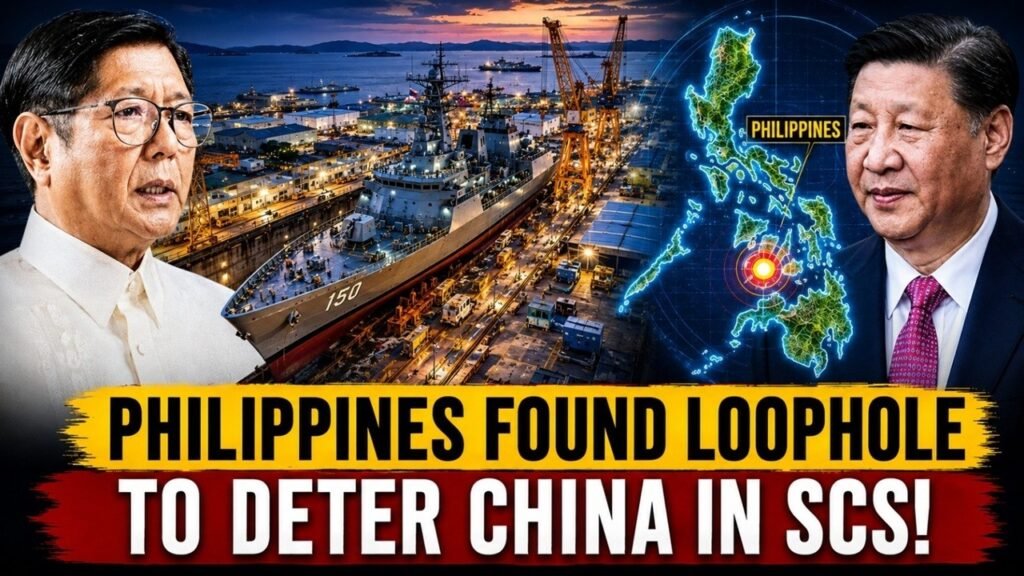
Philippine Navy’s Counter Strategy to Deter China’s Massive Fleet in SCS
Imagine spending billions of dollars on modern warships, only to discover that the biggest weakness is not at sea, but back in port. This is the strategic challenge behind the Philippine Navy’s proposed naval support base in Misamis Oriental. The project is not simply about adding another military facility. It is about building the infrastructure needed to keep a growing fleet supplied, maintained and ready for operations. Over the past decade, the Philippines has expanded its naval capabilities with new frigates, offshore patrol vessels and corvettes, while longer-term modernization plans include more advanced capabilities. But buying warships is only one part of building maritime power. Every vessel needs fuel, spare parts, engineering support, maintenance and a reliable place to return between deployments. In the Indo-Pacific, that makes logistics increasingly important. A navy is not measured only by how many ships it owns, but also by how many of those ships it can keep operational.
The Philippine Navy Is Growing
For years, discussion about Philippine naval modernization focused mainly on the number and quality of new ships. As the fleet becomes more capable, another question is becoming just as important: can the Philippines sustain those ships over decades of service? The Philippine Navy is no longer the same force it was a decade ago. The Jose Rizal-class guided-missile frigates form a modern core, while additional offshore patrol vessels and corvettes are expanding the fleet. Longer-term plans have also included the study of submarines under Horizon 3. Every new platform, however, creates a long-term support obligation. A modern frigate needs regular engine work, radar and electronics maintenance, software support, fuel, spare parts and trained personnel. These requirements continue throughout the ship’s service life. This is why naval strength cannot be judged by acquisitions alone. A ship that is unavailable for weeks because it must travel long distances for maintenance or wait for critical parts cannot perform its mission during that period.
What Is a Naval Support Base?
A naval support base is different from a frontline combat base. Its primary purpose is to keep ships operating. Based on the plans described in the source material, the proposed facility in Misamis Oriental is expected to provide capabilities such as a modern dockyard, maintenance workshops, fuel storage, logistics warehouses, engineering support and repair facilities for increasingly sophisticated naval systems. These capabilities may not attract the same attention as missiles or warships, but they directly affect operational availability. If a ship can receive fuel, spare parts and maintenance closer to its operating area, it can spend less time traveling to distant facilities and more time performing missions. This is a simple but important principle: availability is capability. Support infrastructure can also reduce pressure on existing naval facilities by giving the Philippine Navy more options when ships require maintenance, resupply or engineering assistance.
Philippines Is Building a 12-Frigate Navy China Won’t Like This Move
Why Was Misamis Oriental Chosen?
Misamis Oriental is significant because of its location in northern Mindanao. The province sits near maritime routes connecting the Bohol Sea, the Celebes Sea and the Surigao Strait, which leads toward the Philippine Sea and the wider Pacific. That geography can give the Philippine Navy greater flexibility. A support facility in this part of the country would not be tied to only one operational direction. Instead, it could contribute to a wider network supporting naval activity across different parts of the archipelago. Strategic dispersion is especially relevant for the Philippines because of its geography. With more than 7,600 islands, the country cannot rely indefinitely on highly concentrated military infrastructure. Distributing logistics and maintenance capacity can create resilience and provide alternatives if one facility becomes unavailable.
The proposed support base could help address one of the less visible challenges of naval modernization: sustainment. Modern warships require regular maintenance, fuel, spare parts and technical support throughout their service lives. If these services are concentrated in only a few locations, ships may have to spend significant time traveling to and from maintenance facilities. A support base in Misamis Oriental could provide another location for maintenance, resupply and engineering support. This could potentially reduce pressure on existing facilities and allow naval vessels to return to operations more efficiently. For a country with a large maritime area, the ability to distribute logistics infrastructure can be as important as acquiring additional ships.
Why Naval Logistics Matters in Modern Warfare
A modern warship can carry advanced missiles, powerful radar and a highly trained crew. But those capabilities have limited value if the ship cannot refuel, cannot be repaired or is waiting for a critical spare part. Naval operations depend on an entire support chain. Fuel, ammunition, maintenance, engineering, spare parts and trained personnel all contribute to the same outcome: keeping ships available for missions. History illustrates this clearly. During World War II, U.S. naval operations in the Pacific depended not only on aircraft carriers and combat ships but also on floating dry docks, fleet oilers and forward bases that provided fuel, repairs, supplies and personnel. Much of that infrastructure received less public attention than frontline forces, but it was essential to sustained operations. The same principle remains relevant today across the Indo-Pacific.
Strategic Importance of Misamis Oriental for the Philippines
If completed, the Misamis Oriental support base could contribute to the Philippine Navy’s ability to sustain operations across a large maritime area. Its importance would not necessarily be measured by the number of ships permanently based there, but by how effectively it supports ships when they need fuel, repairs, supplies or engineering assistance. The Philippines has increasingly emphasized archipelagic defense and the protection of its maritime interests. That requires a force capable of operating across a very large geographic area. Patrols, sovereignty missions, humanitarian operations, search-and-rescue activities and exercises with partners all place demands on naval resources. A facility in northern Mindanao could therefore complement existing infrastructure in Luzon and the Visayas.
The Philippines faces a unique geographical challenge because its territory is spread across thousands of islands. A highly concentrated military infrastructure can create vulnerabilities because disruption at one major facility can affect a large portion of operations. A distributed network offers another approach. If maintenance, fuel and logistics capabilities are available at several locations, naval forces have more options when one facility is unavailable. This does not mean that every location must have identical capabilities. Instead, different bases can perform complementary roles within a broader support network. Misamis Oriental could potentially become one part of such a system, helping connect naval infrastructure in northern Mindanao with facilities elsewhere in the Philippines.
What Other Indo-Pacific Countries Are Doing
The importance of naval infrastructure is not unique to the Philippines. Across the Indo-Pacific, countries are investing not only in warships but also in shipyards, naval bases, repair facilities and logistics networks. China has expanded its shipbuilding and naval infrastructure alongside its growing fleet. Japan has strengthened infrastructure across its southwestern islands. India has expanded major naval facilities such as Karwar, while Australia has invested in naval infrastructure and shipbuilding capacity. Singapore has also developed sophisticated naval support facilities. Their strategies and force structures are different, but the underlying lesson is similar: a fleet needs a reliable support system if it is expected to maintain a high operational tempo.
Philippines’ Naval Modernization
The Philippine Navy’s modernization should therefore be viewed as more than a program for purchasing new platforms. New frigates, patrol vessels and future combat ships are important, but their effectiveness depends on the infrastructure supporting them. Maintenance facilities, fuel storage, logistics warehouses, repair capabilities and trained technical personnel are all part of modern naval power. Without these systems, a growing fleet can face maintenance bottlenecks and reduced availability. With them, the same fleet can potentially operate more consistently across the country’s maritime domain.
A stronger support network could give the Philippine Navy greater flexibility in responding to different maritime requirements. Ships could potentially receive maintenance and supplies closer to areas where they are needed, reducing unnecessary transit time. This could support routine patrols, humanitarian assistance, search-and-rescue missions, training activities and maritime security operations. The facility could also complement the Philippines’ broader effort to strengthen its ability to operate across its Exclusive Economic Zone and surrounding waters. The key point is that support infrastructure does not operate separately from naval strategy. It enables the strategy.

Why Sustainment Could Define the Next Phase of Philippine Naval Power
The next phase of Philippine naval modernization may increasingly depend on sustainment. Acquiring a warship is a major investment, but keeping that ship operational for decades requires continuous spending, technical expertise and infrastructure. This makes support facilities strategically important even when they do not receive the same public attention as new combat platforms. For the Philippines, building a more capable support network could help ensure that investments in new ships produce long-term operational value rather than simply increasing the size of the fleet on paper.
Naval power has traditionally been measured in visible platforms such as aircraft carriers, destroyers, frigates and submarines. But the Indo-Pacific is highlighting another dimension of maritime competition: the infrastructure behind those platforms. A country may possess advanced ships, but if many of them are unavailable because of maintenance, fuel or supply limitations, its effective naval strength is lower than the fleet size suggests. This is why analysts increasingly need to look beyond the number of ships and consider availability, maintenance capacity, logistics and industrial support. In the future, the question may not simply be how many ships a country owns, but how many it can keep ready to sail.
The Future of Philippine Naval Power
The proposed naval support base in Misamis Oriental reflects a broader shift in how maritime power is understood. Warships remain essential, but ships alone do not create a sustainable naval force. Fuel systems, dockyards, repair facilities, spare-parts networks, warehouses and trained technical personnel are what allow those ships to remain operational. For the Philippines, the need is particularly important because its maritime responsibilities stretch across a vast and geographically fragmented archipelago. A more distributed support network could make the fleet more resilient and give it greater flexibility.
Conclusion
The strategic importance of the proposed Misamis Oriental naval support base goes beyond the construction of another military facility. Its real value lies in the infrastructure it could provide for maintaining, repairing, refueling and supporting the Philippine Navy’s growing fleet. As Manila continues to modernize its naval forces, sustainment will become increasingly important. A modern navy is not defined only by the ships it can purchase. It is defined by its ability to keep those ships operational, support them across a large maritime area and return them to sea when they are needed. For the Philippines, Misamis Oriental could become an important part of that long-term effort.
About Indo-Pacific Report
For more geopolitical analysis, strategy coverage, and Indo-Pacific security reporting, visit Indo-Pacific Report:
Website
Facebook
YouTube
Philippine Navy’s Counter Strategy to Deter China’s Massive Fleet in SCS