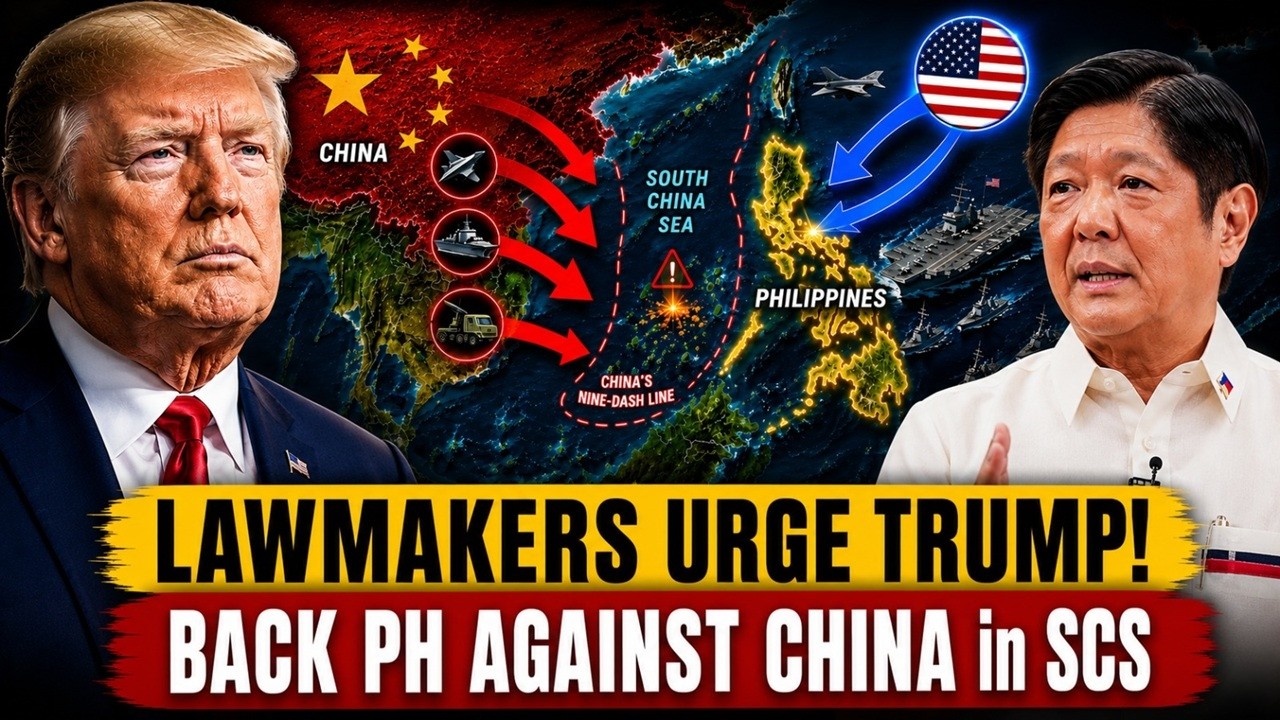
U.S. Lawmakers Urge TRUMP to Back Philippines Against China in the SCS
For years, the Philippines was often seen as just another American treaty ally in Southeast Asia. Today, that has changed. Washington now views the Philippines as one of the most strategically important countries in the Indo-Pacific, as tensions with China continue to intensify across the South China Sea.
That shift became unmistakable this month. On the tenth anniversary of the landmark 2016 Arbitral Award, the United States joined Japan, Australia, the United Kingdom, Canada, Germany, Italy, New Zealand, and several other partners in declaring that China’s sweeping maritime claims have no legal basis under international law. Beijing rejected the statement, reaffirmed its sovereignty claims, and accused outside powers of increasing regional tensions.
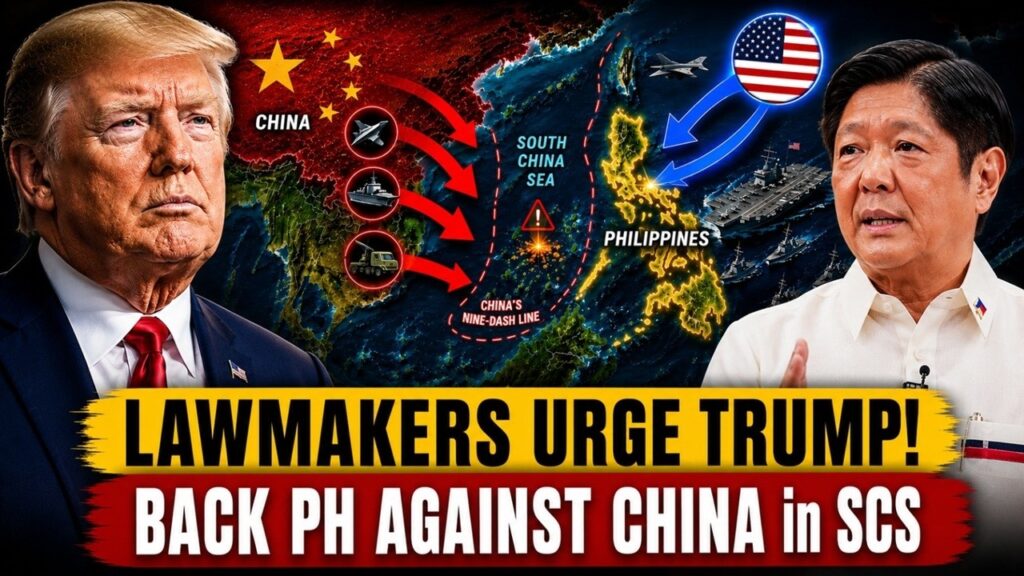
This is about far more than competing claims over reefs and shoals. Washington has repeatedly reaffirmed that its Mutual Defense Treaty with the Philippines applies to armed attacks on Philippine forces, aircraft, and public vessels operating in the South China Sea. At the same time, U.S. lawmakers have called for even stronger support for Manila as Chinese pressure in disputed waters continues to grow The answer goes far beyond the South China Sea itself. It begins with geography. The Philippines sits at the crossroads of some of the world’s most strategically important sea lanes, placing it at the center of America’s strategy, China’s regional ambitions, and the future balance of power across the Indo-Pacific.
Why Everyone Wants the Philippines
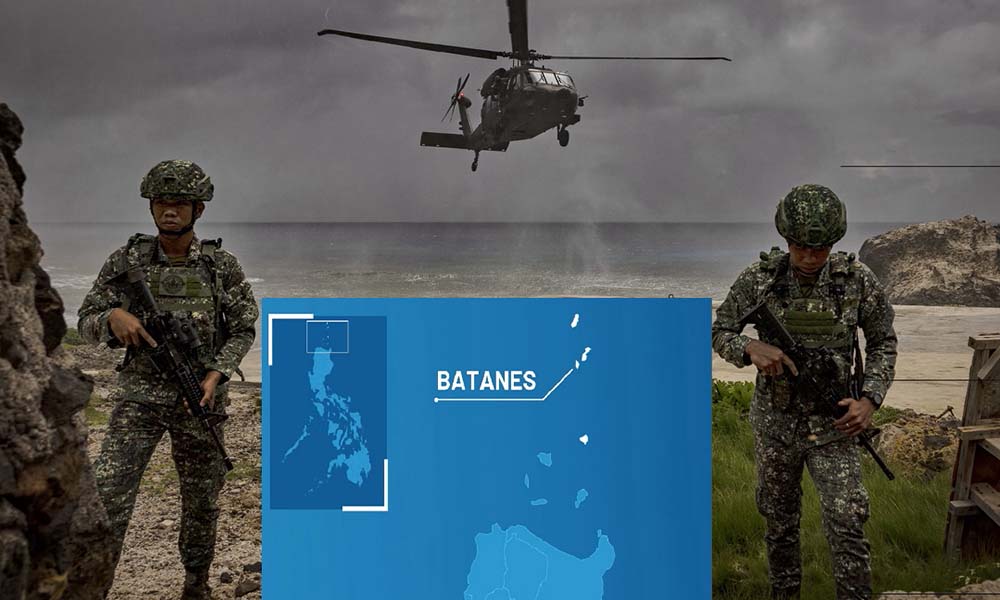
The Philippines sits at the crossroads of two of the world’s most strategically important waterways. To its west lies the South China Sea, one of the busiest maritime trade routes on Earth. To its north, the Luzon Strait and the Bashi Channel form a narrow gateway between the Philippines and Taiwan, connecting the South China Sea to the wider Pacific Ocean. Any navy operating between these waters must pass through or around these chokepoints, making them critical for both commercial shipping and military operations.
This strategic location places the Philippines along the First Island Chain—a natural arc stretching from Japan through Taiwan and the Philippines to Borneo. For the United States, this chain helps support allies, monitor naval movements, and preserve access to the Western Pacific. For China, however, it represents a geographic barrier that limits the People’s Liberation Army Navy’s ability to project power farther into the Pacific. As China’s naval capabilities have expanded, control of these surrounding waters has become increasingly important to both sides.
That geography has fundamentally reshaped the U.S.-Philippines alliance. Expanded access under the Enhanced Defense Cooperation Agreement, larger joint military exercises, and closer defense coordination are not simply responses to individual maritime incidents. They reflect a broader effort to strengthen deterrence at one of the Indo-Pacific’s most strategically important crossroads. The Council on Foreign Relations notes that growing tensions in the South China Sea have accelerated this cooperation because the Philippines occupies terrain that is central to regional security and any potential contingency involving Taiwan.
This is why the Philippines is no longer just another claimant in the South China Sea. It has become a strategic hinge between the Pacific Ocean and the South China Sea, placing it at the intersection of America’s alliance network, China’s maritime ambitions, and some of the world’s busiest sea lanes.
And that helps explain why Beijing’s actions have become increasingly assertive. To understand today’s tensions, we first need to examine how China’s strategy has evolved—and why encounters at sea are becoming more frequent and more dangerous.
China Is Turning a Antelope Reef Into a Military Outpost in the South China Sea
China Changed Everything
For decades, disputes in the South China Sea remained largely contained. That changed as China adopted what security analysts call gray-zone tactics—a strategy of applying constant pressure without triggering open war. Instead of relying primarily on naval combat, Beijing increasingly used its coast guard, maritime militia, and regular patrols to expand its presence while avoiding a military response that could escalate into a wider conflict.
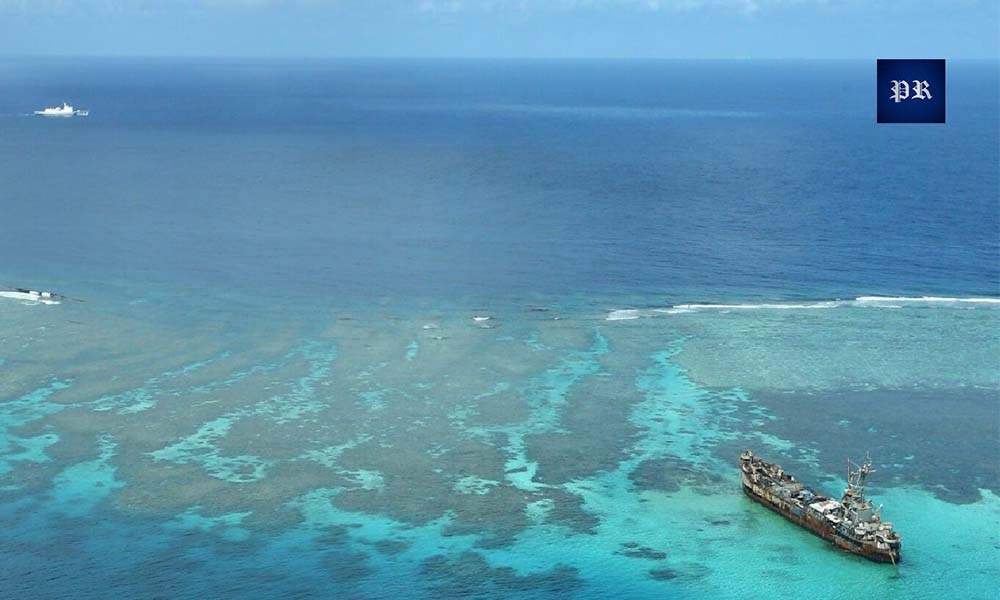
Nowhere has that strategy been more visible than at Second Thomas Shoal, where the Philippines has maintained a small detachment of marines aboard the grounded BRP Sierra Madre since 1999. Over the past several years, Chinese Coast Guard and maritime militia vessels have repeatedly obstructed Philippine resupply missions using military-grade lasers, powerful water cannons, dangerous blocking maneuvers, collisions at sea, and close-range harassment. According to the Congressional Research Service, these actions were designed to pressure Manila without crossing the threshold of conventional war.
The pressure soon spread beyond Second Thomas Shoal. Similar confrontations emerged at Sabina Shoal and Scarborough Shoal, where Chinese vessels continued to shadow, block, and challenge Philippine coast guard ships and fishing boats. In June 2024, one of the most serious incidents occurred when Chinese Coast Guard personnel boarded Philippine rigid-hull inflatable boats during a resupply mission, damaged equipment, and a Philippine marine lost his thumb following a collision. Although both governments later reached a provisional arrangement for future resupply missions, confrontations have continued across the South China Sea.
For Washington, these were no longer isolated maritime incidents. They increasingly appeared to be part of a sustained campaign to change conditions at sea through incremental pressure rather than outright conflict. The Philippines responded by expanding defense cooperation with the United States, while Washington increased military assistance, broadened joint exercises, and repeatedly reaffirmed that the Mutual Defense Treaty applies to Philippine armed forces, public vessels, and aircraft operating in the South China Sea.
The international response also became more coordinated. On the tenth anniversary of the 2016 Arbitral Award, the United States joined Japan, Australia, the United Kingdom, Germany, Canada, New Zealand, and several other partners in reaffirming that China’s sweeping maritime claims have no legal basis under international law. Beijing rejected the statement, called the ruling “null and void,” and argued that outside powers were increasing regional tensions.
This is why the Philippines has become one of the central flashpoints in U.S.-China strategic competition. The question is no longer whether another confrontation will occur. It is whether sustained gray-zone pressure can gradually reshape the regional balance of power without triggering a conventional war—and whether America’s alliances can prevent that outcome.
That brings us to the next question. If the United States has defended the Philippines for more than seventy years, why hasn’t its Mutual Defense Treaty stopped these confrontations?
America Can’t Afford to Lose the Philippines
If the United States has pledged to defend the Philippines for more than seventy years, one question naturally follows: Why hasn’t that treaty stopped these confrontations?
Because deterrence depends on more than promises—it depends on the ability to act. A defense treaty only works if both allies can respond quickly and convincingly during a crisis. For years, American planners worried that although Washington’s commitment was clear, its forces were not positioned to respond fast enough to a rapidly escalating incident in the South China Sea.
That is why the alliance has undergone one of its biggest transformations in decades. Since President Ferdinand Marcos Jr. took office, the Philippines has expanded defense cooperation with the United States through the Enhanced Defense Cooperation Agreement, or EDCA, giving U.S. forces greater rotational access to Philippine military facilities while supporting the modernization of the Armed Forces of the Philippines.
EDCA is often misunderstood. It does not create permanent American bases. Instead, it improves readiness, logistics, interoperability, and rapid response. The two allies have expanded EDCA sites, increased joint exercises, strengthened maritime patrols, and improved coordination across air, sea, and land forces. According to the Congressional Research Service, these changes are designed to make deterrence more credible by ensuring both countries can respond more quickly during a crisis.
The broader strategic goal is clear. CSIS argues that the Philippines is not simply another treaty ally—it is America’s strategic anchor in Southeast Asia. Without access through agreements like the Visiting Forces Agreement and EDCA, Washington’s ability to reinforce the First Island Chain, support freedom of navigation, and deter Chinese coercion would be significantly weaker.
That is why this alliance matters far beyond the Philippines. If Washington failed to support one of its oldest treaty allies under sustained pressure, countries such as Japan, South Korea, and Australia would inevitably question whether American security guarantees could be trusted in their own crises. In geopolitics, credibility is often as important as military strength.
But Beijing sees the situation very differently. China argues that expanding U.S. military cooperation is destabilizing the region and insists its own activities are legitimate. Understanding that perspective is essential—because to understand where this competition is heading, we must examine why China continues to apply pressure despite a stronger U.S.-Philippines alliance.
Why China Keeps Pressuring Manila
If the growing U.S.-Philippines alliance is making deterrence stronger, why does China continue increasing pressure instead of backing down?
From Beijing’s perspective, the answer is strategic. Chinese leaders have long viewed the South China Sea as a core national interest—not only because of competing territorial claims, but because it contains critical sea lanes, valuable fisheries, potential energy resources, and serves as China’s gateway to the wider Pacific. Protecting what Beijing considers its sovereignty has therefore become a long-term strategic priority.
But China also sees a broader challenge. As the Philippines has expanded defense cooperation with the United States, strengthened security ties with countries such as Japan and Germany, and granted greater U.S. access under EDCA, Beijing has increasingly argued that outside powers are transforming the South China Sea into a theater of strategic competition. After fourteen countries reaffirmed the 2016 Arbitral Award, China’s Foreign Ministry rejected the declaration as “null and void” and accused external military deployments of undermining regional stability.
This helps explain why diplomacy alone has not eased tensions. According to the Congressional Research Service, Beijing’s strategy combines diplomatic, economic, military, law-enforcement, and civilian tools to gradually strengthen its position without triggering open war. It generally favors bilateral negotiations over multilateral pressure and opposes greater involvement by outside powers, particularly the United States.
Washington and Manila see those same actions very differently. They argue that persistent pressure at sea is intended to gradually change the status quo without provoking a conventional conflict. The Council on Foreign Relations notes that this strategy has had the opposite of Beijing’s intended effect: it has pushed the Philippines closer to the United States, accelerated military modernization, and expanded defense cooperation with other like-minded partners.
That is the strategic paradox shaping today’s South China Sea. China believes it is defending its sovereignty and resisting outside interference. The United States believes it is supporting an ally and preserving a rules-based regional order. As both sides become more determined, the Philippines finds itself at the center of an increasingly consequential great-power rivalry.
Which raises the next question. If this dispute is about far more than reefs and coast guard ships, what is actually at stake in the South China Sea—and why does the rest of the world care?
The South China Sea Isn’t Just About Fish
After everything we’ve seen so far, one question remains.
Why are so many countries willing to risk military confrontation over a sea filled with reefs, shoals, and small islands?
Because the South China Sea is far more than a territorial dispute. It is one of the world’s most important strategic and economic crossroads. Whoever can dominate these waters gains enormous influence over regional trade, military access, and the balance of power across the Indo-Pacific.
Every day, thousands of commercial ships carry energy supplies, manufactured goods, food, and raw materials through the South China Sea, linking East Asia with the Middle East, Europe, and beyond. According to the United Nations Conference on Trade and Development, roughly one-third of global maritime trade passes through these waters each year, making them one of the busiest shipping corridors on Earth. For economies such as China, Japan, South Korea, and Taiwan, these sea lanes are critical to both energy security and international commerce.
The region also contains valuable fishing grounds and potentially significant offshore oil and natural gas reserves. Although many of those resources remain disputed or unexplored, they provide another powerful incentive for governments to defend their maritime claims.
For Washington, however, the stakes go beyond economics. According to the Congressional Research Service, the United States is focused on preserving freedom of navigation, supporting treaty allies, maintaining a favorable regional balance of power, and preventing any single country from dominating the South China Sea. If China were able to establish effective control over these waters, it could increase pressure on neighboring states, project military power farther into the Western Pacific, and make U.S. operations across the Indo-Pacific far more difficult.
That is why every confrontation in the South China Sea resonates far beyond the region. China views many of these waters as falling under its sovereignty. The United States and many of its partners argue that international law protects the right of civilian and military vessels to operate freely through international waters. Those competing visions have turned individual maritime incidents into a broader contest over the future rules of the Indo-Pacific.
The New Indo-Pacific
The U.S.-Philippines alliance is no longer just a bilateral partnership. It has become part of a much broader transformation reshaping the Indo-Pacific.
As tensions in the South China Sea have intensified, countries across the region have expanded security cooperation in ways that would have been difficult to imagine just a decade ago. The Philippines has strengthened defense ties not only with the United States, but also with Japan, Australia, and several European partners. Joint military exercises have grown, coast guards cooperate more closely, intelligence sharing has expanded, and new defense agreements continue to emerge. Rather than relying on a single alliance, many countries are building a network of overlapping security partnerships designed to strengthen deterrence and improve crisis response.
This transformation extends well beyond the Philippines. Japan has taken on a larger regional security role. Australia has deepened defense cooperation through initiatives such as AUKUS. European countries have increased naval deployments and diplomatic engagement across the Indo-Pacific. Although each government pursues its own national interests, many now share a common objective: preserving regional stability, supporting freedom of navigation, and reducing the risk that disputes are settled through coercion rather than force.
Importantly, this is not a new Cold War or a single anti-China military bloc. Many countries continue to maintain deep economic ties with Beijing while simultaneously strengthening security cooperation with the United States and other partners. The result is a far more interconnected regional security architecture—one built on overlapping partnerships rather than formal alliances.
According to the Center for Strategic and International Studies, the U.S.-Philippines relationship has become one of the most durable partnerships in the region, supported by long-standing institutional ties, shared strategic interests, and sustained cooperation across multiple American administrations. That stability has helped make the alliance a key building block of this broader regional network.
What Happens Next?
So where does all of this leave the Indo-Pacific?
The reality is that neither the United States nor China appears willing to abandon its core objectives. Washington continues strengthening alliances, expanding military cooperation, and promoting what it calls a free and open Indo-Pacific. Beijing continues defending its maritime claims, rejecting the 2016 Arbitral Award, and opposing what it sees as growing outside interference. According to the Congressional Research Service, the South China Sea has become one of the principal arenas of long-term strategic competition between the two powers.
At the same time, diplomacy continues. ASEAN and China are still negotiating a Code of Conduct for the South China Sea, while regional forums such as the ASEAN Regional Forum and the East Asia Summit provide opportunities for dialogue. Reuters also reports that U.S. Secretary of State Marco Rubio’s July 2026 visit to Manila is expected to include discussions on regional security while laying the groundwork for a possible future meeting between President Donald Trump and President Xi Jinping.
Looking ahead, three broad outcomes appear possible.
The first is managed competition. Military exercises, coast guard patrols, and diplomatic negotiations continue, but all sides avoid direct conflict. Competition remains intense, yet crises are contained through communication and restraint.
The second is deeper regional cooperation. The Philippines continues expanding defense ties with the United States while strengthening partnerships with Japan, Australia, and other countries, creating a more interconnected security network across the Indo-Pacific.
The third is unintended escalation. The greatest danger may not be a deliberate decision to start a war, but a collision, miscalculation, or maritime incident that escalates faster than political leaders can contain. With coast guard ships, naval vessels, aircraft, and maritime militias operating in close proximity, even a localized confrontation could trigger treaty commitments and rapidly widen the crisis.
Which path ultimately emerges will depend not only on Washington, Beijing, and Manila, but also on how countries across the Indo-Pacific balance deterrence, diplomacy, and crisis management.
In the end, this story was never just about a handful of reefs or disputed islands.
It is about who shapes the rules of one of the world’s most strategically important regions—and whether competition between the world’s two largest powers can remain below the threshold of war. Today, the Philippines stands at the center of that question.
And whatever happens next in the South China Sea will be watched not just across Asia—but around the world.
About Indo-Pacific Report
For more geopolitical analysis, strategy coverage, and Indo-Pacific security reporting, visit Indo-Pacific Report:
Website
Facebook
YouTube
U.S. Lawmakers Urge TRUMP to Back Philippines Against China in the SCS