Philippines Is Building More Than a Church on Pag-asa Island | China Watching!
Today, something unexpected is happening in one of the world’s most heavily contested maritime regions.
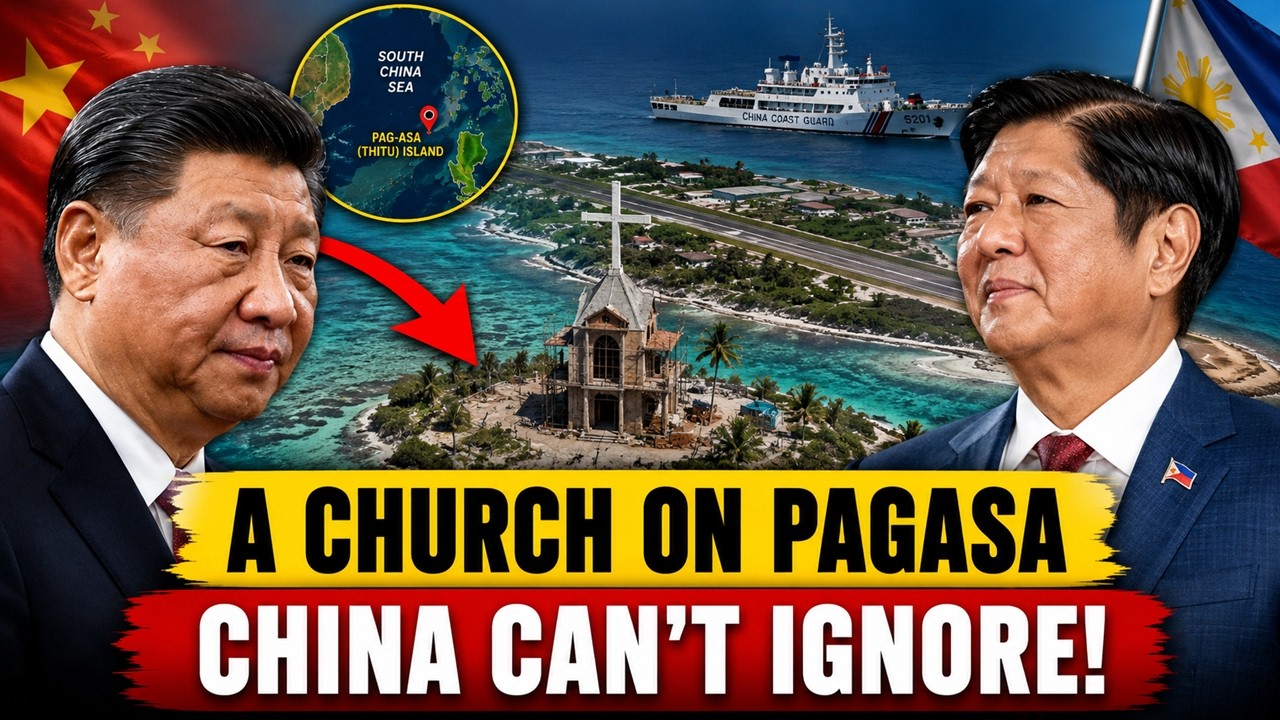
The Catholic Church is preparing to establish a permanent mission on Pagasa Island, a tiny Philippine-controlled outpost in the Spratly Islands that is also claimed by China, Taiwan, and Vietnam.
Church leaders and the Philippine Coast Guard have already begun coordinating the project, with construction preparations expected to begin in late March.
At first glance, that might not sound like geopolitical news.
After all, it’s just a church.
But that’s exactly what makes this story so remarkable.
In the South China Sea, headlines are usually about warships, coast guard confrontations, military exercises, or competing territorial claims.
This time, the headline is about a place of worship.
And yet, this small mission could become one of the most strategically significant civilian developments on Pagasa in years, not because the Church is entering a territorial dispute, but because it is establishing a permanent institution within a community that already lives on one of Asia’s most contested islands.
That raises a much bigger question.
Why would the construction of a simple Catholic mission attract attention far beyond the island itself?
To answer that, we first need to understand why this tiny island has become one of the most closely watched pieces of land in the South China Sea.
Why Tiny Pagasa Matters More Than Its Size
To understand why a Catholic mission matters here, you first have to understand the island itself.
On a map, Pag-asa Island barely stands out.
Known internationally as Thitu Island, it is one of dozens of small features scattered across the Spratly Islands. From space, it looks almost insignificant—a narrow strip of land surrounded by thousands of square kilometers of open sea.
Yet appearances can be deceiving.
Imagine waking up on an island hundreds of kilometers from the Philippine mainland, where nearly everything—from food and medicine to fuel and construction materials—must arrive by ship or aircraft. Weather can delay supplies, and every improvement requires careful planning across vast stretches of sea. Despite that isolation, life continues every single day.
As geopolitical writer Robert D. Kaplan has often observed, geography continues to shape the choices nations make long after political headlines fade. Few places illustrate that reality better than Pag-asa.
The Philippines first established a presence on the island in 1974, and today it remains the country’s largest occupied feature in the Spratly Islands.
But Pag-asa is far more than a military outpost.
It is a living community. More than 400 civilians live alongside members of the Armed Forces of the Philippines, the Philippine Coast Guard, the Navy, and the Philippine National Police. There is a resident mayor, a school, homes, basic healthcare, fishermen, and local government services. In recent years, Manila has upgraded the island’s runway and expanded port facilities, making it easier to deliver supplies and support the people who call Pag-asa home.
Every morning, children walk to school.
Fishermen head out before sunrise.
China Is Turning a Antelope Reef Into a Military Outpost in the South China Sea
Coast Guard personnel begin another day of patrols.
Supply aircraft arrive carrying food, medicine, engineers, and construction materials—not tourists.
Life follows an ordinary rhythm… in one of the world’s most extraordinary places. That is what makes Pag-asa different.
Many disputed features in the South China Sea are occupied only by security forces. Pag-asa wakes up every morning as a town.
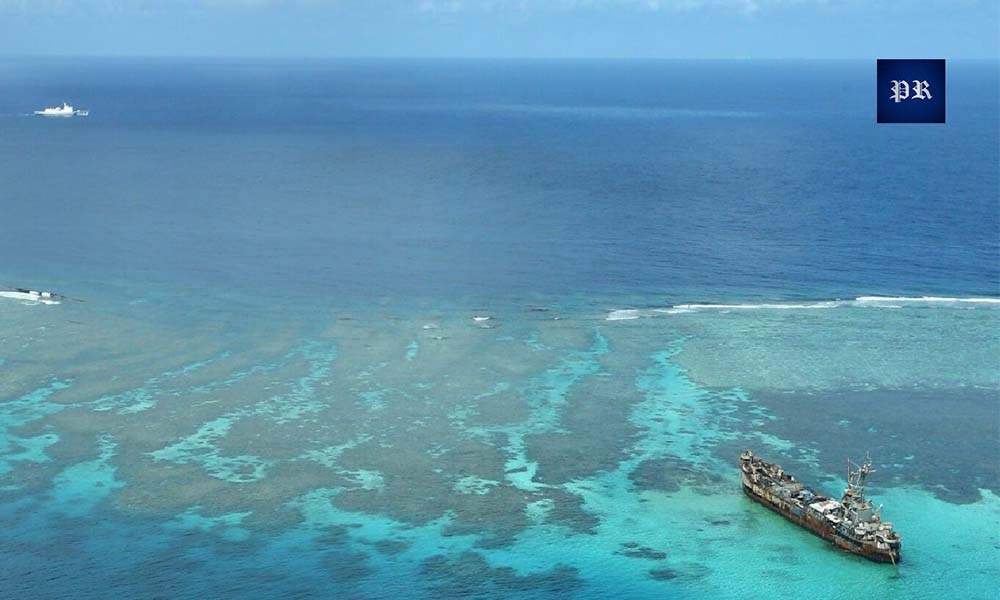
But life on Pag-asa does not unfold in isolation. Just a short distance away lies Subi Reef, one of China’s largest artificial island bases. Chinese Coast Guard vessels and ships that many analysts identify as part of China’s maritime militia have repeatedly operated near Pag-asa, closely monitoring Philippine construction, resupply missions, and civilian activity.
This matters because the South China Sea is far more than a regional waterway. Roughly one-third of global maritime trade passes through these waters, making stability here important not only for the countries around it, but also for the wider international economy.
That is why every improvement on the island has a story.
A repaired runway. A stronger pier. New homes. Freshwater systems. And now… perhaps a Catholic mission. Individually, these are ordinary developments. Together, they signal something much more important.
Not expansion. But permanence. And that brings us to the question at the heart of this story. Why would a school…
a fishing pier… or even a small Catholic mission… matter in one of the world’s most strategically contested maritime regions?
The Secret To Holding Territory
When people think about territorial disputes, they usually picture warships, fighter jets, or soldiers standing guard on distant islands.
Those images dominate the headlines.
But here’s something they often miss.
Military forces can defend a position.
Communities give that position a future.
Throughout history, governments involved in territorial disputes have invested in far more than security alone. They build schools, support healthcare, maintain local government, improve public services, and help sustain the communities that continue living there.
That doesn’t mean these institutions determine sovereignty.
They don’t. Nor do they settle competing territorial claims. But they do demonstrate something important. That life continues. People are raising families. Children are going to school. Fishermen are earning a living. Public services are functioning. Communities are enduring despite difficult conditions. Pag-asa reflects that reality remarkably well. It is not simply a military outpost surrounded by contested waters.
It is a town where ordinary life continues under extraordinary circumstances.
Children walk to school.
Supply aircraft land with medicine and essential goods.
Families celebrate birthdays. Fishermen return before sunset. And every Sunday, residents hope to gather for worship in a place they can call their own.
Only after seeing that bigger picture does the proposed Catholic mission begin to make sense.
Not because it changes sovereignty. Not because it changes international law. But because it supports a community that already exists. As geopolitical writer Robert D. Kaplan has often argued, geography may shape the strategic landscape, but it is the people living within that landscape who give it lasting meaning.
That is why the proposed mission matters. Not as a geopolitical instrument. But as another institution serving a community that has chosen to remain. And once you see the story through that lens…You begin to understand why Beijing may pay close attention to developments that, at first glance, seem entirely unrelated to geopolitics.
Why The Catholic Church Matters Here
So why did the Catholic Church decide to come to Pag-asa?
If this were simply about geopolitics, the answer would probably be very different.
Instead, it begins with the people who already call the island home.
Although Pag-asa is isolated, it has a permanent Catholic community made up of civilian families, members of the Armed Forces of the Philippines, Coast Guard personnel, Navy personnel, police officers, and other government workers serving on the island.
According to Bishop Socrates Mesiona, Apostolic Vicar of Puerto Princesa, the Church plans to establish a mission station rather than a full parish. In Catholic tradition, a mission station serves communities that are too small or too remote to sustain a permanent parish, ensuring that residents continue receiving regular pastoral care.
For the people of Pag-asa, that means something deeply personal.
A priest who can celebrate Sunday Mass.
Families who no longer have to wait for occasional pastoral visits.
Children who can grow up with a regular faith community.
Soldiers, Coast Guard personnel, police officers, and civilians who can gather together in worship despite living hundreds of kilometers from the Philippine mainland.
For many residents, such a mission is not simply about religion. It is about strengthening the sense of community that helps people endure life in one of the Philippines’ most isolated settlements. From the Church’s perspective, this is not a geopolitical mission. It is a pastoral one.
But in geopolitics, the same institution can carry very different meanings depending on where it stands. A school built in an ordinary town is simply a school. A clinic serving a rural village is simply a clinic. A church ministering to an isolated Catholic community is simply fulfilling its religious mission. Yet when those same institutions exist on one of the world’s most closely watched disputed islands, they inevitably become part of a broader strategic conversation—not because their purpose has changed, but because their location has.
That is why Commodore Jay Tarriela welcomed the proposal as a positive development for the island’s residents while also emphasizing that Chinese maritime activity around Pag-asa long predates the planned mission. In other words… The Church is not entering the territorial dispute. The territorial dispute already surrounds the Church. That distinction is essential.Because once you separate purpose from perception…you begin to understand why Beijing may interpret the continued growth of civilian life on Pag-asa differently from the people who simply call it home.
China’s View Of Pagasa
By now, it’s clear that the proposed Catholic mission is only one part of a much larger story.
But to understand why developments on Pag-asa receive so much attention, we also have to see the island through Beijing’s eyes.
From China’s perspective, Pag-asa is not simply a remote Philippine community.
It is one of several occupied features in the Spratly Islands that Beijing also claims as part of its broader position in the South China Sea.
That helps explain why activity around the island has been closely watched for years.
Satellite imagery analyzed by the Asia Maritime Transparency Initiative has repeatedly documented Chinese Coast Guard vessels, fishing fleets, and other government ships operating near Pag-asa. Security analysts have also pointed to the role of China’s maritime militia—civilian vessels that can support state objectives without appearing as conventional naval forces.
Rather than relying only on military confrontation, China has often used what analysts describe as grey-zone tactics: persistent patrols, coast guard deployments, and other forms of maritime pressure designed to reinforce its claims while remaining below the threshold of open conflict.
One example came in 2017, when AMTI imagery showed numerous Chinese vessels operating close to Pag-asa during a period when the Philippines was planning infrastructure improvements. Philippine officials expressed concern that the coordinated presence could discourage construction on the island.
The projects ultimately continued.
The runway was upgraded.
Port facilities were improved.
Freshwater systems were expanded.
And now, a Catholic mission may become the latest addition.
That does not mean China is reacting to the Church itself.
It means Beijing is likely watching the broader pattern.
Not one building.
An island becoming more resilient.
Not one construction project.
A community becoming easier to sustain.
That is why even seemingly ordinary developments on Pag-asa rarely pass unnoticed.
Because in long-term strategic competition, governments often pay as much attention to gradual change…
…as they do to dramatic events.
More Than A Church
By now, it should be clear that this story is no longer just about a church.
Or even about Pag-asa. It is about a much broader pattern unfolding across the South China Sea. Zoom out from Pag-asa, and that pattern becomes impossible
About Indo-Pacific Report
For more geopolitical analysis, strategy coverage, and Indo-Pacific security reporting, visit Indo-Pacific Report:
Website
Facebook
YouTube
Philippines Is Building More Than a Church on Pag-asa Island | China Watching!