
US Wants Ukraine’s Drone Technology After Years of War Experience With Russia
Published by Indo-Pacific Report | Ukraine Drone Industry | US Defense Technology | Modern Warfare | FPV Drones
Here is something that would have sounded implausible just five years ago: the United States — the country with the world’s largest defense budget and the most advanced military on earth — is now actively seeking drone technology from Ukraine.
Not as a goodwill gesture. Not as a diplomatic formality. But because Ukraine has developed battlefield drone capabilities that the US military genuinely does not have and urgently wants.
The United States and Ukraine have drafted a memorandum for a formal defense technology agreement that would allow Ukraine to export military drone systems directly to the US and permit Ukrainian defense companies to build drones jointly with American defense firms. Meanwhile, the Pentagon has invited Ukrainian companies into its Drone Dominance initiative — a program specifically designed to identify the next generation of military drone systems for US defense contracts.
This is a remarkable strategic reversal. For most of the past three years, Ukraine has been on the receiving end of Western weapons transfers. Now Ukraine is becoming a technology exporter to the West’s most powerful military.
How Three Years of War Turned Ukraine Into a Drone Superpower
Ukraine did not enter the war in February 2022 as a drone warfare leader. It entered as a country scrambling to defend itself against a military many analysts expected would overwhelm it within weeks.
What followed was one of the most rapid military-industrial transformations in modern history. Necessity drove innovation at a pace that peacetime defense procurement cycles simply cannot match. Ukrainian engineers, manufacturers, and military operators had to solve real problems, in real time, under live combat conditions. The result was a drone industry that is now, by almost any practical measure, the most battle-tested in the world.
https://indopacificreport.com/trump-says-iran-deal-is-largely-negotiated/
FPV Attack Drones
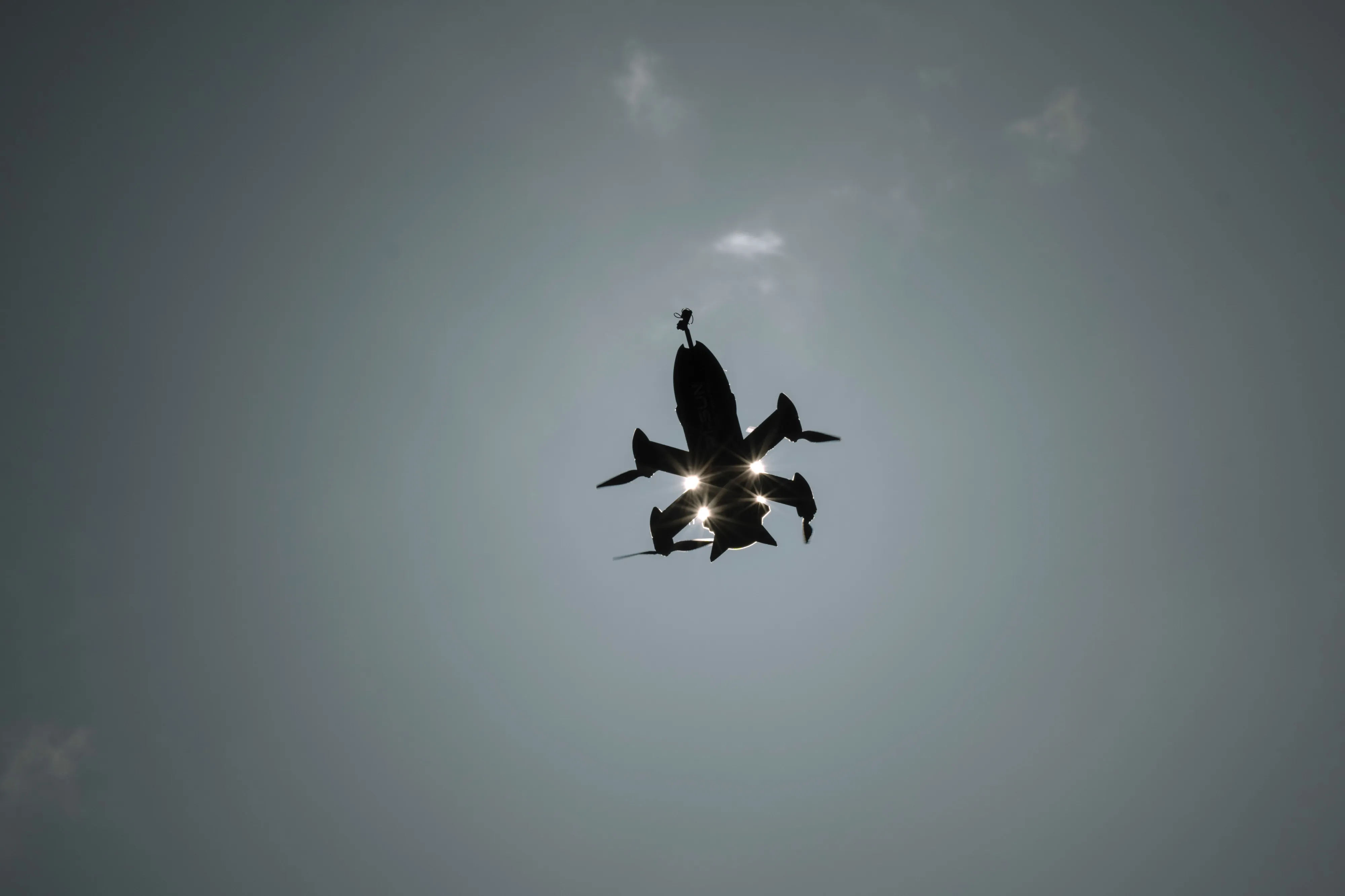
First-person view drones — small, cheap, fast quadcopters guided by a pilot wearing video goggles — became Ukraine’s most effective and most feared weapon against Russian armor and infantry. Ukrainian FPV drones can be built for a few hundred dollars each. They can be adapted rapidly to carry different payloads, modified to counter electronic jamming, and produced in enormous numbers. One Ukrainian manufacturer alone has announced plans to produce more than three million FPV drones in 2026. That scale of production is not theoretical. It is already operational.
Long-Range Strike Drones
Ukraine developed and deployed long-range drone platforms capable of striking targets deep inside Russian territory — oil refineries, military airfields, ammunition depots, radar installations. These are not improvised weapons. They are sophisticated systems designed specifically to hit strategic targets at ranges that force Russia to defend an enormous geographic area.
Drone Interceptors
One of Ukraine’s most significant innovations is the development of drones specifically designed to intercept other drones. As Russia began using Iranian-supplied Shahed drones in mass swarm attacks against Ukrainian cities, Ukraine needed a cost-effective way to shoot them down without exhausting expensive surface-to-air missile interceptors. Drone-on-drone interception — using a cheap FPV platform to physically destroy an incoming Shahed — emerged as a practical solution born entirely from battlefield necessity.
Electronic Warfare Systems
Ukraine also built sophisticated electronic warfare capabilities — systems designed to jam drone communications, spoof GPS signals, and disable enemy unmanned platforms. This electronic contest between drone operators and jamming systems has produced a constant cycle of adaptation: Ukraine jams, Russia adapts, Ukraine counter-adapts. That cycle has driven Ukrainian electronic warfare innovation to a level that Western militaries, whose systems were designed for a very different threat environment, are only beginning to absorb.
Ukraine did not develop these capabilities in a laboratory. It developed them while being bombed, under budget constraints no Western defense contractor has ever faced, against a real adversary that was constantly adapting. That is exactly why what Ukraine built has value that money alone cannot replicate.
For ongoing coverage of Ukraine’s military innovation and the evolving nature of modern warfare, visit Indo-Pacific Report.
Why the Iran Conflict Made Ukrainian Drone Expertise Even More Valuable
Ukraine’s drone expertise did not just attract American attention because of what happened in Ukraine. It attracted attention because of what happened in the Middle East.
When Iran and its proxies began deploying Shahed-series drones in large numbers — against US military installations in Iraq and Syria, against Israeli cities, and across the broader Middle East conflict zone — American allies found themselves scrambling for answers. These were the same drones Russia had been using against Ukrainian cities since late 2022.
Ukraine had already spent years solving the Shahed problem. Ukrainian operators had developed practical, cost-effective methods to detect, track, and destroy Shahed drones at scale. They had built the electronic warfare systems to jam their navigation. They had trained thousands of drone operators who understood exactly how these platforms behaved in real combat.
When American allies in the Middle East needed help defending against the same threat, Ukraine was the country with the most relevant operational experience on earth. Ukrainian expertise directly contributed to allied drone defense efforts in the region.
Washington’s defense establishment drew the obvious conclusion: this knowledge is strategically valuable, and the United States needs access to it.
The Middle East conflict created an unexpected proof of concept for Ukraine’s drone expertise. When the same weapons Ukraine had been fighting for years showed up in a different theater, Ukraine was the country that already knew how to beat them.
Watch our analysis of drone warfare’s spread across global conflict zones on the Indo-Pacific Report YouTube channel.
What the Proposed US-Ukraine Drone Deal Actually Involves
The agreement being negotiated between Washington and Kyiv is more complex than a simple arms sale, and it is worth being precise about what is actually on the table.
Technology Export Authorization
The memorandum would authorize Ukrainian defense companies to export military drone technology directly to the United States. This is significant because current US export control regulations and procurement rules make it difficult for foreign companies, even allied ones, to sell military systems directly into the American defense market. A formal agreement would create a pathway that bypasses many of those barriers.
Joint Production Inside the US
The deal would also allow Ukrainian companies to establish manufacturing operations inside the United States, building drones jointly with American defense firms. This model — sometimes called co-production or licensed manufacturing — allows the US to gain access to Ukrainian technology and methods while also building domestic production capacity that does not depend on supply chains running through an active war zone.
Pentagon Drone Dominance Program
The Pentagon has separately invited Ukrainian drone companies to participate in its Drone Dominance initiative. This program is focused on identifying and developing the next generation of military drone systems for US defense procurement. Ukrainian companies being included means Washington views Ukrainian innovation as competitive with — and in some areas superior to — what American defense contractors are currently producing.
General Cherry, one of Ukraine’s leading drone manufacturers, has already moved in this direction, signing a deal with US company Wilcox Industries to produce drones on American soil. This is not a pilot program or a symbolic gesture. It is a commercial and strategic partnership between a battle-tested Ukrainian manufacturer and an established American defense company.
Ukrainian drone technology authorized for direct export to US military
Joint manufacturing facilities to be established on US soil
Ukrainian companies participating in Pentagon’s Drone Dominance procurement program
General Cherry and Wilcox Industries already operational as a co-production model
Potential for Ukraine’s defense industry to generate approximately $55 billion in military equipment output in 2026
What Ukraine Wants in Return
Ukraine is not giving this technology away. Kyiv has specific and clearly articulated requirements for what it expects from any defense technology partnership with the United States.
American Financing for Scale
Ukraine’s drone industry has demonstrated what it can do with limited resources. The question is how large it can become with access to American capital. Ukrainian officials believe that US financing could enable a dramatic expansion of drone production capacity — moving from hundreds of thousands of units to millions, and from small-batch artisan production to industrial-scale manufacturing. The $55 billion production target for 2026 is ambitious, but Ukrainian defense industry representatives argue it is achievable with the right investment.
Intellectual Property Protection
This is Ukraine’s most sensitive requirement, and it is entirely understandable. Ukraine’s drone developers built their systems through years of innovation under fire. They are not willing to hand over that intellectual property without clear legal guarantees that Ukrainian companies will retain ownership and control. Any partnership that effectively transferred Ukrainian IP to American defense contractors without adequate protection would be seen in Kyiv as exploitation rather than cooperation.
Wartime Supply Security
Ukraine also needs assurance that any technology sharing or joint production arrangement will not reduce the supply of drone systems available to Ukrainian forces currently fighting in the war. Exporting production capacity or technology cannot come at the cost of the front-line units that depend on a steady supply of drones to survive.
These are not unreasonable demands. But they do require careful structuring of any agreement to ensure that Ukrainian interests are genuinely protected, not just acknowledged in the text of a memorandum.

The Political Resistance Inside Washington
The proposed agreement faces real political obstacles, and it is worth acknowledging them directly rather than presenting this as a done deal.
President Trump publicly stated that the United States does not need Ukrainian drone defense assistance — a position that signals at minimum some skepticism at the executive level about the urgency and value of the proposed partnership. Within Washington’s defense establishment, opinions are more divided. Some officials see the Ukrainian partnership as a rapid and cost-effective way to absorb battlefield-proven innovations. Others view it as unnecessary, questioning whether American defense contractors cannot simply develop equivalent capabilities independently.
This internal disagreement reflects a broader tension in US defense policy between the established defense industrial base — large contractors with deep political connections and significant lobbying power — and the push for faster, cheaper, more adaptive procurement that draws on allied innovation and non-traditional suppliers.
The Ukrainian drone industry represents exactly the kind of disruption that traditional defense procurement resists. FPV drones that cost a few hundred dollars each and can be produced by the millions challenge a procurement culture built around multi-billion-dollar platforms developed over decades. Accepting Ukrainian technology at scale would mean acknowledging that some of the most effective weapons in modern warfare came from a country under siege, not from a major American defense corporation.
The resistance to Ukraine’s drone technology in Washington is not really about the technology. It is about what accepting that technology would say about the American defense procurement system that failed to develop it first.
Follow daily updates on US defense policy, Ukraine, and global military developments on our Facebook page.
Why This Matters Well Beyond Ukraine and the US
The US-Ukraine drone technology partnership, if it moves forward, has implications that extend far beyond the two countries involved. It signals something important about how warfare is changing and how militaries around the world will need to adapt.
The Democratization of Advanced Military Technology
Ukraine’s drone industry demonstrated that advanced, militarily effective unmanned systems do not require enormous budgets or decades of institutional research. They require innovation, iteration, and willingness to test ideas under real combat conditions. This model is now being studied by militaries across Asia, the Middle East, and Europe. The lesson is not just about drones. It is about how modern military technology is developed and who gets to develop it.
The Speed Advantage of Combat-Tested Innovation
Traditional defense procurement is designed for predictability and accountability. It is slow by design. The Ukraine war demonstrated that combat conditions can drive innovation cycles measured in weeks, not years. A drone that gets jammed in the field on Monday can be redesigned and redeployed by Friday. No peacetime procurement system operates at that speed. For militaries trying to prepare for fast-moving modern conflicts, access to combat-tested innovation is worth more than the most elegantly designed laboratory prototype.
The Indo-Pacific Dimension
For countries in the Indo-Pacific watching China’s military modernization and expanding drone programs, the US-Ukraine technology partnership carries a specific lesson. Small, cheap, and numerous can defeat large, expensive, and few. Ukraine’s experience shows that a determined, innovative defender can impose enormous costs on a larger aggressor through mass drone deployment and electronic warfare. That lesson is being studied carefully in Taipei, Manila, Tokyo, and Seoul.
Ukraine Changed the Calculus of Modern War — Now the World Is Taking Notes
The United States seeking drone technology from Ukraine is not a story about American weakness. It is a story about how completely the nature of warfare has shifted in three years of grinding, innovative, brutal conflict on the Ukrainian steppe.
Ukraine built a drone industry under conditions that no defense contractor has ever faced. It produced systems that work in real combat, against a real adversary using real countermeasures. That experience — that hard-won, field-tested knowledge — is what Washington now recognizes it cannot simply buy or replicate from scratch.
Whether the political obstacles in Washington allow the proposed agreement to move forward remains to be seen. But the direction of travel is clear. Modern warfare is increasingly a contest of unmanned systems, electronic warfare, and industrial-scale drone production. Ukraine is currently leading that contest.
And the countries paying attention to what Ukraine built are not just thinking about the war in Europe. They are thinking about every other potential conflict where the same capabilities could decide the outcome.
Stay Ahead of Military Innovation and Global Security
For sharp, consistent analysis of drone warfare, modern military technology, and global security developments, visit Indo-Pacific Report — strategic intelligence from the world’s most critical regions.
► Subscribe on YouTube
► Follow us on Facebook