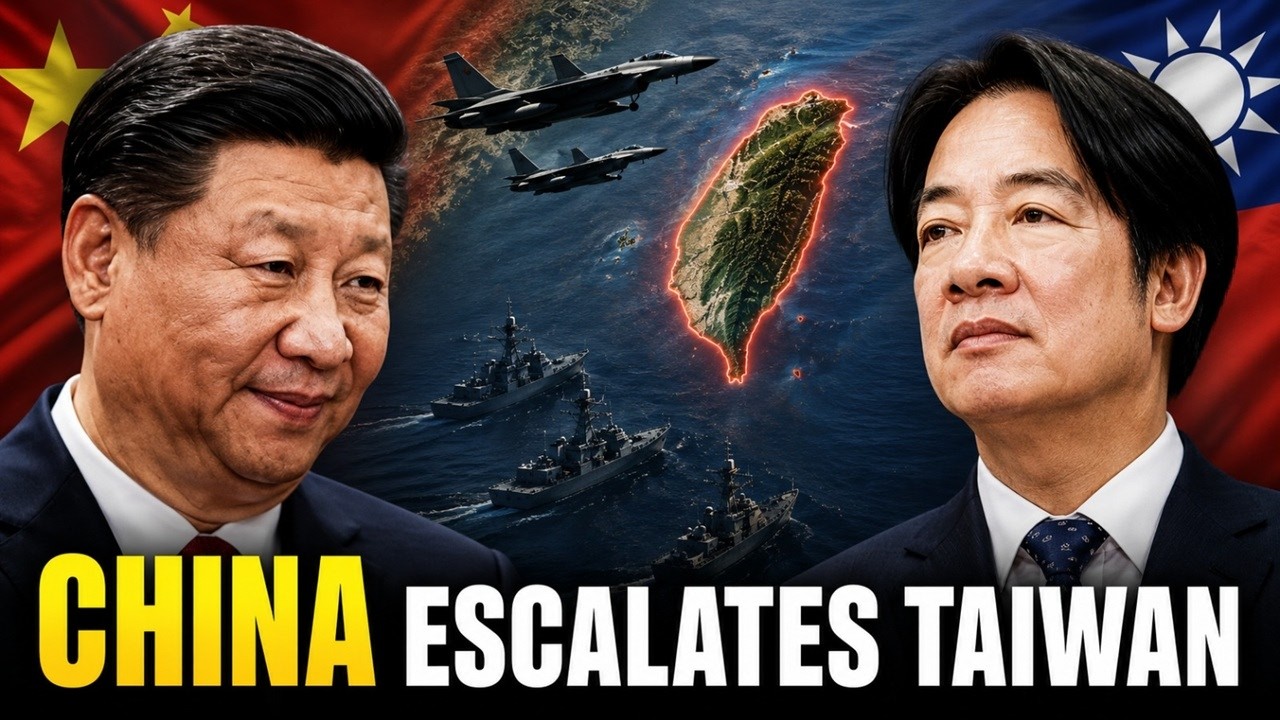
China Just Sent More Aircraft and Warships Near Taiwan
Published by Indo-Pacific Report | Taiwan Strait | China Military | Indo-Pacific Security
China has once again sent military aircraft and warships near Taiwan. Taiwan’s Ministry of National Defense reported tracking nine Chinese military aircraft, seven naval vessels, and one official government ship operating around the island in a single operation. Eight of those aircraft crossed into Taiwan’s Air Defense Identification Zone (ADIZ).
If this sounds familiar, that is precisely the point.
This is not an isolated incident or a one-off show of force. China has been running these operations week after week, month after month. What was once considered a significant military provocation has been deliberately transformed by Beijing into something that looks routine. And that shift in perception is itself a strategic goal.
To understand what China is doing around Taiwan — and why it matters for everyone in the Indo-Pacific and beyond — you need to look past the individual headlines and understand the bigger pattern.
What Happened: The Numbers Behind This Operation
Taiwan’s Ministry of National Defense confirmed Chinese military activity detected around the island during the latest operation. The breakdown:
9 Chinese military aircraft detected operating near Taiwan
7 People’s Liberation Army Navy (PLAN) warships tracked around the island
1 official Chinese government vessel operating in the area
8 aircraft entered Taiwan’s Air Defense Identification Zone (ADIZ)
Taiwan responded by activating its standard response protocols — deploying aircraft, naval assets, and missile defense systems to monitor and track the Chinese forces.
On paper, this looks like a straightforward military incident. But context is everything. These numbers need to be understood not as a single event, but as the latest entry in a long and accelerating pattern of Chinese military pressure.
Eight Chinese aircraft entering Taiwan’s ADIZ in a single operation is not unusual anymore. That is the problem. China has made it normal.
For detailed, ongoing coverage of PLA military activity near Taiwan, visit Indo-Pacific Report.
China’s Strategy: Making the Abnormal Feel Normal
The most important thing to understand about China’s military activity near Taiwan is that it is not random. It is a deliberate, long-term strategy. And the strategy has a name among defense analysts: normalization.
Here is how it works. China conducts military operations near Taiwan repeatedly, at increasing frequency and scale. Each individual operation is calibrated to stay just below the threshold that would trigger a formal military response from Taiwan or the United States. Over time, these operations stop being treated as provocations and start being treated as routine.
Once that happens, China gains several strategic advantages:
Taiwan’s military is under constant operational pressure, forcing it to maintain high alert levels indefinitely at significant cost
International attention gradually shifts away, since “no new news” means declining media coverage
The psychological burden on Taiwan’s population increases as military tension becomes a permanent background reality
Beijing slowly shifts the accepted baseline of what counts as “normal” Chinese military behavior around Taiwan
In a future crisis, China can rapidly escalate beyond this normalized baseline faster than defenders can recalibrate
This is gray-zone warfare applied to one of the world’s most sensitive flashpoints. It is patient, calculated, and effective precisely because it does not cross the line into open conflict.
https://indopacificreport.com/chinas-taiwan-pressure-test-is-beijing-exploiting-americas-middle-east-distraction/
China is not trying to shock Taiwan with these operations. It is trying to exhaust it — politically, militarily, and psychologically — over years.
The Taiwan Strait: Why This Is One of the World’s Most Dangerous Waterways
The Taiwan Strait is a 180-kilometer-wide body of water separating Taiwan from mainland China. It does not look particularly dramatic on a map. But it is arguably the single most consequential stretch of water in the world right now.
Here is why:
The Sovereignty Dispute
China considers Taiwan a breakaway province that will eventually be reunified with the mainland — by force if necessary. Taiwan’s government rejects this framing entirely. Taiwan operates its own democratic government, its own military, and its own foreign policy. The dispute has been unresolved since 1949, and it has never been more militarily charged than it is today.
The US Commitment
The United States does not formally recognize Taiwan as an independent state, but it maintains a robust unofficial relationship with Taipei. Under the Taiwan Relations Act, Washington is legally required to provide Taiwan with the means to defend itself. More significantly, US military commanders have repeatedly made clear that America would likely intervene militarily if China attempted to take Taiwan by force.
That means any Chinese military operation that goes too far risks pulling the world’s two largest military powers into direct conflict.
China’s Taiwan Pressure Test: Is Beijing Exploiting America’s Middle East Distraction?
The Global Economic Stakes
Taiwan produces approximately 90 percent of the world’s most advanced semiconductor chips — the microprocessors that power everything from smartphones to fighter jets, from cars to medical devices. A military conflict over Taiwan would devastate the global technology supply chain in ways that would affect virtually every economy on earth.
The Taiwan Strait is not just a regional flashpoint. It is a global one.
Watch our in-depth video analysis of the Taiwan Strait crisis on the Indo-Pacific Report YouTube channel.
Taiwan’s Response: Preparing for a Pressure Campaign That Has No End Date
Taiwan is not simply watching China’s operations passively. Taipei has accepted a difficult reality: the pressure is not going away, and the military needs to be able to sustain its readiness indefinitely.
Taiwan’s current defense posture reflects several hard lessons from years of facing China’s normalization strategy:
Immediate tracking and response to every Chinese ADIZ incursion, regardless of scale
Ongoing military modernization with a focus on asymmetric capabilities — weapons and systems that make a Chinese invasion as costly as possible
Increased cooperation with the United States, Japan, and other regional partners on intelligence sharing and defense planning
Expanded military training and readiness exercises designed for sustained operations rather than short-term crisis response
Investment in resilient infrastructure to maintain government and military function under potential cyberattack or missile strikes
Taiwan’s defense planners are not just preparing for an invasion scenario. They are preparing for a world in which Chinese military pressure is a permanent condition — and in which Taiwan must remain militarily credible and politically cohesive under that pressure for years to come.
That is a significantly harder challenge than simply preparing for a single conflict. It requires national resilience, not just military hardware.
The United States: Balancing Deterrence With the Risk of Escalation
Washington’s position on Taiwan is deliberately calibrated to walk a very fine line.
On one side, the US must signal clearly to Beijing that any forcible attempt to change Taiwan’s status will trigger a military response. If China does not believe that deterrence is credible, the risk of miscalculation increases dramatically.
On the other side, Washington does not want to provoke Beijing into accelerating its timeline for military action by appearing to support Taiwan’s formal independence. The US policy of “strategic ambiguity” — maintaining commitment to Taiwan’s defense without explicitly guaranteeing it — has been the cornerstone of cross-strait stability for decades.
What China’s normalization strategy does is stress-test that balance. By running constant operations that are just below the threshold of outright aggression, Beijing forces the US to constantly decide: is this the moment to respond more forcefully, or is this still within the range of acceptable gray-zone behavior?
Every time Washington decides not to escalate its response, China learns something valuable about where the actual red lines are.
The US continues to conduct freedom of navigation operations through the Taiwan Strait, maintain arms sales to Taiwan, and hold joint exercises with allies in the region. But the fundamental question — how far China can push before triggering a more direct US response — remains deliberately unanswered.
Follow our daily updates on US-China military competition across the Indo-Pacific on our Facebook page.
The Bigger Picture: How Taiwan Fits Into China’s Long-Term Regional Strategy
China’s military pressure on Taiwan cannot be understood in isolation. It is part of a broader strategic posture that Beijing has been building across the Indo-Pacific for over a decade.
The pattern is consistent across multiple theaters:
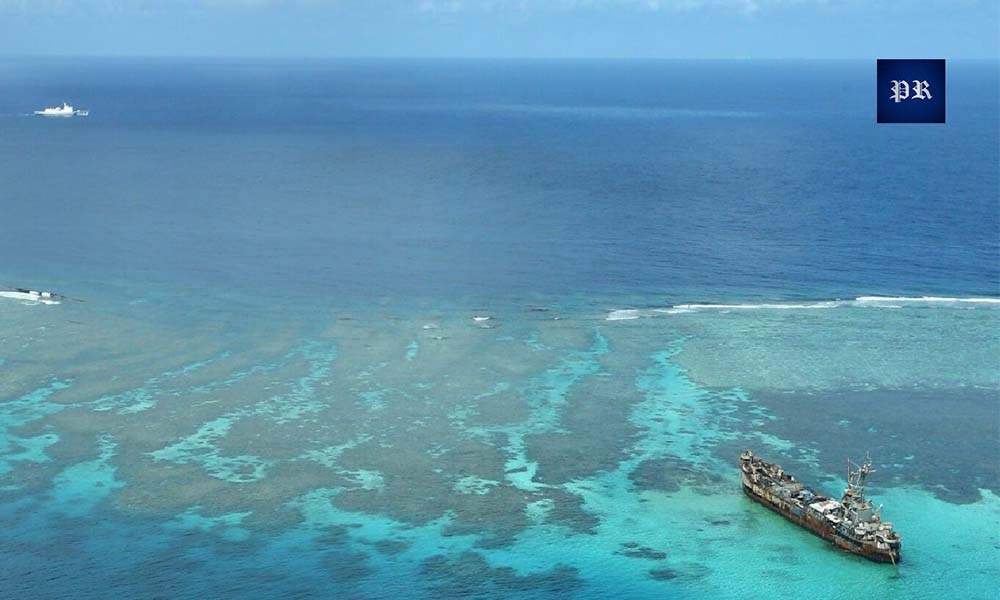
In the South China Sea, China built artificial islands and installed military infrastructure to gradually assert control over contested waters
Along the Himalayan border with India, China has constructed military villages and infrastructure in disputed territory, changing facts on the ground without open conflict
In the East China Sea, Chinese coast guard and naval vessels conduct regular operations near the Japan-administered Senkaku Islands
Around Taiwan, the current ADIZ incursion campaign follows the same logic: incremental pressure that reshapes the operational environment over time
The strategic thread connecting all of these is the same. China uses persistent low-level pressure to slowly shift what is considered normal, to stretch adversary resources, and to create new facts on the ground without triggering the full military response that an overt act of aggression would require.

Taiwan is the highest-stakes application of this approach. And the fact that China is intensifying its operations around the island — even as it faces international scrutiny on multiple other fronts — signals that Beijing views the Taiwan question as a priority, not a secondary concern.
What Happens Next: Three Scenarios Worth Watching
1. Continued Normalization
The most likely near-term scenario is that China continues its current pressure campaign without crossing into open conflict. Operations increase gradually in scale and frequency. Taiwan’s military remains on alert. The US continues freedom of navigation operations. The situation stays tense but controlled.
2. A Deliberate Escalation Trigger
A significant shift in Taiwan’s political direction — such as a formal declaration of independence or a major upgrade in official US-Taiwan relations — could prompt Beijing to escalate beyond the current normalization framework. China has consistently described such moves as red lines. Whether those red lines are real, and what crossing them would actually trigger, remains one of the most consequential open questions in international security.
3. Miscalculation
The scenario that keeps analysts most concerned is not a deliberate decision to escalate, but an accident. A Chinese aircraft or vessel that strays too close. A Taiwanese or American response that goes further than intended. An incident at sea or in the air that neither side planned but that neither can walk back without losing face. In a high-tempo operational environment with forces operating in close proximity, the risk of miscalculation is real and increasing.
The most dangerous moment in the Taiwan Strait may not come from a deliberate decision to go to war. It may come from an incident that neither side wanted but that no one was able to stop.
The Pressure Is Real, It Is Growing, and It Is Not Going Away
China’s latest military operation near Taiwan — nine aircraft, seven warships, eight ADIZ incursions — is significant not because it is exceptional, but because it is not. Beijing has successfully made this level of military activity feel routine.
That normalization is itself a strategic achievement for China. And it places Taiwan, the United States, and the broader Indo-Pacific community in a difficult position: how do you respond to a pressure campaign that is deliberately designed to stay just below the threshold of response?
Taiwan is investing in resilience. The US is maintaining its commitment to deterrence. Regional allies are strengthening their own defenses and deepening cooperation. But the fundamental tension — China’s long-term goal of controlling Taiwan versus Taiwan’s determination to remain self-governing — has not changed.
The Taiwan Strait remains one of the world’s most dangerous flashpoints. And the pressure around it is still rising.
Stay Ahead of Indo-Pacific Developments
For clear, consistent analysis of China’s military strategy, Taiwan Strait tensions, and the broader Indo-Pacific security competition, visit Indo-Pacific Report — your dedicated source for strategic intelligence from the region.
► Subscribe on YouTube
► Follow us on Facebook