France Is Helping Ukraine Build a Missile Shield Against Russia
Published by Indo-Pacific Report | Ukraine War | European Defense | Missile Defense Systems | NATO Security
Russia’s missile campaign against Ukraine is not slowing down. It is getting bigger, more sophisticated, and harder to stop. Ballistic missiles now arrive faster than many defense systems can react. Drone swarms are deliberately designed to exhaust interceptor supplies. And the targets — cities, power grids, water systems, hospitals — are chosen to break civilian will alongside military capability.
Ukraine’s response to this reality is no longer just about asking for more weapons. Kyiv is now pursuing something more ambitious: a permanent, coalition-backed missile shield that can protect the country over the long term.
And France is stepping forward as a key partner in that effort.
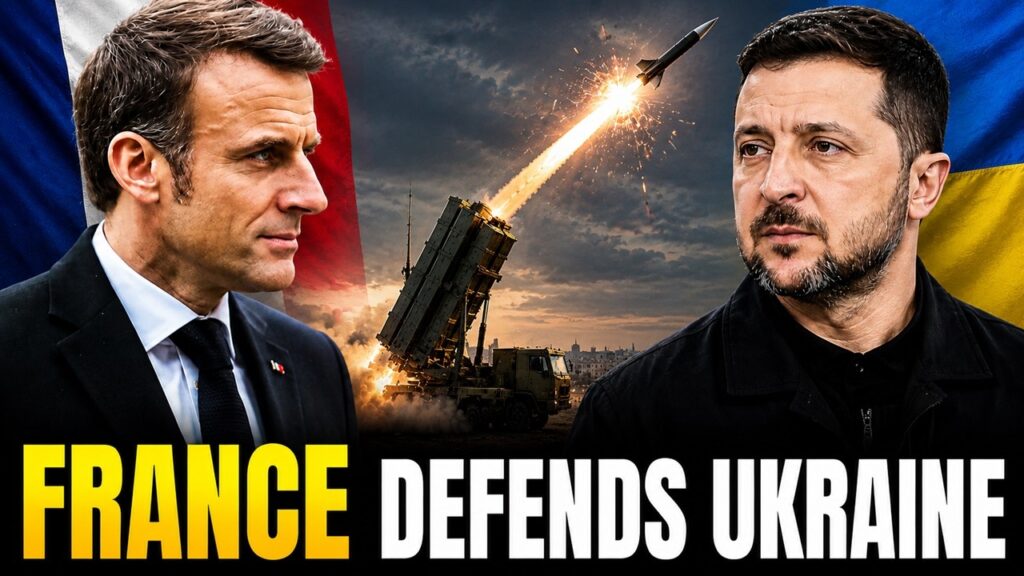
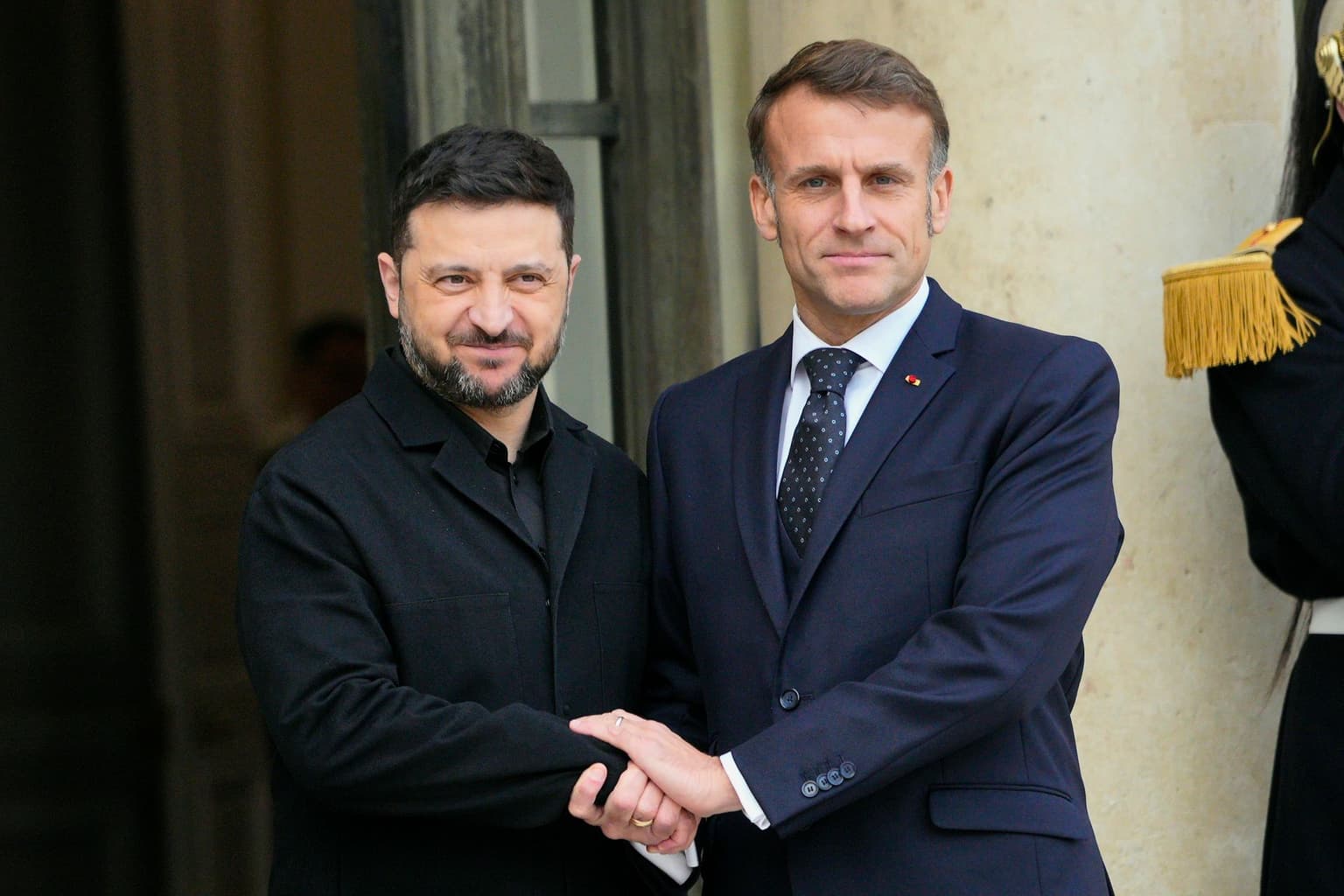
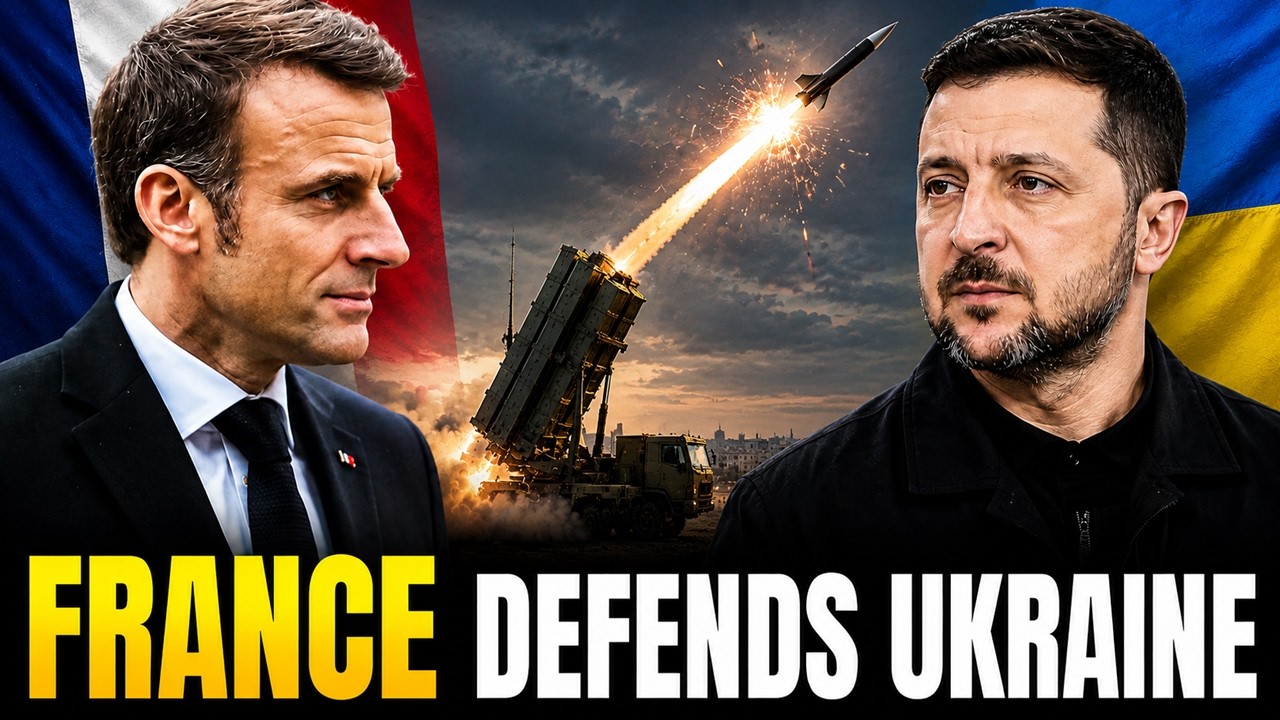
President Zelensky confirmed that he spoke directly with French President Emmanuel Macron about ballistic missile defense cooperation. According to Zelensky, France is ready to work with Ukraine on strengthening anti-ballistic capabilities — a move he described as an important step for Ukrainian security.
To understand why this matters — not just for Ukraine, but for European security and the future of modern warfare — you need to look at what is actually happening on the ground, what France brings to the table, and what Ukraine is ultimately trying to build.
The Missile Threat Ukraine Is Actually Facing
Before getting into France’s role, it is worth being precise about the nature of the threat Ukraine is dealing with. Russia’s air campaign is not a simple bombardment. It is a layered, evolving offensive that is being continuously adapted to overcome Ukrainian defenses.
Russia is deploying three primary weapons categories:
Ballistic Missiles
These are the hardest to stop. Ballistic missiles — including variants of the Iskander system — travel at extremely high speeds, often exceeding Mach 5, and follow a trajectory that gives air defense systems very little reaction time. They carry heavy warheads and can destroy hardened infrastructure with a single strike. Intercepting them requires specialized, high-performance systems that are both expensive and limited in supply.
Cruise Missiles
Russia uses cruise missiles like the Kalibr and Kh-101 to strike at longer ranges with greater precision. These fly at lower altitudes and can maneuver to avoid detection, making them harder to track on radar. Ukraine’s existing air defense network has become increasingly effective at intercepting cruise missiles, but the volume of launches is designed to overwhelm the available interceptors.
Drone Swarms (Shaheds)
Iran-supplied Shahed drones are used in mass attacks deliberately designed to exhaust Ukraine’s interceptor stocks. Each drone costs a fraction of the price of the missile used to shoot it down. Russia has been using drone swarms strategically to deplete Ukrainian air defense resources before launching ballistic or cruise missile strikes.
This combination — ballistic speed, cruise precision, and drone volume — is what Ukraine is trying to defeat. And no single country or system can solve it alone.
https://indopacificreport.com/france-to-supply-40-fast-patrol-boats-for-the-philippines-to-defend-the-west-philippine-sea/
Russia’s missile campaign is not random. It is an engineering problem — designed to find and exploit the gaps in Ukraine’s air defense network. The shield Ukraine is building has to be smarter than the attack.
For detailed analysis of Russia’s air warfare strategy and Ukraine’s defense response, visit Indo-Pacific Report.
What France Is Bringing to the Table
France is not a newcomer to advanced air and missile defense. Paris operates some of Europe’s most sophisticated defense systems, and its involvement in Ukraine’s missile defense effort brings both hardware and strategic credibility.
The SAMP/T System
The centerpiece of France’s air defense capability is the SAMP/T — Surface-to-Air Missile Platform/Terrain — also known as Mamba. Developed jointly by France and Italy, the SAMP/T is a long-range surface-to-air missile system capable of engaging ballistic missiles, cruise missiles, aircraft, and drones at significant altitude and range.
France has already provided one SAMP/T battery to Ukraine alongside Italy. The system has been operationally deployed and has demonstrated effectiveness against Russian missile threats. The question now is whether France is prepared to go further — providing additional systems, technical support, maintenance cooperation, and joint development of anti-ballistic capabilities.
Based on Zelensky’s statements following his conversation with Macron, that is exactly the direction the talks are heading.
Technical and Industrial Cooperation
Beyond hardware, France brings substantial defense industrial capacity. French defense companies — including MBDA, one of Europe’s leading missile manufacturers — have the technical expertise to support Ukraine in building long-term, sustainable air defense infrastructure rather than simply delivering systems that require ongoing French maintenance.
This is the distinction Ukraine is pushing for: not just weapons deliveries, but genuine capability transfer that allows Ukraine to maintain and eventually develop its own missile defense network.
Advanced interceptor missiles compatible with multi-nation systems
Radar and sensor integration expertise
Training and technical assistance for Ukrainian operators
Joint research and development on next-generation anti-ballistic technologies
France is not just writing a check. Paris is considering becoming an active partner in Ukraine’s long-term defense architecture. That is a significantly deeper commitment than most European countries have made so far.
Ukraine’s Larger Goal: The Anti-Ballistic Coalition
France’s involvement is important, but Zelensky is building toward something much larger. He has explicitly described Ukraine’s diplomatic push as the formation of an “anti-ballistic coalition.”
This is not just a military concept. It is a political and industrial strategy.
Zelensky has confirmed that representatives from 13 countries and NATO officials have already held discussions on ballistic missile defense cooperation specifically focused on Ukraine. The goal is to create a coordinated, multi-nation framework that provides:
Overlapping missile defense coverage using different systems from different countries
Shared interceptor stockpiles and resupply agreements to prevent depletion
Joint procurement of next-generation anti-ballistic systems to reduce individual country costs
France to Supply 40 Fast Patrol Boats for the Philippines to Defend the West Philippine Sea
Permanent infrastructure rather than temporary deployments that end when political attention fades
NATO-standard interoperability so that systems from different countries can work together seamlessly
The logic is straightforward. No single European country has the production capacity or budget to provide Ukraine with a comprehensive missile shield on its own. But 13 countries working together, each contributing components of a coordinated system, can create something significantly more capable than any one nation could deliver alone.
This is also how Ukraine is thinking about its own future within European security architecture. If a ceasefire eventually happens, Ukraine will need a credible long-term deterrent against future Russian attacks. A permanent missile defense coalition provides that deterrent far more reliably than any peace agreement signed on paper.
Watch our breakdown of Ukraine’s defense coalition strategy on the Indo-Pacific Report YouTube channel.
Why Europe Is Taking This So Seriously Now
Three years ago, most European governments viewed missile defense as primarily a NATO issue to be handled through American-led systems. That thinking has fundamentally shifted. The war in Ukraine has served as a real-world demonstration of what sustained missile warfare looks like — and the lessons are being absorbed across the continent.
The Vulnerability Lesson
European capitals have watched Russia systematically target Ukrainian civilian infrastructure — power plants, heating systems, water treatment facilities — with sustained missile campaigns. The message for European governments is uncomfortable but clear: modern cities are highly vulnerable to sustained missile attacks, and air defense coverage is not something that can be improvised once a conflict starts. It has to be built in advance.
The American Reliability Question
The war in Ukraine has also accelerated a broader European conversation about strategic autonomy. The political debate in the United States about the level of support for Ukraine has raised genuine questions among European governments about long-term American reliability as a security guarantor. European leaders are increasingly concluding that Europe needs to be capable of managing its own security crises — including providing meaningful missile defense — without depending entirely on Washington.
France, under Macron, has been the most vocal European proponent of this strategic autonomy argument. France’s deeper involvement in Ukraine’s missile defense is consistent with that broader foreign policy position.
The Defense Industry Opportunity
There is also a practical industrial dimension. European defense companies are receiving massive new orders as governments across the continent increase defense spending to meet NATO targets. Investment in advanced missile defense systems — research, development, production, and deployment — creates high-value manufacturing jobs, builds strategic industrial capacity, and positions European companies as global leaders in a technology area that will only become more important over the coming decades.
France’s MBDA, Germany’s MBDA Deutschland, Italy’s Leonardo, and other European defense companies all have strong incentives to see European missile defense cooperation deepen and institutionalize.

What This Means for the Broader War
The development of a more robust missile defense network around Ukraine has direct military implications for the course of the conflict.
On the defensive side, better ballistic missile interception capability means:
Ukrainian cities face less catastrophic infrastructure damage from Russia’s heaviest missiles
The civilian cost of the war decreases, sustaining Ukrainian public morale and international support
Military command and logistics infrastructure becomes more survivable under sustained attack
Russia’s ability to use missile superiority as a war-winning tool is progressively degraded
On the strategic side, a credible, coalition-backed missile shield changes the political calculus around the conflict:
Russia cannot simply wait out Western weapons deliveries if Ukraine’s defense infrastructure is becoming structurally stronger over time
European countries locked into a cooperative defense framework have stronger political incentives to maintain their support rather than quietly reduce it
Ukraine enters any future negotiations with a significantly stronger defensive position
A missile shield is not just a military asset. It is a statement of long-term political commitment. When 13 countries build one together, it signals that this coalition is not planning to walk away.
The Limits and Challenges of What Is Being Proposed
It is worth being honest about the challenges involved. Building a genuinely effective anti-ballistic coalition is not straightforward, and there are real obstacles that will need to be overcome.
Production Capacity
The most immediate constraint is interceptor missile production. Advanced air defense interceptors — particularly those capable of engaging ballistic missiles — are expensive, technically complex, and produced in limited numbers. Even with significant new investment, European production lines cannot rapidly scale to provide the volume Ukraine needs. This is a constraint that will take years to address, not months.
System Interoperability
Coordinating missile defense systems from 13 different countries requires solving complex technical and operational interoperability challenges. Radars from different manufacturers need to share data. Command and control systems need to work together. Interceptor missiles from different countries need to be compatible with each other’s launchers. These are solvable problems, but they require sustained investment in integration that goes well beyond simply delivering hardware.
Political Consistency
Coalition defense commitments are only as strong as the political will behind them. European governments change. Public opinion shifts. Defense budgets come under pressure. Ukraine’s experience over the past three years has demonstrated that Western political support, while broadly consistent, has never been entirely predictable. Institutionalizing the anti-ballistic coalition in ways that survive political changes is a serious governance challenge.
None of these challenges make the coalition concept wrong. But they do mean that the path from Zelensky’s announcement to a functioning, comprehensive missile shield is a long one.
Follow daily updates on European defense and the Ukraine war on our Facebook page.
The War Is Forcing Europe to Think About Defense Differently
France’s decision to deepen cooperation with Ukraine on ballistic missile defense is not just a bilateral military agreement. It is part of a broader transformation in how Europe thinks about its own security.
The war in Ukraine has demonstrated, in real time and at enormous human cost, what happens when a country faces sustained missile warfare without adequate defenses. European governments have drawn the lesson: air and missile defense is not optional, it is not something that can be improvised under fire, and it cannot depend on a single supplier or a single political relationship.
Ukraine is building an anti-ballistic coalition because it has no choice. But the framework it is building — multi-nation, integrated, coalition-based missile defense — may end up becoming the model for how Europe defends itself in the decades ahead.
France stepping forward as a key partner in that effort is significant. Not just for Ukraine’s survival today, but for the shape of European security for a generation.
Stay Informed on Global Security and Defense
For sharp, reliable analysis of the Ukraine war, European defense, and global military developments, visit Indo-Pacific Report — strategic intelligence from the world’s most critical regions.
► Subscribe on YouTube
► Follow us on Facebook