Iran and the US Are Exchanging Proposals. Here Is Why a Deal Is Still Out of Reach
By Indo-Pacific Report | May 2026
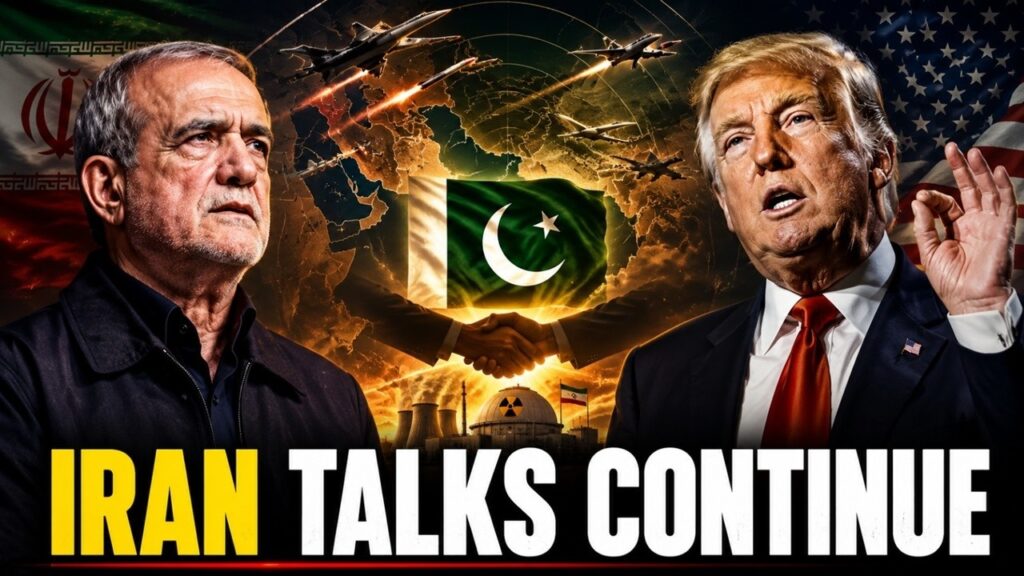
Iran and the United States are talking to each other — just not directly. In one of the stranger diplomatic arrangements of recent years, Pakistan has become the primary channel through which Washington and Tehran are passing proposals back and forth, with Pakistani officials physically traveling between the two capitals to carry messages that neither side is yet willing to deliver face to face.
Iran’s Foreign Ministry confirmed that Tehran received new American proposals and is reviewing them. Several rounds of message exchanges have already taken place. President Trump has described the negotiations as being in their final stages. And yet, after all of that movement, no agreement exists and the core dispute between the two countries remains exactly where it started: Washington insists the nuclear issue must be resolved before any lasting deal, and Tehran insists the nuclear issue can only be discussed after a permanent ceasefire is secured.
That gap is not a minor procedural disagreement. It reflects a fundamental difference in how each side reads its own leverage and what it fears most. Until that gap closes, the negotiations — however active they appear — are unlikely to produce the durable agreement that both sides nominally say they want.
What Iran Confirmed and What It Means
Iranian Foreign Ministry spokesman Esmaeil Baghaei confirmed publicly that Tehran received Washington’s latest proposals and that Iran’s leadership is reviewing what he described as the American side’s stated viewpoints. The language was careful and noncommittal — which is itself informative. When a government describes received proposals as viewpoints under review rather than a concrete basis for negotiation, it is signaling that it has not yet decided whether those proposals are worth engaging seriously.
The confirmation matters nonetheless. Iran publicly acknowledging that it is in receipt of American proposals — and that multiple rounds of exchanges have already occurred — is a departure from the complete rupture of communication that characterized the worst periods of US-Iran tension. Whatever the gaps in their positions, both sides are at least maintaining a channel and using it.
https://indopacificreport.com/iran-may-now-track-u-s-warplanes/
That is not nothing, but it is also not a breakthrough. The history of US-Iran diplomacy is full of periods of active message-passing that produced either no agreement or agreements that later collapsed. The 2015 Joint Comprehensive Plan of Action, which the Trump administration withdrew from in 2018, was the product of years of intensive multilateral negotiation and still proved unable to survive a change of administration in Washington. Both sides carry that history into every current exchange.
What Iran’s confirmation does is establish that the diplomatic channel is open and that Tehran is not simply running out the clock on military pressure. Whether that openness translates into actual movement on the central issues depends entirely on whether either side is prepared to shift the positions that have so far kept them apart.
Pakistan as Mediator: Why Islamabad and Why Now
The use of Pakistan as a go-between for Washington and Tehran is an unusual arrangement that reflects the particular constraints of the current situation. The United States and Iran have no direct diplomatic relations — the US embassy in Tehran has been closed since the hostage crisis of 1979-1981, and the two governments do not maintain normal diplomatic channels. When they need to communicate, they typically rely on third parties.
Pakistan was not the obvious choice for this role. It has its own complicated relationship with the United States, including a history of tensions over counterterrorism cooperation, Afghanistan, and nuclear proliferation. Its relationship with Iran is shaped partly by shared Shia-Sunni sectarian dynamics and partly by geography — the two countries share a long border and have complex economic and security ties.
What makes Pakistan useful in this moment is precisely its position between multiple worlds. It has working relationships with both Washington and Tehran. It is not perceived by Iran as a Western proxy in the way that European mediators might be. And Pakistan’s Interior Minister Mohsin Naqvi making his second trip to Tehran in less than a week signals a level of active, high-tempo shuttle diplomacy that suggests both sides are genuinely using the channel rather than simply maintaining it for appearances.
Pakistan also has its own strong interest in a US-Iran de-escalation. A prolonged military conflict involving the United States in the Middle East creates regional instability that Pakistan, as a neighboring state, cannot be insulated from. It drives refugee pressures, energy price volatility, and the risk of conflict spillover that Islamabad has every reason to want contained. Pakistan’s mediation is not purely altruistic — it serves Pakistani interests directly.
The Nuclear Sequencing Dispute: The Core Problem
Strip away the diplomatic language and the intermediary arrangements, and the central obstacle to a US-Iran agreement is a sequencing dispute that both sides frame in terms of principle but that is really a negotiation about who bears the most risk in the deal’s early stages.
Washington’s position is that Iran’s nuclear program — its enrichment activities, its stockpiles of enriched uranium, and the verification mechanisms that would allow international inspectors to confirm compliance — must be addressed and constrained before any permanent ceasefire or significant sanctions relief is granted. The American logic is straightforward: if Iran retains a nuclear program that could be rapidly advanced toward weapons capability, any agreement is built on a foundation that can be dissolved the moment Tehran decides the deal no longer serves its interests.
https://www.youtube.com/watch?v=abB3yZza5Xs
Tehran’s position is the mirror image. Iran wants a permanent ceasefire and meaningful sanctions relief before it agrees to nuclear constraints. The Iranian logic is equally straightforward: if Iran gives up its nuclear leverage before it has received the economic relief and security guarantees it is seeking, it has nothing left to bargain with if Washington later decides to walk away from its commitments — as the Trump administration did in 2018.
Both positions are rational from the perspective of the party holding them. Both positions are also genuinely incompatible as stated. The only way through the deadlock is for one side to accept more upfront risk than it currently wants to, or for a creative sequencing formula to be found that gives each side partial reassurance at each stage rather than requiring one side to move completely before the other reciprocates. That kind of graduated confidence-building mechanism is exactly what experienced negotiators try to construct — and exactly what has proven elusive in every previous round of US-Iran nuclear diplomacy.
The latest US proposals reportedly include improved economic incentives — discussions around frozen Iranian assets, sanctions relief measures, and related economic provisions. But reports indicate Washington has offered no significant new concession on the nuclear program itself. That means the proposals may be more attractive on the economic dimension while leaving the core sequencing dispute unresolved. An improved offer that does not address the fundamental disagreement is unlikely to break the deadlock.
What Trump Said and What It Actually Signals
President Trump’s public statements about the negotiations have been characteristically confident in tone while remaining vague on specifics. His description of talks being in their final stages is a claim that has been made about various phases of US-Iran diplomacy at multiple points, and it does not necessarily correspond to any particular threshold of actual progress.
More revealing was his statement that he is in no hurry to complete the agreement. That is an unusual thing for a negotiator to say publicly while talks are supposedly in their closing phase. It could reflect genuine confidence that the pressure on Iran — through military operations and sanctions — is working and that time favors the American position. It could be a deliberate message to Tehran that Washington is not desperate for a deal and will not make large concessions to get one. Or it could be a domestic political signal, managing expectations ahead of a deal that may take longer than the final stages framing implies.
The White House faces a genuine strategic tension in this negotiation. Military pressure on Iran is expensive — the conflict has already cost more than 29 billion dollars and claimed American lives. Sustaining that pressure indefinitely in hopes of forcing better nuclear terms is a costly strategy. But accepting a deal that leaves Iran’s nuclear program largely intact, in exchange for a ceasefire that reduces immediate military costs, would be criticized domestically as a weak outcome that fails to address the underlying threat. Navigating between those pressures is the core challenge for the Trump administration’s Iran policy.
The simultaneous pursuit of diplomacy and military pressure is not inherently contradictory — it is a standard negotiating approach. The question is whether the balance between the two is calibrated to actually produce movement, or whether each side has concluded that maintaining the current posture serves its interests better than the compromises a deal would require.
Why the Ceasefire Remains Fragile
Even with negotiations ongoing, the military situation between the United States and Iran has not stabilized into a genuinely settled ceasefire. American forces remain deployed across the Gulf, Iraq, and Syria. Iranian-aligned militia groups continue operating in the region. The Strait of Hormuz, the critical chokepoint for global oil shipments that runs along Iran’s southern coast, remains a potential flashpoint that could reignite full-scale hostilities rapidly.
The fragility of the current pause in fighting is itself a factor in the negotiations. Both sides know that a breakdown in talks carries a real risk of renewed conflict. That shared awareness of the downside creates some incentive for continued engagement. But it also creates pressure that can distort the negotiating process — pushing both sides toward positions they present as principled but that are partly shaped by calculations about what the military situation allows them to demand.
Iran still carries the weight of significant damage inflicted during American airstrikes. Its air defense systems took direct hits. Its military infrastructure was degraded. That reality constrains what Tehran can credibly threaten and limits the leverage it can bring to the table, even as it maintains the nuclear sequencing position that is blocking a deal.
For the United States, the cost of continued military operations is real and visible. Every week the conflict continues without resolution adds to a financial and human toll that creates domestic political pressure for a diplomatic outcome. That pressure is part of why Trump is engaged in these negotiations at all. The challenge is finding an outcome that ends the immediate military confrontation without being seen as having rewarded Iran’s behavior or left its nuclear program in a position to threaten US allies and interests in the future.
What a Deal Would Need to Look Like
For the negotiations to produce a lasting agreement rather than a temporary pause that breaks down as earlier deals have, several things would need to come together simultaneously.
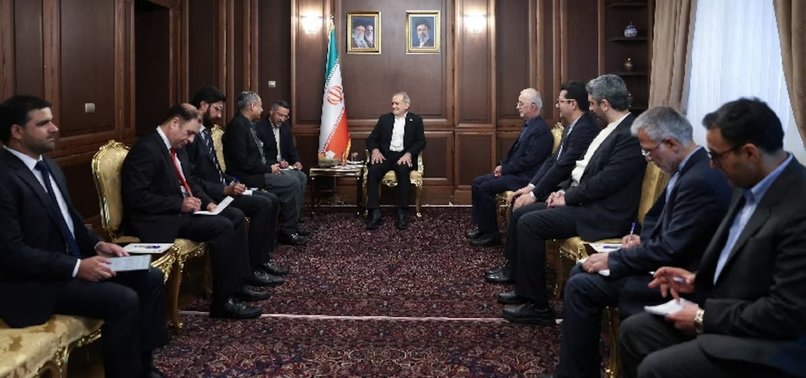
Iran would need some form of credible economic relief — access to frozen assets and a meaningful reduction in sanctions pressure — early enough in the process to justify the political costs of accepting nuclear constraints at home. The Iranian government has its own domestic constituencies that view any concession to Washington as a capitulation, and its negotiators need deliverables that can be presented as genuine gains rather than forced concessions.
The United States would need verifiable nuclear limits — restrictions on enrichment levels, caps on enriched uranium stockpiles, and a monitoring regime robust enough to provide genuine warning time if Iran moves toward weapons development. Washington’s core concern is not Iran’s current nuclear status but the possibility that a deal could give Iran sanctions relief and an economic recovery while leaving the path to a nuclear weapon open to be walked later.
Both sides would need some form of sequenced reciprocity — a framework where each step by one side triggers a corresponding step from the other, building confidence gradually rather than requiring either party to make large upfront concessions on the assumption that the other side will eventually follow. That kind of graduated approach is technically complex to design and politically difficult to sell, but it is likely the only architecture capable of bridging the sequencing dispute that currently divides the two sides.
Whether the current exchange of proposals through Pakistani intermediaries is moving toward that kind of framework — or whether it represents both sides signaling diplomatic engagement without genuine movement on the core issues — is the question that will determine whether 2026 produces a deal or another collapse.
Where This Stands
Iran and the United States are talking. That is real and it matters. Pakistan is working actively to keep the channel open and move the process forward. Trump has described the talks as being in their final stages. And Iran is reviewing the latest American proposals.
At the same time, the central obstacle — the nuclear sequencing dispute — has not moved. Washington has not offered new concessions on the nuclear program. Tehran has not agreed to address nuclear issues before a ceasefire is secured. Both sides are maintaining positions that, as stated, cannot both be satisfied at once.
The outcome of these negotiations will shape the Middle East for years. A durable deal that genuinely constrains Iran’s nuclear program in exchange for real economic relief and security guarantees would be a significant diplomatic achievement with major implications for regional stability, energy markets, and US credibility. A breakdown in talks, or a partial agreement that papares over the core disagreement, would leave the underlying conflict unresolved and potentially set the stage for another escalation.
Right now, the process is alive but the distance between the two sides remains real. Watching whether that distance actually closes — or whether the final stages description turns out to mean something different from what it implies — is what makes this one of the most consequential diplomatic stories of 2026.
Follow Indo-Pacific Report for More Global Security Analysis
For ongoing coverage of the Iran-US conflict, Middle East security, nuclear diplomacy, and Indo-Pacific developments, follow Indo-Pacific Report across all platforms:
Website
Facebook
YouTube