How Drones Just Changed the Biggest US-Philippine War Games
On April 28, along the coast of Zambales in the Philippines, something quiet but important happened. A US Marine missile launched from the shore. It climbed into the sky. Seconds later, it hit a small jet-powered drone flying at 9,000 feet.
A small group of American and Filipino soldiers, watching from a concrete tower, broke into applause.
It looked like a routine military drill. But it was a signal of how warfare is changing.
This year’s Balikatan exercise — the 41st edition of the annual US-Philippine drills — was the largest and most complex ever. Over 17,000 troops from seven nations took part: the Philippines, the United States, Japan, Australia, Canada, New Zealand, and France.

And at the heart of one of its biggest demonstrations were not fighter jets, ships, or tanks. The stars were drones.
This is the story of why drones took center stage at Balikatan 2026, and what it means for the future of war in Asia.
What Balikatan really is
The word Balikatan means shoulder-to-shoulder in Filipino. It is the largest annual military exercise between the Philippines and the United States. Every year, troops train together. They simulate real-world threats. They prepare for crises that could one day be real.
But Balikatan has changed. It used to focus on internal security and traditional combat. Today, the focus has shifted to external defense, archipelagic security, and modern warfare. Tensions in the South China Sea, the Taiwan question, and the rise of new technology have pushed the exercise into a different era.
Balikatan 2026 reflected that shift. And the change was clearest in Zambales.
What happened in Zambales
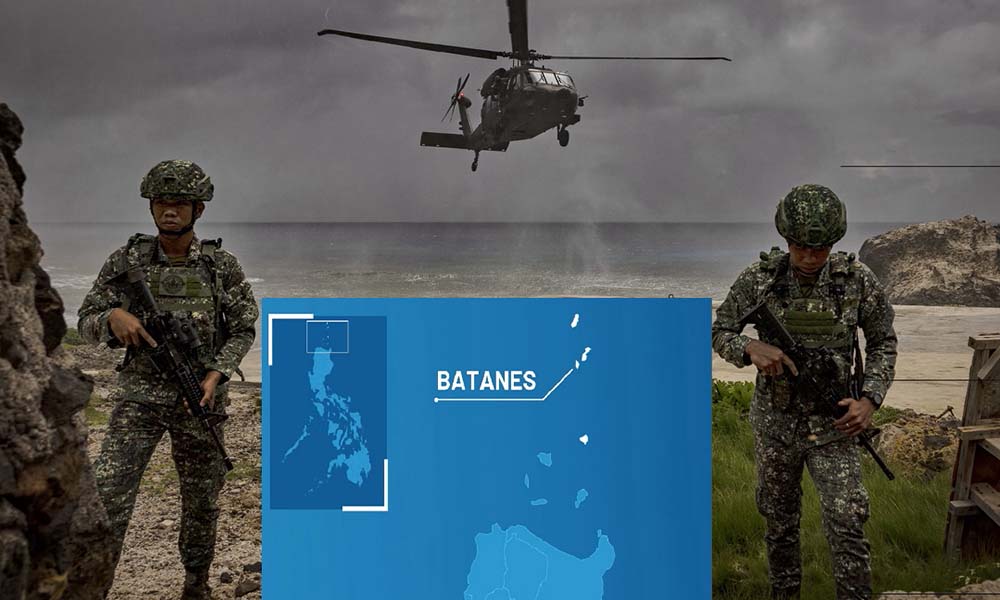
On April 28, at Naval Station Leovigildo Gantioqui in San Antonio, Zambales, the two militaries ran an Integrated Air and Missile Defense, or IAMD, demonstration. It was a four-day live-fire drill along the coast facing the West Philippine Sea.
Three drones played the role of enemy aircraft. The Banshee, a large jet-powered target. The Outlaw, a faster threat. And the Quadcopter, a small low-flying drone — the kind seen in modern wars from Ukraine to the Red Sea.
The US Marines fired Stinger missiles from their Avenger air defense system and from MADIS, the Marine Air Defense Integrated System. They used a laser system called VAMPIRE. They used .30 and .50 caliber machine guns to shoot down smaller drones swarming the coast.
The Philippine Air Force’s SPYDER air defense system worked alongside the Americans. Japanese forces observed. American radars passed targets directly to Filipino crews and back again.
The Banshee drone was hit cleanly. The Quadcopters fell from the sky.
Why integrated air defense matters
Behind the spectacle is a deeper concept: Integrated Air and Missile Defense.
In the past, air defense was simple. A radar saw an aircraft. A missile shot it down. That was it. But modern threats arrive fast, from many directions, and in many forms. Drones. Cruise missiles. Loitering munitions. Low-flying jets. They can come in swarms.
https://www.youtube.com/watch?v=AYps6z3EKHI
IAMD is the answer. It connects radars, missiles, sensors, and command centers into one network. Different countries’ systems talk to one another. When a threat is detected, it is tracked, classified, and assigned to whichever weapon is best placed to engage it.
Modern air defense is no longer a single weapon. It is a connected shield. For the first time at Balikatan 2026, Philippine, American, and Japanese forces operated under what is called a Common Operating Picture. They saw the same battlefield. They shared the same data. They could coordinate as a single force.
Why drones are the new threat
This is where drones change the math.
Cheap drones can do what expensive weapons used to do. They can find targets. They can carry bombs. They can crash into ships and tanks. They can be launched in dozens. They are cheap, replaceable, and easy to fly.
The world has seen this in Ukraine, where small first-person-view drones have destroyed tanks worth millions of dollars. The world has seen this in the Red Sea, where drone and missile attacks against shipping forced navies to spend expensive interceptors on cheap targets. The world has seen this in the ongoing Middle East war.
Philippines Opens New Luzon Strait Base to Bolster Deterrence Against China
The lesson is clear. Drones have democratized airpower. A weaker force can now hurt a stronger force without ever scrambling a fighter jet.
For the Philippines, sitting near the South China Sea, this matters. Chinese maritime activity around Scarborough Shoal and Second Thomas Shoal is constant. Chinese drone development is fast. Surveillance and pressure are part of daily life.
What the commanders said
The Filipino officers spoke plainly. Major Richmon Cayabyab of the Philippine Air Force, who commands the SPYDER battery, said the training was about learning. We learn a lot from our allies, he said. We determine our gaps. And when we come back home, we address those gaps so we can perform well in our duty.
AFP officials called drone defense one of the modern threats every country must now consider. They stressed that Balikatan is not aimed at any specific country.
US officials echoed the same theme. The American spokesperson, Colonel Robert Bunn, said the exercise focused on the defensive side of drone warfare. The combined systems of three nations, US officers said, proved capable of neutralizing modern threats.
The quiet message
There is always a quiet message behind military exercises. Balikatan 2026 sent several.
It told partners that the alliance is broader than ever, with seven nations on one field. It told the region that the US remains committed to the Indo-Pacific, even as Washington fights another war in the Middle East. And it told potential adversaries that low-altitude drone attacks will be met by layered air defense, sensor-to-shooter networks, and coalition firepower.
As Robert Kaplan has often written, deterrence is built in peacetime — through training, alliances, and infrastructure. Wars are rarely won by surprise. They are won by preparation.he bigger picture
Balikatan 2026 is not the end. It is the beginning of a new chapter.
Future wars in Asia will be shaped by sensors, networks, and unmanned systems. Air defense will become more important than ever. The lessons of Ukraine and the Red Sea — that cheap drones can humble expensive forces — are now being absorbed into Indo-Pacific planning.
The Philippines is modernizing its radar, missile, and surveillance systems. The United States is testing new air defense doctrines. Japan, Australia, and the wider coalition are learning to operate as one.
The battlefield is changing. And it is changing faster than most people realize.
The real question
On a quiet beach in Zambales, a Marine missile climbed into a clear blue sky and struck a drone falling toward the West Philippine Sea. The soldiers applauded. The world barely noticed.
But that single missile was a signpost.
Future wars will not begin only with fighter jets and warships. They will begin with drones. With sensors. With networks of allies working as a single force.
Balikatan 2026 showed that the Philippines and its partners are getting ready.
The real question is whether they are getting ready fast enough.