Philippines’ New Navy Patrol Boat Arrives In Subic — Four More Are Coming!
On May 4, 2026, a new warship quietly sailed into Subic Bay.
Four days later, the Philippine Navy held a full arrival ceremony for it. Officers in white uniforms. Flag officers giving speeches. Cameras everywhere.
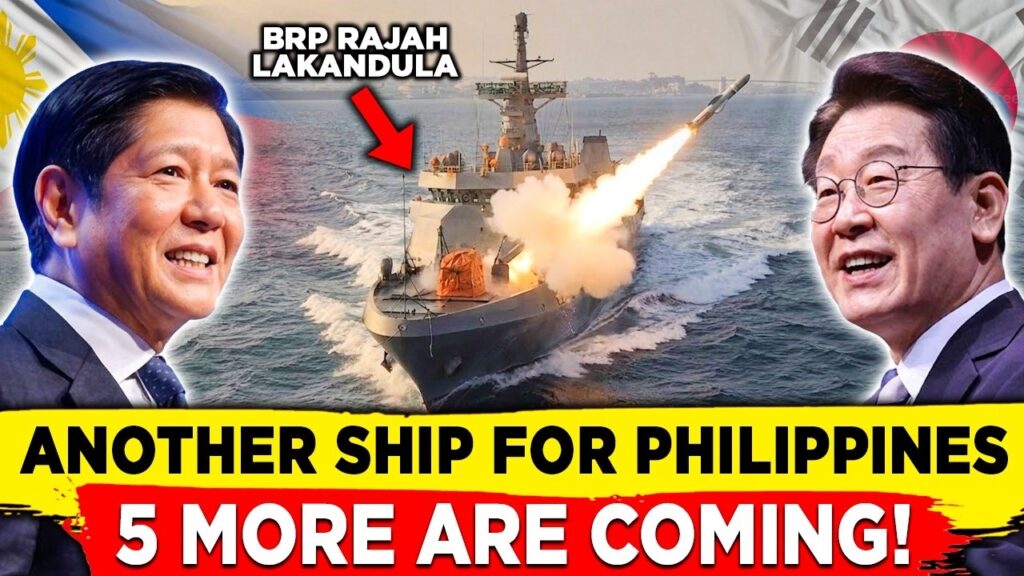
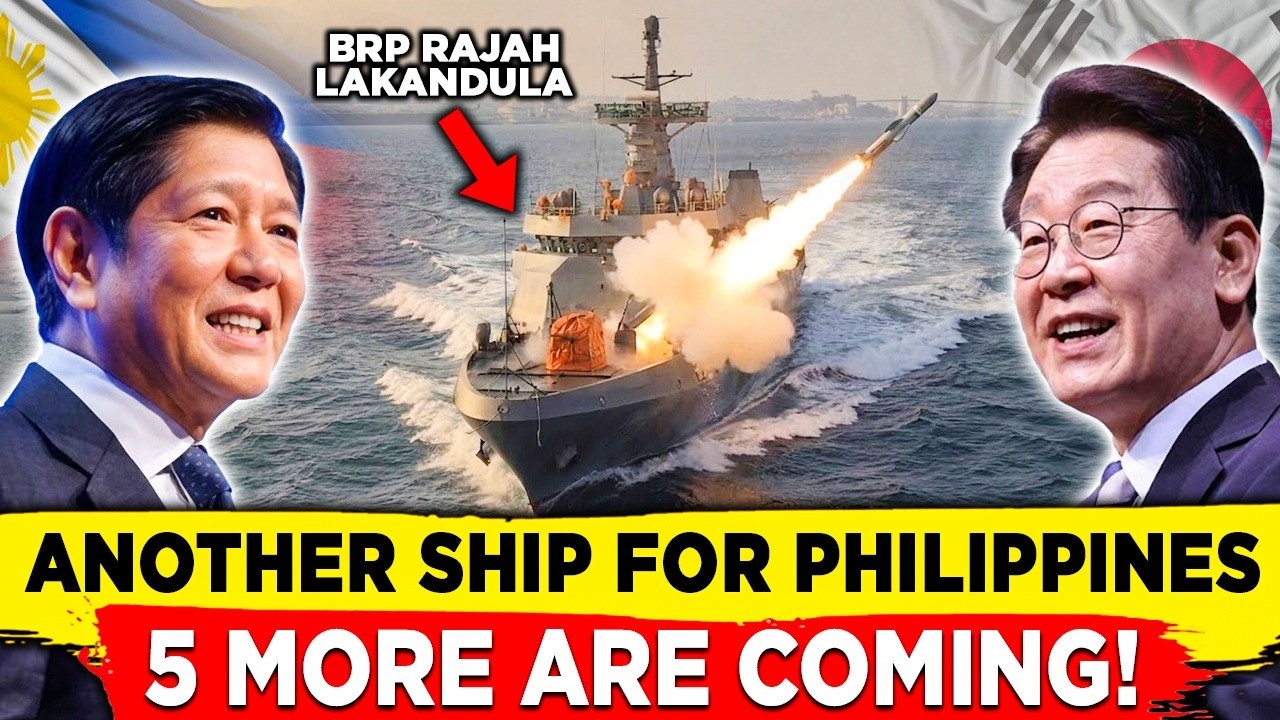
The ship is called the BRP Rajah Lakandula. It is the second of six new patrol warships the Philippines is buying from South Korea.
But here is the part most viewers miss. This is not just another delivery. It is part of one of the largest naval expansions Manila has ever attempted. And it is happening right in the middle of rising tensions in the South China Sea.
So what does this new ship actually mean for the Philippines? And why is it arriving now?
Let’s break it down.
The Main News
On May 8, 2026, at the Naval Operating Base in Subic, Zambales, the Philippine Navy welcomed its newest offshore patrol vessel. The future BRP Rajah Lakandula carries the hull number PS-21.
The ship had actually arrived in the country four days earlier, on May 4, after sailing from South Korea.
She was built by HD Hyundai Heavy Industries, the world’s largest shipbuilder. The vessel was constructed at Hyundai’s massive Ulsan shipyard and launched there in June 2025.
The Rajah Lakandula is the second ship under the Philippine Navy’s Offshore Patrol Vessel Acquisition Project. The first one, the BRP Rajah Sulayman, was commissioned back in February 2026.
Both ships are part of a single contract signed in 2022 worth around 30 billion pesos, or about 573 million US dollars. That deal covers six warships in total. So after Rajah Lakandula, four more are still on the way. All six are expected to be delivered by 2028.
The arrival ceremony was led by senior Philippine Navy officials. Among them was Vice Admiral Caesar Bernard Valencia, who served as the keynote speaker. He had a special connection to this project. Back in 2017, he chaired the team that helped shape the framework for the entire OPV acquisition program.
“We are not just witnessing the arrival of a new vessel. We are experiencing the institutional evolution of our Navy.”
That line tells you everything about how Manila views this moment.
What This Ship Can Actually Do
Now, let’s talk about the ship itself.
The BRP Rajah Lakandula is a 2,400-ton offshore patrol vessel. She measures 94.4 meters long and 14.3 meters wide. She can hit a top speed of 22 knots, cruise comfortably at 15 knots, and travel up to 5,500 nautical miles without refueling.
She can stay at sea for around 20 days at a stretch. That is a long endurance window. And it matters more than most people realize.
She carries a crew of 72. Her weapons include a 76mm naval gun as the main armament, two 30mm secondary guns, and two 12.7mm heavy machine guns. She can also carry a 10-ton helicopter and operate unmanned drones from her deck.
Now, on paper, this is not a heavy combat ship. She is not a missile destroyer. She is not a frigate loaded with vertical launch cells. She is a patrol vessel.
But that is exactly the point.
The Philippines does not just need ships that can fight wars. It needs ships that can show up, every single day, across one of the largest maritime zones in Southeast Asia.
And that is what offshore patrol vessels are built for.
They watch fishing grounds. They protect Filipino fishermen. They monitor the country’s exclusive economic zone. They respond to typhoons. They run anti-smuggling missions. They show the flag in contested waters.
In short, they are the workhorses of any modern navy. And the Philippine Navy badly needed more of them.
https://indopacificreport.com/japan-fires-missiles-in-philippines-donates-6-warships-to-manila/
Why This Modernization Push Is Happening
To understand why this matters, you have to look back about ten years.
In 2016, the Philippine Navy was operating with very limited assets. Its main combat ships included three ex-British Peacock-class corvettes and three ex-American Hamilton-class cutters. All of them were old, second-hand vessels.
For a country with one of the largest coastlines in Southeast Asia, that was simply not enough.
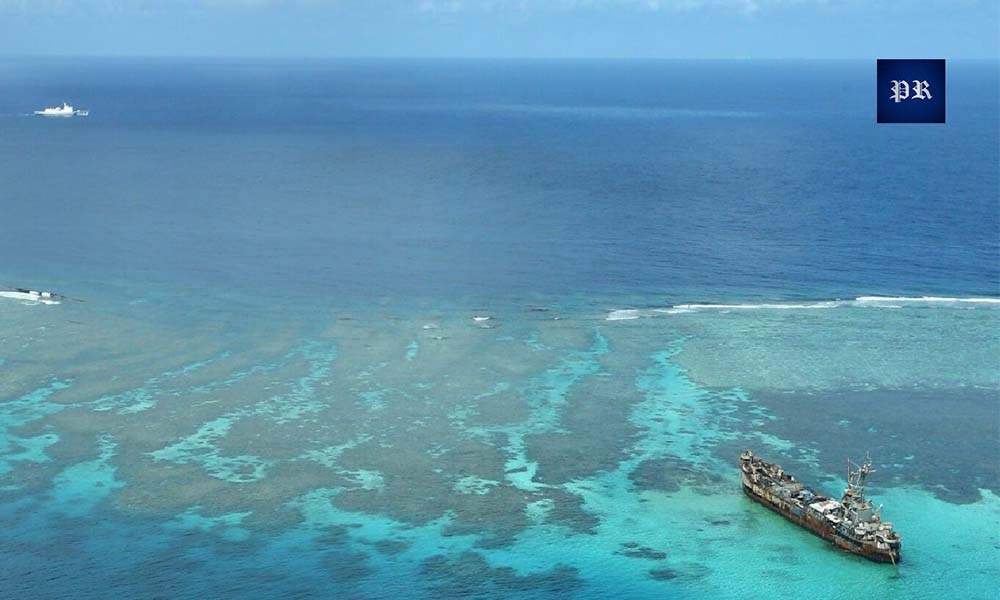
Then came a turning point. In 2012, a standoff between Philippine and Chinese ships at Scarborough Shoal exposed a hard truth. Manila did not have the maritime power to back up its claims. That moment changed everything. It pushed Philippine leaders to take naval modernization seriously.
Since then, the Philippines has committed roughly 2 trillion pesos, around 35 billion US dollars, over the next decade to modernize its armed forces. A big share of that money is going into the navy.
South Korea has become Manila’s most important partner in this push. Since 2016, HD Hyundai Heavy Industries has secured orders for 12 warships from the Philippine Navy. That includes frigates, corvettes, and now the new offshore patrol vessels.
By the 2030s, the Philippines is on track to operate six modern Korean-built frigates and six new OPVs. That is a major shift for a navy that, just a decade ago, was sailing decades-old hand-me-downs.
Japan Fires Missiles in Philippines & Donates 6 Warships to Manila
The Strategic Picture
So why is all of this happening now?
Because the West Philippine Sea has become one of the most contested stretches of water on the planet.
Filipino fishermen have faced repeated harassment by Chinese coast guard vessels. There have been water cannon incidents, blockades, and dangerous maneuvers near Scarborough Shoal and Second Thomas Shoal. Beijing has expanded its presence using grey-zone tactics, where it pushes its claims without firing a single shot.
Against this, Manila has chosen a clear path. Build a stronger maritime force. Buy more ships. Train more crews. And, just as important, deepen alliances.
The Philippines is now working closely with the United States, Japan, and South Korea. That includes joint exercises, technology transfers, weapons sales, and shared intelligence.
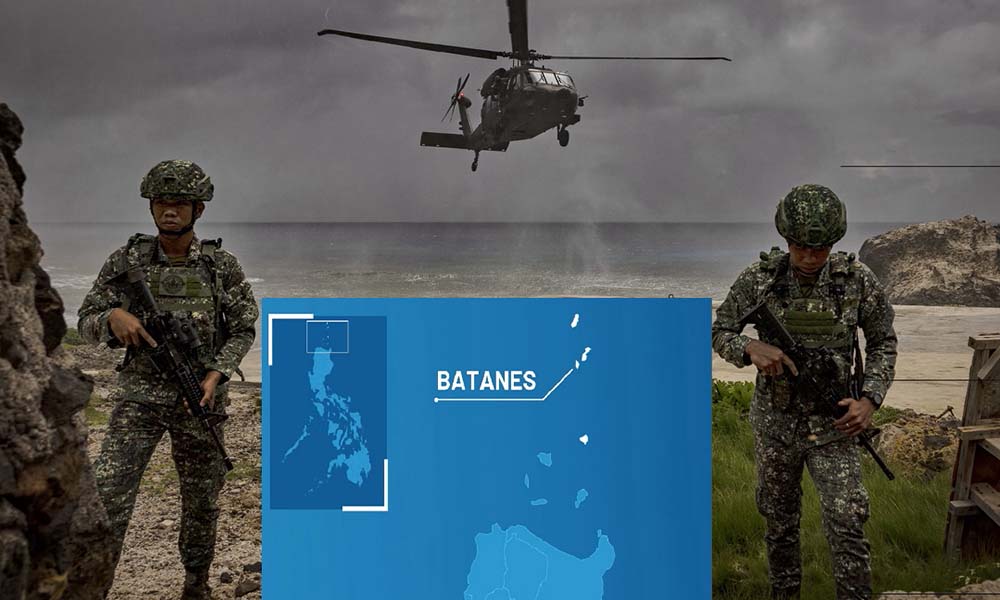
Subic Bay sits at the heart of this strategy. Once home to a massive US naval base, Subic is now a key Philippine naval hub. It faces the South China Sea directly. So when a new warship arrives at Subic, it sends a quiet but clear message.
The Meaning Behind the Name
There is one more layer to this story that deserves attention. The name itself.
Rajah Lakandula was the last ruler of the Kingdom of Tondo during the early Spanish era. He is remembered in Philippine history as a leader who balanced wisdom, courage, and pragmatism.
Naming a modern warship after him is not random. It is a statement.
Vice Admiral Valencia captured it best during the ceremony.
“When this ship sails, the spirit of Rajah Lakandula sails with it — steadfast, wise, and unyielding.”
He went further, with one of the most powerful lines of the event.
“While we are a peace-loving nation, our resolve to protect what is ours is as deep as the trenches of the Philippines.”
That is not just ceremony language. It reflects a national posture. Manila wants to be seen as peaceful, lawful, and patient. But also firm. Especially at sea.
What Comes Next
The Rajah Lakandula will not be commissioned right away. She still has to go through technical inspections before she officially joins the fleet. Once she does, she will become part of the new Rajah Sulayman-class of Philippine offshore patrol vessels.
And she will not be alone for long. Four more sister ships are scheduled to arrive in the coming years. By 2028, the Philippine Navy plans to have all six OPVs in service.
That changes the math of Philippine maritime defense in a real way.
More patrol ships at sea means more eyes on contested waters. It means faster response to maritime incidents. It means better protection for Filipino fishermen working far from shore. And it means continuous presence in zones that, until now, the Philippines often struggled to cover.
These ships will also work alongside Manila’s new Korean-built frigates, its growing coast guard fleet, and its expanding network of coastal radar and drone surveillance.
Step by step, a more modern Philippine maritime force is taking shape.
The Bigger Question
The BRP Rajah Lakandula is, on its own, just one ship. She has limits. She is not built to win a war against a major naval power.
But that is not what she is meant to do.
Her role is something different. She is meant to be there. Every day. Every patrol. Every storm season. Every standoff. Quietly showing the flag in waters the Philippines has every legal right to operate in.
And that is exactly what changes when six modern OPVs are added to a navy’s daily rotation.
So here is the real question. As the Philippines keeps building this kind of steady, persistent maritime force, will it be enough to hold the line in the South China Sea? Or will Beijing’s pressure keep growing faster than Manila can build?
Drop your thoughts in the comments. Tell us how you see this playing out.
And for more honest defense and Indo-Pacific updates, hit subscribe and follow the channel.
https://youtu.be/VLbyJrKntzc?si=KvWLKkVlaxvTDdC8