U.S, Philippines, Japan, Canada Conduct Counter Landing Live Fire Exercises in Northern Luzon
Tokyo has agreed to transfer six Abukuma-class destroyer escorts to Manila in what may be Japan’s most significant defense export in eight decades. On May 5, 2026, Japan’s Defense Minister Shinjiro Koizumi flew into Manila and signed a deal that many observers once thought impossible. Standing beside Philippine Defense Secretary Gilberto Teodoro Jr., he agreed to begin the early transfer of Japanese warships to the Philippine Navy. The target: six Abukuma-class destroyer escorts — stealth-shaped, missile-armed, and specifically built for hunting submarines.
According to Teodoro, Japan is not selling them. Japan is donating them.
This is not a routine defense agreement. It is the moment Japan’s eight-decade arms export ban cracked open in Asia — and it cracked open right where China least wanted it.
For deeper analysis of Indo-Pacific defense developments like this, visit IndoPacific Report at https://indopacificreport.com/ — your source for independent geopolitical coverage of the South China Sea and beyond.
What Happened in Manila on May 5, 2026
Koizumi arrived in Manila straight from Jakarta, where he had signed a separate defense cooperation deal with Indonesia just one day earlier. In Manila, he held closed-door sessions with Teodoro and then with President Ferdinand Marcos Jr. at Malacañang Palace.
Two outcomes came out of those talks. First, both governments signed an agreement establishing a joint working group to manage the policy, operations, maintenance, training, and information-sharing required to transfer the ships. Second, Koizumi told reporters the goal was to finalize the number of ships and timeline at an early time. Teodoro confirmed that both sides had already agreed in principle.
The first Abukuma is scheduled to retire from Japanese service in 2027. The timing is deliberate.
Why Japan Exporting Warships Is a Big Deal
For most of the post-war era, exporting lethal weapons was legally off the table for Japan. The pacifist constitution, combined with strict domestic policies, kept Japanese defense hardware inside Japan’s own borders.
That changed on April 21, 2026, when Prime Minister Sanae Takaichi’s Cabinet approved a major policy revision. Japan now separates defense equipment into two categories: weapons, meaning lethal systems like warships, tanks, and missiles, and non-weapons, meaning radars, sensors, and protective gear. Lethal exports are now allowed, subject to review by Japan’s National Security Council and restricted to countries that hold defense and technology transfer agreements with Japan.
Japan currently holds those agreements with seventeen countries. The Philippines is one of them.
The Abukuma transfer is the first major naval platform to move through this newly opened legal door. According to The Japan Times, it would be Japan’s first export of an entire warship class in decades.
China Deploys Carrier Fleet as Japan Joins Balikatan 2026 — The Indo-Pacific’s New Flashpoint
What Are the Abukuma-Class Destroyer Escorts?
The six Abukuma-class ships were built between 1988 and 1993 for the Japan Maritime Self-Defense Force. Each vessel is 109 meters long, displaces roughly 2,500 tons fully loaded, and reaches a top speed of around 27 knots with a crew of 120 sailors.
Their original armament includes a 76mm Otobreda main gun, a Phalanx close-in weapon system for point defense, eight Harpoon anti-ship missiles, an ASROC anti-submarine rocket launcher, and triple torpedo tubes on each side. They were also the first Japanese destroyer escorts designed with stealth shaping to reduce radar cross-section.
Will the Philippines Receive Armed Ships?
Under Japan’s old rules, lethal weapons systems were stripped before any export. The ships would have arrived as hulls only. The April 2026 policy revision changes that calculation. Japan can now consider transferring the weapons systems as well. The Associated Press has reported that under the eased rules, Japan is looking at sending up to all six ships, which could be used for patrols and for detecting aerial, surface, and undersea threats.
Why the Philippine Navy Needs These Ships
The Philippine Navy has a specific and well-documented gap in its fleet: anti-submarine warfare capability. Right now, Manila relies on two Jose Rizal-class frigates from South Korea, the newer Miguel Malvar-class frigates, and a small number of AW159 Wildcat helicopters to perform submarine detection duties. That is a thin capability for a nation with one of the longest coastlines on Earth and an exclusive economic zone the size of a small continent.China’s submarine fleet, by contrast, keeps growing.
Captain John Percie Alcos of the Philippine Navy public affairs office has confirmed that the Abukumas match Manila’s operational requirements. He noted that the ships are similar in size, speed, and length to the Jose Rizal-class frigates already in Philippine service, which means faster integration into existing logistics and training pipelines.
These ships also slot directly into the Philippines’ broader Comprehensive Archipelagic Defense Concept, known as CADC, which is the strategic framework guiding all current modernization decisions. Separately, Japan has also placed additional TC-90 maritime patrol aircraft on the table, building on the five Tokyo already donated to Manila between 2017 and 2018.
IndoPacific Report has been tracking Philippine military modernization since the CADC was first announced. Follow the full coverage on YouTube at https://www.youtube.com/@IndoPacific_Report for video analysis of every major development.

The Timing Was Not an Accident
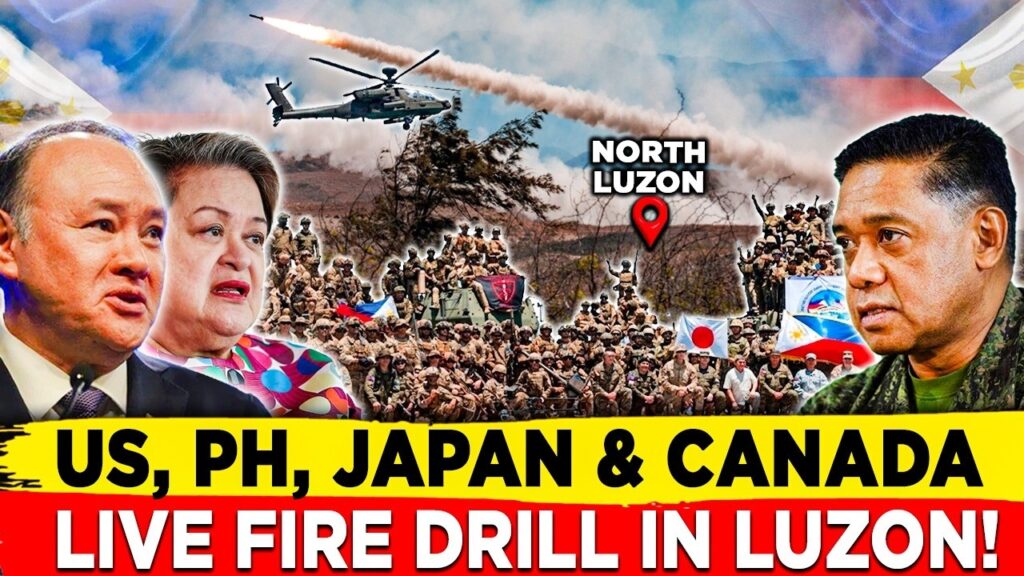
The signing did not happen in a quiet office in Tokyo. It happened in Manila during Balikatan 2026, the largest joint military exercise the Philippines has ever hosted. More than 17,000 troops from the United States, Japan, Australia, Canada, France, New Zealand, and other partner nations are taking part. Japan alone deployed 1,400 personnel under the Reciprocal Access Agreement that entered into force in September 2025.
The day after Koizumi signed the destroyer agreement, he traveled to Paoay in Ilocos Norte to watch a live-fire maritime strike drill. Japanese forces fired the Type 88 surface-to-ship missile in Philippine waters for the first time. The target was a decommissioned World War II-era Philippine warship, sunk roughly 40 kilometers offshore. President Marcos watched the strike by video from Manila.
Put those two facts together. A Japanese minister signs a destroyer transfer on Tuesday. A Japanese missile sinks a target ship in Philippine waters on Wednesday. The message to Beijing was impossible to miss.
How Beijing Is Responding
China is not staying quiet. After Japan eased its export rules in April, Foreign Ministry spokesperson Guo Jiakun warned that the world would resolutely resist Japan’s moves, framing the policy shift as a drift toward militarism. Chinese state outlets have repeated that framing for weeks, pointing to fourteen straight years of rising Japanese defense spending and a Japanese defense budget that has roughly doubled since 2022.
During the May 5 press conference in Manila, Koizumi and Teodoro responded with a joint statement raising serious concern about China’s intensifying coercive activities in both the East China Sea and the South China Sea. Both sides stated they reject any attempt to change the status quo by force.
But the bigger story is the network being built around China. Japan is signing defense agreements with Indonesia, deepening its partnership with the Philippines, deploying troops to Balikatan, and reportedly lining up future deals with Vietnam, Malaysia, and India. Beijing is watching a regional security architecture take shape across the South China Sea, and every new strand makes the next one easier to add.
Two Hurdles That Still Need to Be Cleared
The Legal Question
Even with the new export rules, Japanese law currently does not allow the transfer of used lethal defense equipment for free or at very low cost. According to a Yomiuri Shimbun report cited by The Japan Times, the Japanese government is considering a revision to the Self-Defense Forces Law during the next ordinary parliamentary session. That revision would allow lethal used equipment to be donated or exported at minimal cost. Without it, the donation Teodoro referenced will require a legal workaround.
The Sustainment Question
The Lowy Institute has noted that refurbished warships of this age typically carry ten to fifteen additional years of service life. The Philippine Navy will need larger berths, deeper logistics chains, and steady funding to keep them operational. Manila is already absorbing six Rajah Sulayman-class offshore patrol vessels from South Korea, two more Tarlac-class landing platform docks from Indonesia, and another Miguel Malvar-class frigate — all due by 2028. The infrastructure is racing to keep pace with the commitments.
The next political milestone: President Marcos is set to make the first Philippine state visit to Japan in over a decade next month. Whether a finalized Abukuma announcement comes during that visit remains to be seen, but the symbolism is hard to ignore.
The Bigger Picture: What May 5 Actually Meant
Step back and look at what really happened on May 5, 2026. A Japanese defense minister stood on Philippine soil and signed papers to send warships to a country that Japanese forces once occupied. Eighty years after the Second World War, Tokyo and Manila have completely rewritten that history. They are not rivals. They are partners constructing a maritime defense line in the same waters that defined the Pacific War.
That line is being built because both governments see the same threat developing on the other side of it. China’s coast guard, maritime militia, and navy are operating more aggressively in the South China Sea, the East China Sea, and around Taiwan than at any point in recent memory. Japan and the Philippines have concluded that responding alone is no longer adequate.
The real question now is whether the Abukuma transfer is a one-time arrangement or the first in a long line of Japanese platforms moving toward Southeast Asia. Sources from Bloomberg to The Diplomat suggest it is a beginning, not an endpoint. Missile defense systems and even submarines are being discussed.

Frequently Asked Questions
Q: How many Abukuma-class ships will the Philippines receive?
Both sides have agreed in principle to transfer all six ships. The exact number and timeline are being finalized by a joint working group, with the first ship due to retire from Japanese service in 2027.
Q: Will the ships come with their weapons systems?
Under Japan’s revised April 2026 export rules, lethal systems can now be included. Whether weapons are transferred with the hulls is still being negotiated, but the legal barrier that previously made it impossible has been removed.
Q: Why does the Philippines need anti-submarine warships?
China operates a large and growing submarine fleet that is active across the South China Sea and adjacent waters. The Philippines has very limited sub-surface detection capability, and the Abukumas were specifically designed for anti-submarine warfare, making them a direct answer to that gap.
Q: Is this Japan’s first warship export in modern history?
According to The Japan Times, the Abukuma transfer would be Japan’s first export of an entire major warship class in decades, making it a historic milestone in Japanese defense policy.
Stay Ahead of the Indo-Pacific
The Japan-Philippines warship deal is one of the clearest signals yet that the security architecture of the Indo-Pacific is being rebuilt in real time. Every agreement signed, every ship transferred, and every missile fired in these waters reshapes the strategic balance.
For independent, in-depth coverage of South China Sea developments, Philippine defense affairs, and great-power competition, follow IndoPacific Report — our website, YouTube channel, and Facebook page are updated with every major development in the region.
https://youtu.be/Z0PcqU0cSDE?si=MGBZ8cJ_dKjwPfj1