Balikatan 2026: Seven Nations, 17,000 Troops, and a Clear Message in the South China Sea
The Philippines is no longer sitting on the fence. Here is what happened on a beach in northern Luzon — and why it matters for the entire Indo-Pacific.
On the morning of May 4, 2026, missiles cut through the sky above the La Paz Sand Dunes in Ilocos Norte, northern Philippines. The targets — simulated enemy landing craft pushing toward shore — were destroyed in layers. First from the air and from rocket trucks. Then from attack helicopters and fighter jets. Finally, from soldiers planted in the sand with machine guns, mortars, and missile systems.
Over 800 troops from four countries — the Philippines, the United States, Japan, and Canada — executed what military planners call a Counter-Landing Live Fire Exercise. The message written in smoke and fire over that beach was anything but subtle: if you try to force your way onto Philippine shores, this is what you will face. This was Balikatan 2026. And it was the biggest version of this annual drill the region has ever seen.
What Is Balikatan — and Why Is 2026 Different?
Balikatan is a Tagalog word that means shoulder-to-shoulder. The drill has run annually between the Philippines and the United States for decades. For most of that history, it focused on counter-terrorism and disaster response — practical but relatively low-key.
This year, the shift was unmistakable. Balikatan 2026 brought together more than 17,000 troops from seven nations: the Philippines, the United States, Australia, Canada, France, Japan, and New Zealand. Another 17 countries attended as observers. Four of those nations — Canada, France, New Zealand, and Japan — participated as active combat partners for the first time.
That expansion did not happen by accident. The Philippines has been quietly building a new alliance architecture. It now holds Reciprocal Access Agreements with Japan (in force since September 2025), New Zealand, Canada, and France — legal frameworks that allow troops to train on each other’s soil, something that would have been unthinkable just a few years ago.
The Beach That Got the World’s Attention
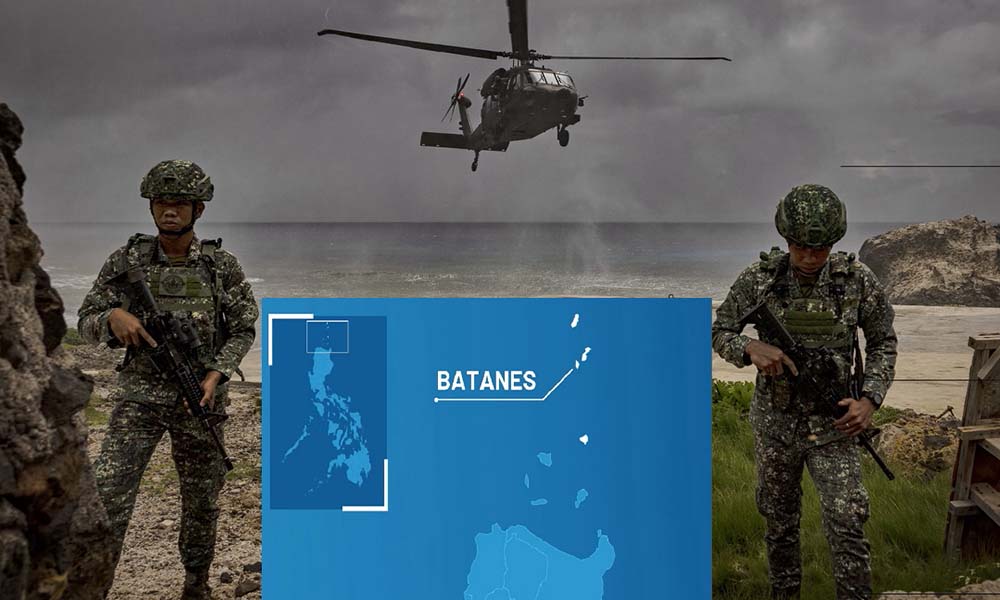
The Counter-Landing Live Fire Exercise on May 4 took place at La Paz Sand Dunes, just outside Laoag in Ilocos Norte. Look at a map and the location is striking. That beach sits on the northwestern coast of Luzon, facing the South China Sea, roughly 50 miles from the Luzon Strait and about 100 miles south of Taiwan.
The Luzon Strait is one of the most strategically important waterways in Asia. Ships and submarines pass through it to move between the South China Sea and the wider Pacific. Whoever controls — or can defend — that corridor holds real leverage in any future conflict in the region.
The drill itself played out in three waves. Philippine Air Force A-29 Super Tucano planes and T-129 ATAK attack helicopters joined US HIMARS rocket systems to strike targets far offshore. As mock landing craft pushed closer, US F-16 Fighting Falcons and AH-64 Apache helicopters engaged. At the waterline, troops from all four nations opened fire with howitzers, Stinger missiles, mortars, and machine guns.
“This exercise showcases the lethality of our combined joint force when empowered by a modern command and control network,” said US Army Col. Daniel J. VonBenken of the 25th Infantry Division Artillery. He described the ability to see the entire battlespace on a single screen alongside Philippine partners as the real breakthrough.
Japan’s Historic Return — and What It Signals
One detail from the May 4 drill deserves particular attention. The 60 Japanese troops who stood in the sand that day were from the 2nd Amphibious Rapid Deployment Regiment. According to The Japan Times, this was the first time since the end of World War II that Japanese combat-capable forces had returned to the Philippines as military partners — not as occupiers.
Around 1,400 Self-Defense Force personnel participated in the wider Balikatan 2026 drills. For Japan, which has been steadily expanding its security role in the region under revised defense policies, this is a significant step. For the Philippines, it represents a normalization — and even a deepening — of a relationship that history made complicated.
The Weapons on Display — and the Honest Failures
Balikatan 2026 was not just a flag-waving exercise. It was a real test of hardware and interoperability, and it showed both capability and gaps.
The Navy-Marine Expeditionary Ship Interdiction System, known as NMESIS, was deployed near the Luzon Strait earlier in the exercise. Missiles from these launchers can reach targets between 115 and 310 miles away — enough to cover much of the water between Luzon and the southern tip of Taiwan. HIMARS rocket artillery, Apache Longbow helicopters, and 105mm howitzers were also part of the live-fire package.
But the exercise was also honest about its shortcomings. During the May 4 event, US soldiers fired Stinger missiles at aerial targets and some missed, streaking out over the water. In a 2023 Balikatan, US Army HIMARS fired six rounds at a target ship and failed to score a single hit. Newer testing with the Precision Strike Missile has shown better results against moving ships at sea, but these misses were a reminder that readiness is not the same as perfection.
Drones were everywhere. Unmanned systems were integrated into nearly every phase of the exercise. “All nations are looking at more unmanned systems,” said Maj. Gen. James Bartholomees, the 25th Infantry Division commander, after the live-fire drill.
BrahMos Missile at Balikatan 2026: How the Philippines Just Changed the South China Sea
China Was Watching — and Responding
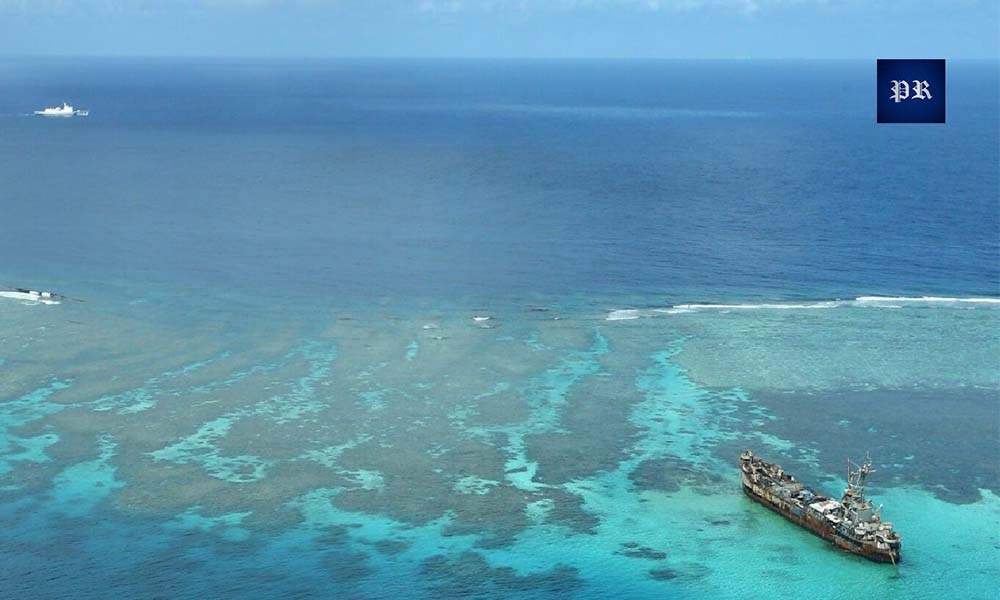
Beijing did not ignore what was happening on that beach. The People’s Liberation Army Southern Theatre Command announced that its naval fleet had recently held drills east of Luzon — framing the move as a necessary response to the regional situation. China also sent Task Force 107, which included the aircraft carrier Liaoning and a Type 075 landing helicopter dock, into the South China Sea during the Balikatan period.
Manila-based security analyst Chester Cabalza told Reuters that the deployment of NMESIS near the Bashi Channel “can spark a powder keg for Beijing and asymmetric deterrence for Manila and Taipei in the Luzon Strait.”
In other words, both sides are sending signals simultaneously. The Philippines and its partners are demonstrating that a forced landing on Philippine territory would be extremely costly. China is demonstrating that it is watching, and that it has the reach to respond.
Deterrence — or Something More?
The official framing from both the Philippine Armed Forces and US commanders is consistent: these drills are defensive, they do not target any specific country, and their purpose is to deter conflict rather than prepare for one.
US Army Gen. Ronald Clark, commander of US Army Pacific, told Defense News that the alliances themselves are the real product of exercises like Balikatan. “We never go into a conflict by ourselves,” he said. “Our highest duty is to deter. The best way to do that is to be ready.”
For the Philippines, the shift is visible and deliberate. Under President Ferdinand Marcos Jr., Manila has moved from strategic ambiguity toward a clear alignment with the United States and its allies. The country has opened new base sites to US forces, signed reciprocal access agreements with multiple partners, and allowed exercises like Balikatan 2026 to take place openly, in territory facing the South China Sea and Taiwan.
https://indopacificreport.com/brahmos-missile-at-balikatan-2026-how-the-philippines-just-changed-the-south-china-sea/
Whether that constitutes deterrence or the early stages of a containment architecture around China depends heavily on where you sit. From Manila’s perspective, it is about protecting Philippine waters and sovereign territory. From Beijing’s perspective, it looks like encirclement.
What This Means for the Region
Balikatan 2026 is a data point in a much longer trend. The Indo-Pacific security order is being rebuilt in real time — not through grand treaty negotiations but through quiet agreements, joint exercises, and the slow accumulation of military presence and interoperability.
The Philippines, once considered the weakest link in the US alliance network in Asia, is rapidly becoming one of its most active participants. Japan is returning to the region as a security partner in a way that carries real historical weight. Canada, France, and New Zealand are extending their military reach into waters far from their own shores.
The beach at La Paz Sand Dunes is no longer just a scenic stretch of coastline. It is, as the exercise made clear, now part of the front line of Indo-Pacific deterrence. What that front line ultimately holds — and whether it prevents conflict or accelerates it — is the defining question of the decade ahead.
Follow Indo-Pacific Report for sharp, grounded analysis of South China Sea developments, Philippine defense affairs, and the broader power competition reshaping Asia.
Website: IndoPacificReport.com
YouTube: @IndoPacific_Report
Facebook: IndoPacific Report