Why the Philippines is Building 40-Missile Frigates Against China
South China Sea
40 Missiles on One Ship: The Philippine Navy’s Frigate Plan That Has China Watching
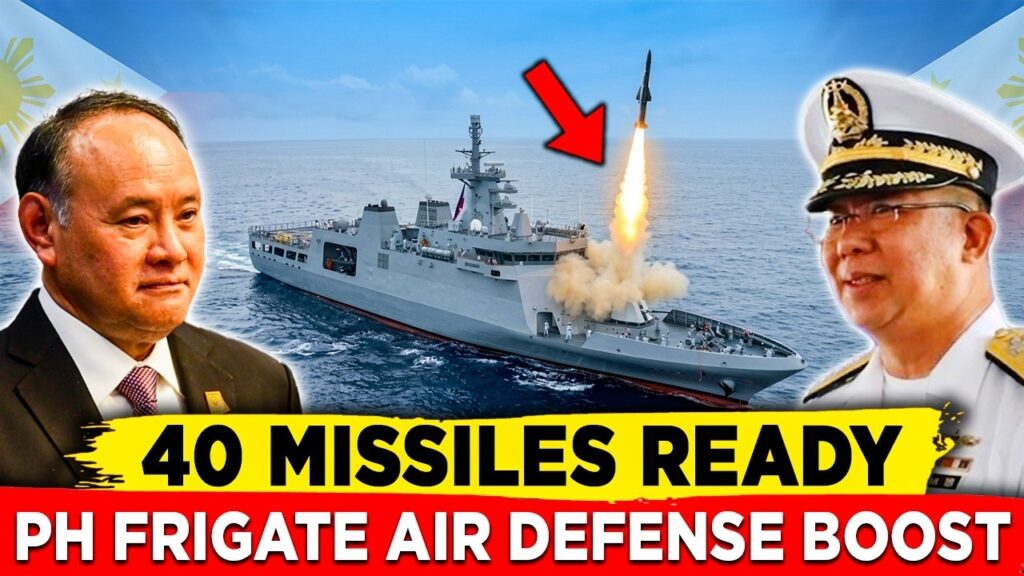
The Philippine Navy is planning to arm a frigate with 40 vertical-launch surface-to-air missiles, choosing between South Korea’s K-SAAM and France’s VL-MICA NG. It is one of the most consequential naval procurement decisions in Southeast Asia in years — and it says everything about how Manila intends to fight in the South China Sea.

Indo-Pacific Report · April 2026 · 14 min read · Naval Modernization · South China Sea · Sea Denial
In the Falklands War of 1982, the British Royal Navy learned something the hard way. A single Argentine Exocet missile sank HMS Sheffield. One missile. One ship. Twenty sailors dead.
The lesson wasn’t just about missiles. It was about what happens when a navy enters a contested maritime environment without adequate air defense. You don’t get a second chance to correct that mistake.
The Philippine Navy is paying attention.
40 VERTICAL-LAUNCH SURFACE-TO-AIR MISSILES PLANNED FOR A SINGLE PHILIPPINE NAVY FRIGATE
WHAT HAPPENED
A 40-Missile Frigate and the Choice Between Korea and France
The Philippine Navy is planning to arm one of its frigates with 40 vertical-launch missiles as part of its ongoing modernization program. The decision under consideration involves two competing systems — the South Korean K-SAAM and the French VL-MICA NG.
Both are short-to-medium range surface-to-air missile systems designed for naval platforms. Both are capable of engaging drones, anti-ship missiles, and aircraft. The choice between them represents one of the most consequential procurement decisions Manila has made in years — not because of the hardware alone, but because of what it signals about how the Philippine Navy intends to fight, and where.
This is a ship designed to operate in the South China Sea. That context makes everything about this decision strategic
K-SAAM VS VL-MICA NG — SYSTEM COMPARISON
SPECIFICATION K-SAAM (South Korea) VL-MICA NG (France)
Origin South Korea (ADD / LIG Nex1) France (MBDA)
Range ~9–10 km (est.) ~20 km
Speed Supersonic Mach 3+
Guidance Active radar homing Active radar / IR dual-mode
Targets Drones, missiles, aircraft Drones, missiles, aircraft, saturation attacks
VLS Compat. Yes — cold launch Yes — cold launch
In Service South Korean Navy (ROK) French Navy, multiple export customers
Alliance Signal Korea-Philippines bilateral European / NATO interoperability
ANALYSIS
Six Reasons This Procurement Decision Changes the Strategic Picture
Manila Is Building a Ship That Can Survive
Most of the Philippine Navy’s surface fleet today cannot defend itself against a modern air threat. That’s not an insult — it’s a structural reality facing most smaller navies in Southeast Asia. Legacy vessels carry limited point-defense systems at best. Against drone swarms, supersonic anti-ship missiles, or coordinated aerial attack, they are exposed.
Forty vertically-launched surface-to-air missiles on a single frigate changes that picture significantly. Vertical launch systems allow rapid, multi-directional engagement. They don’t require the ship to maneuver toward a threat before firing. They can engage multiple targets simultaneously.
This is the difference between a patrol vessel and a combatant. Manila is building a combatant.
The Choice of Missile Is a Strategic Signal
The K-SAAM is South Korean. The VL-MICA NG is French. Neither is American. That’s worth noting.
The Philippines has long relied on the United States as its primary security partner and defense supplier. But Manila is increasingly diversifying — Korean corvettes, Israeli artillery, and now a choice between Korean and French air defense systems. This isn’t a rejection of the American alliance. It’s a maturation of it. A Philippines that can source capable systems from multiple suppliers is a Philippines with more procurement flexibility, better maintenance ecosystems, and less single-point dependency.
Strategically, it also signals to Beijing that Manila’s modernization isn’t contingent on Washington’s approval or budget cycles. The Philippines is shopping seriously, and the market is competitive.
Philippines Joins Pax Silica: The 4,000-Acre AI Hub That Could Redraw the Global Supply Chain
Sea Denial Is the Geography
The South China Sea is not the open ocean. It’s a semi-enclosed body of water surrounded by overlapping territorial claims, artificial islands, and increasingly militarized features. For the Philippine Navy, the operational question isn’t power projection. It’s sea denial — the ability to make it costly for an adversary to operate freely in waters Manila considers its own.
“Geography shapes strategy more than ideology.”
— Robert Kaplan, Geopolitical Analyst
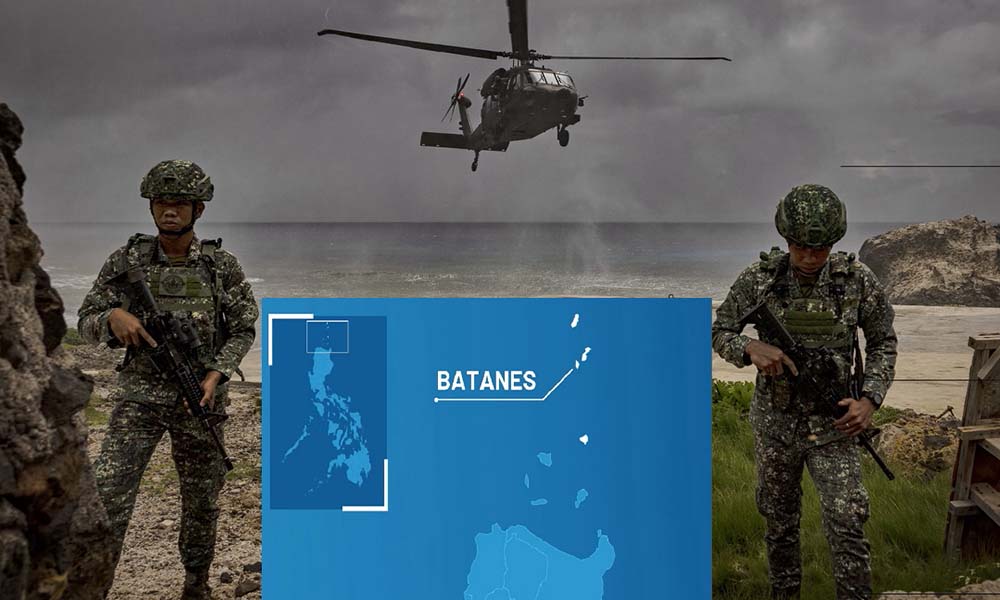
The Philippine archipelago sits at the western edge of the first island chain. Luzon, Palawan, and the Kalayaan Island Group are not just territory — they are geographic chokepoints through which Chinese naval forces must pass to reach the broader Pacific. A Philippine frigate with credible air defense, operating in those waters, complicates Chinese naval planning. It can’t match the PLA Navy in tonnage or firepower. But it doesn’t need to. It needs to survive long enough, and threaten enough, to raise the cost of coercion. That’s sea denial. And forty missiles is a serious contribution to it.
Small Navies Can Shift the Balance — If Built Right
The conventional wisdom is that small navies don’t matter much in great-power competition. The numbers are too asymmetric. The capability gap too wide. That framing misunderstands how deterrence actually works in contested littoral environments.
Ukraine’s Neptune missiles sank the Moskva — the flagship of Russia’s Black Sea Fleet — in April 2022. Ukraine had no navy to speak of. It had missiles, targeting, and the will to use them. The Moskva is still on the bottom of the Black Sea.
The lesson is not that small navies can defeat great powers. It is that credible, capable, survivable platforms raise the cost of aggression enough to influence adversary decision-making. Elbridge Colby’s deterrence framework rests precisely on this logic — you don’t need to win every engagement, you need to make every engagement expensive enough that the adversary reconsiders starting one.
https://indopacificreport.com/philippines-joins-pax-silica-the-4000-acre-ai-hub-that-could-redraw-the-global-supply-chain/
A Philippine frigate with forty surface-to-air missiles, operating inside Philippine territorial waters, integrated with allied surveillance and targeting networks, is not a minor variable in Chinese naval planning. It is a real cost. And real costs change real calculations.
The Broader Modernization Arc
This frigate decision doesn’t exist in isolation. It sits alongside the ATMOS artillery acquisition, the ongoing Horizon 2 and Horizon 3 phases of the AFP Modernization Program, the expansion of joint exercises with the United States, Japan, and Australia, and a broader regional pattern of smaller Indo-Pacific states building genuine indigenous defense capacity.
Japan is acquiring counterstrike capability. Australia is deploying HIMARS and Tomahawk missiles. The Philippines is fielding long-range artillery and planning missile-armed frigates. None of these states is matching China capability-for-capability. But together, they are constructing a distributed deterrence architecture across the first island chain — one where the aggregate cost of Chinese coercion is rising, even if no individual state is strong enough to resist alone.
“American extended deterrence is more sustainable and more credible when the allies it underwrites are genuinely capable partners rather than dependent clients.”
— Hal Brands, Johns Hopkins SAIS

The Risk Is in the Timeline
⚠ CAPABILITY GAP
Chinese grey-zone pressure in the South China Sea is not waiting for Manila to complete its capability development. The frigate being planned today will take years to enter full service. That gap is real — and a determined adversary operating in grey zones can do considerable damage in years.
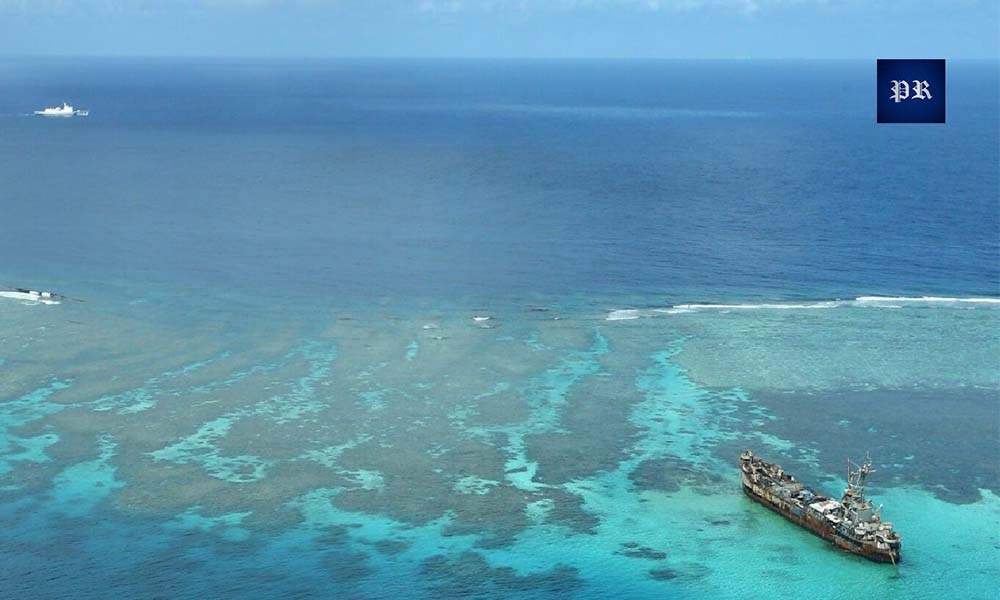
The confrontations at Second Thomas Shoal are intensifying. The BRP Sierra Madre is deteriorating. The window between current Philippine capability and the capability this modernization program eventually delivers is a period of genuine vulnerability — one that Beijing understands and may choose to exploit.
The frigate being planned today will take years to enter full service. The K-SAAM or VL-MICA NG systems being evaluated now will be integrated, tested, and operationally ready on a timeline measured in years — not months.
CONCLUSION
Forty missiles on one ship sounds like a procurement detail. It isn’t.
It’s a decision about what kind of navy the Philippines wants to be, in what kind of waters it intends to fight, against what kind of threat it is preparing for. The answer to all three questions points in the same direction — outward, into the South China Sea, against a threat no one in Manila is naming directly but everyone understands clearly.
The frigate will be built. The missiles will be chosen. The ship will eventually sail into waters where that capability will matter.
The question isn’t whether Manila is serious about defending itself. That question has been answered.
The question is whether it can build fast enough — and whether the alliance behind it will hold firm when the moment of testing finally arrives.
https://youtu.be/TliT4iYpzik?si=zyh3QrG4cl5aSWtW