Why the Philippines Is Investing Heavily in Defense: A Strategic Imperative in a Changing Indo-Pacific
For decades, the Philippines was not seen as a military heavyweight. It wasn’t trying to be. The country focused inward, on development, on domestic stability, on economic growth. Defense spending existed, yes, but it was modest. Functional. Limited. That era is ending.
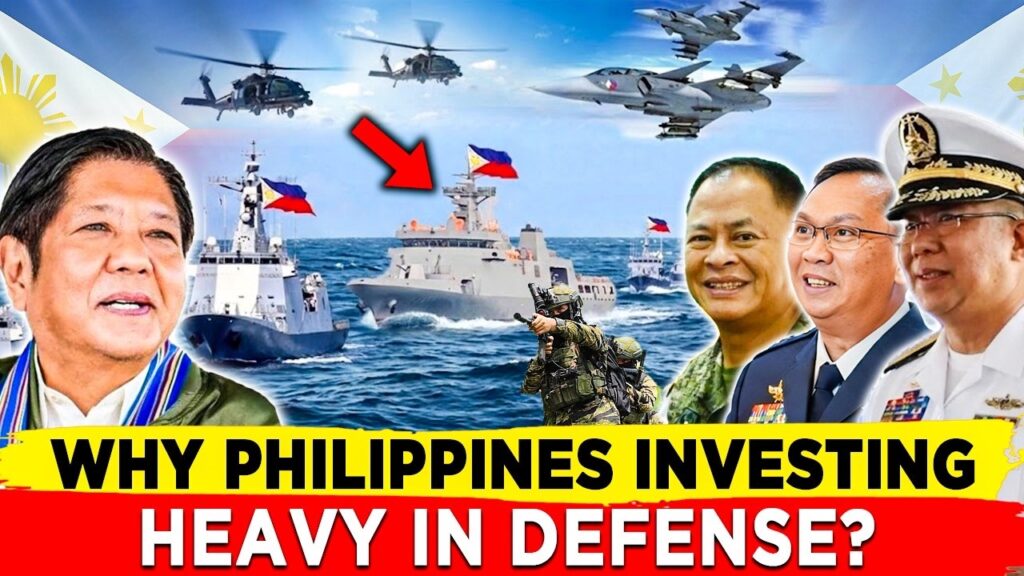
Today, Manila is pouring serious resources into modernizing its armed forces. New warships. Radar systems. Missile platforms. Expanded military access agreements. Training exercises at a scale we haven’t seen before. This isn’t cosmetic. It’s structural. And it raises a blunt question: why now?
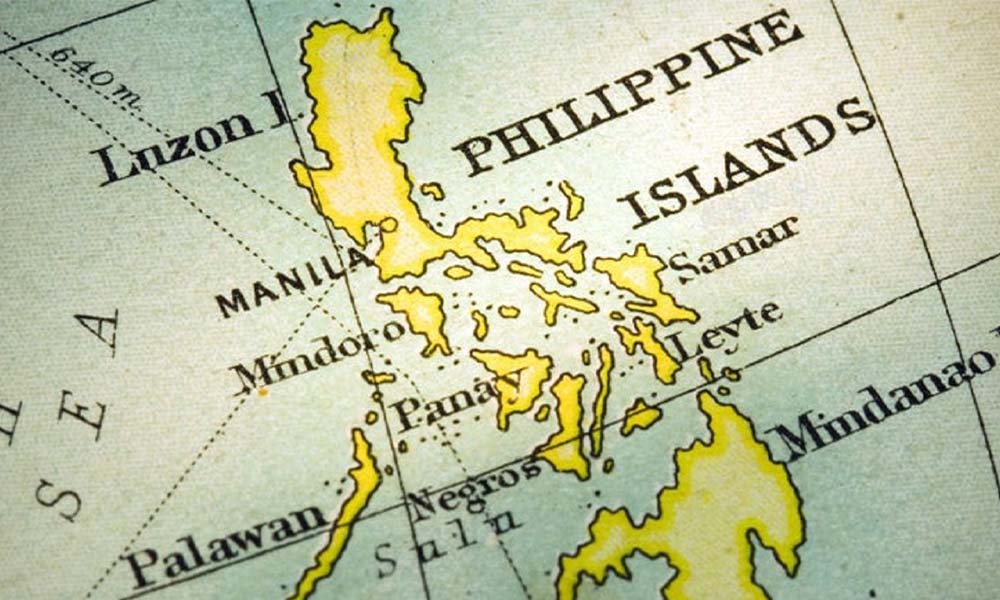
The answer begins with geography and geography, as history keeps reminding us, is destiny. The Philippines sits at the center of the Indo-Pacific’s most contested space. To its west lies the South China Sea, one of the world’s busiest maritime corridors and a region of overlapping territorial claims. To its north is Taiwan, a flashpoint with global consequences. To its east, the vast Pacific, where major naval powers operate routinely. Few countries are positioned so directly along strategic fault lines.https://www.youtube.com/watch?v=yIpC-8wr1ZA
For years, that geography was manageable. Today, it is strategic pressure. Tensions in the South China Sea have escalated, particularly between Manila and Beijing. Incidents involving coast guard vessels, water cannon confrontations, and standoffs near contested features have become more frequent. What once felt episodic now feels patterned.

At the same time, the US–China rivalry has sharpened. The Philippines, bound by a Mutual Defense Treaty with the United States, cannot simply sit neutral in a rapidly polarizing environment. It must be calculated carefully. Strengthen deterrence without provoking escalation. Reinforce sovereignty without overcommitting. This is not about militarism. It’s about vulnerability.
For decades, the Armed Forces of the Philippines prioritized internal security, counterinsurgency, disaster response, and domestic stabilization. External defense was secondary. The modernization push underway signals a strategic pivot: from internal focus to territorial defense.
It reflects a recognition that the security environment has changed. Maritime disputes are no longer abstract diplomatic issues; they involve coast guard collisions, contested resupply missions, and real risks of miscalculation.https://www.youtube.com/watch?v=F5krgC4CYR0
In a region where power balances are shifting quickly, capability matters. Not for aggression but for deterrence. Because in geopolitics, weakness invites pressure. Credible defense capacity creates space for diplomacy. The Philippines is no longer operating in a relatively benign strategic neighborhood. It is navigating an Indo-Pacific defined by competition among major powers. And at this crossroads, standing still is no longer an option.

Geopolitical Drivers: Why Manila Is Rethinking Security
Let’s be clear. Countries don’t suddenly spend billions on defense because they feel like it. They do it when the environment forces a reassessment. For the Philippines, that reassessment has been building for years. The most immediate pressure comes from the South China Sea. This isn’t some abstract map dispute debated in diplomatic forums. It has become operational, involving ships, coast guard personnel, and frequent maritime maneuvers. The Philippines has overlapping claims with China over the Spratly Islands and the Scarborough Shoal, both of which lie within Manila’s Exclusive Economic Zone. Beijing, meanwhile, asserts its sweeping nine-dash line claim, overlapping significant portions of Philippine waters.https://www.youtube.com/watch?v=Ys8dncPDNUA
In 2016, the Permanent Court of Arbitration ruled overwhelmingly in favor of the Philippines, rejecting China’s expansive claims under international law. It was a landmark legal victory. But law and enforcement are two very different things. Despite the ruling, confrontations continue. Water cannon incidents, shadowing maneuvers, and tense resupply operations have become almost routine. What once was a diplomatic friction point has evolved into persistent gray-zone pressure.
This is why defense investment is no longer optional. The Philippines must protect fishing grounds that sustain coastal communities, secure potential oil and gas reserves, and ensure that its vessels can operate in their own EEZ without intimidation. Modernization, from advanced radar systems to missile-capable platforms, becomes a tool of deterrence. Not to escalate conflict, but to make coercion costly and sovereignty enforceable.
EDCA Is Not a U.S. Base: Manila’s Strategic Recalibration Amid Middle East Tensions
Overlaying this maritime tension is the broader strategic rivalry between China and the United States. The Indo-Pacific has become the central arena of major-power competition, with trade routes, military posture, and technology all intersecting here. The Philippines is not a bystander. As a treaty ally of the United States under the Mutual Defense Treaty, Manila carries both responsibilities and opportunities in this contested space.
Recent expansions under the Enhanced Defense Cooperation Agreement have granted US forces access to additional Philippine bases. These are not permanent US bases, sovereignty remains firmly with Manila but they significantly enhance operational cooperation. Interoperability improves. Deterrence strengthens. And strategically, the Philippines gains leverage in a region where posture matters as much as policy.
In short, rising tensions in the South China Sea combined with the shifting US–China rivalry have created a perfect storm of strategic imperatives. Defense modernization is no longer a choice; it is a necessity, rooted in geography, legal reality, and the hard calculus of regional power.
Modernization of the Armed Forces
For decades, the Armed Forces of the Philippines (AFP) were largely oriented inward. The focus was on internal security: combating insurgencies, counterterrorism operations, disaster response, and maintaining domestic stability. Urban conflicts, such as the 2017 Battle of Marawi, exposed gaps in coordination, intelligence, and rapid deployment, reinforcing the need for capable internal security forces. External defense, particularly against major regional powers or in contested maritime zones, was secondary, often constrained by limited budgets, aging equipment, and decades of underinvestment.
That paradigm is shifting. The Revised AFP Modernization Program represents one of the most ambitious overhauls in the country’s history, aiming to transform the military into a force capable of defending sovereignty, projecting credible deterrence, and responding effectively to a range of threats. The program is multi-domain, spanning air, sea, land, cyber, and space capabilities.
In the air, the AFP is acquiring multi-role fighter aircraft to strengthen aerial reach, rapid response capability, and surveillance. These jets are intended not just for territorial defense, but also to enable the Philippines to operate with greater flexibility alongside allies, deter potential aggressors, and conduct effective maritime and air patrols over the country’s vast territory. Air defense is no longer a symbolic priority; it has become operationally critical.
At sea, the navy is undergoing a significant expansion. Frigates with modern sensors and missile systems are being introduced, enhancing both offensive and defensive capabilities. Submarines are being considered and developed for the first time in decades, marking a transformative step in undersea defense and surveillance. Coastal defense missile batteries are being strategically deployed to secure vulnerable shorelines and key maritime approaches, particularly in areas near contested features in the South China Sea and the country’s exclusive economic zone. These capabilities together are meant to project a credible deterrent, allowing the AFP to challenge gray-zone coercion without engaging in direct confrontation.https://indopacificreport.com/the-potential-acquisition-of-cheap-italian-fighter-jets-by-the-philippines/
Modernization also extends to technology. Cybersecurity initiatives are strengthening protection of military networks and critical infrastructure, while space-based monitoring is being pursued to improve surveillance, early warning, and situational awareness. The AFP is acknowledging that modern conflicts are not limited to traditional battlefields; information dominance, cyber resilience, and real-time intelligence have become central to strategic advantage.
Philippines Strengthens Grip in South China Sea with Pag-asa Runway Upgrade
The cumulative effect of these upgrades is profound. The AFP is transitioning from a posture focused on a “minimum credible defense” — one designed mainly to show presence and maintain basic sovereignty — to a robust, multi-layered deterrent capable of responding to diverse threats. This modernization does not signal aggression; it reflects a calculated approach to defending territorial integrity, maintaining regional credibility, and ensuring that the Philippines can operate independently while remaining interoperable with allies in a complex Indo-Pacific security environment.
In essence, the modernization effort is a recognition that geography, regional dynamics, and emerging threats demand a capable, versatile, and forward-looking military. It is a strategic investment in sovereignty, deterrence, and long-term national security.

Economic and Energy Security Considerations
Defense spending in the Philippines goes far beyond military might; it is intimately linked to economic survival and energy security. The country’s waters within its Exclusive Economic Zone (EEZ) are believed to hold substantial hydrocarbon deposits, as well as some of the richest fisheries in Southeast Asia. These resources are not abstract statistics, they directly affect energy supply, food availability, and the livelihoods of millions of Filipinos.
Securing maritime zones is therefore essential. Every patrol mission, radar installation, and coastal defense system is not just a military exercise, it is a practical safeguard for national development. Controlling and monitoring these waters ensures that fishing communities can operate safely, that potential offshore oil and gas reserves remain accessible to the country, and that foreign powers cannot unilaterally restrict Philippine resource use.
Energy independence is a particularly pressing concern. The Philippines imports most of its oil and gas, leaving the economy exposed to global price shocks and geopolitical volatility. Protecting offshore energy resources strengthens the country’s long-term energy resilience, potentially reducing dependence on imports and improving economic stability.
Moreover, fisheries play a dual role: they feed communities and contribute to exports, supporting both food security and the national economy. Disruptions in these zones, whether from illegal fishing, territorial encroachments, or coercive maritime tactics, have direct socioeconomic consequences.
In this context, defense investment is not merely about building a stronger military. It is about protecting the pillars of economic well-being, safeguarding natural resources, and ensuring that the country can leverage its territorial assets sustainably. The lines between security and development blur here: a secure EEZ is a productive EEZ, and a productive EEZ underpins a stable, resilient economy.
Strengthening Alliances and Regional Partnerships
While the United States remains a key security partner, the Philippines is broadening its network of defense relationships. Partnerships with Japan, Australia, and South Korea now include joint exercises, technology transfers, and collaborative procurement programs. This multi-alignment strategy strengthens strategic autonomy, provides diplomatic leverage, and creates a more credible collective deterrence. Manila is signaling that it will not rely solely on a single ally, while ensuring that its defense posture is compatible with broader regional security architectures.
National Sovereignty and Public Sentiment
Domestic awareness of maritime confrontations has grown, and with it, public support for stronger defense policies. National pride, sovereignty concerns, and the perception of external pressure all shape political decisions. Investment in defense has become both a practical and symbolic act, a statement of independence, a demonstration of national resolve, and a tangible safeguard against coercion. The Filipino public increasingly sees a modern military not as an abstract institution, but as a protector of identity, territory, and rights.
Philippines is moving toward military cooperation with Taiwan
Challenges and Criticisms
Heavy defense spending is not without controversy. Budgetary trade-offs inevitably arise, forcing policymakers to balance military priorities against pressing needs in education, healthcare, and poverty reduction. Critics also warn of the risk of militarization or regional escalation, as well as the country’s continued reliance on foreign suppliers for advanced platforms. Maintaining a careful balance between strengthening defense and supporting development remains a persistent policy challenge.
The Strategic Outlook: What the Future Holds
The Philippines is moving from a peripheral security actor to a proactive regional stakeholder. Its defense buildup reflects recognition of shifting power dynamics, determination to defend maritime rights, and preparation for uncertain geopolitical futures. Over the next decade, Philippine defense policy is expected to focus on maritime domain awareness, air and naval deterrence, cyber defense, and full integration with allied forces. These capabilities aim to ensure that the country is not reactive, but strategically prepared for evolving threats.
Conclusion: Defense as a Strategic Necessity
The Philippines’ modernization drive is not an act of aggression. It is a strategic imperative. Confronted with maritime disputes, intensifying great-power rivalry, persistent internal threats, and frequent natural disasters, the country is recalibrating its national security posture. At its core, this investment is about sovereignty, stability, security, and survival. In an Indo-Pacific defined by uncertainty, Manila is choosing preparedness over vulnerability, sending a clear message that it will defend its territory, protect its people, and navigate a complex regional landscape with resilience and resolve.https://youtu.be/CtuWhBrzWS0?si=qeStjGDVbDcsaJvT