Ayungin Shoal: The Moral Frontline of Philippine Sovereignty
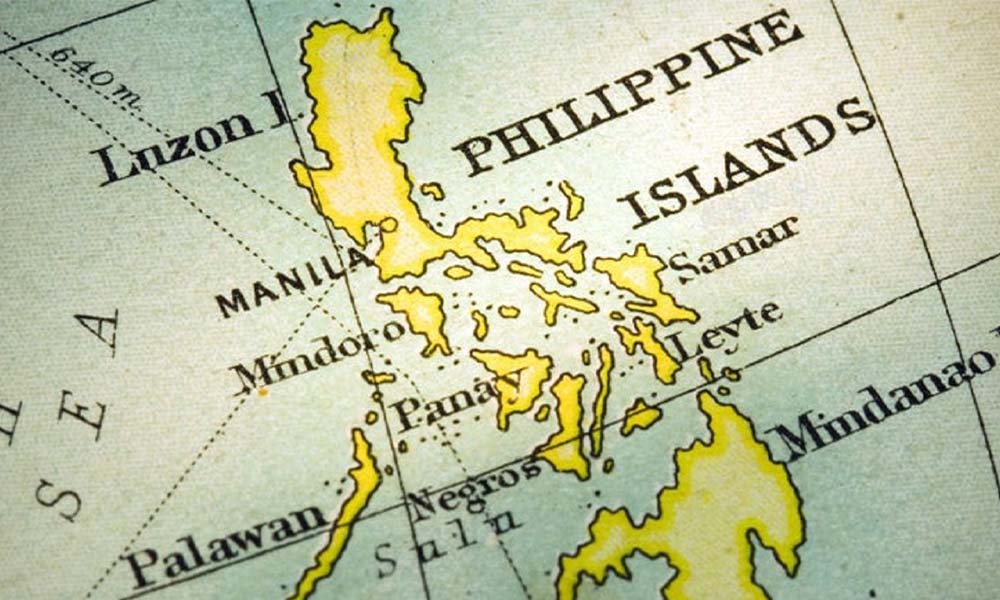
The waters around Ayungin Shoal — known internationally as Second Thomas Shoal — have become the defining flashpoint in the Philippines’ fight to defend its West Philippine Sea (WPS) sovereignty. Located just 106.3 nautical miles from Palawan, this submerged reef lies squarely within the Philippine Exclusive Economic Zone (EEZ), a fact affirmed by the 2016 Arbitral Award and UNCLOS. For over two decades, the rusting hull of the BRP Sierra Madre has stood as a living symbol of defiance — a Filipino outpost holding ground against overwhelming odds.
Now, under escalating pressure from China Coast Guard (CCG) and Chinese Maritime Militia (CMM), the shoal is more than a maritime dispute — it’s a battle for principle, where law confronts force, and courage meets coercion.
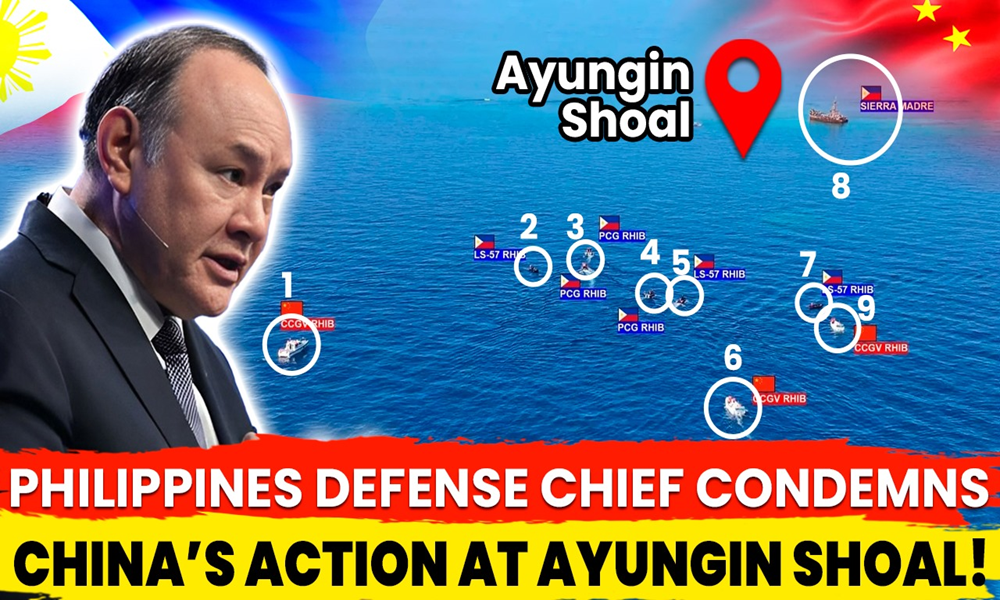
At the heart of Manila’s response is Defense Secretary Gilberto Teodoro Jr., whose recent condemnation of China’s actions — calling them “unacceptable, aggressive, and illegal” — marks one of the strongest, clearest statements yet from the Philippine government. His words aren’t just diplomatic rhetoric — they’re a declaration of national resolve, backed by international law, constitutional duty, and the lived sacrifice of Filipino sailors.
Latest Chinese Actions: Tactical Escalation at Ayungin Shoal
The most recent confrontation at Ayungin Shoal (Second Thomas Shoal) was not a random clash — it was a coordinated, militarized operation designed to intimidate, obstruct, and test Manila’s will.
According to Philippine Navy and Coast Guard reports, the Chinese flotilla included:
- 5 China Coast Guard (CCG) ships
- 9 Maritime Militia vessels
- 11 rigid-hull inflatable boats (RHIBs) — some armed with mounted weapons
What made this incident alarming was the tactical precision:
- Water cannons blasted at close range, damaging wooden panels and equipment.
- Fishing nets and floating barriers deployed to physically trap Philippine resupply vessels.
- RHIBs swarming within 50 meters of collision distance, cutting across bows.
- Loudspeakers blaring Mandarin warnings while crew members brandished knives during past encounters.
Eyewitnesses described scenes of calculated intimidation: Philippine crews bruised, supplies damaged, and morale tested under relentless spray. This isn’t passive shadowing — it’s close-contact coercion, pushing the boundaries of gray-zone warfare toward outright aggression.
For the Filipino marines aboard BRP Sierra Madre, each mission feels less like logistics — and more like sovereignty under fire. Surrounded by steel hulls, floodlights, and high-pressure water cannons, they embody the fragile but unyielding Philippine presence in the West Philippine Sea.
Philippines’ Balabac Island to Light Up with 102kWh Solar Energy
Defense Chief’s Condemnation: Law, Principle, and Moral Clarity
In a nationally broadcast statement, Defense Secretary Gilberto Teodoro Jr. didn’t mince words:
“China’s actions at Ayungin Shoal are gross violations of international law… a deliberate disinformation campaign… and the biggest fiction ever imposed on the region.”
He directly attacked Beijing’s so-called “10-dash line” — an expanded version of the Nine-Dash Line — calling it “the biggest lie ever imposed on the region.”
This wasn’t just political theater — it was a rhetorical pivot from restraint to moral confrontation, reflecting growing frustration within the Armed Forces of the Philippines (AFP) over China’s escalating gray-zone tactics.
Legal Foundation: The 2016 Arbitral Award Still Stands
Teodoro’s stance rests on rock-solid legal ground:
The Permanent Court of Arbitration (PCA) in The Hague (2016) ruled that Ayungin Shoal lies within the Philippine EEZ.
It classified the shoal as a low-tide elevation (LTE) — meaning no country can claim sovereignty over it.
It invalidated China’s Nine-Dash Line as having “no legal basis” under UNCLOS.
As AFP Chief Gen. Romeo Brawner Jr. declared:
“We will defend every inch of our territory… any act of aggression against our forces is an act against the Republic.”
These statements aren’t symbolic — they’re operational commitments, backed by coordination between the AFP, Philippine Coast Guard (PCG), and allied partners.
Geopolitical Ripple Effects: Allies Rally Behind Manila
The world didn’t stay silent.
Within hours, international allies issued strong responses:
-
Australia’s Defence Minister Richard Marles:
“We stand up for international law and freedom of navigation.”
Australia pledged expanded naval cooperation with the Philippines. -
United States, Japan, EU: Issued joint statements reaffirming support for the rules-based order and condemning China’s coercive tactics.
Manila is also expanding its defense partnerships:
- New Zealand & Canada: Negotiating Visiting Forces Agreements for training access and logistics support.
- Quad Summit (Sept 2024): Reaffirmed the 2016 Arbitral Award as the basis for peaceful resolution.
The message is clear: the more China pressures Ayungin, the tighter Manila’s alliance network becomes.
Philippines Draws Line Against China: ‘Scarborough Will Not Become Another Mischief Reef’
Human Cost: Blood, Sacrifice, and Courage Under Fire
Behind the headlines and legal briefs is a human story — one of pain, courage, and quiet heroism.
In June 2024, a Filipino Navy diver lost his thumb after Chinese personnel allegedly boarded a Philippine vessel, slashed lines with knives, and smashed equipment. He later received medals for valor — a somber reminder that every “routine” mission to Ayungin Shoal is a gauntlet run by small crews facing steel hulls, floodlights, and water cannons powerful enough to shatter windows.
For families in Palawan and Zambales, this isn’t abstract geopolitics — it’s about whether their loved ones return home safely after delivering a box of rice or a drum of freshwater.
Philippine Response: Transparency, Persistence, and Strategic Unity
Manila’s strategy is threefold:
1. Operational Persistence
- Resupply missions to BRP Sierra Madre continue — “no matter the risk, no matter the harassment.”
- No prior notification given to foreign powers — sovereign rights are non-negotiable.
2. Radical Transparency
- Every ramming, water cannon blast, and blocked path is documented and released publicly.
- Footage shared globally to build an evidentiary record and rally international opinion.
3. Alliance Deepening
- Strengthening ties with U.S., Japan, Australia, New Zealand, Canada.
- Expanding Maritime Cooperation Activities (MCAs) and joint patrols near contested waters.
Analysts note: the information space around Ayungin is now a battlefield — where disinformation battles truth, and edited videos compete with raw footage.
China’s Bombers Move In, Manila Refuses to Back Down – South China Sea Crisis Escalates
Conclusion: The Power of Principle Over Force
China’s latest show of force at Ayungin Shoal — armed RHIBs, water cannons, blockades — is a stark reminder of the perilous imbalance of power at sea. Yet, even as aggression escalates, the Philippine response remains anchored in law, principle, and determination.
Defense Secretary Teodoro’s condemnation and the AFP’s quiet courage underscore one immutable truth:
The Philippines will not yield sovereignty for convenience, nor legality for silence.
Each resupply mission to BRP Sierra Madre is more than logistics — it’s a reaffirmation of Manila’s moral obligation to protect its troops and uphold its sovereign rights.
As the world watches, Ayungin Shoal has become a living test:
- Can international law withstand unilateral force?
- Can moral courage outlast coercion?
- Can a rules-based order endure amid crashing waves and glaring floodlights?