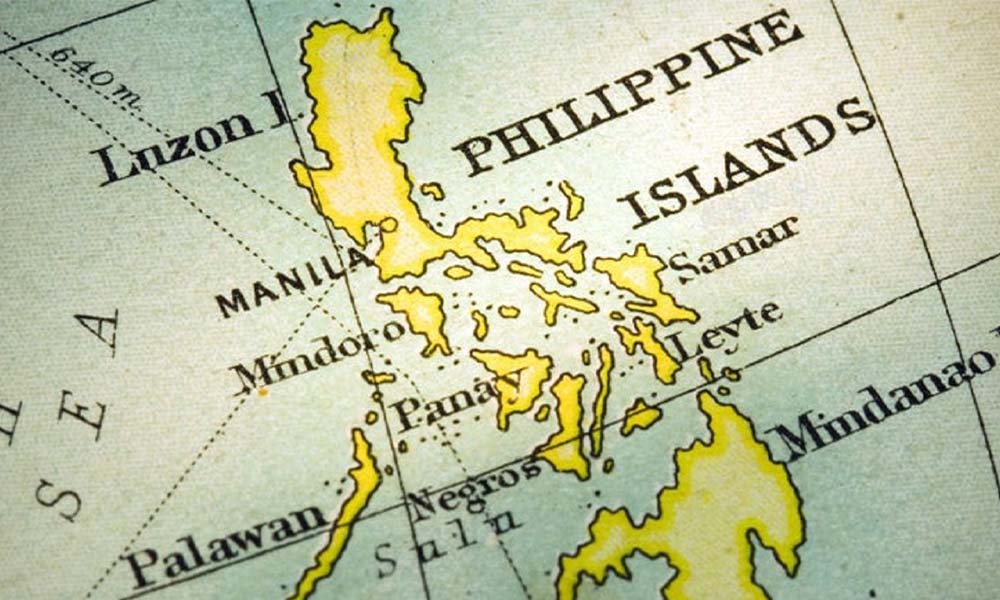
On September 16, 2025, the China Coast Guard’s water cannon assault at Scarborough Shoal highlighted the intensifying clash between Beijing’s expansive claims and Manila’s defense of its sovereign rights. The Philippines under President Marcos Jr. is pushing for a legally binding Code of Conduct (CoC) to end coercion, collisions, and new island-building. The South China Sea’s immense importance, as China’s trade lifeline, the Philippines’ fishing ground and resource frontier, and ASEAN’s strategic corridor, makes it one of the world’s most contested waterways. Yet China continues to anchor its position on the Nine-Dash Line, rejecting the 2016 arbitral ruling and responding to Philippine lawfare with its own baseless baselines. Within the Philippine EEZ, Beijing has markedly stepped up incursions, from illegal scientific surveys to blockades at Scarborough and Second Thomas Shoals. These confrontations have escalated into water cannon blasts, rammings, and boardings, forcing Manila to adopt “assertive transparency” to rally international support. For the Philippines, the way forward is a binding CoC to prevent miscalculations, limit militarization, and manage disputes, but China is slow-walking talks while tightening control at sea. Looking ahead, Manila must combine alliances, legal clarity, and ASEAN leadership to raise the costs of Chinese coercion. Yet the gap between China’s sovereignty claims and the Philippines’ UNCLOS-based rights means a true binding CoC remains unlikely, keeping the South China Sea as a flashpoint of U.S.-China rivalry and regional instability.
The Philippine Proposal for a South China Sea Code of Conduct
Under President Ferdinand Marcos Jr., the Philippines is pushing for a legally binding Code of Conduct (CoC), a clear step up from the 2002 Declaration on the Conduct of Parties (DOC), which was political but not enforceable. Manila’s goal is to establish firm rules that would stop coercive acts and prevent the building of new artificial islands. Marcos himself framed it simply in August 2025: “When that happens, it will be clear what the rules are for everyone, no more of this, no more of that, no more of a collision, no more of building new islands.” This vision underscores Manila’s push for accountability and restraint.
Diplomatically, the Philippines has grown pessimistic about ASEAN-China negotiations, which have dragged on for decades without producing a final text. To hedge against this stalemate, Manila has floated the idea of a claimant-only CoC, working more closely with Vietnam since late 2024. This move reflects frustration with the slow ASEAN process and Beijing’s ability to water down drafts.
Beijing, however, insists the ASEAN-China CoC is the only legitimate track. In January 2024, Chinese Foreign Ministry Spokesperson Mao Ning warned that “any departure from the Declaration on the Conduct of Parties in the South China Sea framework and its spirit will be null and void.” This makes clear that China rejects a Philippine-led, claimant-only framework and continues to prioritize negotiations it can shape to its advantage.
The Significance of the South China Sea (SCS)
The South China Sea (SCS) is of immense strategic value for all its stakeholders. For China, it is both a commercial lifeline and a security buffer: over 64% of its maritime trade passes through the SCS, including vital oil and gas imports from the Middle East, making the sea central to Beijing’s energy security and economic prosperity. It is also crucial for the People’s Liberation Army Navy (PLAN), which requires the SCS’s deep waters to deploy its nuclear ballistic missile submarines, an essential component of China’s strategic deterrent. These hard interests are coupled with an ideological one: Beijing justifies its expansive claims through a “long historic course,” portraying its activities, from artificial island construction to the presence of coast guard vessels, as defensive measures to protect sovereignty, as restated by the Chinese Embassy in August 2025. For the Philippines, the SCS or the West Philippine Sea in its EEZ, is a matter of sovereign rights and survival. Manila relies on the 2016 Arbitral Tribunal ruling that invalidated China’s nine-dash line, framing its position on defending internationally recognized maritime entitlements. The stakes are not abstract: the WPS is a crucial fishing ground underpinning local livelihoods and national food security, while seabed reserves such as Reed Bank offer prospects for energy independence. China’s harassment of Filipino fishermen and interference with exploration thus strikes directly at the Philippines’ economic and human security. Other Southeast Asian claimants share similar concerns. Vietnam, Malaysia, and Brunei have overlapping claims, with Vietnam accelerating construction in the Spratlys during 2024–2025, underscoring their determination to defend territorial integrity. At the same time, ASEAN seeks to preserve its central role as the diplomatic forum for managing the dispute, wary of being sidelined in bilateral talks with Beijing. Beyond sovereignty, littoral states and external powers like the United States, Japan, and Australia converge on a common interest: ensuring freedom of navigation across one of the world’s busiest sea lanes, through which an estimated $3–5 trillion of annual global trade flows. This confluence of economic lifelines, military imperatives, sovereignty claims, and global maritime interests explains why the SCS remains one of the world’s most contested and consequential waterways.
China’s Infamous Nine-Dash Line Claims of SCS and Littoral States’ Claims
China’s claim to the South China Sea rests on its infamous Nine-Dash Line, a cartographic construct first appearing in the mid-20th century and repeatedly invoked by Beijing as evidence of its “sovereignty and relevant rights formed in a long historic course.” Chinese officials frame this claim as rooted in historical fishing activity and ancient records, presenting it as a defensive assertion of sovereignty rather than expansion. Yet this sweeping claim overlaps with the internationally recognized Exclusive Economic Zones (EEZs) of nearly every other littoral state, most prominently the Philippines, Vietnam, Malaysia, and Brunei, setting the stage for decades of tension.
A landmark challenge came in July 2016, when an arbitral tribunal under the United Nations Convention on the Law of the Sea (UNCLOS) issued its ruling in Philippines v. China. The tribunal found that the Nine-Dash Line, insofar as it claimed historic rights to resources within other states’ EEZs, was “incompatible with UNCLOS.” The award clarified that China had no lawful basis to claim resources within the Philippines’ EEZ and that features like Mischief Reef and Subi Reef were low-tide elevations incapable of generating EEZs or continental shelves. Although legally binding, China rejected the decision outright, calling it “null and void” and refusing compliance.
In response to Beijing’s persistent lawfare tactics, the Philippines codified its maritime entitlements into domestic law. The Maritime Zone Act and the Archipelagic Sea Lanes Act, passed in November 2024, explicitly enshrine the UNCLOS framework and the 2016 arbitral ruling into Philippine legislation, strengthening Manila’s legal arsenal. These acts not only reaffirm the Philippines’ rights but also institutionalize them domestically, signaling a resolve to resist erosion of its sovereignty claims through gray-zone pressure.
Beijing answered swiftly. In November 2024, China published territorial baselines around Scarborough Shoal, a move widely criticized by international legal experts as baseless under UNCLOS. This action, unprecedented given that Scarborough is a mere shoal and lies well within the Philippine EEZ, was widely read as a symbolic escalation and a warning that China would use its own domestic lawmaking and cartographic assertions to buttress its claims, regardless of international rulings.
International legal scholars and analysts remain unequivocal: China’s reliance on the Nine-Dash Line has no standing under modern international law. UNCLOS, to which China is itself a signatory, establishes clear maritime entitlements based on geographic features, not historical narratives. The contradiction is stark: Beijing continues to assert historic sovereignty while simultaneously benefiting from the UNCLOS regime elsewhere. Littoral states, meanwhile, emphasize that recognition of the 2016 ruling and adherence to UNCLOS principles are essential to restraining Chinese expansion and preserving the rules-based order at sea.
Indonesia Joins Philippines for Massive Naval Drill in the South China Sea
Philippines EEZ and Chinese Incursions in PH Waters
The Philippines’ position in the South China Sea is anchored in the Exclusive Economic Zone (EEZ) standard established under UNCLOS, which grants a coastal state sovereign rights over living and non-living resources within 200 nautical miles of its baselines. For Manila, this means that vast swathes of the West Philippine Sea (WPS) including fisheries, hydrocarbon reserves, and strategic shoals, fall squarely under its jurisdiction, as reaffirmed by the 2016 arbitral tribunal ruling.
Yet China has “markedly stepped up” coercion against Philippine vessels and activities in these waters during 2024–2025. This coercion has taken both overt and gray-zone forms, ranging from aggressive maritime law enforcement to subtler interference with scientific and resupply missions.
A series of incursion case studies in 2025 illustrates the intensity of this campaign. First, Chinese Marine Scientific Research (MSR) incursions have raised alarm in Manila. Between May and July 2025, at least three Chinese research vessels, Tan Suo 3, Bei Diao 996, and Zhuhaiyun, were tracked conducting what Philippine authorities described as “illegal marine scientific research” inside its EEZ, particularly around Scarborough Shoal and off Palawan. These activities were unauthorized and seen as thinly veiled efforts to map seabed resources or dual-use data for military applications.
Second, Scarborough Shoal (Bajo de Masinloc) remains a flashpoint more than a decade after China’s 2012 seizure. The shoal, lying well within the Philippine EEZ, has become a symbol of lost access and contested sovereignty. Filipino fishermen continue to face blockades and harassment from China Coast Guard (CCG) vessels, denying them entry to the lagoon that has sustained livelihoods for generations. Manila’s diplomatic protests have multiplied, but China maintains effective control, consolidating its grip through constant patrols and physical obstruction.
Third, the Second Thomas Shoal (Ayungin Shoal) situation is perhaps the most fraught. Here, the Philippines maintains a small outpost on the grounded World War II–era vessel BRP Sierra Madre, resupplied through Regular Rotation and Resupply (RORE) missions. China, however, routinely deploys dozens of CCG and maritime militia vessels to shadow, block, or water-cannon Philippine boats attempting to reach the outpost. These confrontations often escalate to dangerous levels, with resupply missions turning into high-stakes tests of resolve under Beijing’s campaign of sustained pressure.
These incursions highlight a pattern: China is not merely asserting legal claims but is actively undermining Philippine sovereign rights within its EEZ through continuous, multi-domain pressure. For Manila, the challenge is existential, upholding international law and UNCLOS entitlements against a far stronger power bent on altering facts at sea through coercion and control.
Heated Fightbacks: Exchanges, Water Cannon Attacks, Boat Ramming, and Collision
China’s campaign in the South China Sea has increasingly relied on gray-zone tactics, actions deliberately designed to coerce without crossing the threshold into open armed conflict. These tactics are primarily executed through the China Coast Guard (CCG) and the Chinese Maritime Militia (CMM), with occasional backing from the People’s Liberation Army Navy (PLAN). By operating in this ambiguous zone, Beijing seeks to steadily assert control while avoiding escalation to outright war, leveraging its numerical and technological advantages at sea.
One of the most visible forms of this coercion has been water cannon attacks, which have become a hallmark of Chinese harassment. The most serious case occurred in September 2025, when the CCG unleashed high-pressure water cannons at a Philippine Coast Guard vessel near Scarborough Shoal. The assault caused significant structural damage and injured a Filipino crew member, forcing Manila to file a diplomatic protest and galvanizing international concern.
Another dangerous tactic has been aggressive maneuvering and ramming. In August 2025, a Chinese PLAN destroyer reportedly came dangerously close to ramming a Philippine Coast Guard ship in the contested waters of Second Thomas Shoal, a striking escalation given that PLAN warships had generally remained in the background. Earlier, in June 2024, CCG sailors physically boarded Philippine Navy boats attempting to resupply the BRP Sierra Madre, a brazen act of intimidation highlighting China’s willingness to test red lines. These incidents underscore the unpredictable and hazardous environment faced by Philippine vessels operating in their own EEZ.
In response, Manila has countered with a strategy of “assertive transparency.” Instead of quietly tolerating incidents, the Philippine government has chosen to publicize images and video footage of Chinese coercive actions, particularly water cannon strikes and obstructive maneuvers. By broadcasting these confrontations to international audiences, Manila seeks to impose reputational costs on Beijing, generate diplomatic pressure, and rally support from allies and partners. This approach has proven effective in drawing global attention to the scale and severity of Chinese tactics, reframing the dispute as not merely bilateral but as a broader challenge to international law and maritime norms.
The Way Out of this Mess is a Code of Conduct as Proposed by PH
The repeated clashes in the West Philippine Sea highlights the inadequacy of the existing 2002 Declaration on the Conduct of Parties (DOC), which, being non-binding, has done little to prevent incidents, block coercive acts, or halt large-scale island-building. For Manila, the way out of this cycle of escalation lies in a legally binding Code of Conduct (CoC). Unlike the DOC, such an agreement would establish clear rules of the road to minimize the risk of collisions and dangerous encounters between vessels, set enforceable limits on activities like land reclamation and the deployment of armed coast guard or naval ships, and create a functional dispute management mechanism that could help resolve confrontations before they spiral out of control. President Ferdinand Marcos Jr. has consistently articulated this vision, declaring in May 2025 that the CoC is essential to “safeguard maritime rights, promote stability, and prevent miscalculations at sea.” For the Philippines, then, the push for a binding CoC is not merely about diplomacy but about survival, anchoring international law in a region where might increasingly makes right, and where the absence of binding rules has allowed coercion to flourish unchecked.
Will China Agree to PH CoC or Will It Escalate?
China is unlikely to embrace the Philippines’ vision of a legally binding Code of Conduct (CoC), as its behavior since the 2002 Declaration on the Conduct of Parties (DOC) shows a consistent strategy of “slow-walking” ASEAN negotiations to preserve maximum flexibility. By insisting on consensus with ASEAN as a bloc, Beijing effectively wields veto power over any provision that might constrain its activities, while its unilateral moves, such as the November 2024 publication of territorial baselines around Scarborough Shoal and the intensification of gray-zone coercion at sea, highlight a preference for consolidating control rather than accepting multilateral limits. The likelihood of escalation is high, underscored by China’s passage of a May 2024 law granting its Coast Guard authority to detain foreigners in “waters under Chinese jurisdiction,” an expansive interpretation that extends lawfare into operational practice and raises the risks of confrontation. This danger is sharpened by the Philippines-US Mutual Defense Treaty (MDT) of 1951, which President Marcos Jr. reaffirmed in June 2024, warning that if a Filipino serviceman is killed in an attack, Manila would invoke the treaty. The August 2025 near-ramming incident by a PLAN destroyer at Second Thomas Shoal illustrates how close the region is to crossing this red line. Ultimately, China may consent to a CoC in form, but only one that avoids explicit references to the 2016 arbitral ruling and does not restrain its effective control of contested features, making it fundamentally different from the binding, rules-based accord envisioned by the Philippines.
Philippines Calls on the World to Stop China’s South China Sea Grab
Future Look
Looking ahead, the Philippines’ path will hinge on balancing assertive transparency with coalition-building. By consistently publicizing Chinese coercion at sea, Manila can continue to shape international opinion and impose reputational costs on Beijing, while simultaneously leveraging alliances with the United States, Japan, and Australia to raise the diplomatic and economic stakes of continued Chinese aggression. On the legal front, Manila has already strengthened its position through the Maritime Zone Act and should persist in clarifying its entitlements under international law, as seen with its Extended Continental Shelf (ECS) submission to the UN in June 2024. Such steps reinforce the Philippines’ legal case and underscore its reliance on UNCLOS over China’s historic narrative. A further opportunity lies in the Philippines’ upcoming ASEAN chairmanship in 2026, which President Marcos Jr. flagged in August 2025 as a potential diplomatic window. Whether to accelerate stalled ASEAN-China CoC negotiations or to explore a more claimant-only code with Vietnam and other partners, Manila will have a chance to drive the regional agenda.
Still, the near-term outlook suggests a dual-track future: slow, non-committal CoC discussions at the diplomatic level, paralleled by increasingly dangerous gray-zone confrontations on the water. The proximity of rival vessels at choke points like Scarborough Shoal and Second Thomas Shoal means the risk of escalation, whether through miscalculation, accident, or deliberate provocation, remains high.
Final Prognosis
The fundamental gap between China’s sovereignty-driven, historically framed claims and the Philippines’ international law-based entitlements makes a mutually acceptable, legally binding Code of Conduct highly unlikely in the foreseeable future. Instead, the South China Sea will continue to serve as a defining flashpoint in US-China rivalry, with Manila caught at the center. For the region, this means ongoing instability, constant risk of escalation, and the steady erosion of the rules-based maritime order unless meaningful guardrails can be established.