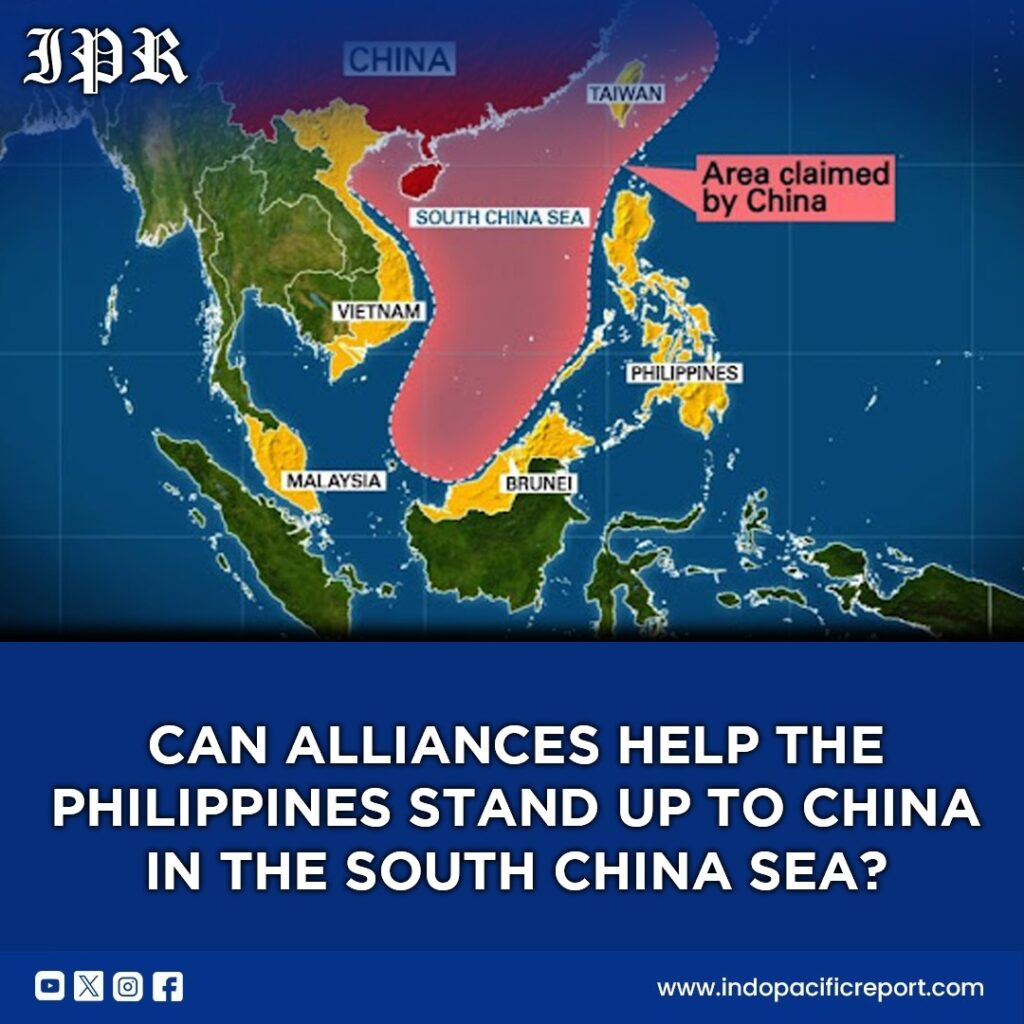
The strategic pressure facing the Philippines in the South China Sea is no longer a distant or abstract concern. It has become a daily reality shaped by repeated maritime confrontations, coast guard standoffs, and persistent gray-zone tactics by China. For Manila, the central challenge is clear: it must strengthen its defense capabilities while building deeper security partnerships. In modern geopolitics, smaller maritime states rarely deter larger powers alone. They rely on alliances, strategic geography, and limited but credible military capability to raise the cost of coercion.
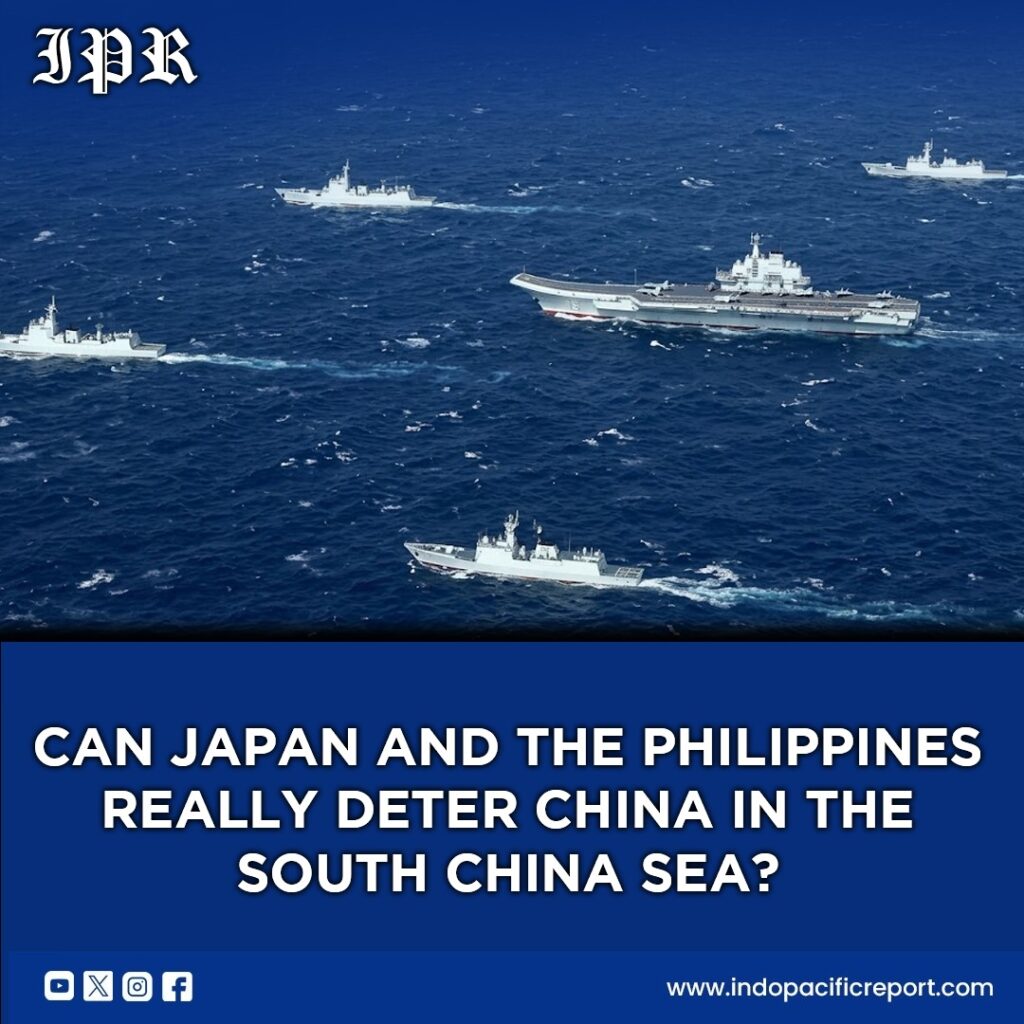
China’s approach in the South China Sea illustrates a classic salami-slicing strategy—small, incremental actions designed to slowly shift the status quo without triggering full-scale conflict. Fishing militias, coast guard patrols, and large maritime deployments allow Beijing to exert pressure while remaining below the threshold of war. This type of gray-zone coercion is particularly effective against countries with limited naval power. For the Philippines, which historically maintained a small navy focused on internal security missions, such pressure exposes serious capability gaps in maritime surveillance, coastal defense, and rapid response operations.
This is why alliance-building has become central to Manila’s new strategic posture. The Philippines is strengthening defense ties with the United States through expanded military access agreements and joint exercises. At the same time, it is deepening cooperation with partners such as Japan, Australia, and South Korea. These relationships serve several purposes. They improve training and interoperability, provide access to modern military equipment, and most importantly, strengthen collective deterrence. When multiple states demonstrate political and military support for Philippine maritime rights, it becomes harder for any single power to isolate or intimidate Manila.
Defense modernization is the second pillar of this strategy. The Philippine military is gradually shifting from an internal security force to a more capable external defense structure. Investments in modern frigates, offshore patrol vessels, coastal missile systems, and fighter aircraft are meant to improve maritime domain awareness and create a credible deterrent posture. The goal is not to match China ship for ship. That would be impossible. Instead, Manila is pursuing an asymmetric defense strategy—developing targeted capabilities that can complicate hostile operations, protect key maritime zones, and respond quickly to gray-zone activities.
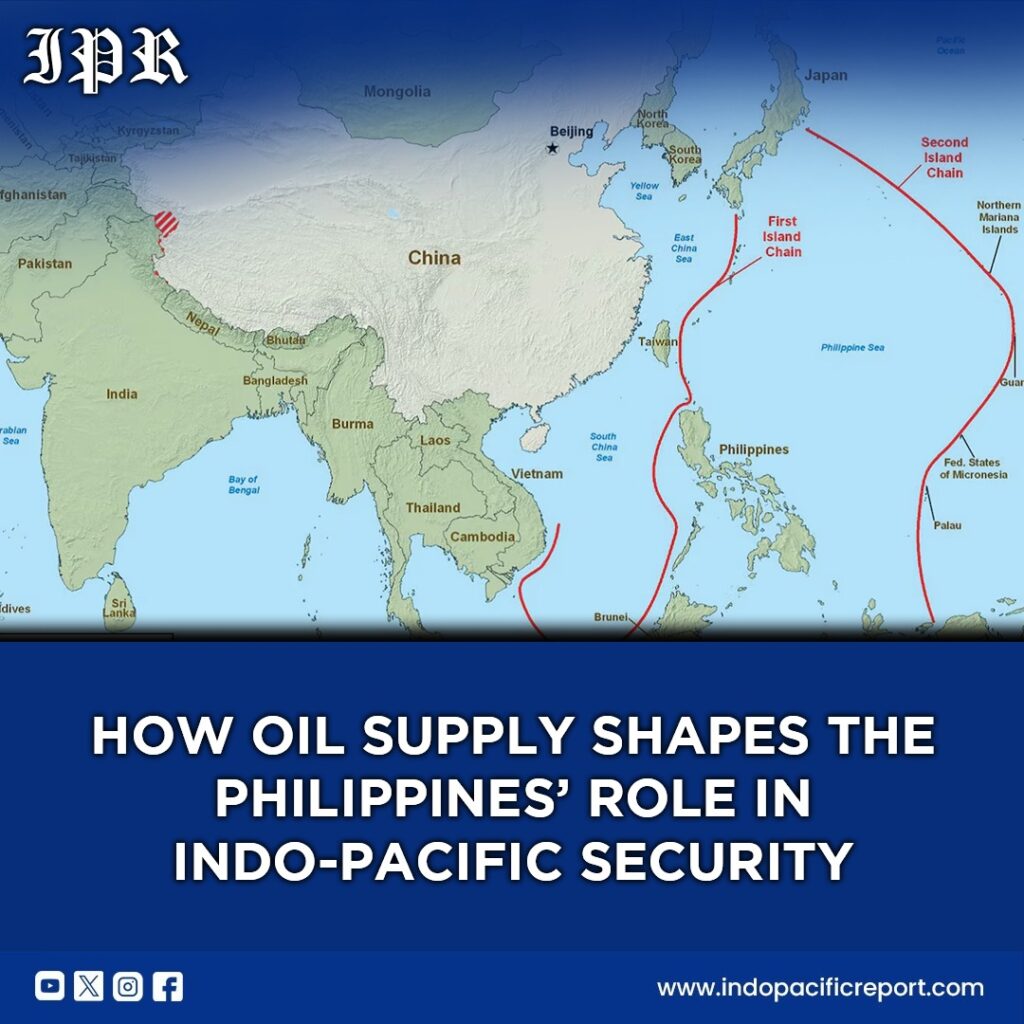
The South China Sea is not only a territorial dispute; it is also one of the most important maritime corridors in the world. A large share of global trade passes through these waters every year. Energy shipments, container traffic, and regional supply chains all rely on stable sea lanes in this region. This makes the Philippines strategically significant. Its geographic position along the western Pacific gives it an important role in maintaining the security of these sea routes. If Manila strengthens its maritime defenses and works closely with partners, it contributes to a wider balance of power that helps keep these sea lanes open.
From a broader Indo-Pacific perspective, the Philippines represents a frontline state in the contest over regional order. The question is not simply about reefs or fishing rights. It is about whether maritime disputes will be resolved through international law and cooperation or through pressure and coercion. If smaller states like the Philippines can strengthen alliances and maintain credible defense capabilities, they can help preserve a rules-based maritime order. But if they remain weak and isolated, the strategic balance in the region could shift more rapidly.
The coming decade will therefore be critical. Manila’s defense modernization plans, combined with deeper partnerships with regional and global allies, will determine how effectively it can resist coercion and protect its maritime interests. The Philippines does not need to become a major military power. What it needs is credible deterrence, reliable partners, and consistent political resolve.
Question for readers:
Do you think stronger alliances can really help the Philippines stand up to China in the South China Sea?