The Philippines’ current maritime strategy highlights a growing paradox in Southeast Asian security politics. By doubling down on hard balancing—strengthening naval capacity, expanding the US alliance, and cultivating multilateral defence partnerships—Manila seeks to deter coercion from Beijing. Yet, the same measures that enhance deterrence simultaneously complicate the very diplomatic outcomes the Philippines aspires to, namely a legally binding ASEAN–China Code of Conduct (COC) in the South China Sea. In effect, Manila faces a classic strategic dilemma: the instruments used to secure power at sea can restrict leverage at the negotiating table.
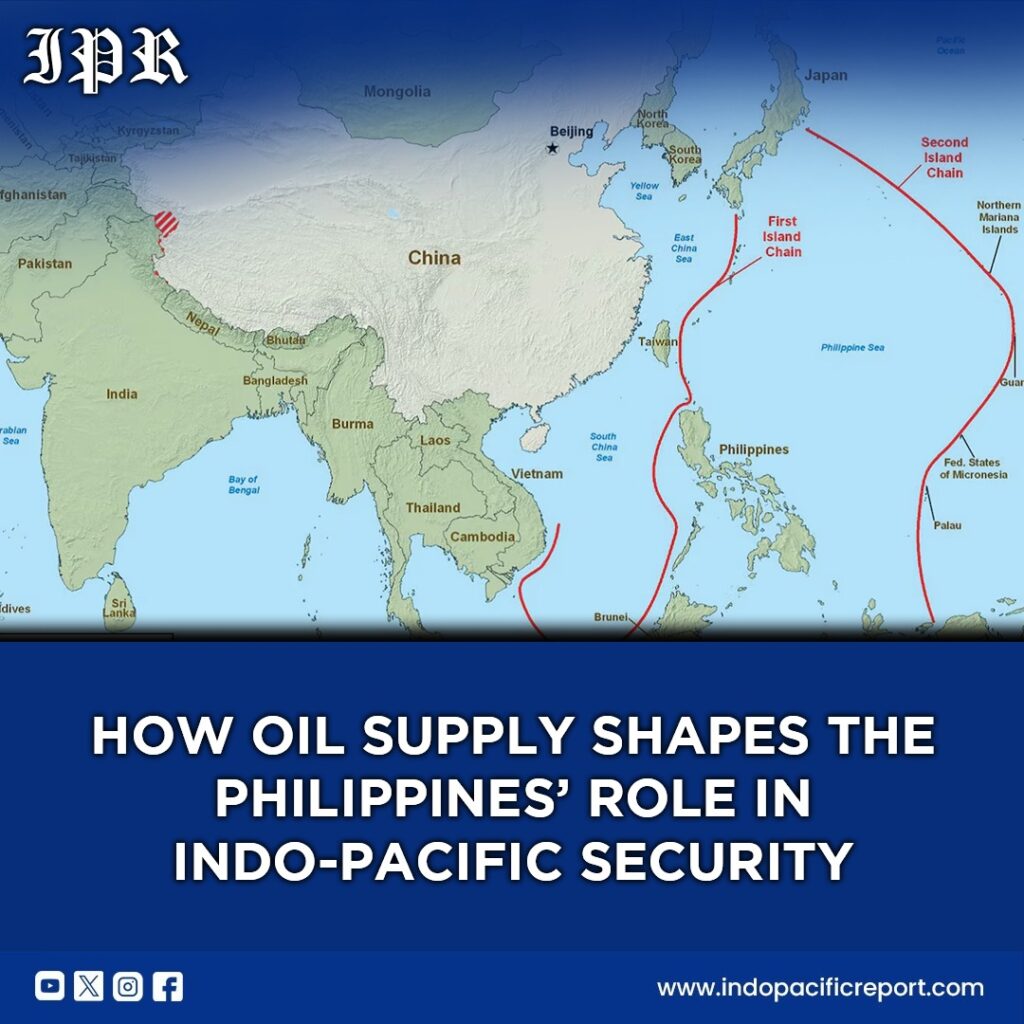
From a great-power competition lens, the Philippines’ approach exemplifies the intensifying US–China rivalry in the Indo-Pacific. Enhanced US–Philippines exercises, joint maritime patrols, and the growing involvement of Japanese, Australian, and European partners signal a more structured deterrence network aimed at countering China’s expanding maritime reach. The Philippines, however, now risks reinforcing Beijing’s perception of containment along the First Island Chain. For China, the presence of advanced US-backed capabilities and multilateral partnerships constitutes a security dilemma: defensive measures by Manila appear as proactive encirclement, encouraging reciprocal hardening of Chinese military posture in the region. Strategic signaling, therefore, both stabilizes and escalates tensions simultaneously.
In terms of regional security architecture, hard balancing may undermine ASEAN’s role as a neutral arbiter. The Philippines’ security cooperation with external powers—though operationally beneficial—risks framing the COC negotiations as part of a broader alignment architecture rather than a purely regional solution. ASEAN’s credibility hinges on its perceived ability to convene without favoritism, yet Manila’s choices may unintentionally shift the perception toward partiality, reinforcing China’s narrative of external interference. This dynamic complicates efforts to craft a rules-based maritime order, underscoring the tension between hard power accumulation and soft institutional legitimacy.
Alliance dynamics are equally fraught. Visible commitment to US–Philippines military collaboration raises the reputational cost of compromise for Manila. Concessions at the negotiation table could be interpreted as weakening the alliance’s deterrent posture, constraining Manila’s room for manoeuvre. Domestically, political pressures amplify this effect: Philippine leaders face expectations to leverage growing naval and aerial capabilities decisively. On the Chinese side, nationalist imperatives similarly limit flexibility. Both states’ hardening domestic constituencies mean that even minor concessions are politically costly, locking the parties into a cautious, reactive posture that slows substantive progress.
Maritime and economic strategy also intersect with these dynamics. Manila’s pursuit of hard balancing strengthens its operational readiness and maritime domain awareness, yet it does not automatically translate into enforceable rules for freedom of navigation or commercial security. While deterrence reduces the likelihood of unilateral escalation, it cannot substitute for negotiation mechanisms that clarify responsibilities, manage incidents, or ensure compliance with international law. Without calibrated diplomacy, the South China Sea remains a theatre of both strategic stability and latent conflict—a paradox of capability without contractual certainty.
The implications for Indo-Pacific balance of power are significant. Manila’s trajectory illustrates how middle powers navigating a competitive environment may inadvertently contribute to strategic friction despite defensive intent. Hard balancing stabilizes tactical encounters but complicates regional rule-making. Comparisons with Vietnam show an alternative path: low-profile force modernization combined with persistent bilateral channels and restrained public messaging can manage escalation while preserving negotiation space. Manila’s current approach, by contrast, risks entrenching mistrust and delaying the creation of a binding, regionally respected maritime framework.
Looking forward, the Philippines’ challenge is clear: hard balancing must be complemented with strategic diplomacy that preserves face, sequences negotiations, and leverages ASEAN’s convening authority. Success in maritime rule-making will require a nuanced blend of deterrence and dialogue, not escalation alone. The South China Sea remains a litmus test for ASEAN’s relevance, US–China competition, and middle-power strategy in the Indo-Pacific. Without careful calibration, Manila may strengthen its security posture at sea but fail to secure the legal and institutional assurances necessary for long-term regional stability.