Introduction: The One-Sided Water Wars of the West Philippine Sea
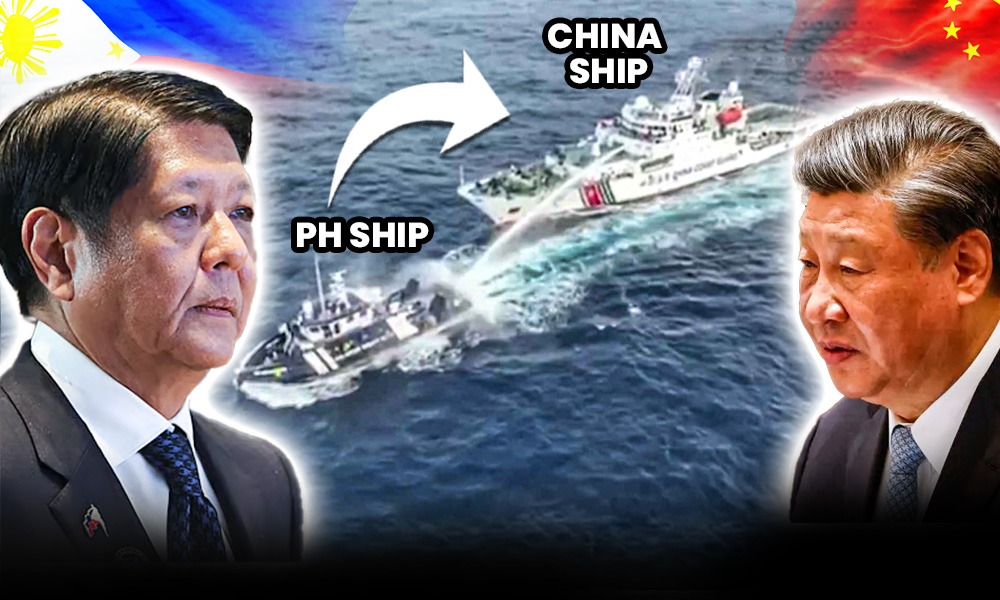
The West Philippine Sea has become a battleground of asymmetry, where China’s hulking coast guard ships—some displacing 10,000 tons—routinely bully, ram, and blast smaller Philippine vessels with high-pressure water cannons. The latest escalation, on October 12, 2025, near Thitu Island (Pag-asa), saw the China Coast Guard (CCG) vessel Bow No. 21559 firing water cannons at the Philippine fisheries ship BRP Datu Pagbuaya, then ramming its stern, leaving crew injured and the vessel damaged.
Yet, despite years of harassment, the Philippines has never retaliated in kind. No water cannons fired back. No aggressive maneuvers. To outsiders, this restraint may seem like weakness. But in Manila’s strategic circles, it is brilliant statecraft—a calculated, disciplined response designed to outmaneuver China without firing a shot.
President Ferdinand Marcos Jr. has been clear:
“We will not follow the Chinese Coast Guard and Chinese vessels down that road. Our mission is to lower tensions, not raise them. We will never fire water cannons.”
This is not passivity. It is strategic mastery—a high-stakes game where restraint is the ultimate weapon.
The Asymmetric Reality: Why Fighting Back Would Be a Disaster
1. China’s Overwhelming Naval Superiority
The Philippine Coast Guard (PCG) and Bureau of Fisheries and Aquatic Resources (BFAR) operate with limited assets:
- Largest PCG vessel: BRP Teresa Magbanua (97 meters, ~2,400 tons).
- China’s CCG ships: Haijing-class (10,000+ tons, reinforced hulls, military-grade sensors).
A water cannon duel would be suicidal:
Chinese cannons can shatter steel railings—Philippine ships would suffer catastrophic damage.
CCG vessels are built for ramming—PCG ships are not.
China’s maritime militia (disguised fishing boats) swarm in numbers—Philippine vessels are outgunned and outmanned.
Retaliation = Escalation Risk
- China could justify a military response under “self-defense.”
- The U.S.-Philippines Mutual Defense Treaty (MDT) covers armed attacks, but water cannons are “non-lethal”—retaliating could blur the line, risking unintended war.
2. The Legal & Diplomatic Trap
China wants the Philippines to react aggressively—it would:
Shift blame to Manila for “provoking” conflict.
Undermine the Philippines’ moral high ground as the victim of coercion.
Weaken international support, which currently overwhelmingly sides with Manila.
By not firing back, the Philippines:
Keeps China as the sole aggressor in global eyes.
Strengthens its case under the 2016 Arbitral Ruling (which invalidated China’s nine-dash line).
Forces Beijing to bear the full weight of diplomatic condemnation.
“Cease Its Farces”: China’s Warning to the Philippines Ignites South China Sea Crisis
The Philippines’ Real Weapons: Lawfare, Transparency, and Alliances
1. The Power of Documentation: Turning Aggression Into Global Outrage
The Philippine Coast Guard’s “transparency initiative” is a game-changer:
- Every water cannon attack is filmed in 4K.
- Footage is released within hours, going viral on social media.
- Allies (U.S., Japan, Australia, EU) issue statements of condemnation within 24 hours.
Example:
- After the October 2025 Thitu Island attack, the U.S. State Department called it “dangerous, unlawful, and destabilizing.”
- Japan’s Foreign Ministry warned of “serious concern over China’s coercive behavior.”
- The EU reiterated support for UNCLOS and the Arbitral Ruling.
Result: China is diplomatically isolated, while the Philippines gains global sympathy.
2. The U.S. Mutual Defense Treaty (MDT): The Silent Deterrent
The 1951 U.S.-Philippines MDT is Manila’s ultimate insurance policy:
- Any armed attack on Philippine forces triggers U.S. military response.
- Water cannons are “non-lethal”, so retaliating could risk escalation—but not retaliating keeps the MDT as a credible deterrent.
U.S. Secretary of State Antony Blinken has repeatedly affirmed:
“An armed attack on Philippine armed forces, public vessels, or aircraft—including those of its Coast Guard—in the South China Sea would invoke U.S. mutual defense commitments.”
By not escalating, the Philippines:
Keeps the U.S. engaged as a silent guarantor.
Prevents China from testing U.S. resolve in a gray-zone conflict.
If China Tow Away Philippines’ BRP Sierra Madre From Ayungin Shoal
3. The 2016 Arbitral Ruling: The Legal Nuclear Option
The Permanent Court of Arbitration’s 2016 ruling is the Philippines’ strongest weapon:
- China’s nine-dash line = illegal.
- Bajo de Masinloc (Scarborough Shoal) = Philippine EEZ.
- China’s artificial islands = violations of UNCLOS.
By not retaliating, the Philippines:
Keeps the focus on China’s illegal actions.
Strengthens calls for enforcement of the ruling.
Encourages allies to pressure Beijing through sanctions, patrols, and diplomatic isolation.
The Big Picture: Why Restraint is Winning the Long Game
1. China’s Gray-Zone Tactics Are Backfiring
China’s water cannon diplomacy was supposed to:
Intimidate the Philippines into submission.
Normalize Chinese control over the West Philippine Sea.
Instead, it has:
United the Philippines with the U.S., Japan, and Australia in joint patrols.
Turned global opinion against Beijing (even ASEAN nations are growing wary).
Strengthened Manila’s legal and moral case.
2. The Philippines is Playing 4D Chess While China Plays Checkers
| China’s Move | Philippines’ Counter |
|---|---|
| Fires water cannons | Films it, releases footage, rallies global condemnation |
| Blocks resupply missions | Invites foreign journalists to document it |
| Declares “nature reserves” in Philippine waters | Files diplomatic protests, strengthens alliances |
| Rams Philippine ships | Repairs vessels, continues patrols, refuses to retreat |
Result: China looks like a bully, while the Philippines looks like a responsible defender of international law.
3. The Endgame: Forcing China to the Negotiating Table
The Philippines’ long-term strategy is to:
- Expose China’s coercion through transparency.
- Rally global pressure via alliances and legal actions.
- Make Beijing’s aggression so costly that it has no choice but to negotiate.
Former Supreme Court Justice Antonio Carpio explains:
“We are not fighting China with ships. We are fighting them with law, diplomacy, and moral authority. And in the long run, that is far more powerful than any water cannon.”
https://indopacificreport.com/china-malaysia-vs-japan-philippines-drills-south-china-sea-japan/
Conclusion: Strength Through Restraint
The Philippines’ refusal to fire back is not weakness—it is strategic genius. By avoiding escalation, Manila:
Preserves the moral high ground.
Keeps China as the aggressor in global eyes.
Strengthens alliances and legal leverage.
Forces Beijing into a diplomatic corner.
In the West Philippine Sea, true power is not measured in water pressure, but in principle, patience, and persistence. The Philippines is winning the war without firing a shot—and that may be the most brilliant victory of all.