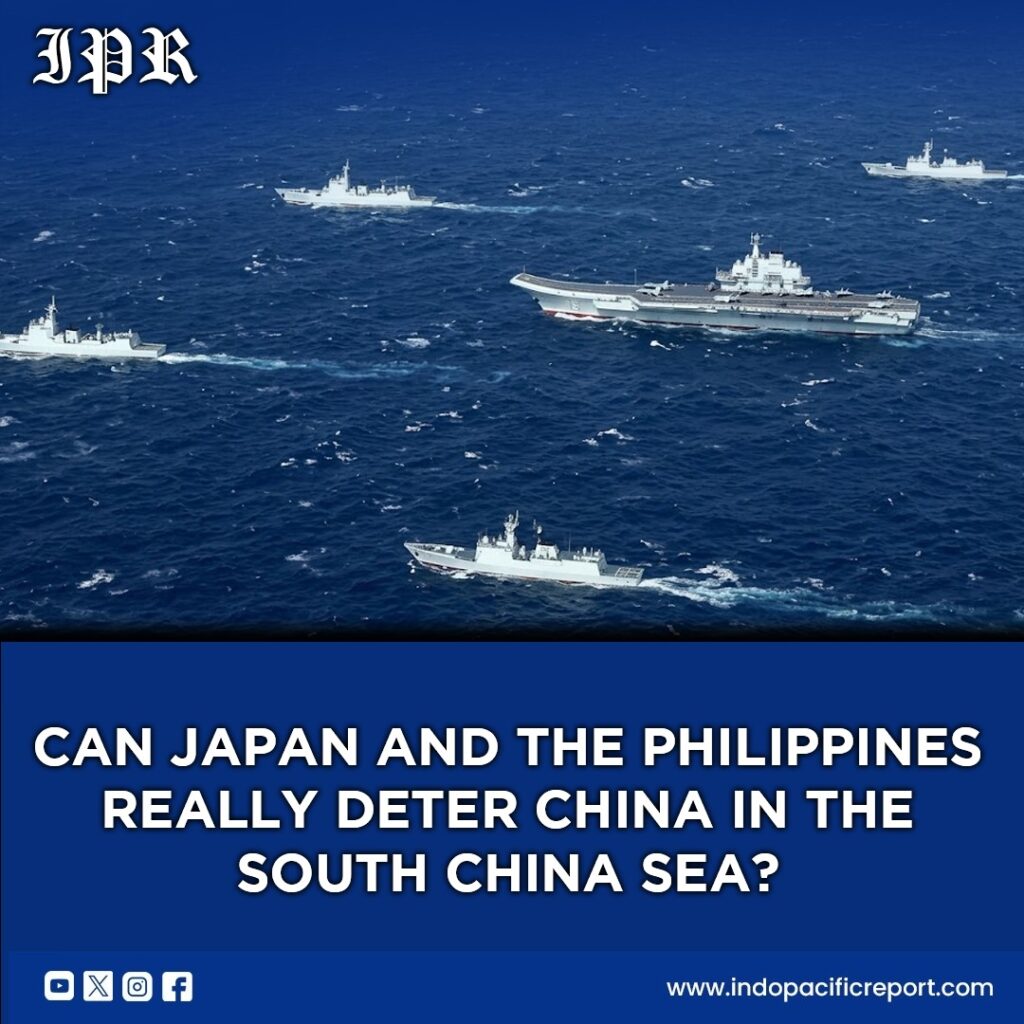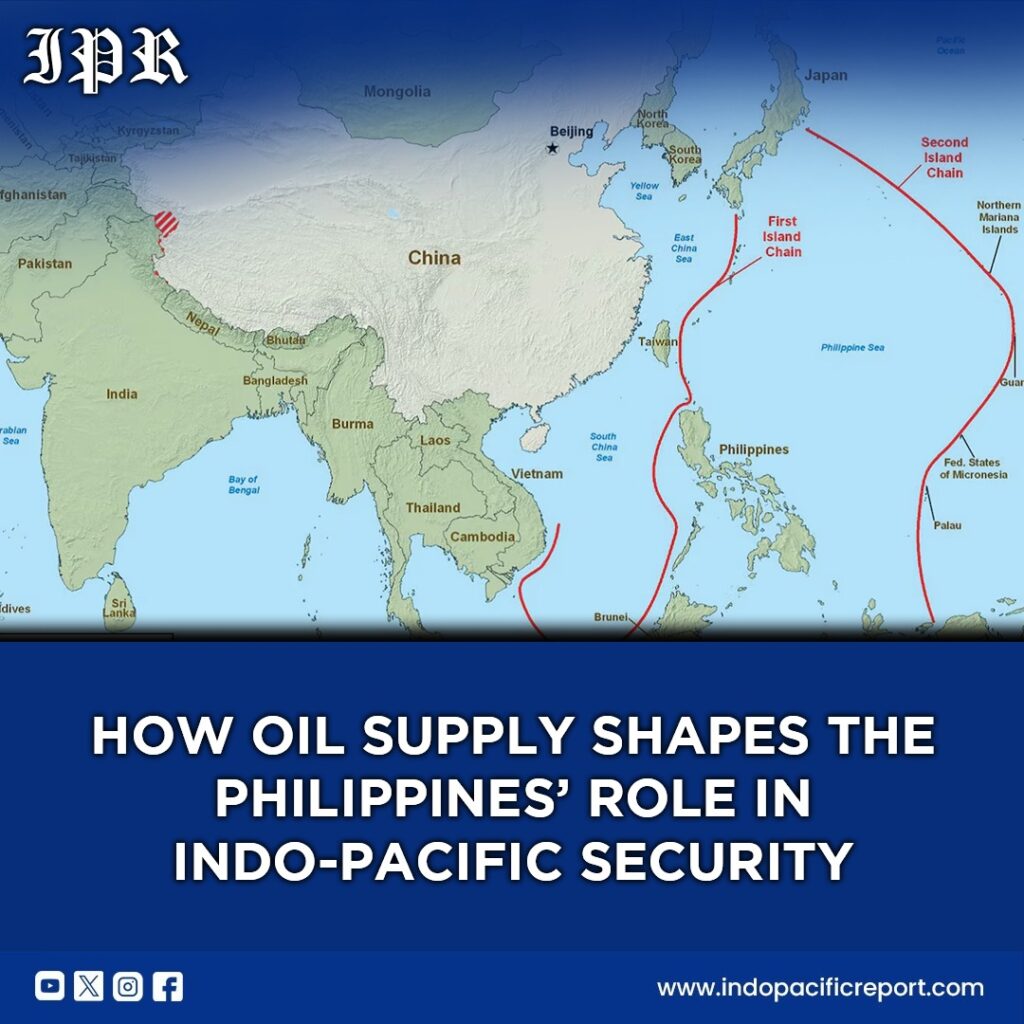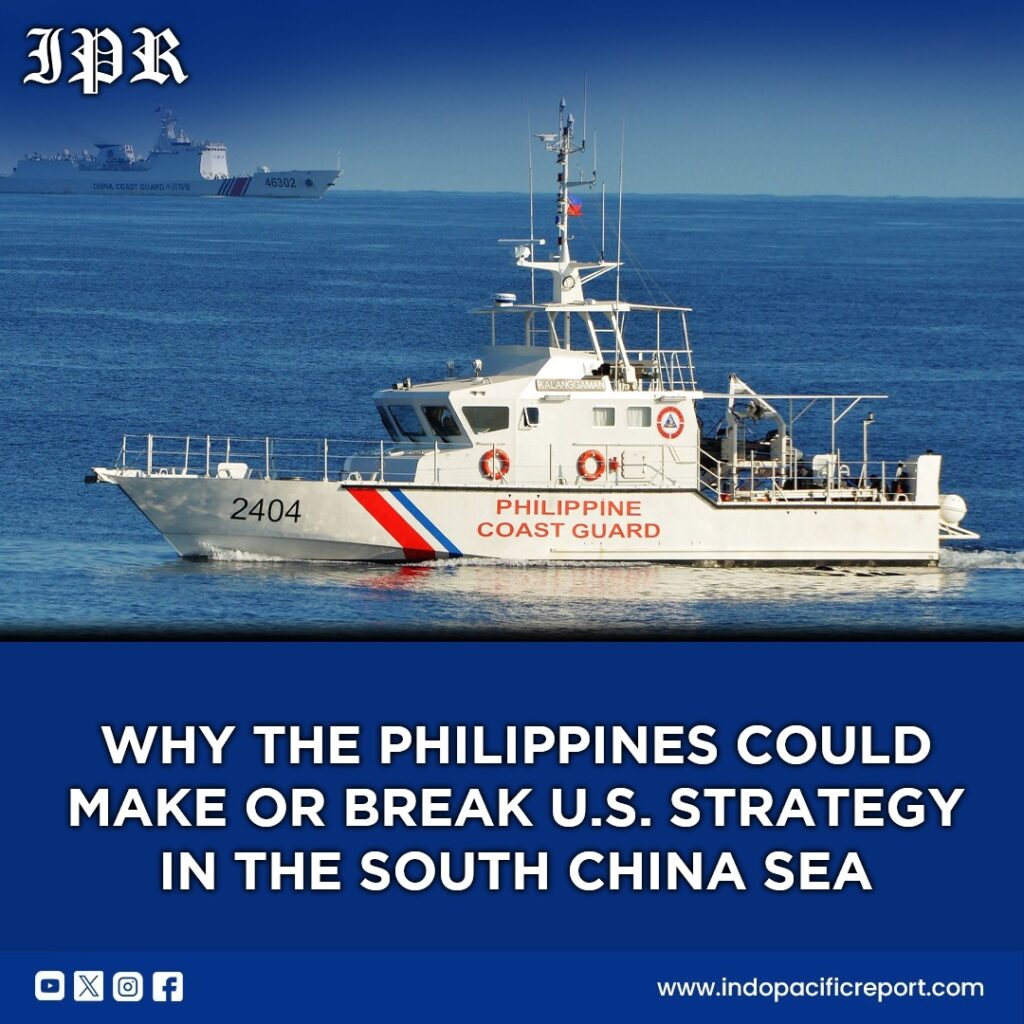
The Philippines is emerging as the critical litmus test for the United States’ denial strategy along the First Island Chain. The Pentagon’s National Defense Strategy emphasizes that credible deterrence is no longer defined solely by forward presence, but by whether allies can sustain operations under pressure. In this framework, Manila’s ability to maintain resilient, repairable, and politically legitimate military infrastructure will determine whether the U.S.-led strategy can prevent rapid adversary gains in the Indo-Pacific, particularly against the backdrop of China’s growing maritime assertiveness.
Great-power competition in the region is intensifying, and the Philippines occupies a central position. Northern Luzon and Palawan provide geographically advantageous locations for monitoring the Luzon Strait and the northern South China Sea, key maritime chokepoints that connect Taiwan, the Philippines, and broader regional sea lanes. Forward-deployed missile systems, rotational U.S. forces, and enhanced Philippine military capabilities extend the deterrent reach of the First Island Chain. Beijing’s routine maritime coercion—ranging from water cannon and ramming incidents to drone surveillance—illustrates the stakes: if Manila cannot politically and operationally sustain allied access, the credibility of denial as a counter to Chinese expansion is compromised.
Regional security architecture depends not only on U.S. military presence but also on resilient, distributed Philippine infrastructure. The 2014 Enhanced Defense Cooperation Agreement institutionalizes a “places, not bases” framework, enabling rotational deployments, prepositioning, and infrastructure development without permanent footprints. This distributed model aligns with contemporary concepts of survivable deterrence, emphasizing hardened facilities, dispersed logistics, redundant communications, and rapid repair capabilities. Such resilience is essential in an era where precision-strike missiles, cyberattacks, and electronic warfare could render fixed assets vulnerable.
Alliance dynamics are shaped as much by domestic politics as by geography or hardware. Manila’s sovereignty-conscious approach, demonstrated by constitutional and public scrutiny over defense agreements, underscores the fragility of alliance access in democratic settings. Past political shifts, such as the Duterte administration’s threats to terminate bilateral agreements, highlight the need for durable political legitimacy. U.S. policymakers must therefore ensure that deterrence infrastructure is framed as defensive, sovereignty-preserving, and capable of dual-use missions like humanitarian assistance. Political durability in Manila directly translates into operational credibility and strategic reliability for the alliance.
From a maritime and economic perspective, the Philippines’ role in the First Island Chain is indispensable. Northern Luzon and Palawan sit astride vital sea lanes through which a substantial portion of global trade flows. Effective denial requires that these islands support persistent surveillance, mobile coastal defenses, and logistical sustainment. The combination of maritime domain awareness, survivable missile systems, and rapid repair capabilities enhances deterrence not only by imposing costs on potential aggressors, but also by safeguarding the free flow of commerce essential to regional economic stability.
The implications for the Indo-Pacific balance of power are profound. A politically resilient, militarily capable Philippines strengthens the First Island Chain as a credible barrier against coercion and limits China’s ability to establish sustained control over maritime corridors. Conversely, if domestic politics or inadequate infrastructure undermine Manila’s operational endurance, the alliance risks appearing symbolic rather than substantive, inviting Chinese gray-zone pressure and probing operations. Ultimately, credible denial hinges on Philippine ownership of infrastructure and capabilities—distributed, hardened, and rapidly repairable assets that can endure under duress while reducing the political costs of alliance cooperation.
Looking ahead, Manila’s ability to sustain a resilient defense posture will determine whether the U.S.-Philippines partnership functions as the operational backbone of the First Island Chain. Investments in missile systems, prepositioning, distributed logistics, and rapid repair, paired with politically legitimate framing of defensive missions, will enhance deterrence credibility and regional stability. For Washington, the strategic lesson is clear: alliances are only as strong as their capacity to survive and operate under fire. The Philippines, by owning its segment of denial, could become the decisive node that shapes Indo-Pacific power dynamics for decades.
Hashtags:
#PhilippinesDefense #FirstIslandChain #USAllianceStrategy #SouthChinaSea #IndoPacificSecurity #MaritimeDeterrence #MissileDefense #ChinaContainment