To understand, why the Pacific Ocean is centre of geopolitical gravity in the 21st century, we’ll have to take a holistic look at how things evolved in the past and how they impacted the seas, the oceans and broader littoral geographies. Let us delve into the detail of it.
The invention of the wheel around 3500 B.C. was a pivotal moment in shaping human civilization. It revolutionized transportation, enabling the movement of people, goods, and materials over long distances. As civilizations advanced, the wheel’s use expanded into machinery like water wheels and eventually industrial equipment, significantly enhancing trade, agriculture, and construction. Alongside this, the development of written language allowed humans to record knowledge, communicate over distances, and preserve information for future generations, laying the foundation for education, governance, and intellectual progress.
In modern times, electricity has been the most transformative innovation. Its discovery in the late 19th century reshaped how people live, work, and interact. Electricity powers almost all modern technologies, from lighting and appliances to the internet and medical advancements, driving the digital revolution that has connected the world. Each of these key innovations—the wheel, writing, and electricity—represents a milestone in humanity’s continuous journey of transformation, with each breakthrough building upon the last to push the boundaries of what’s possible.
The Aegean Sea: Sea of the City States
Let us journey through the ancient times and look at how geographies have been shaped with respect to these developments. In our quest, first we’ll journey from ancient Mesopotamia where the wheel was invented, westward to the shores of the Aegean Sea, a region once teeming with wealth, power, and advanced knowledge, was the center of gravity for global power dynamics.
Here, city-states, or poleis, emerged as the foundational structure of ancient Greek society, comprising urban centers and surrounding countryside. Each polis was fortified and featured public spaces with temples and government buildings, often atop an acropolis, like Athens’ Parthenon, dedicated to the goddess Athena. Over 1,000 littoral city-states flourished, with major ones such as Athens, Sparta, Corinth, and Thebes exhibiting diverse governance and values. Sparta prioritized military strength, while Athens championed democracy and culture.
The Mediterranean Sea: Mare Nostrum
As the city states grew in size and power, the geopolitical centre stage moved from the congested Aegean Sea to the broader Mediterranean sea. The Mediterranean Sea gained prominence after the Aegean Sea as the center of power and influence shifted from the Greek city-states to larger empires, particularly the Roman Empire. Initially, the Aegean Sea was central to the rise of the ancient Greek civilizations, with its islands and coastlines being hubs of trade, culture, and political power. However, as the Roman Republic expanded and later became the Roman Empire, it conquered territories surrounding the entire Mediterranean, transforming it into what the Romans called “Mare Nostrum” (Our Sea).
The Roman Empire used the Mediterranean for trade, military campaigns, and governance, uniting regions from North Africa, Southern Europe, and the Middle East under its control. The strategic location of the Mediterranean facilitated extensive maritime trade routes, connecting Europe, Africa, and Asia, and enabled the exchange of goods, culture, and ideas. During the height of Roman control over the Mediterranean in the 1st century BCE, the economy was thriving, driven by extensive trade routes that connected Europe, Africa, and Asia. Key goods such as grain from Egypt, olive oil from Spain, wine from Italy, and luxury items like silk and spices from the East flowed across the empire, supported by a sophisticated road network and naval dominance.
Politics were centralized under Roman rule, with the emperor holding supreme authority, supported by a complex bureaucracy. Roman law and governance were imposed across the provinces, although local customs and leaders were often maintained to ensure stability. The Roman Senate, while diminished in power compared to the Republican era, still played a role in governance, particularly in domestic affairs. Demographically, the Roman Empire was highly diverse, encompassing a vast array of cultures, languages, and ethnic groups. Major urban centers like Rome, Alexandria, and Carthage were cosmopolitan hubs with large populations.
The Vast Atlantic Ocean
Fast-forward several millennia, towards the west of the Mediterranean sea, the Atlantic Ocean gained significance on a global scale during the Age of Exploration in the late 15th century. This period marked a shift in maritime focus from the Mediterranean to the Atlantic as European powers, particularly Spain and Portugal, sought new trade routes to Asia and the Americas.
In his book,Monsoon: The Indian Ocean and the Future of American Power, Robert D Kaplan argued that the voyages, “par orientis” “towards the east” and “par occidentis” “towards the west” were baptized by the church, but they were a direct result of the latest invention in ship making and the ships made were named, “Caravel”. They were strong, modern and agile, and helped to fare faster and safer. The explorations by European powers during the Age of Exploration, voyages “to the east” typically referred to the search for trade routes to Asia (like Vasco da Gama’s voyage to India in 1498), while voyages “to the west” referred to expeditions across the Atlantic, like Christopher Columbus’s voyage in 1492.
The discovery of the Americas by Christopher Columbus in 1492 and the rounding of the Cape of Good Hope by Vasco da Gama in 1498 opened new frontiers for exploration, colonization, and trade. The Atlantic became the main artery for the exchange of goods, people, and ideas between Europe, Africa, and the Americas, leading to the rise of the Atlantic trade networks. This included the transatlantic slave trade, the Columbian Exchange of crops and animals, and the expansion of European empires.
By the 17th and 18th centuries, the Atlantic had overtaken the Mediterranean as the primary economic and political theater, with powers like Britain, France, Spain, and Portugal establishing global maritime empires. The Atlantic’s significance continued to grow into the modern era, becoming central to trade, military strategy, and cultural exchanges between the continents.
During the 19th century, the Atlantic became a critical force in the rise of industrialized nations. The abolition of the Atlantic slave trade early in the century led European powers to focus on global commerce and colonization, particularly in Africa and the Americas. The invention of the steamship revolutionized maritime transport, making Atlantic crossings faster and more reliable. Millions of Europeans migrated to the Americas, especially the U.S., driving economic growth and urbanization on both sides of the ocean. The installation of the Transatlantic Cable in 1866 allowed instant communication between Europe and North America, transforming diplomacy, business, and financial exchanges.
The volume of trade across the Atlantic grew significantly due to the Industrial Revolution. By the mid-19th century, transatlantic trade in goods like cotton, sugar, tobacco, manufactured goods, and raw materials had reached unprecedented levels, with steamships dramatically reducing the time needed for transport. Between 1800 and 1850, British trade across the Atlantic increased fivefold, and by the late 19th century, British exports across the ocean were worth £230 million. Migration also boosted trade, as millions of European migrants created demand for goods and sent remittances home. Free trade policies, such as the repeal of the British Corn Laws in 1846, further spurred the expansion of transatlantic commerce.
By the 20th century, the Atlantic remained a key strategic and economic space, particularly during both World Wars. The Battle of the Atlantic in World War II was crucial for maintaining supply lines between North America and Europe, while after the war, the Atlantic’s importance persisted during the Cold War as NATO guarded the ocean against Soviet threats. The rise of commercial air travel reduced the Atlantic’s role in maritime transport, but it enhanced its importance as a global bridge for air travel and international diplomacy. Meanwhile, the growth of multinational corporations and the development of new industries like oil ensured that Atlantic nations continued to dominate global trade and politics.
Transatlantic trade expanded significantly during the 20th century, with surges following both World Wars. In 1913, global trade reached over $38 billion, with a significant share involving Atlantic powers like the U.S., Britain, Germany, and France. By 1970, world trade volume had surpassed $260 billion, driven by post-war recovery efforts such as the Marshall Plan and facilitated by international agreements like GATT. By the late 20th century, trade between the U.S. and Europe alone exceeded $1 trillion annually, particularly in high-value goods like machinery, chemicals, and technology. The Atlantic’s role as a central artery for global trade and movement of ideas made it one of the busiest trade routes of the century.
The Pacific Ocean: Vast and the Deepest
Let’s come to our contemporary age, as with the dawn of the 21st century, things are taking another course one more time and the center of gravity is shifting once again. On the western coast of the great Atlantic ocean, in the capitol hills of Washington, the secretary of state, Hillary Clinton gave a clue about this shift in gravity, as she talked about shifting the country’s broader foreign policy priorities in the Pacific Ocean from the Atlantic in the 21st century.
Observing from the broader Pacific Ocean region can provide a clearer perspective on the gravity of these changes. Starting from the western coast of the United States, there lies California, the global hub of technology and innovation, where Silicon Valley stands as a symbol of cutting-edge advancements and entrepreneurial spirit. This epicentre of technological development not only drives global tech trends but also brings significant economic and strategic importance to the Pacific region.
The Scale and the Gravity
Now, as we are voyaging through the regions, Let’s get deep inland towards the western littoral states of the great Pacific Ocean.
China
If we travel about 373 miles upstream on the Yangtze River, we’ll find The Three Gorges Dam in Hubei province of China. The dam is enormous and is a marvel of human engineering. It gives the footprints about the level of advancements that humans have so far achieved, since the invention of the wheel in ancient Mesopotamia. The dam is multipurpose and it alone can generate massive 22,500 megawatts (MW) of electricity. The giant dam is made to fulfill the energy demands of the enormous Dragon economy, to supply power to millions of homes and businesses in the Eastern developed coasts of China.
As of water holding capacity, the Three Gorges Dam holds a massive volume of water, approximately 42 billion tons. This significant mass of water has a measurable impact on the Earth’s rotation. Specifically, it is estimated that the dam’s water storage has increased the length of a day by about 0.06 microseconds. Moving along the coastal regions of China, one can easily understand the enormity of transformation, and how China has lifted unprecedented millions of its populace out of poverty in just a few decades.
Japan – The Most Industrialized Nation
Alongside China lies Japan, which stands out as one of the most industrialized nations along the Pacific Ocean littorals, renowned for its technological leadership and manufacturing prowess. With a GDP of approximately $4.11 trillion as of 2024, Japan is the world’s fourth-largest economy and a major exporter, particularly in automobiles, electronics, and machinery, with Toyota being the largest automobile manufacturer globally. The country’s rapid post-World War II recovery transformed it into an economic powerhouse, and its strategic Pacific location has reinforced its role in global trade. Despite facing demographic challenges, with 28.7% of its population over 65 years old, Japan continues to lead in technological innovation, particularly in robotics, to address labor shortages.
South Korea: Tech and Global Manufacturing Leader
South Korea is a global leader in industries such as electronics, automotive, shipbuilding, and semiconductors. The country’s economy, valued at over $1.761 trillion in GDP is largely driven by its advanced technological sector. South Korean conglomerates like Samsung, LG, and Hyundai are household names worldwide and dominate markets in smartphones, home appliances, and automobiles.
Taiwan: Global Semiconductor and Tech Hub
Taiwan, although smaller in size, plays a disproportionately large role in the global economy due to its dominance in semiconductor manufacturing and electronics. With a GDP of over $791.61 billion in 2024, its economy is heavily export-oriented, with semiconductors being the backbone of its industrial might. Taiwan Semiconductor Manufacturing Company (TSMC), the world’s largest contract chipmaker, accounts for over 54% of the global foundry market. TSMC is the main supplier of chips for tech giants like Apple, Nvidia, and Qualcomm. Taiwan’s semiconductor industry is projected to generate over $154 billion in revenue in 2024 alone.
Although Taiwan is an Island nation, but it has gained so much leverage through semiconductors manufacturing, that the Economist wrote like this about Taiwan, “Without Taiwan, the world economy would grind to a halt,”
The 10 ASEAN Nation States
Likewise, if we move to the south, we encounter one of the most progressive blocs in the world: ASEAN, comprising 10 dynamic economies as littoral states of the Pacific.
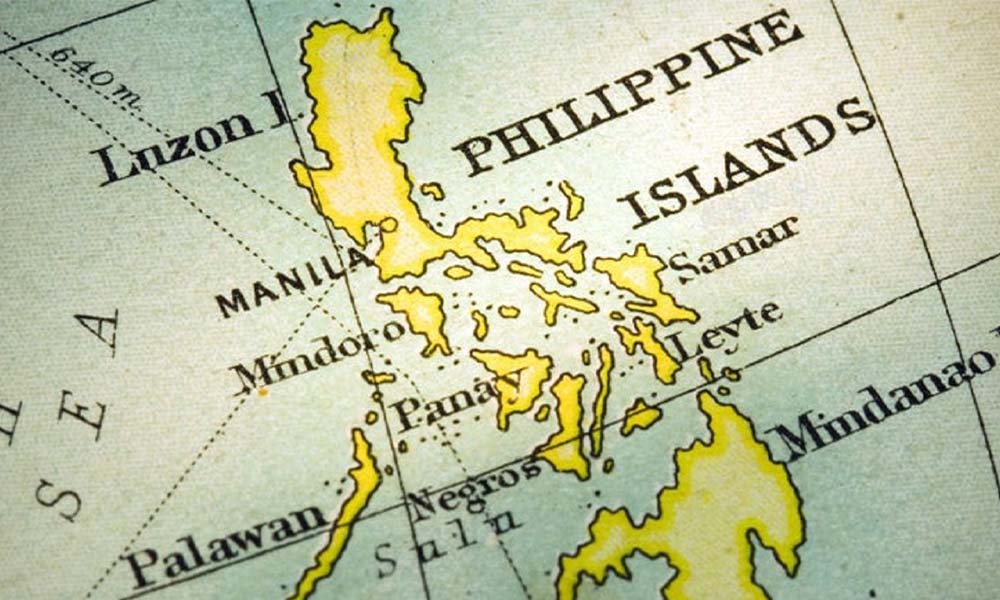
The Philippines has an extremely young population of approximately 119 million people, with a median age of just 25. This youthful demography gives the country a competitive advantage in labor-intensive businesses, such as business process outsourcing (BPO) and manufacturing.
Indonesia is the world’s largest archipelagic country, with a population of more than 280 million. Its vast size and abundant natural resources make it an important player in areas like energy, agriculture, and industry. Indonesia is also expected to become one of the top ten global economies by 2030.
Vietnam has experienced unprecedented economic expansion, by becoming an important industrial hub. With a population of more than 100 million, Vietnam is known for its strong export sectors, particularly in electronics, textiles and footwear, making it a key part of global supply chains.
Malaysia, with a 34 million populace, remains a regional leader in electronics, petroleum, and palm oil production.
Singapore, the tiny city-state, stands out as another economic powerhouse in the region. Despite its small size, Singapore’s GDP in 2024 is projected to be around $550 billion, making it one of the wealthiest countries in the world in terms of GDP per capita.
The ASEAN region, with its combined population of over 680 million people, represents one of the most vibrant economic areas globally. The bloc’s total GDP is projected to exceed $4 trillion in 2024, positioning it as a critical player along the Pacific region.
Australia & New Zealand
Moving further south, we encounter Australia and New Zealand, two highly developed Pacific nations with significant global influence. Australia, with over 26 million people, boasts a strong economy driven by vast natural resources like iron ore, coal, and natural gas, positioning it as a global leader in mining, agriculture, and energy exports. Its strategic ties with both Asia and the West make it a key player in Indo-Pacific trade and security. New Zealand, with a population of over 5.2 million, excels in agricultural exports, particularly dairy and meat, and is recognized for its leadership in environmental sustainability and renewable energy.
Economical, Political & Demographic Significance
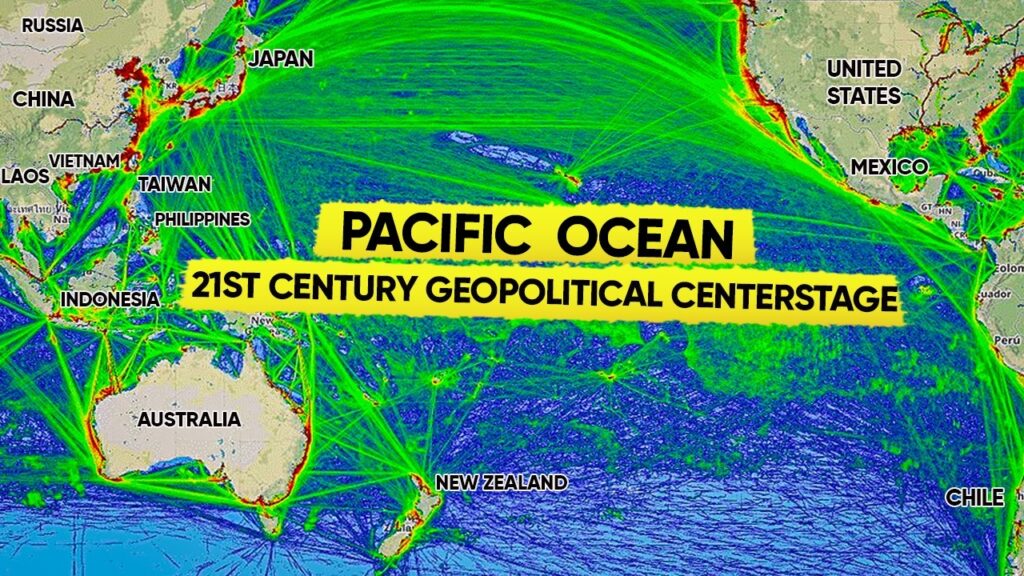
In the 21st century, the Pacific Ocean holds immense economic, political, and demographic significance, serving as a vital hub for international trade, geopolitical competition, and environmental sustainability. More than 60% of global shipping passes through its waters, connecting major economic powers such as the United States, China, Japan, and Southeast Asia, making it a critical artery for global supply chains. The Pacific has also become a central stage for geopolitical tensions, particularly between the U.S. and China, as both seek dominance in the region through military and economic influence. With its rapidly growing and diverse population, particularly in East and Southeast Asia, the Pacific region is driving global economic growth and innovation, while its cultural diversity shapes global trends.
Discussing Geo-Politics and GeoStrategy in the Pacific Ocean
The Pacific region is rapidly becoming a geopolitical hotbed, with rising tensions involving major global powers, particularly the U.S. and China. Conflicts in the area extend across economic, military, and strategic lines, making the Pacific a crucial theater for 21st-century power struggles.
US Vs China: The New Cold War
The U.S.-China rivalry is at the center of Pacific tensions, with both nations vying for dominance in the region. The U.S. seeks to maintain its influence through alliances like AUKUS (with Australia and the UK) and QUAD (with Japan, India, and Australia), while China pushes back with its Belt and Road Initiative (BRI) and military buildup in the South China Sea. China’s military budget has surged to around $230 billion, making it the second-largest defense spender in the world after the U.S., which spends $886 billion. The two powers are locked in a struggle for control over sea routes, technology, and influence over regional allies.
“The U.S. is now in a de facto Cold War with China,” says Richard Fontaine, CEO of the Center for a New American Security.
China Vs Philippines: The South China Sea Flashpoint
The South China Sea remains one of the most contentious locations, with China claiming practically the whole region under its “Nine-Dash Line” policy, which conflicts with the territorial waters of numerous Southeast Asian countries, most notably the Philippines. Recently, the Philippines has taken a more proactive position, increasing military ties with the United States and hosting enlarged military sites under the Enhanced Defense Cooperation Agreement (EDCA). The region sees frequent confrontations between Chinese and Filipino ships, with tensions escalating as China tries to push its claims.
“The Philippines is at the front line of Chinese aggression,” according to security analyst Richard Heydarian.
US Vs South Korea: Differing Interests
South Korea is a vital ally of the United States. The strengthening economic ties between South Korea and China, its biggest trading partner, are complicating its security relationship with the United States. South Korea is balancing its reliance on China for economic support and the United States for military defense against North Korea by walking a tightrope. This careful balancing job has occasionally resulted in conflict, particularly with regard to matters such as THAAD (Terminal High Altitude Area Defense), an American missile defense system that has infuriated parts of China and the South Korean populace.
“South Korea is caught between two giants, and the pressure is mounting,” says a South Korean foreign policy expert.
US Vs Russia: Increasing Tensions in the Pacific
Although Europe receives the majority of attention when discussing U.S.-Russian relations, there is also a resurgence of antagonism in the Pacific theater. Russia is stepping up its military presence in the Kuril Islands, a region that Japan claims is disputed. Russia has held joint military drills in the Pacific as a means of strengthening its relationship with China despite growing isolation and U.S. sanctions. In response, the United States has increased its military presence in South Korea and Japan.
“Russia’s Pacific ambitions are part of its broader strategy to challenge U.S. dominance in global affairs,” notes an expert from the Council on Foreign Relations.
The Broader Geopolitical Picture
The Pacific region’s importance goes beyond just military conflict. It’s a global economic hub, home to 60% of the world’s population and responsible for over 50% of global GDP. The Pacific’s sea lanes are vital for global trade, carrying trillions of dollars worth of goods annually. This strategic value is one reason why powers like the U.S., China, and Russia are keen to assert influence. With its mix of economic competition, military buildup, and territorial disputes.
As a former U.S. Secretary of Defense James Mattis once put it: “The Pacific is the future, and all the players know it.”
Bottom Line
In the 21st century, the Pacific has emerged as the new center of gravity for world politics, becoming the focal point for global conflicts and strategic maneuvering. This vast and crucial region is where the world’s most significant power struggles are unfolding. The intense rivalry between the U.S. and China over influence, control of key sea routes, and regional dominance highlights the Pacific’s strategic importance. As these superpowers navigate their competing interests, the economic dynamism and military buildup in the Pacific add to its central role on the global stage. The region is not just a hotspot for geopolitical tension; it is shaping the future of international relations, making it the key battleground for 21st-century global power.