The New Flashpoint in a High-Stakes Maritime Chessboard
Beneath the glistening waves of the South China Sea lies Sabina Shoal, a seemingly ordinary stretch of reef that has now become the stage for extraordinary tensions. A dramatic collision between Chinese and Philippine vessels ignited fresh sparks in an already volatile dispute. Known as Xianbin Jiao in China and Escoda Shoal in the Philippines, this contested territory is more than just a blip on the map—it’s a powder keg of strategic value, resource potential, and national pride.
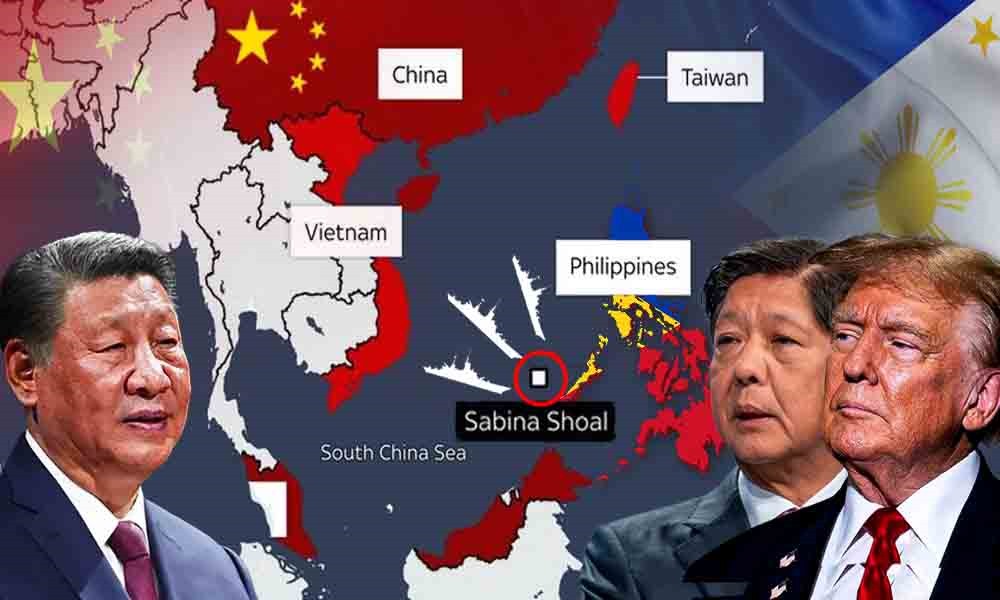
Positioned just 75 nautical miles from the Philippines but over 600 nautical miles from China, the shoal’s location tells one story, but its ownership battle tells another. As accusations of deliberate ramming and naval intimidation fly, Sabina Shoal is emerging as the latest symbol of a struggle that could shape the future of the region.
Sabina Shoal: A Crucial Speck in the South China Sea
Tucked away in the heart of the South China Sea, Sabina Shoal lies just 75 nautical miles off the western coast of the Philippines and 630 nautical miles from mainland China. This small, submerged feature has become the focal point of a high-stakes geopolitical contest, holding immense strategic value as both a potential military outpost and a gateway to vital maritime trade routes. Part of the contested Spratly Islands, Sabina Shoal is believed to sit atop untapped oil, gas, and marine resources, making it even more coveted.
The shoal lies within the Philippines’ Exclusive Economic Zone (EEZ) as per the United Nations Convention on the Law of the Sea (UNCLOS), yet China claims it under its controversial “Nine-Dash Line.” For China, control over Sabina Shoal is key to asserting dominance in the South China Sea, a critical waterway for global trade. For the Philippines, the shoal represents a vital part of its sovereignty, economic interests, and national security. As tensions rise, Sabina Shoal stands as a microcosm of the broader struggle for territorial control and regional influence in one of the world’s most contested maritime zones.
The Ongoing Dispute: Clashes Beneath and Above the Waves
Ownership of Sabina Shoal remains shrouded in tension, underscored by frequent encounters between Chinese and Philippine vessels. The shoal has become a hotspot for incidents, with both nations accusing the other of aggressive tactics ranging from maritime blockades to intentional ramming of vessels. Just last week, a collision near the shoal reignited tensions, with both countries claiming the other provoked the incident.
While the Philippines relies on international law to uphold its claim, China has intensified its presence in the area with militia ships and artificial island-building campaigns. These clashes not only threaten regional peace but also underscore the broader power struggle between a rising China and its neighbors backed by the United States and allied forces.
Sabina Shoal: Historical Context and the Roots of Dispute
Historical Claims: A Murky Trail of Ownership
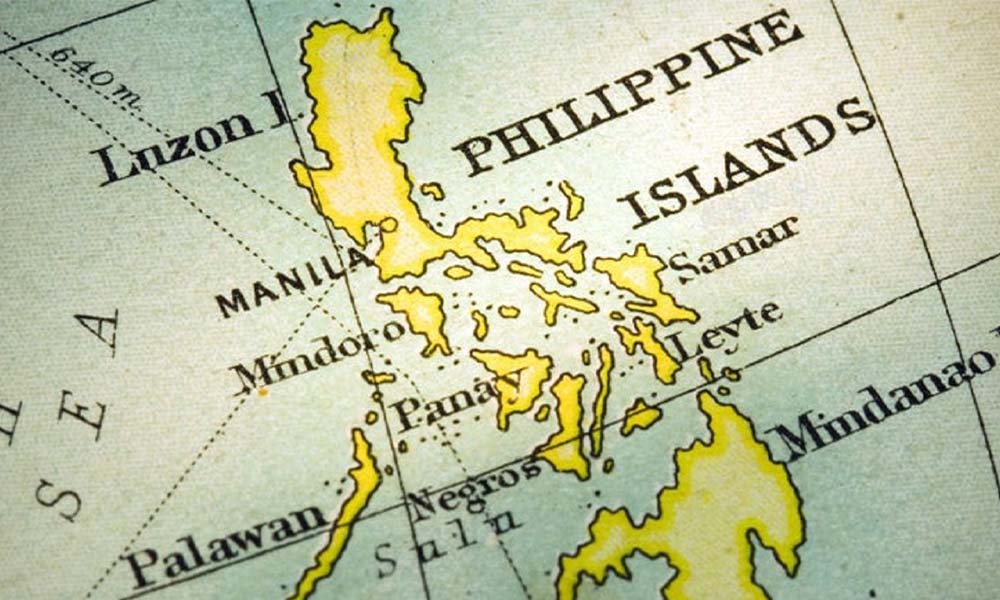
The ownership of Sabina Shoal, like much of the South China Sea, is a puzzle shaped by centuries of shifting power, conflicting maps, and overlapping claims. Historical maps from the 17th and 18th centuries offer little clarity, as they depict varying territorial boundaries across the region. China bases its claim on the infamous “Nine-Dash Line,” a vaguely defined maritime boundary first formalized in 1947.
Chinese officials argue that Sabina Shoal, known as Xianbin Jiao, has historically been part of Chinese maritime territory. Professor Carlyle Thayer, Emeritus Professor at the University of New South Wales, points out, “While China asserts historical rights based on the ‘Nine-Dash Line,’ these claims lack legal basis under international law, as affirmed by the 2016 South China Sea Arbitration.”
The Philippines counters this narrative with its own historical evidence, including colonial-era treaties and maps. Spanish and American-era documents, such as the Treaty of Paris (1898), delineate Philippine territorial boundaries, which Manila asserts include Sabina Shoal, known locally as Escoda Shoal.
Taiwan and Vietnam have also staked claims in the broader Spratly region, arguing their historical ties through periods of territorial control and documented naval activity. As Dr. Ian Storey, Senior Fellow at the ISEAS – Yusof Ishak Institute, explains, “The ambiguity of historical maps and the lack of clear, universally recognized boundaries have contributed significantly to the current territorial disputes.”
Historical Treaties and Agreements: Unsettling Ambiguities
Several treaties and agreements from the colonial era play a role in the tangled ownership claims over Sabina Shoal. The Treaty of Paris, which marked the end of the Spanish-American War in 1898, transferred the Philippines to U.S. control and set specific territorial boundaries, leaving certain maritime areas undefined. China’s claim to the South China Sea relies heavily on its interpretation of historical usage, bolstered by the “Nine-Dash Line” introduced by the Nationalist government. This claim was dismissed as lacking legal merit in the 2016 Hague ruling.
Adding to the complexity, Japan’s occupation of the South China Sea during World War II disrupted existing territorial arrangements. Following the war, the 1951 San Francisco Peace Treaty failed to clearly allocate sovereignty over the disputed areas, leaving room for competing claims. Vietnam also refers to historical documents from its Nguyen Dynasty, which allegedly conducted naval patrols in the Spratly Islands, including nearby features like Sabina Shoal.
Regional Dynamics: The Echoes of History
Historical power struggles and regional rivalries have left a lasting imprint on the South China Sea dispute. The rise of China as a regional superpower has intensified territorial claims, with Beijing using historical narratives as a cornerstone of its foreign policy.In order to combat China’s aggression, the Philippines is working to fortify its ties with the US and other regional allies, supported by the 2016 arbitration decision.
“The US-China rivalry has cast a long shadow over the South China Sea, with both powers vying for influence and seeking to maintain their strategic interests,” notes Dr. Mira Rapp-Hooper, Senior Fellow for Asia at the Council on Foreign Relations. These dynamics have drawn other claimants, like Vietnam and Taiwan, into a precarious balancing act, navigating between securing their territorial claims and avoiding escalation with China.
The historical backdrop of Sabina Shoal reveals a deeply entangled dispute, where ambiguous maps, colonial-era treaties, and power struggles have shaped competing claims. As the South China Sea remains a cauldron of regional tensions, understanding its historical context is essential to unraveling the geopolitical complexities of today.
Current Claimants: Navigating the Complex Web of Ownership
The ongoing territorial dispute over Sabina Shoal involves multiple claimants, each asserting sovereignty based on historical, legal, and strategic grounds. The primary contenders include the Philippines and China, with other regional stakeholders like Vietnam and Malaysia also expressing interests in the broader South China Sea region.
Philippines’ Position: Upholding International Law
The Philippines asserts that Sabina Shoal lies within its 200-nautical-mile Exclusive Economic Zone (EEZ), as defined by the United Nations Convention on the Law of the Sea (UNCLOS). This stance was bolstered by the 2016 ruling from the Permanent Court of Arbitration (PCA), which invalidated China’s expansive “Nine-Dash Line” claim over the South China Sea. The PCA’s decision reinforced the Philippines’ sovereign rights over areas like Sabina Shoal.
In recent years, the Philippines has reported multiple confrontations with Chinese vessels near Sabina Shoal. Incidents include allegations of Chinese ships ramming Philippine boats and deploying water cannons against them. These aggressive actions have prompted the Philippines to enhance its maritime patrols and consider legal actions against China for environmental damages within its EEZ.
China’s Position: Asserting Historical Claims
China claims Sabina Shoal, referred to as Xianbin Jiao, as part of its “historical waters” encompassed by the “Nine-Dash Line.” Despite the 2016 PCA ruling rejecting this claim, China continues to assert sovereignty over the area. To reinforce its position, China has increased its military and paramilitary presence around Sabina Shoal, including deploying maritime militia vessels. These actions are viewed as efforts to establish de facto control over the disputed territory.
Other Stakeholders: Regional Interests and International Dynamics
Beyond the Philippines and China, other ASEAN countries, notably Vietnam and Malaysia, have overlapping claims in the South China Sea. While their assertions do not specifically target Sabina Shoal, the broader territorial disputes contribute to regional tensions. The United States plays a significant role through its Freedom of Navigation Operations (FONOPs), challenging China’s maritime claims and advocating for open sea lanes.
These operations underscore the U.S. commitment to maintaining international maritime norms and supporting allies like the Philippines in the face of China’s assertiveness In summary, the dispute over Sabina Shoal epitomizes the broader complexities of South China Sea territorial conflicts, involving a mix of historical claims, international law, and strategic interests among regional and global powers.
Military Presence Around Sabina Shoal
The military buildup and activity in the vicinity of Sabina Shoal reflect the broader tensions in the South China Sea, as competing nations assert their sovereignty through both soft and hard power. This contested space has seen a dramatic increase in military presence, raising concerns over the potential for escalation.
China: Expanding Military Reach
China has been at the forefront of militarizing the South China Sea. Beyond deploying maritime militia and coast guard vessels near Sabina Shoal, Beijing has fortified artificial islands throughout the region. These outposts are equipped with advanced military hardware, including anti-ship cruise missiles, surface-to-air missile systems, and sophisticated radar installations.
“The militarization of the South China Sea significantly increases the risk of miscalculation and accidental clashes, potentially escalating tensions into a larger conflict,” warns Dr. Bonnie Glaser, Director of the China Power Project at the Center for Strategic and International Studies.
Chinese vessels near Sabina Shoal often operate in coordinated formations, blending military assets with civilian-looking maritime militia. Such strategies create a gray zone conflict environment, complicating the enforcement of international maritime law.
Philippines: Strengthening Defenses
The Philippines, while militarily less equipped than China, has been ramping up its presence around Sabina Shoal. With the support of allies such as the United States, it has increased coast guard patrols and sought to modernize its naval and air capabilities. Recent incidents, including Chinese vessels blocking Philippine supply ships and deploying water cannons, have intensified Manila’s calls for international support.
In response, the Philippines has considered expanding the deployment of its navy and coast guard in the area to prevent encroachment. Joint military exercises with the United States and other allies further underscore its resolve to defend its maritime rights.
United States: Freedom of Navigation Operations (FONOPs)
The United States Navy frequently conducts Freedom of Navigation Operations (FONOPs) in the South China Sea to challenge China’s expansive territorial claims. These operations often involve warships sailing near disputed features, including areas close to Sabina Shoal.
“Freedom of navigation operations by the US Navy in the South China Sea have led to tense encounters with Chinese naval and coast guard vessels, highlighting the potential for unintended incidents.”
While the U.S. does not claim sovereignty over any part of the South China Sea, its presence serves as a deterrent against unilateral actions by China, signaling support for the Philippines and other regional allies.
The Risks of Military Escalation
The increasing militarization of the South China Sea, coupled with the proximity of opposing forces near Sabina Shoal, has heightened the risk of military escalation. Even minor incidents, such as accidental collisions or miscommunications, could trigger larger conflicts involving multiple powers.
The strategic importance of Sabina Shoal—as a critical waypoint within the contested waters—means that any conflict in its vicinity could have wide-ranging geopolitical implications. As nations continue to bolster their military presence, the need for de-escalation mechanisms and dialogue grows ever more urgent.
Strategic Importance of Sabina Shoal
Control and Influence
Sabina Shoal, a small but highly significant feature in the South China Sea, represents more than just a maritime claim; it is a geopolitical chess piece in one of the world’s most contested regions. For China, asserting control over Sabina Shoal is part of a broader strategy to solidify its dominance in the South China Sea. By incorporating this feature into its maritime territory, China can project power deeper into Southeast Asia, establish forward operating bases, and challenge the maritime sovereignty of its neighbors.
For the Philippines, retaining control over Sabina Shoal is critical for safeguarding its Exclusive Economic Zone (EEZ), securing resources, and maintaining its territorial integrity.
“Control over strategic maritime features like Sabina Shoal is the linchpin for influence and security in the South China Sea,” explains geopolitical analyst Gregory Poling from the Asia Maritime Transparency Initiative.
The U.S.-China rivalry casts a long shadow over the South China Sea dispute. China’s presence in Sabina Shoal extends its ability to monitor and potentially disrupt critical sea lanes, through which one-third of global trade passes. The shoal also provides a foothold to challenge U.S. naval dominance in the region, which Beijing views as a threat to its security and ambitions.
In response, the United States has ramped up joint military drills with the Philippines and expanded its Freedom of Navigation Operations (FONOPs) to reinforce the principle of open seas. These actions are seen as a direct counter to China’s growing influence, further intensifying tensions in the region.
Economic Impacts
Marine Resources Under Threat
The South China Sea is not just a strategic waterway but also an economic treasure trove. Fisheries around Sabina Shoal are critical for the livelihoods of millions in Southeast Asia. However, overexploitation, often exacerbated by Chinese fishing fleets and maritime militia, threatens marine biodiversity and endangers long-term sustainability.
Oil and Gas Reserves
The economic stakes extend beneath the waves, where the South China Sea is believed to hold immense untapped energy resources. According to the U.S. Energy Information Administration, the region boasts an estimated 11 billion barrels of oil and 190 trillion cubic feet of natural gas. While the exact reserves near Sabina Shoal remain uncertain, its strategic location makes it a potential hotspot for exploration. Control over such resources would provide significant economic and energy security benefits to the dominant claimant.
International Law and the Sabina Shoals Dispute
Legal Frameworks
The UN Convention on the Law of the Sea (UNCLOS) serves as the primary framework for maritime disputes, defining Exclusive Economic Zones (EEZs) and continental shelves. Under UNCLOS, Sabina Shoal lies within the Philippines’ EEZ. However, China contests this, citing “historical rights” under its controversial nine-dash line.
“The ambiguity of international law and the lack of enforcement mechanisms often leave such disputes unresolved,” notes Dr. Alexander Vuving, Director of the Asia Program at the Daniel K. Inouye Asia-Pacific Center for Security Studies.
2016 PCA Ruling
The Permanent Court of Arbitration invalidated China’s nine-dash line in 2016, affirming the Philippines’ rights over its EEZ, including Sabina Shoal. Despite the ruling, China rejected it outright, continuing its maritime assertiveness.
“The 2016 arbitration ruling set a legal precedent, but enforcement remains the Achilles’ heel of international law,” says Dr. Vuving.
Global Reactions
The U.S., Japan, and Australia openly supported the ruling, emphasizing freedom of navigation, while ASEAN nations tread cautiously due to economic reliance on China.
“Freedom of navigation in the South China Sea is a national interest,” stated former U.S. Secretary of State Hillary Clinton.
Strategic Significance and Escalation Risks
Sabina Shoal holds strategic value as a maritime chokepoint for global trade and a potential flashpoint for conflict. It underscores regional military dominance and resource access, further entangling global powers.
“Unresolved disputes in the South China Sea heighten risks of miscalculation and escalation, potentially dragging in major powers,” explains Dr. Michael Green, Senior Vice President for Asia at CSIS.
The ongoing Sabina Shoal dispute reflects the broader challenges of enforcing international law in geopolitically sensitive regions, leaving room for diplomatic initiatives or potential flashpoints for conflict.
Conclusion: Who Owns Sabina Shoal?
The question of Sabina Shoal’s ownership is emblematic of the broader struggles in the South China Sea—where historical claims, international law, and power dynamics collide. While the Philippines has a strong legal foundation under the 2016 Permanent Court of Arbitration (PCA) ruling and the United Nations Convention on the Law of the Sea (UNCLOS), China continues to assert its dominance through historical narratives and military presence.
As tensions rise, the dispute is not merely about territorial ownership but a flashpoint for regional security, global trade, and geopolitical rivalry. Resolving the issue will require a combination of diplomatic pressure, adherence to international law, and strategic alliances. Ultimately, the future of Sabina Shoal hinges on the international community’s collective will to uphold maritime rules and deter coercion in one of the world’s most contested waters.