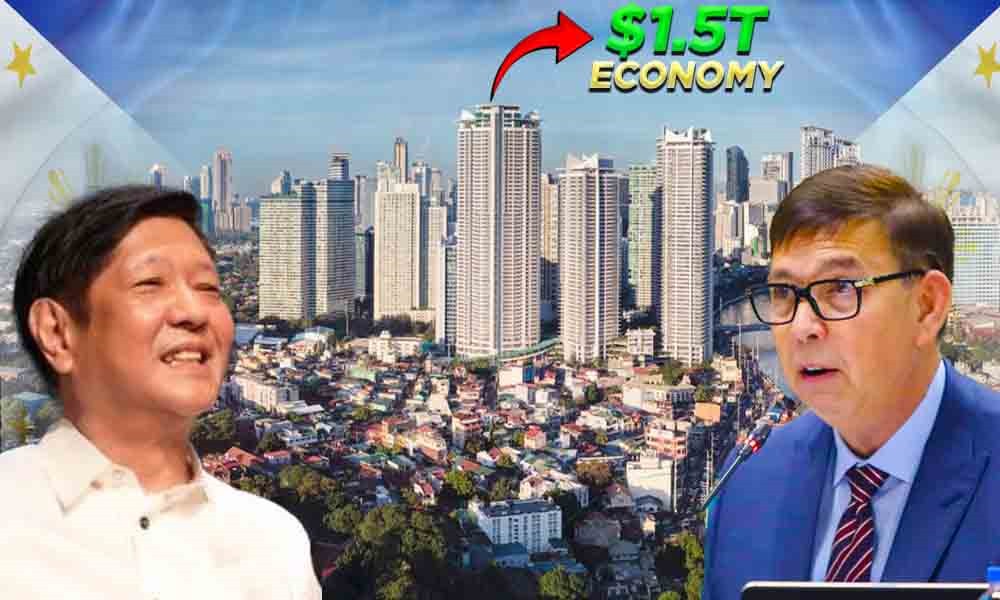
The Philippines is on the cusp of a transformative economic milestone, poised to join the ranks of trillion-dollar economies within the next decade. With its abundant natural resources, young and tech-savvy population, and thriving cultural dynamism, the nation has positioned itself as one of the fastest-growing economies in the world. Since 2010, the country has achieved an impressive annual GDP growth rate of approximately 6%, reaching 26.55 trillion Philippine Pesos ($471.5 billion) as of 2024, ranking 13th in Asia and 32nd globally in terms of nominal GDP.
Driving this growth is the rapid urbanization of the population, a surge in private consumption, and government-backed initiatives such as the ambitious “Build, Build, Build” infrastructure program and comprehensive tax reforms. These efforts are complemented by a growing focus on renewable energy, as evidenced by the recent $15 billion agreement between the UAE’s state energy firm, Masdar, and the Philippines to develop up to 10 gigawatts of renewable energy capacity by 2035. By addressing critical challenges such as infrastructure gaps, rural poverty, and the need for foreign investments, the Philippines is strategically paving its path toward becoming a trillion-dollar economy by 2033.
The Philippines’ Path to Becoming a Trillion-Dollar Economy by 2033
According to S&P Global Market Intelligence, the Philippines is projected to become a trillion-dollar economy by 2033. This ambitious milestone is based on the country’s consistent economic expansion, with GDP expected to double from around 400 billion dollars in 2022 to 800 billion dollars by 2030, eventually surpassing the 1 trillion dollars mark by 2033. Apparently, the key drivers fueling this growth include rising domestic consumption, a robust services sector, and significant remittance inflows from overseas Filipino workers (OFWs). The sustained growth will depend on the government’s ability to implement structural reforms, improve infrastructure, and create a more investor-friendly environment. Private consumption has been identified as one of the strongest growth catalysts for the Philippine economy. With a young, tech-savvy population and improving urban household incomes, the country is experiencing increased consumer spending power. The expanding middle class and steady remittances from OFWs not only support household spending but also act as a stabilizing factor during global economic uncertainties.
Another key contributor to the Philippines’ growth trajectory is the Information Technology and Business Process Outsourcing (IT-BPO) sector. The sector generated 32.5 billion dollars in export revenues recently and continues to be a leading driver of employment and economic activity. As global demand for outsourcing services grows, particularly in customer service and IT support, the Philippines remains a prime destination due to its English-speaking workforce and competitive labor costs.
GDP per capita has also shown promising growth, rising from 2,902 dollars a decade earlier to approximately 3,621 dollars. While this indicates progress, the figure remains below the Asia-Pacific average of 8,369 dollars, suggesting room for improvement in terms of overall wealth distribution and living standards. To catch up with higher-income economies, the Philippines will need to focus on industrial diversification, increased investment in technology, and human capital development.
When compared with other emerging economies, the Philippines’ economic trajectory appears promising but also faces challenges. Success will depend on strategic policy decisions. Let us analyze this in different scenarios.
Scenario 1 (Optimistic): Accelerated Growth Towards a Trillion-Dollar Economy
If key development factors align, the Philippines could reach a trillion-dollar economy even before 2033. Strong domestic demand, steady foreign investments, and effective government policies would be the driving forces behind this accelerated growth. Rising incomes, a growing middle class, and consistent remittances from overseas Filipino workers (OFWs) can significantly boost consumer spending, fuelling a consumption-driven economic surge.
Foreign investments could also play a transformative role as evidenced by the recent $15 billion agreement between the UAE’s state energy firm, Masdar, and the Philippines to develop up to 10 gigawatts of renewable energy capacity. The government’s efforts to ease restrictions on foreign ownership, simplify business processes, and upgrade infrastructure—especially in high-potential sectors like manufacturing, IT, and renewable energy—could attract more investors. Public-private partnerships and stable regulations would further enhance infrastructure development, improving productivity and connectivity across the country.
Well-implemented government policies that focus on innovation, responsible budgeting, and education reform would be critical. Programs aimed at digital transformation, skill development, and research in technology-focused industries like IT and business process outsourcing (BPO) could make the Filipino workforce more competitive. Political stability and reduced corruption would strengthen investor confidence and economic resilience.
If these factors align, the Philippines could exceed its current annual growth rate of 6–7%, potentially sustaining an 8% growth rate. At this pace, the country could achieve trillion-dollar GDP status as early as 2030. This growth will significantly improve living standards and GDP per capita, marking a new era of prosperity for the whole nation.
Scenario 2 (Pessimistic): Delayed Progress Towards a Trillion-Dollar Economy
In a challenging scenario, the Philippines’ journey to becoming a trillion-dollar economy could face delays due to a mix of economic, political, and environmental challenges. Natural disasters, political instability, and a global economic slowdown could create roadblocks, pushing the goal past 2033.
A global economic crisis could reduce demand for Philippine exports, especially in key sectors like electronics and IT-BPO services, which depend heavily on foreign clients. Lower demand from major trading partners such as the US, Japan, and China could strain the country’s income and foreign exchange reserves. Job losses abroad might also lead to a drop in remittances from overseas Filipino workers (OFWs), further weakening household spending and slowing economic growth.
At home, political instability and inconsistent policies could hurt investor confidence and disrupt long-term plans. Corruption, regulatory delays, and sudden policy changes could slow infrastructure projects and deter foreign investments.
The Philippines’ vulnerability to natural disasters such as typhoons, earthquakes, and floods adds another layer of risk. Of the six major storms that affected the Philippines in late October-mid November 2024, three made landfall as major typhoons (defined as category 3 or above. Severe weather events can displace communities, damage infrastructure, and disrupt agriculture, causing significant economic setbacks. In this difficult scenario, GDP growth could slow to below 5% annually, delaying the trillion-dollar economy milestone until the late 2030s or beyond.
Quantitative Projections
The Philippines is on a trajectory to become a trillion-dollar economy by 2033, with projections indicating a doubling of GDP from USD 400 billion now to USD 800 billion by 2030, and surpassing USD 1 trillion by 2033.
Optimistic Scenario:
In an environment characterized by strong domestic demand, robust foreign direct investment (FDI), and effective government policies, the Philippines could achieve accelerated economic growth. Sustained GDP growth rates exceeding 6% annually could potentially advance the timeline, enabling the economy to reach the trillion-dollar mark earlier than 2033. For instance, maintaining an average growth rate of 7% could see the economy achieving this milestone by 2030.
Pessimistic Scenario:
Conversely, challenges such as a global economic slowdown, political instability, or natural disasters could impede growth. If GDP growth rates were to decelerate to an average of 4-5% annually, the attainment of a trillion-dollar economy could be delayed beyond 2033, potentially pushing the milestone to the mid-2030s or later.
It’s important to note that these projections are subject to various internal and external factors, including policy decisions, global economic conditions, and unforeseen events. Sustaining high growth rates will require strategic investments in infrastructure, education, and technology, alongside maintaining political stability and fostering a conducive environment for business and investment.
Factors Contributing to a Trillion-Dollar Economy
The Philippine economy continues to rely heavily on consumer spending, with strong domestic consumption serving as a primary growth driver. Wholesale and retail trade significantly contributed to the nation’s GDP growth of 6.3% in the second quarter of 2024. Factors such as rising salaries, a growing middle class, and consistent remittances from overseas Filipino workers (OFWs) have bolstered consumer confidence and purchasing power, further fueling this expansion.
Infrastructure development remains a cornerstone of the country’s economic strategy, with both public and private investments playing pivotal roles in enhancing productivity and competitiveness. Public spending surged by 10.7% in the second quarter of 2024, highlighting the government’s commitment to improving infrastructure. These expenditures have strengthened networks for energy, transportation, and telecommunications, simplifying commercial operations and attracting additional capital to the economy.
The travel and tourism sector offers significant potential for job creation and income generation. Although exact figures for tourism in 2024 are not yet available, the industry’s post-pandemic recovery is expected to contribute substantially to economic growth. However, foreign direct investment (FDI) inflows have declined, dropping from $10.5 billion in 2022 to $8.9 billion in 2023, indicating a challenge for attracting external capital.
Human capital development is also a critical focus area, with investments in healthcare, education, and skill development aimed at improving labor productivity and competitiveness. Government programs targeting enhancements in these systems are designed to promote long-term growth by fostering a healthy and well-educated workforce. Such a workforce is better positioned to attract high-value sectors and drive innovation across industries.
Technology has emerged as a vital driver of economic progress, with the digital economy generating approximately $35.4 billion in 2023, accounting for 8.4% of GDP. The Philippines’ rise to 53rd place in the 2024 Global Innovation Index reflects ongoing efforts to enhance innovation capabilities. Embracing the information economy, e-commerce, and digital transformation will be essential for sustaining development and maintaining competitiveness.
With strong domestic consumption, strategic infrastructure investments, a focus on human capital development, and advancements in technological innovation, the Philippines is making significant strides toward its goal of becoming a trillion-dollar economy.
Government Policies and Reforms
The Philippines’ journey toward becoming a trillion-dollar economy is shaped by its government policies and reforms. Sound fiscal management and effective monetary policy have been critical in fostering economic growth. The government has demonstrated fiscal discipline by keeping the budget deficit within manageable levels and implementing prudent debt management strategies. For 2025, it approved a record budget of 6.33 trillion pesos ($109.2 billion), aimed at driving economic growth and addressing poverty. On the monetary front, the Bangko Sentral ng Pilipinas (BSP) has maintained its policy rate to manage inflation and support the national currency, ensuring a balanced approach to sustaining economic stability.
Reforms to improve the ease of doing business have also played a vital role in enhancing economic productivity and attracting investments. The government has been working to reduce bureaucratic red tape, streamline business registration processes, and enhance regulatory efficiency. These measures are designed to create a more business-friendly environment, encouraging both local and foreign investors to contribute to the country’s economic development. At the same time, social and political stability remain essential. Political stability fosters investor confidence, while social cohesion ensures the smooth implementation of policies and reforms. The government’s commitment to upholding the rule of law and ensuring public safety has helped maintain a favorable climate for economic progress.
However, the Philippines faces challenges and risks that could impede its economic trajectory. High levels of poverty and income inequality remain significant issues, with the top 1% of earners capturing 17% of national income, while the bottom 50% share only 14%, according to the World Bank. This disparity underscores the need for targeted measures to promote inclusive growth. The country is also highly vulnerable to natural disasters, which can disrupt economic activities and damage infrastructure. Implementing disaster risk reduction and climate adaptation strategies is crucial for enhancing resilience and sustaining growth.
Political and social unrest pose additional risks, as instability can undermine investor confidence and hinder progress. Ensuring good governance, transparency, and public trust in institutions is vital to maintaining a stable environment conducive to development. Furthermore, the Philippine economy remains exposed to global economic fluctuations that can impact exports, foreign direct investment, and remittances from overseas workers. Diversifying the economy and strengthening domestic demand are necessary to mitigate the adverse effects of global economic downturns.
Through effective policies and reforms, the Philippines has made significant progress toward its economic goals. However, addressing these challenges is imperative to sustain its momentum and realize its vision of becoming a trillion-dollar economy.
End Note
As a result of strategic infrastructure investments, robust domestic consumption, and a developing middle class, the Philippines could achieve a trillion-dollar GDP by 2033. This course, however, is dependent on the implementation of efficient government policies, business-friendly reforms, and the resolution of issues like poverty, natural disasters, and political stability. Through using its advantages and reducing its risks, the Philippines may be able to realize its full economic potential in the upcoming ten years.