What’s the Endgame Plan for BRP Sierra Madre and Ayungin Shoal?
Just before dawn in the West Philippine Sea, a small Philippine supply boat slowly cuts through the waves. The sea is calm. Too calm. And then, like shadows rising out of the mist, massive white Chinese Coast Guard ships appear on the horizon. Sirens. Radio warnings. Sometimes water cannons. And at the center of this tense maritime chessboard, sits a rusting, skeletal warship that looks like it belongs in a museum. But it’s not abandoned. It’s BRP Sierra Madre.
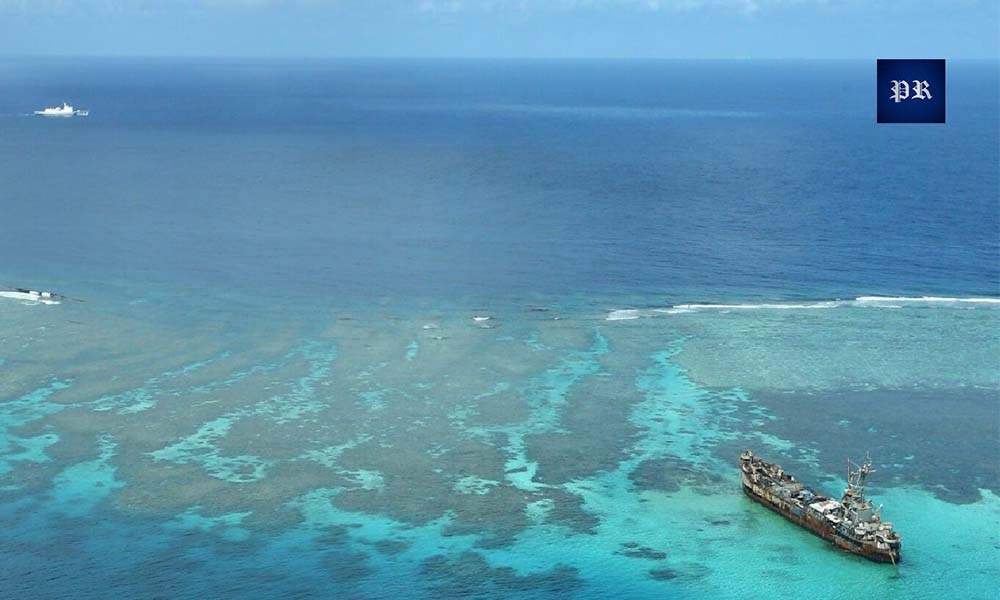
A World War II–era vessel deliberately ran aground in 1999 on Second Thomas Shoal, known in the Philippines as Ayungin Shoal. Inside that decaying hull, a small group of Filipino marines still lives there. They cook, sleep, and patrol inside a ship that is literally falling apart. No heavy weapons. No modern base. Just rust, determination and a flag. And here’s the question that quietly keeps strategists awake at night:
How long can a rusting ship hold the line against a rising superpower? Because make no mistake, what’s happening at Ayungin Shoal is not just about a stranded ship. It’s about power, law, and the future of the South China Sea. Over the past year, tensions there have escalated dramatically. Supply missions to the Sierra Madre have been blocked, rammed, and blasted with water cannons by Chinese vessels. Videos released by Philippine Coast Guard show near-collisions and aggressive maneuvers that look less like patrols and more like intimidation. At one point, a Philippine boat trying to deliver food and repair materials was surrounded so tightly that it could barely move.https://www.youtube.com/watch?v=abrTZz4uNys
One Filipino sailor later described the moment simply: “It felt like they were squeezing us out of our own waters.” And yet, the resupply missions continue.
Because if the Sierra Madre disappears, the consequences could be huge. Second Thomas Shoal sits only about 105 nautical miles from Palawan, well inside the Philippines’ Exclusive Economic Zone under the United Nations Convention on the Law of the Sea.
But China claims the area under its sweeping nine-dash line, a claim that stretches across most of the South China Sea. In 2016, an international tribunal ruled that claim had no legal basis. The decision came through the landmark South China Sea Arbitration, which sided with the Philippines. But here’s the harsh reality of geopolitics. Legal victories don’t always translate into control on the water. And that’s exactly why the Sierra Madre matters.
Back in 1999, leaders in the Philippines made a desperate but clever move. Instead of building a costly military base, they intentionally grounded the old ship on the shoal. It was a simple idea. If Filipino troops stayed there permanently, the country could maintain a physical presence and under maritime law, presence matters. So the rusting ship became something unexpected. A frontline outpost. A legal anchor. A symbol. Over the years, waves, storms, and saltwater have eaten away at its steel hull. Parts of the deck have collapsed. Metal beams are exposed. The structure looks like it could give up at any moment. And yet, it’s still there.
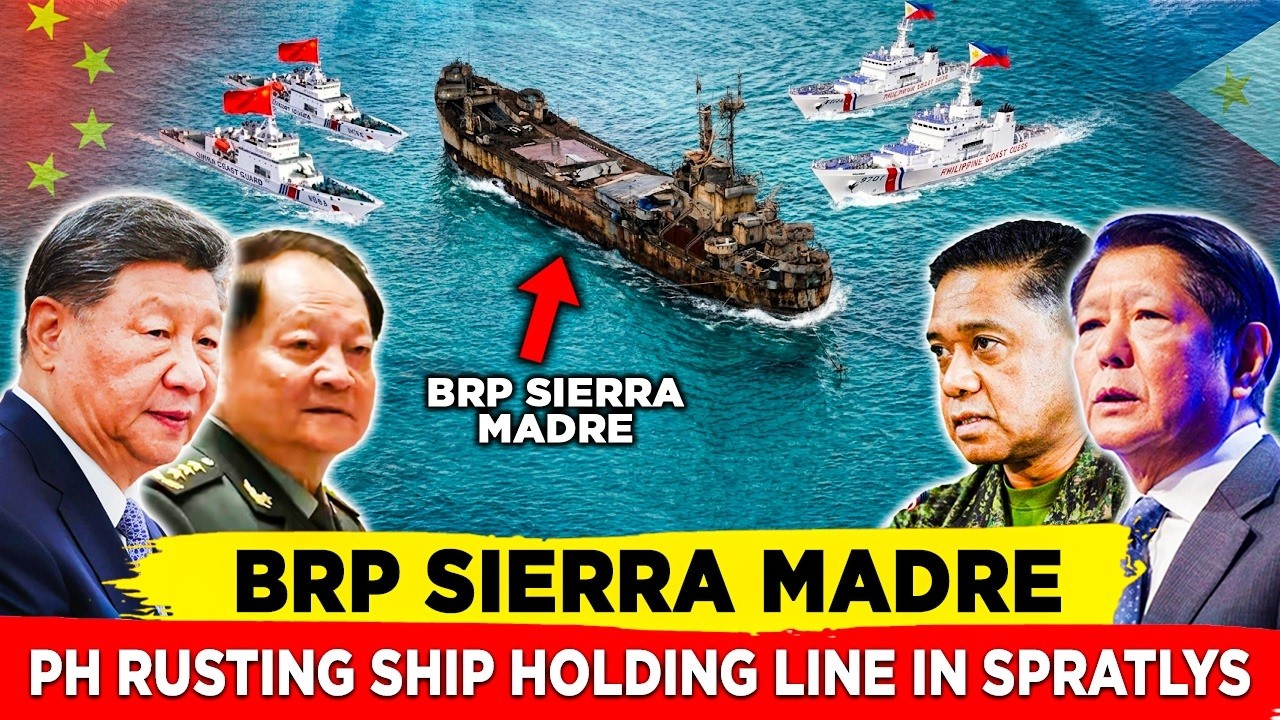
Which raises an uncomfortable question that few people talk about openly: What is the Philippines’ endgame for the Sierra Madre? Is the plan to repair it? Replace it with a permanent base? Or hold on until the ship finally collapses? Because time is not neutral in this dispute. China’s coast guard is growing larger. Its artificial islands across the Spratly Islands are now packed with radar systems, missile platforms, and long runways. Meanwhile, the Sierra Madre is slowly turning into scrap metal.https://indopacificreport.com/how-china-took-over-mischief-reef-can-the-philippines-stop-it/
So every resupply mission, every repair attempt, every confrontation at sea, is really part of a much bigger question. How do you defend sovereignty with a ship that’s already dying? And more importantly: What happens the day it finally breaks apart? Because when that moment comes, the struggle for Ayungin Shoal may enter a completely new phase. And the entire balance of power in the West Philippine Sea could shift with it.
Historical Background
The story of Ayungin Shoal didn’t begin with a dramatic naval battle or a sudden invasion. It began quietly, almost oddly, with an aging warship that most navies would have already retired. In 1999, the Philippines made a decision that, at the time, looked temporary, maybe even improvised. Officials ordered the grounding of BRP Sierra Madre on the shallow reef of Second Thomas Shoal, known locally as Ayungin Shoal. The move came shortly after China had taken control of nearby Mischief Reef, a development that shocked Manila and signaled that the regional dispute over the South China Sea was entering a more serious phase.
So the Philippines did something unconventional. Instead of constructing a new military installation, which would have required time, money, and political escalation, it parked an old ship directly on the reef and left a small group of marines there. The logic was simple but powerful. As long as Filipino personnel physically remained on the shoal, the country could demonstrate continuous presence and reinforce its claim under international maritime law. Over time, the Sierra Madre stopped being just a ship. It became a statement.
Maintaining a Deterrence Strategy for the Philippines in the Scarborough Shoal
The vessel itself carries a long history. Built during the Second World War, it had already served decades before being assigned its final and most unusual mission. Once grounded on the reef, it was officially kept in service as a commissioned outpost of the Philippine Navy. Inside its aging steel frame, small detachments of marines rotate in and out every few months. Life there is far from comfortable. The ship creaks constantly as waves push against its rusted hull. Sections of metal have corroded away, stairways have weakened, and parts of the deck have partially collapsed after years of exposure to wind and saltwater.
Anyone who sees the ship up close immediately realizes something unsettling, it looks like it shouldn’t still be standing. Rust stains run down its sides like old scars, and the skeletal structure of the hull is increasingly exposed. Engineers and defense analysts have quietly warned that the structural integrity of the ship is deteriorating year by year. Despite occasional repair attempts during resupply missions, the vessel has long stopped being a functioning combat platform. Its guns are irrelevant. Its engines are silent. What keeps it important today isn’t military capability but symbolism. Yet symbolism alone cannot keep a remote outpost alive. Everything the marines need must be delivered by sea. And that brings the focus to the shoal itself.https://www.youtube.com/watch?v=abrTZz4uNys
Second, Thomas Shoal is not an island in the traditional sense. It is a submerged reef, a shallow coral formation that disappears under water during high tide. There is no solid ground to build on, no hills, no natural shelter, and certainly no freshwater source. The environment is harsh and unforgiving. Any human presence there exists only through constant logistical effort. Food, drinking water, fuel, spare parts, and new personnel all have to arrive by boat, sometimes through rough seas and increasingly tense conditions.
Geographically, the shoal lies well within the Philippines’ Exclusive Economic Zone, roughly 105 nautical miles west of Palawan. Under the framework of the United Nations Convention on the Law of the Sea, this would normally give the Philippines clear jurisdiction over the surrounding waters and resources. But the reality on the water has been far more complicated.
Since the Sierra Madre was grounded, China has repeatedly challenged Philippine activity around the shoal. Over the years, the presence of Chinese vessels has grown steadily, from occasional patrols to large coordinated deployments. Ships belonging to the Chinese coast guard, fishing fleets linked to maritime militia groups, and other government-backed vessels often appear around Ayungin Shoal during Philippine resupply missions.
The pattern has become familiar but increasingly tense. When a Philippine supply boat heads toward the Sierra Madre carrying food, water, and repair materials, Chinese vessels frequently move in to monitor or block the approach. Sometimes they shadow the supply ship from a distance. Other times they position themselves directly in its path, forcing slow and dangerous maneuvers in tight waters.
One particularly striking episode highlighted how crowded the situation can become. During a Philippine resupply mission, observers documented the presence of 38 Chinese vessels operating around the shoal. Among them were large coast guard cutters alongside smaller boats believed to be part of China’s maritime militia network. For the small Philippine crews navigating the area, the experience can feel overwhelming, a handful of ships trying to reach a rusting outpost while surrounded by a much larger flotilla.
Despite these pressures, the missions continue. Supplies still arrive, marines still rotate through the ship, and the Sierra Madre still stands on the reef, rusting, creaking, but holding its position. And in the strange logic of maritime disputes, that fragile presence continues to carry enormous geopolitical weight.
Current Challenges
For years, the rusting hull of BRP Sierra Madre has stood quietly on Second Thomas Shoal, but today the challenges surrounding it are becoming harder to ignore. The ship was never designed to sit permanently on a reef in the middle of the South China Sea. It was built for war decades ago, not for a slow battle against saltwater, wind, and time. After more than two decades stranded on the shoal, the structure is visibly weakening. Steel plates have corroded through, stairways are brittle, and sections of the deck look fragile enough that sailors have to step carefully when moving around. The vessel still holds its ground, but it feels less like a functioning naval platform and more like a symbol that refuses to sink. Many observers quietly admit the same uncomfortable truth: the ship has outlived the role it was originally meant to play.
EDCA Is Not a U.S. Base: Manila’s Strategic Recalibration Amid Middle East Tensions
For the small group of marines stationed aboard, the environment can feel unsettling. Living inside a rusting warship anchored on a submerged reef is not exactly normal military duty. Waves constantly hit the hull. Metal groans at night. Supplies arrive only when resupply boats can safely reach the shoal. The Sierra Madre has become less about defense capability and more about presence, a physical reminder that the Philippines has not abandoned its claim.
But the physical decay of the ship is only one part of the challenge. The bigger pressure now comes from the geopolitical environment surrounding the shoal. China has dramatically expanded its maritime presence in the region over the past decade. Around Ayungin Shoal, Chinese coast guard vessels, maritime militia boats disguised as fishing ships, and fast patrol craft frequently appear whenever Philippine supply missions approach. Sometimes they trail the boats. Sometimes they block them. Other times they move dangerously close, creating tense moments that can escalate very quickly.
In several encounters over the past few years, water cannons have been used against Philippine supply vessels. Communication signals have reportedly been jammed, forcing crews to rely on backup systems or visual coordination. Videos released by the Philippine Coast Guard show chaotic scenes, ships maneuvering in tight circles, crews shouting over radios, and powerful water jets blasting across the decks of smaller boats. It is the kind of confrontation that falls short of open conflict but clearly sends a message.https://www.youtube.com/watch?v=xRptWjxeJzY
Despite the pressure, officials in Manila have tried to downplay some of the more dramatic rumors circulating around the shoal. At one point, reports surfaced suggesting that the appearance of a Chinese tugboat near the reef might indicate preparations to remove the Sierra Madre. A Philippine military official responded bluntly, saying that such fears were exaggerated. Pulling the ship off the reef would not be simple, he explained. “It will take more than a tugboat to pull out BRP Sierra Madre.” The statement carried a hint of confidence and perhaps a bit of quiet defiance.
Even so, the operational reality remains complicated. The missions that keep the outpost alive are known as Rotation and Resupply operations, often shortened to RORE missions. These journeys bring fresh troops, food, drinking water, and repair materials to the ship. On paper, they sound routine. In practice, they can feel like navigating through a maze of foreign vessels while cameras and radar systems watch every movement. Each mission requires careful timing, coordination between multiple agencies, and sometimes a bit of luck with weather conditions.
Philippines–US–Japan Military Drills Over the Bashi Channel (Feb 2026)
Still, the Philippine Navy insists these missions will continue no matter what. Officials have repeatedly stated that rotations and resupply runs will proceed “regardless of any threat.” It is a firm line, and it reflects how much symbolic weight the Sierra Madre now carries in national policy.
At home, the issue touches a deeper emotional chord. Defense budgets in the Philippines are modest compared with the massive military spending of China, which means Manila must constantly balance ambition with practical limits. Building large bases or deploying major naval forces everywhere in the Spratly Islands simply isn’t realistic right now. In that context, the presence of the Sierra Madre represents something powerful, a reminder that even a smaller nation can hold its ground.
Among many Filipinos, the ship has become a strange kind of national icon. Photos of the rusting vessel circulate widely online. Stories about the marines stationed there often spark pride, admiration, and sometimes concern. People respect the symbolism of the outpost, but they also worry about the men living inside a structure that looks increasingly fragile. That mix of pride and anxiety captures the dilemma perfectly. The Sierra Madre is still standing, still serving its purpose in a political and legal sense. But every passing year raises the same quiet question. How long can a rusting ship keep carrying the weight of a nation’s claim?
Strategic Objectives
Any long-term strategy around BRP Sierra Madre and Second Thomas Shoal really comes down to a few core goals. First, the Philippines needs to keep a credible presence at the shoal. In maritime disputes, presence isn’t just symbolic, it reinforces sovereignty claims, especially within the country’s Exclusive Economic Zone as defined by the United Nations Convention on the Law of the Sea. Simply put, if Filipino personnel remain there, the country maintains a living connection to the territory rather than a claim that exists only on maps.
At the same time, the strategy has to strengthen deterrence without triggering open confrontation. The situation in the South China Sea is already tense, and the goal is not to start a conflict but to discourage coercive actions by other vessels operating nearby. That balance, standing firm while avoiding escalation, is delicate and requires careful coordination between naval forces, coast guards, and diplomatic channels.https://www.youtube.com/watch?v=CtuWhBrzWS0
Another key objective is sustainability. The current arrangement places a small group of marines inside a ship that was never designed to remain grounded for decades. Any strategy going forward has to ensure that personnel are safe, supplies can reliably reach them, and operations do not stretch the country’s logistical capacity too thin. A presence that cannot be maintained safely or consistently will eventually weaken rather than strengthen the claim.
Finally, international legitimacy remains essential. The Philippines continues to rely heavily on global legal frameworks and diplomatic support. The landmark South China Sea Arbitration already ruled in Manila’s favor against the sweeping claims of China. Building global awareness around that ruling and reinforcing it through diplomacy helps ensure that the dispute remains grounded in international law rather than raw power alone.
Possible Endgame Options
One option is simply to maintain the current situation. The Philippines could continue rotating personnel and delivering supplies to the Sierra Madre as it has done for more than two decades. This approach keeps a visible and continuous presence at the shoal, and operational costs are relatively predictable since the system is already in place. The downside is obvious, though, the ship continues to age. Every year corrosion worsens, and the outpost remains vulnerable both to environmental damage and interference by foreign vessels.
Another path would involve replacing or upgrading the outpost. Instead of relying on a deteriorating vessel, the Philippines could ground a newer ship or establish a modular facility built with stronger materials. Such an upgrade would improve safety for personnel and potentially support better communications, surveillance equipment, and living conditions. However, the financial cost would be significant, and any construction effort at the shoal could trigger strong diplomatic reactions from Beijing.
A more ambitious option would be to build a permanent artificial structure. Some analysts imagine a fixed platform or lighthouse-style installation designed to withstand waves, storms, and long-term occupation. This kind of infrastructure would offer stable living quarters and space for sensors, communications gear, and maritime monitoring systems. Yet such a project would face legal complexities and environmental concerns. It would almost certainly draw criticism from China, which might view the move as an attempt to permanently fortify the reef.https://youtu.be/wHFsyAtQIgg?si=tDihVnhfzj4D4jZ1
Another possibility lies in deeper cooperation with partners. The Philippines could expand coordination with allies, especially the United States and regional partners within the Association of Southeast Asian Nations, to strengthen surveillance, intelligence sharing, and logistical support. Multilateral involvement would increase deterrence and reinforce the idea that maritime stability in the region matters to many countries, not just one. Still, reliance on outside actors carries risks, because foreign governments may shift priorities depending on their own domestic politics or strategic interests.
The final option would be a strategic withdrawal combined with remote monitoring. In this scenario, personnel and equipment would leave the Sierra Madre while the area is monitored through satellites, drones, and maritime patrol aircraft. From a purely operational standpoint, this would reduce risks to human life and eliminate the logistical challenges of constant resupply missions. But politically and legally, the visible absence of Filipino personnel could weaken the country’s claim and potentially invite further encroachment by other forces.
Implementation Considerations
Whatever path Manila chooses, logistics will remain a central challenge. Reliable rotation schedules, secure supply routes, and clear contingency plans are essential to sustaining operations at Second Thomas Shoal. Support vessels, including ships from the Philippine Coast Guard, play a key role in ensuring that food, water, fuel, and equipment reach the outpost safely. Emergency evacuation procedures must also be prepared in case the structural condition of the Sierra Madre deteriorates further or tensions escalate unexpectedly.
Philippines–US–Japan Military Drills Over the Bashi Channel (Feb 2026)
Security planning is equally important. Modern maritime disputes often involve surveillance and information as much as ships themselves. Expanding radar coverage, deploying aerial drones, and coordinating with allied navies can help monitor activity around the shoal more effectively. Contingency planning should also address potential scenarios in which foreign vessels attempt to tow, damage, or isolate the Sierra Madre.
Budget constraints will shape every decision. Compared with the massive defense spending of China, the Philippines operates with more limited resources. Large construction projects or new platforms require careful financial planning and long-term commitment. Without sustainable funding, even the best strategic ideas could struggle to move beyond the planning stage.https://www.youtube.com/watch?v=o-uRUDPyRdU
Diplomacy and international law must remain at the center of the strategy. Each incident around the shoal should be documented and communicated through diplomatic channels and international institutions. By continuously referencing the principles of the United Nations Convention on the Law of the Sea and the 2016 arbitral ruling, the Philippines reinforces the legitimacy of its position and keeps the dispute framed within global legal norms.
Recommendations
In the short term, the most realistic course is to continue rotation and resupply missions while improving safety procedures for crews and marines stationed on the Sierra Madre. Expanding maritime domain awareness through better sensors, drones, and radar systems can also help authorities track vessel movements around the shoal more effectively. Clearer policies on how and when to publicize supply missions may reduce misunderstandings and limit opportunities for confrontation.
Over the medium term, planning should begin for an upgraded presence. This could involve grounding a newer vessel or constructing a modular platform capable of supporting personnel more safely. At the same time, the Philippines can deepen diplomatic cooperation with regional and international partners, expanding joint patrols, intelligence sharing, and logistical support networks that reinforce deterrence.
Looking further ahead, the long-term goal should be a sustainable and resilient outpost capable of enduring both environmental pressures and geopolitical tensions. This could involve permanent infrastructure combined with advanced monitoring technologies, allowing the Philippines to maintain awareness and presence without relying entirely on a single aging ship.
Conclusion
For more than two decades, BRP Sierra Madre has served as a fragile but powerful symbol of Philippine resolve at Second Thomas Shoal. What began as a temporary measure has turned into one of the most recognizable flashpoints in the South China Sea dispute.
The challenge now is deciding what comes next. Whether the ship is maintained, replaced, or eventually transformed into a new type of outpost, the strategy must balance several realities at once, asserting sovereignty, protecting personnel, managing limited resources, and maintaining international support.
Handled carefully, a steady and legally grounded approach can help the Philippines safeguard its interests in the West Philippine Sea while avoiding unnecessary escalation. And in a region where symbols often carry strategic weight, the future of the Sierra Madre may continue to shape the broader contest over the sea for years to come.https://youtu.be/wHFsyAtQIgg?si=GEv2rDPINhDBI6q2