Just days ago, China officially urged the Philippines to stop “provocations” around Huangyan Island after what Beijing calls a dangerous new incursion. The geostrategic significance of Bajo de Masinloc is impossible to overstate. The Philippines’ position on the shoal is firmly anchored in international law and reinforced by diplomacy, on-the-water action, and stronger security ties. China’s stance on Huangyan Dao rests on a sweeping historical narrative and an unyielding approach at sea. China’s latest warnings to the Philippines are best understood as part of a calculated power play to consolidate control. The international community’s view of the dispute reflects a mix of outspoken support for the Philippines and strategic caution from regional neighbors. The militarization of the South China Sea provides the hard-power backdrop to the current tensions. The standoff at Bajo de Masinloc is more than a local maritime quarrel, it’s a vivid microcosm of the great power competition between the United States and China. The face-off at Bajo de Masinloc shows no sign of cooling, ensuring that the dispute remains a live flashpoint for years to come. The Panatag Shoal dispute is far more than a quarrel over a ring of coral, it has become a defining test of the international rules-based order.
Geostrategic Significance of Bajo de Masinloc
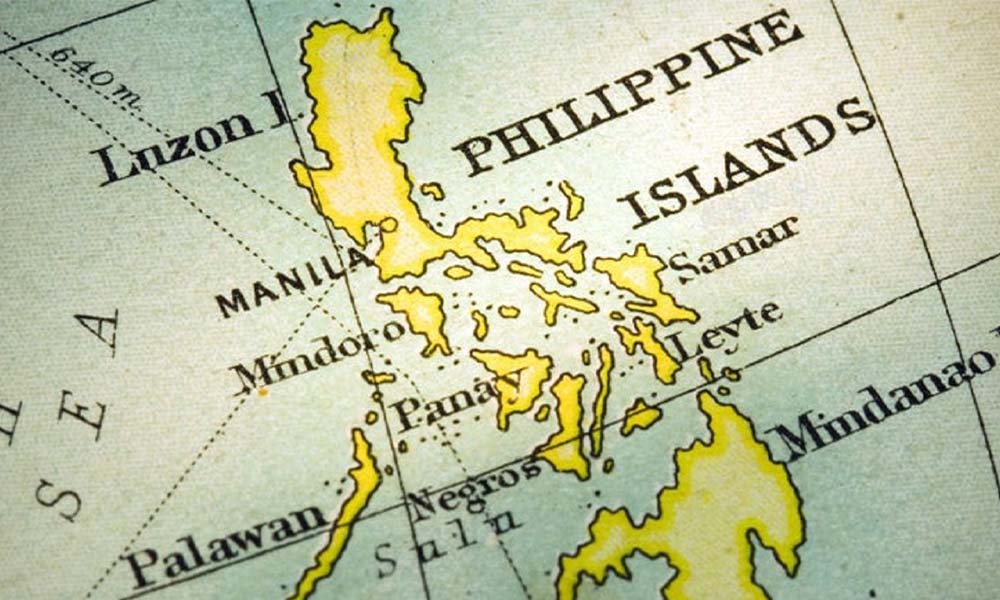
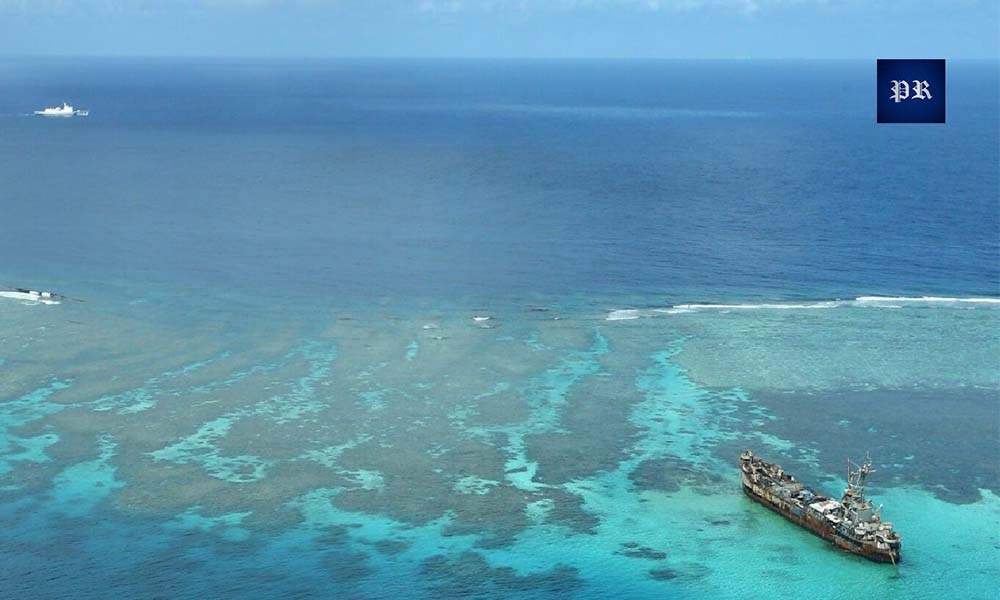
The geostrategic significance of Bajo de Masinloc (Scarborough Shoal/Huangyan Island) is impossible to overstate. Picture this: a triangular coral atoll, just 124 nautical miles from Zambales, Luzon, sitting squarely inside the Philippines’ Exclusive Economic Zone (EEZ). On the map it might look like a tiny speck, but in global politics it’s a pivot point where national survival, regional power plays, and international law all collide.
For ordinary Filipinos, the shoal is a lifeline of the sea. It’s one of the richest fishing grounds in the West Philippine Sea, a spawning cradle teeming with tuna, mackerel, and coral reef species. Thousands of small-scale fishermen depend on these waters for their daily catch, and local markets feel every ripple of Chinese blockades or harassment. The ecological stakes are equally high: marine biologists rank the atoll as a biodiversity hotspot essential for the health of surrounding seas, making any disruption a threat to food security and environmental balance.
But the real contest is geopolitical. Bajo de Masinloc isn’t known for massive oil or gas deposits, yet control over it grants strategic reach. For China, asserting sovereignty here is central to reinforcing its sweeping “nine-dash line” claim over almost the entire South China Sea. Each patrol, buoy, and coast guard maneuver signals Beijing’s resolve to rewrite maritime boundaries on its own terms. For the United States and allied navies, the shoal is a litmus test of the “rules-based international order.” Keeping these waters open safeguards trillions of dollars in annual trade and demonstrates that freedom of navigation cannot be dictated by force.
In short, Bajo de Masinloc may look like an unassuming ring of coral, but it’s a geopolitical pressure point where livelihoods meet great-power rivalry. Whoever shapes the future of this shoal is effectively drawing the lines for security and maritime law across the entire Indo-Pacific.
Philippines’ Take on the Island
The Philippines’ position on Bajo de Masinloc is firmly anchored in international law and reinforced by a mix of diplomacy, on-the-water action, and stronger security ties. Manila points to the United Nations Convention on the Law of the Sea (UNCLOS), which clearly defines a 200-nautical-mile Exclusive Economic Zone (EEZ), and to the 2016 Permanent Court of Arbitration ruling in The Hague, which invalidated China’s sweeping “nine-dash line” claim. Together, these legal pillars underpin the Philippines’ sovereign rights over the shoal and the surrounding rich fishing grounds.
Backed by that legal foundation, the Philippines has been relentless in its diplomatic protests. Whenever Chinese Coast Guard ships block fishermen or when Beijing unveiled its plan to designate the shoal as a “national nature reserve,” Manila immediately filed formal notes verbale. Officials branded the move a “clear pretext for eventual occupation,” stressing that environmental claims cannot erase an international court decision. These protests keep the dispute visible on the global stage and rally support for a rules-based order.
On the water, Manila is equally determined. The Philippine Coast Guard and Bureau of Fisheries vessels maintain a steady presence around the shoal, escorting fishermen and asserting sovereign rights. These missions, often shadowed by larger Chinese vessels and water-cannon threats, have led to frequent, high-risk standoffs. Yet, each sortie sends the message that the Philippines will not be bullied off its own EEZ.
To reinforce those efforts, the Philippines has tightened alliances, especially with the United States under their Mutual Defense Treaty. Joint maritime patrols, expanded Balikatan military exercises, and new defense access agreements are now joined by cooperative drills with Australia and Canada, signaling that an attack on Philippine public vessels could draw a much broader response. This layered strategy, law, presence, and partnerships, shows that Manila isn’t just defending a reef; it’s defending the principle that international law, not brute force, decides who owns the sea.
Chinese Take on the Island
China’s stance on Bajo de Masinloc (Scarborough Shoal), which it calls Huangyan Dao, rests on a sweeping historical narrative and an unyielding approach at sea. Beijing cites ancient maps and historical records predating modern maritime law to claim what it calls “indisputable sovereignty” over the shoal. In China’s view, these centuries-old voyages and fishing activities carry more weight than contemporary legal frameworks like the United Nations Convention on the Law of the Sea (UNCLOS).
This perspective explains why Beijing flatly rejects the 2016 ruling by the Permanent Court of Arbitration in The Hague, which invalidated its “nine-dash line” claim. Chinese officials dismiss the award as a “political farce” cooked up to undermine their sovereignty. They argue that no international tribunal can erase what they see as long-standing historical rights, positioning the dispute as a question of national dignity rather than maritime law.
On the water, China backs its claim with aggressive enforcement. The China Coast Guard and maritime militia maintain a near-constant presence, often using water cannons, ramming tactics, and close-quarter blocking maneuvers to chase away Philippine Coast Guard ships and civilian fishing boats. From Beijing’s perspective, these operations are “lawful control measures” designed to counter what it labels as “illegal intrusions” by Philippine vessels.
To further cement its presence, China recently declared a “national nature reserve” over about 3,500 hectares of the shoal. Officials frame this as an environmental initiative, but analysts view it as another layer of de facto administration, giving China a civilian and ecological pretext for permanent control. In essence, Beijing treats Huangyan Dao not just as a patch of sea, but as a sovereign outpost and a symbol of its determination to redraw the maritime order on its own terms.
China WARNS Philippines as U.S. Japan Enters South China Sea
Why Is China Warning the Philippines?
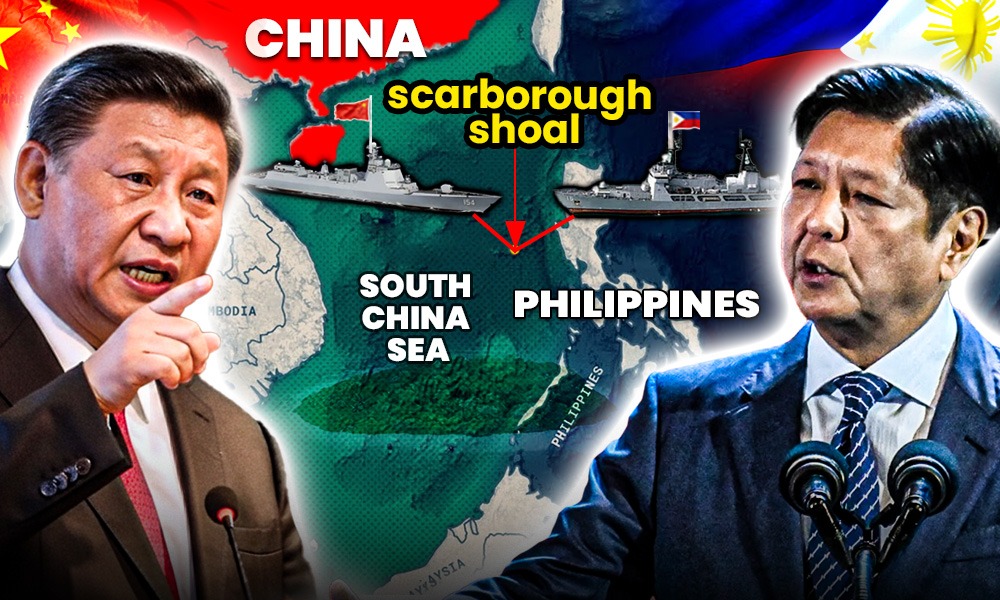
China’s latest warnings to the Philippines are best understood as part of a calculated power play to consolidate control over Bajo de Masinloc and the wider West Philippine Sea. Manila’s current administration has taken a far more assertive stance, from beefed-up coast guard patrols to louder calls for international support and Beijing is moving quickly to counter it. By issuing high-profile warnings and dispatching more coast guard and militia vessels, China signals that it intends to tighten de facto control of the shoal and surrounding waters before the Philippines can entrench its own presence.
At the same time, these actions are a test of resolve. Every water-cannon blast and ramming incident gauges how far Manila and its allies, particularly the United States, are willing to go to protect Philippine sovereign rights. If responses stay limited to diplomatic protests, Beijing learns that it can keep expanding its footprint without provoking a military confrontation. This is classic brinkmanship: pushing right up to the edge while watching carefully for pushback.
Analysts often describe this pattern as “salami slicing” a slow-motion strategy in which China makes small, incremental gains that never quite cross the threshold of war. One day it’s a new buoy, the next it’s a “nature reserve,” and before long the reality on the water has shifted in China’s favor. By keeping each step below the level that would trigger armed conflict, Beijing gradually locks in territorial advantages, changing facts on the ground and in the sea, without firing a shot.
International Community’s View
The international community’s view of the Bajo de Masinloc dispute reflects a mix of outspoken support for the Philippines and strategic caution from regional neighbors. Leading the chorus of backing is the United States, joined by Australia, Canada, and the United Kingdom, all of which have repeatedly cited the 2016 Hague arbitration ruling and the broader framework of international law. In a strong recent statement, U.S. Secretary of State Marco Rubio called China’s maneuvers a “coercive attempt to advance sweeping territorial and maritime claims at the expense of its neighbors,” underscoring Washington’s commitment to defend freedom of navigation and its mutual defense obligations with Manila.
Other nations, particularly within Southeast Asia, are more measured. Countries like Vietnam, Malaysia, and Singapore share deep concerns over Beijing’s expanding reach and its implications for trade routes and maritime rights. Yet, these states also depend heavily on Chinese investment and markets. As a result, they typically adopt a cautious, wait-and-see stance, voicing support for peaceful resolution and adherence to international law while avoiding direct confrontation with China.
What unites these diverse responses is a single, critical worry: China’s disregard for international law threatens the global rules-based order. If a major power can simply brush aside an international tribunal’s decision and redraw maritime boundaries, it sets a precedent that could destabilize seas and borders far beyond Asia. For many observers, from Washington to Canberra to Brussels, the battle over Bajo de Masinloc is about far more than fishing grounds; it’s about whether international norms still have teeth in a world of growing geopolitical competition.
Militarization of the Region
The militarization of the South China Sea provides the hard-power backdrop to the current tensions at Bajo de Masinloc. Over the past decade, China has transformed once-submerged reefs into fortified outposts, creating a network of artificial islands bristling with runways, aircraft hangars, radar domes, and missile batteries. These facilities are strategically positioned across the Spratly and Paracel Islands, giving Beijing the ability to project force far beyond its mainland coast.
The scale of this build-up is striking. More than 3,200 acres of new land have been reclaimed, effectively turning coral reefs into forward operating bases. China’s naval fleet, now the world’s largest and its vast maritime militia provide the muscle to back up these installations, ensuring a constant presence that can respond quickly to any perceived challenge. Together, these forces create what analysts call a “strategic triangle” of military power spanning the South China Sea.
The implications reach well beyond the disputed shoals. With these fortified islands acting as unsinkable aircraft carriers, China could one day declare an Air Defense Identification Zone (ADIZ) over much of the region, requiring foreign aircraft to seek Chinese permission before flying through. Such a move would not only tighten Beijing’s grip on vital shipping lanes but also challenge the principle of freedom of navigation that global trade depends on. For the Philippines, the United States, and other stakeholders, China’s militarization isn’t just an abstract threat, it’s a ready-made infrastructure that could enforce territorial claims by force, not law, reshaping the balance of power across the entire Indo-Pacific.
Growing Geopolitical Tensions
The standoff at Bajo de Masinloc is more than a local maritime quarrel, it’s a vivid microcosm of the great power competition between the United States and China for dominance in the Indo-Pacific. Every skirmish between Chinese coast guard ships and Philippine patrols doubles as a proxy test of whether Washington’s promises to defend a treaty ally will hold firm, and whether Beijing can expand its influence without triggering direct confrontation. This tug-of-war for influence is redefining regional security, as both superpowers seek to set the rules of the sea.
But it’s not just a chess match. The situation carries a real and growing risk of conflict. Philippine and Chinese vessels frequently operate dangerously close to one another, with reports of ramming, blocking maneuvers, and water-cannon use becoming routine. In such tense conditions, a single accident, a snapped towline, a misread radar signal, could spiral into a shooting incident, drawing in allies and igniting a broader military clash. The region has seen such flashpoints before, but the density and frequency of today’s encounters raise the danger to new levels.
The economic stakes are equally high. The South China Sea is one of the world’s busiest shipping corridors, carrying over $3 trillion in trade each year, including vital energy supplies and consumer goods that fuel economies from Tokyo to Los Angeles. A prolonged standoff, or worse, an armed conflict, would disrupt global supply chains, spike energy prices, and send shockwaves through financial markets. In short, every close encounter at Bajo de Masinloc isn’t just about territory, it’s about regional peace and the stability of the global economy itself.
China to Turn Scarborough Shoal Into ‘Nature Reserve’? Philippines on Edge
Future Implications
The face-off at Bajo de Masinloc shows no sign of cooling. Continued confrontations are all but certain as China keeps up its unrelenting patrols and construction plans, while the Philippines, backed by allies like the U.S., Japan, Australia, and Canada, presses ahead with patrols and legal protests. Every fresh encounter adds to the risk of an accident or miscalculation at sea, ensuring that the dispute remains a live flashpoint for years to come.
Perhaps the most troubling consequence is the erosion of international law. By openly defying the 2016 Hague arbitration ruling, Beijing signals that even a clear, binding legal decision can be brushed aside if a country wields enough power. This precedent reverberates far beyond the South China Sea, emboldening other would-be maritime and territorial claimants to ignore treaties and tribunal decisions, and gradually undermining the authority of the global rules-based system.
The standoff is also shifting regional dynamics. Southeast Asian nations now find themselves under pressure to choose sides, a strain that is already testing the unity of ASEAN. Some states seek stronger defense ties with the U.S. and like-minded partners, while others hedge, wary of alienating China’s vast market. This recalibration of alliances could reshape the security architecture of the entire Indo-Pacific.
Conclusion / End Note
The Panatag Shoal dispute is far more than a quarrel over a ring of coral. It has become a defining test of the international rules-based order, where the outcome will show whether a powerful nation can redraw boundaries through force and intimidation, or whether international law and collective action can still hold sway. For Filipinos, Americans, and the wider world, the stakes are immense: freedom of navigation, the credibility of global maritime law, and the balance of power in the Indo-Pacific all hang in the balance. Sustained diplomatic pressure, international solidarity, and a strong commitment to peaceful resolution will be critical if the region is to avoid sliding into a future where might makes right.