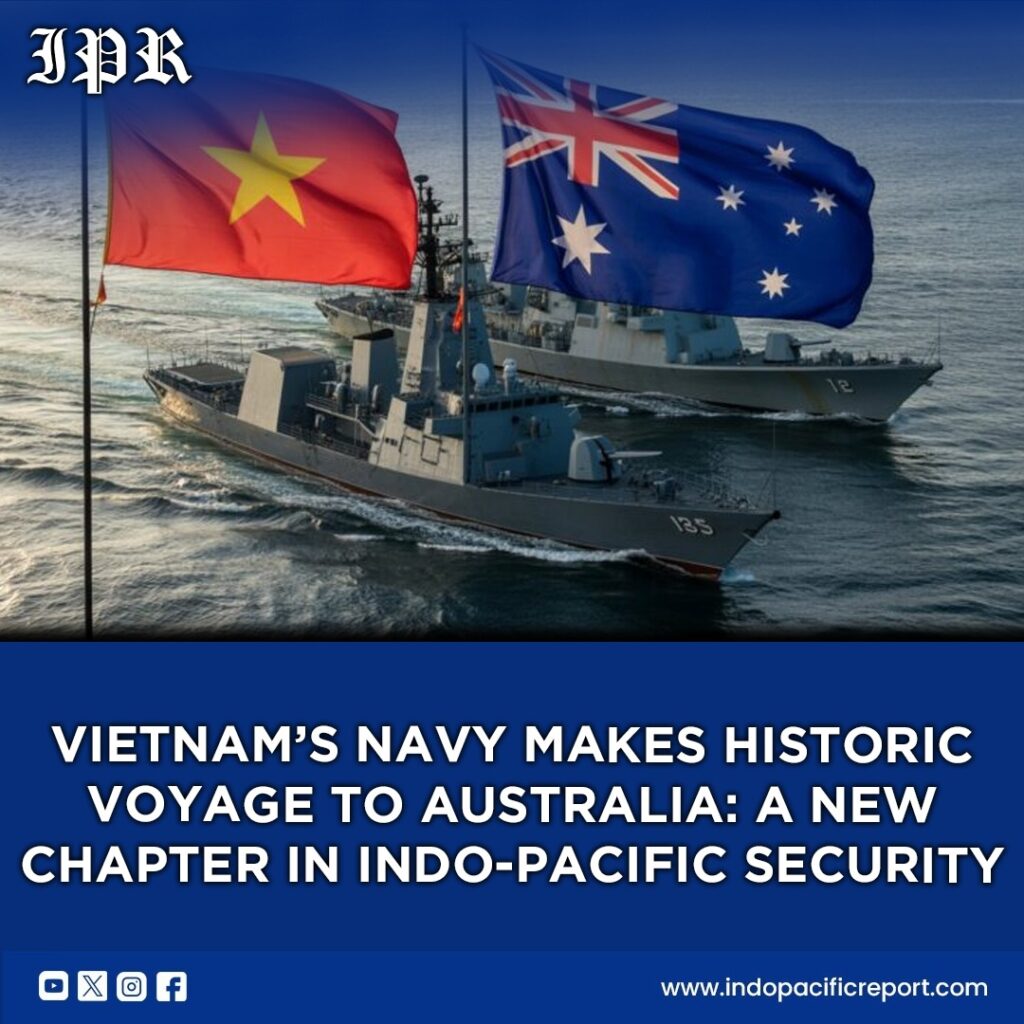
Vietnam’s Ship 016–Quang Trung recently completed an 11,000-nautical-mile, nearly 60-day voyage to Australia for Exercise Kakadu 2026 and the Royal Australian Navy’s 125th Fleet Review. This marks the longest deployment in the history of the Vietnam People’s Navy, demonstrating its expanding operational reach and deepening international engagement. During the visit, Vietnamese and Australian naval leaders emphasized mutual trust, coordination, and the growing strategic importance of bilateral defense ties, now underpinned by a Comprehensive Strategic Partnership upgraded in 2024.
From a maritime security perspective, this voyage signals Vietnam’s effort to strengthen interoperability with advanced regional navies while gaining experience in long-range deployments and multilateral exercises. Such deployments not only enhance seamanship and logistical capabilities but also showcase Vietnam’s commitment to safeguarding regional sea lanes and contributing to maritime stability in the Indo-Pacific, particularly amid growing tensions in the South China Sea.
The visit underscores alliance dynamics and soft power projection. Vietnam’s interaction with Australia builds political trust while reinforcing strategic messaging to other regional actors. By participating alongside 29 ships from 20 countries, Hanoi demonstrates its willingness to engage constructively with a network of like-minded states, highlighting its status as a rising maritime actor capable of operating beyond its immediate waters.
Economically and politically, these exercises support Vietnam’s broader defense diplomacy and international integration. The ability to conduct sustained, long-range operations reflects an investment in personnel, training, and platforms—key elements for a middle power seeking to balance influence between great powers while maintaining sovereign control over strategic maritime approaches.
The strategic implications extend beyond bilateral ties. By improving coordination with Australia, Vietnam strengthens its role in regional security architecture, reinforcing the collective capacity to deter coercion, support freedom of navigation, and maintain stability in contested waters. Such activities may also complement broader Western and regional initiatives, including ASEAN-led maritime security dialogues and U.S.–partner naval cooperation frameworks.
Looking ahead, Vietnam’s naval modernization and engagement with Australia signal a long-term vision: cultivating a professional, globally integrated navy capable of contributing to both national defense and wider Indo-Pacific stability. These developments also reflect a nuanced strategy of balancing relations with great powers while deepening partnerships with middle-power allies.
As Vietnam expands its naval reach and engages with allies like Australia, could this reshape South China Sea security dynamics, or risk provoking heightened tensions with China?