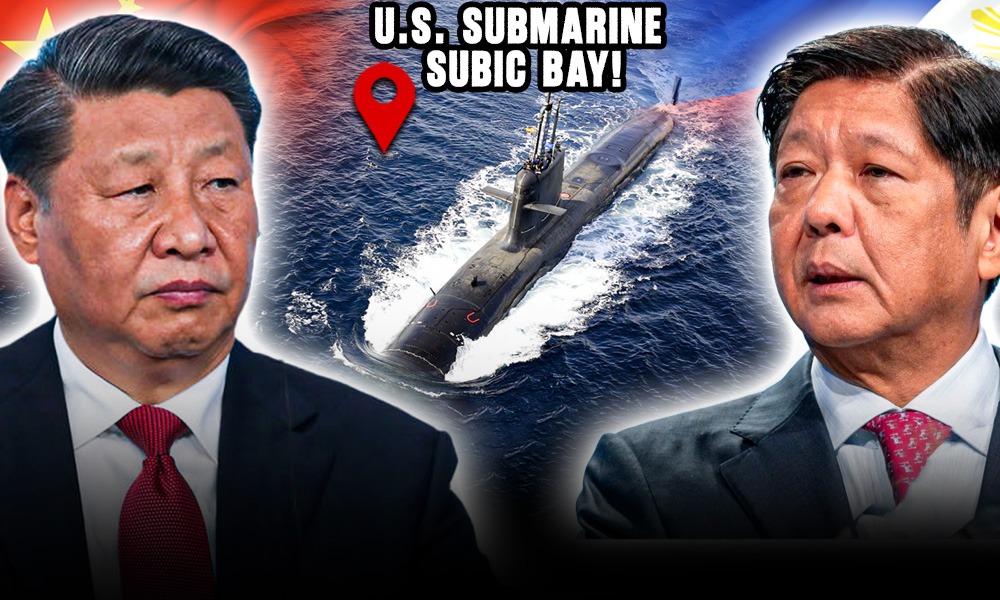
A silent, unseen leviathan is now gliding through some of the world’s most hotly contested waters, as the United States deploys a nuclear-powered attack submarine to the South China Sea to “preserve a free and open Indo-Pacific.” In truth, this is a calculated show of force, a deliberate signal to Beijing challenging its sweeping “nine-dash” and “ten-dash” claims and countering its relentless naval expansion.
The USS Ohio, an Ohio-class guided-missile submarine capable of launching 154 Tomahawk cruise missiles, embodies the sharpest edge of U.S. naval power. Its port call at Subic Bay in the Philippines, on the very frontline of the First Island Chain, highlights America’s intent to keep key sea lanes open and reassure allies that Washington will not yield strategic waters to Chinese control. China’s response has been swift and layered. Officials in Beijing condemned the mission as the U.S. “deploying offensive weapons near China” and “creating a powder keg,” while simultaneously accelerating anti-submarine warfare programs, testing giant uncrewed underwater vehicles near Hainan, and portraying U.S. moves as a “paper tiger” in state media.
The deployment exposes the broader geopolitical battlefield. The South China Sea carries over $5.3 trillion in annual trade, and China already commands the world’s largest navy with 350+ vessels and 60 submarines, while the U.S. counters with carrier strike groups and hundreds of aerial reconnaissance missions each year. The submarine’s presence along the First Island Chain highlights a global contest over who will shape 21st-century sea lanes and supply chains.
History warns how easily these silent maneuvers can go awry. In 2021 the USS Connecticut struck an uncharted seamount in the same waters, injuring 11 sailors and proving how quickly secrecy and uncertainty can spark crises. This latest patrol is thus part of a decades-long struggle, from China’s island-building campaigns to repeated standoffs at Scarborough and Second Thomas Shoals.
Put together, these opening lines paint a vivid picture of a tense new reality: a U.S. nuclear sub quietly broadcasting American resolve, a fast-growing Chinese navy gearing up with its own countermeasures, and a South China Sea so crowded and contested that a single mishap, a near-miss, a collision, even a radar glitch, could flip a routine patrol into a crisis with global consequences.
The Incident: A Show of Force Beneath the Waves
The USS Ohio, an Ohio-class guided-missile submarine (SSGN), has become the centerpiece of a meticulously calibrated U.S. show of force in the South China Sea. At more than 18,000 tons submerged and over 560 feet long, the Ohio is effectively a mobile, stealthy strike base. She carries up to 154 Tomahawk land-attack cruise missiles, each capable of striking targets more than 1,000 miles away with meter-level precision and can deploy special operations teams, unmanned undersea drones, and advanced surveillance arrays. Her nuclear propulsion lets her stay hidden underwater for months, crossing oceans without refueling and surfacing only when it serves a strategic purpose.
That purpose was unmistakable when the U.S. Navy confirmed her arrival at Subic Bay in the Philippines. Once the largest American naval installation in Asia, Subic Bay remains a deep-water port with direct access to the contested South China Sea. After decades of reduced presence, it has again become a linchpin of U.S.–Philippine defense cooperation, thanks to a revitalized alliance and the Enhanced Defense Cooperation Agreement that grants U.S. forces rotational access. The official Navy line described the visit as “scheduled,” yet its timing left little to chance.
The Ohio’s pier-side appearance came days after China’s newest and most advanced aircraft carrier, the CNS Fujian, wrapped up its first sea trials, and amid a surge of tense confrontations between Chinese coast guard and Philippine vessels near Scarborough Shoal and Second Thomas Shoal. To defense planners and analysts, the juxtaposition was unmistakable: Washington meant to remind Beijing that every technological milestone it celebrates will be met with a visible, high-stakes counterbalance.
The submarine’s movements were choreographed for maximum strategic effect. After allowing satellites and cameras to capture her alongside the pier, the Ohio slipped back beneath the surface, vanishing into waters where Chinese and American patrol routes frequently intersect. This deliberate surfacing and submergence delivered a double message: reassurance to allies that the U.S. can deliver overwhelming undersea firepower on demand, and a pointed warning to China that any bid to dominate vital sea lanes would face stealthy but decisive retaliation.
In many ways Ohio’s deployment captures the new character of U.S.–China rivalry. Where surface ships and aircraft can be tracked in real time, a nuclear-powered submarine remains invisible until it chooses to be seen, compressing decision times for adversaries and magnifying the risk of miscalculation. With one visit, the USS Ohio illustrated how the contest for maritime supremacy is increasingly fought in the ocean’s silent depths, where a single submarine can alter the regional balance of power without firing a single shot.
China’s Reaction: Rhetoric, Retaliation, and Technological Countermoves
Beijing wasted no time in condemning the USS Ohio’s port call and stealth patrol. A spokesperson for the Chinese Embassy in Washington, D.C. charged that “the United States is deploying offensive weapons near China and turning the South China Sea into a powder keg,” accusing Washington of “deliberately stoking confrontation and undermining regional peace.” China’s Foreign Ministry followed up in Beijing, warning that “no military show of force can shake China’s determination to safeguard its sovereignty and maritime rights.” These pointed statements are part of a now-familiar Chinese diplomatic pattern: denounce, warn, and frame the United States as the true destabilizer.
But China’s reaction is not just rhetorical. Behind the sharp words lies a rapid and sophisticated military response, aimed at blunting U.S. undersea dominance. Chinese naval planners view American guided-missile submarines as among the most difficult threats to track and counter, so they are pouring resources into anti-submarine warfare (ASW) and new technologies designed to hunt and deter stealthy intruders.
Key to this effort is the deployment of two experimental extra-large uncrewed underwater vehicles (UUVs), currently undergoing sea trials near Hainan Island, home to the South Sea Fleet’s submarine base. These autonomous, long-endurance submarines can conduct reconnaissance, lay mines, or trail enemy vessels for weeks at a time without risking human crews. Military analysts see them as harbingers of an AI-enabled undersea network that could one day shadow every U.S. submarine operating in the South China Sea.
China is also expanding a layered anti-submarine surveillance web. This includes land-based maritime patrol aircraft like the KQ-200, advanced shipborne sonar arrays, and a growing network of undersea hydrophone sensors strung across choke points from the Paracels to the Luzon Strait. Together, these assets aim to narrow the U.S. Navy’s stealth advantage, signaling that every U.S. submarine entering these waters may now be tracked more quickly and accurately than before.
Meanwhile, Chinese state media has launched a full-spectrum information campaign. Commentaries in outlets such as the Global Times and PLA Daily frame the USS Ohio’s mission as “a classic case of intimidation theater”, dismissing U.S. submarines as “paper tigers” whose political impact exceeds their military utility. At the same time, these narratives emphasize that China’s own naval strength, now the world’s largest in ship numbers—guarantees that any U.S. move can be contained or outmatched. This propaganda serves dual purposes: reassuring domestic audiences of Beijing’s control and signaling to Southeast Asian neighbors that aligning with Washington carries long-term risks.
In short, China’s response to Ohio’s high-profile patrol is multi-dimensional. It blends blistering official rhetoric, fast-evolving undersea warfare technology, and a sophisticated information campaign. Together, these measures are designed not only to counter a single U.S. submarine, but to deter the broader strategy of persistent American undersea presence in the South China Sea, a contest that is increasingly shifting to the invisible, high-stakes battlefield beneath the waves.\
Marco Rubio Wants to Turn the Philippines Into China’s Worst Nightmare
The Geopolitical Battlefield: Beyond a Single Submarine
The South China Sea is far more than a regional flashpoint; it is one of the world’s busiest economic lifelines, carrying an estimated $5.3 trillion in annual global trade, including about $1.2 trillion of U.S. maritime commerce. Tankers and container ships hauling energy supplies, semiconductors, and consumer goods all pass through these waters every day. Any instability, from a blockade to a miscalculation at sea, could send shockwaves through global energy markets, supply chains, and consumer prices from Asia to North America.
Beneath these commercial stakes lies a rapidly escalating military competition. China’s People’s Liberation Army Navy (PLAN) now commands well over 350 ships, making it the largest naval fleet on the planet, compared to roughly 230 deployable vessels for the U.S. Navy. Within that force, around 60 submarines are already operational, and projections suggest as many as 80 by 2035, including a growing number of nuclear-powered and missile-capable boats. Each year brings new destroyers, frigates, and undersea platforms, all designed to push China’s defensive perimeter outward and secure de facto control over the South China Sea.
The United States has not been idle. According to a Beijing-based maritime think tank, the U.S. military conducted around 1,000 aerial reconnaissance sorties in 2024 alone and deployed carrier strike groups to the South China Sea eight times. These patrols and exercises, backed by advanced submarines like the USS Ohio, are meant to demonstrate high-intensity presence, assure allies, and remind Beijing that freedom of navigation is a core U.S. interest.
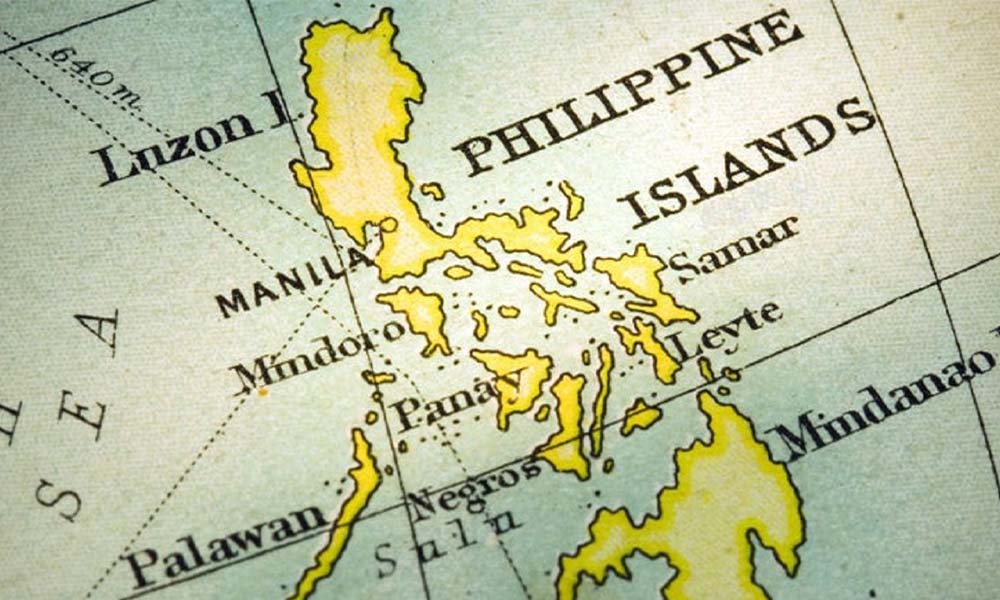
All of these maneuvers unfold along the strategic arc known as the First Island Chain, a natural maritime barrier stretching from Japan through Taiwan and the northern Philippines down to the Malay Peninsula. Long a central concept in U.S. and allied defense planning, the First Island Chain effectively bottles up China’s naval forces, limiting their easy access to the wider Pacific. By making a high-profile port call at Subic Bay in the Philippines, the USS Ohio sends a deliberate signal: the United States intends to maintain and if necessary, project overwhelming naval power along this critical frontline, ensuring that the First Island Chain remains a key check on China’s blue-water ambitions.
These economic imperatives and military realities reveal why a single submarine voyage reverberates across the Indo-Pacific. The South China Sea is not just a backdrop for tactical maneuvers; it is the central chessboard on which global trade security, technological competition, and future great-power stability are being decided.
Panatag Shoal Sparks Controversy as China Releases New Maritime Baselines
Case Study & Historical Context: Lessons from the Past
The deployment of the USS Ohio unfolds against a long and often volatile history of naval brinkmanship in the South China Sea. One striking precedent is the 2021 USS Connecticut incident, when a Seawolf-class nuclear-powered attack submarine struck an uncharted seamount while submerged in these same waters. The impact damaged the vessel’s sonar dome and injured 11 sailors, forcing an emergency surfacing and a withdrawal to Guam for repairs. Beijing quickly accused Washington of “hiding the truth” and conducting “reckless intrusions,” while U.S. officials, citing operational security, released few details. The episode illustrated two hard realities: the seabed here is poorly mapped and inherently hazardous, and the opacity of undersea operations magnifies the risk of miscalculation and misinformation. One navigational error or unexpected encounter can, in a matter of minutes, escalate far beyond the original mishap.
The current standoff is also part of a decades-long contest for maritime dominance. Since the late 20th century, China has steadily advanced a strategy to extend control over the South China Sea, starting with routine maritime patrols and later launching massive land-reclamation projects. From 2013 onward, it dredged and built artificial islands across the Spratly and Paracel chains, equipping them with long runways, deep-water ports, radar systems, and missile batteries. Beijing initially described these projects as purely civilian, “lighthouses” or “fisheries services” but they have evolved into militarized outposts functioning as unsinkable aircraft carriers that extend Chinese reach hundreds of miles offshore.
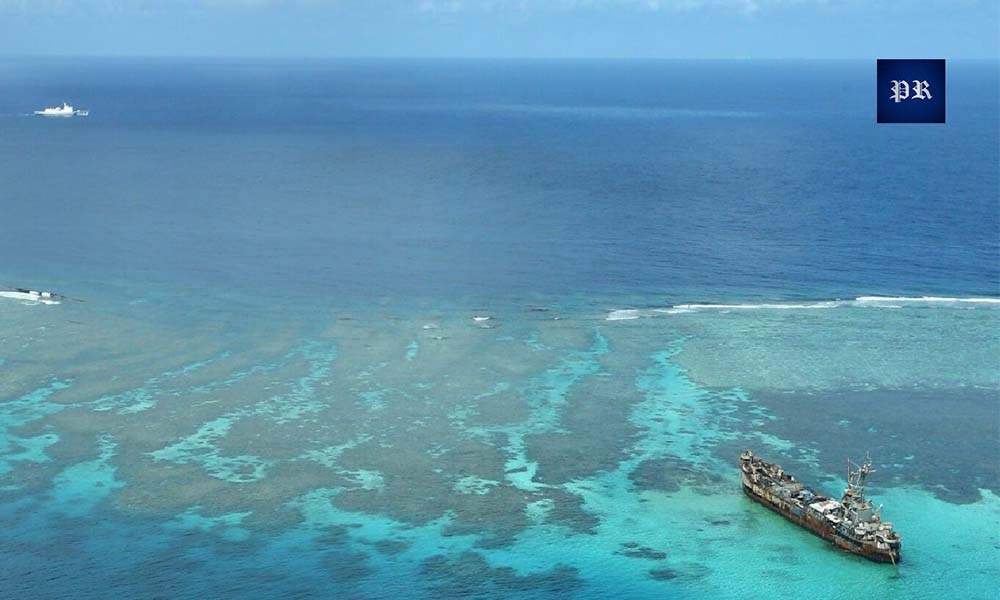
Over these years, flashpoints have multiplied. In 2012 at Scarborough Shoal, a two-month naval standoff ended with China’s de facto control of the reef, shutting out many Filipino fishermen. At Second Thomas Shoal (Ayungin), Philippine resupply missions to the grounded BRP Sierra Madre are regularly harassed and sometimes rammed. From 2018 to 2024, U.S. Freedom of Navigation Operations (FONOPs) repeatedly challenged excessive Chinese claims, often shadowed by Chinese warships and aircraft. Each of these episodes reinforced a strategic pattern: incremental Chinese expansion met by persistent U.S. counter-presence.
Viewed through this historical lens, the USS Ohio’s high-profile stop at Subic Bay and its silent patrols are not an isolated provocation but a continuation of this long-running rivalry. They reflect Washington’s resolve to contest Beijing’s bid to rewrite the rules of access and control in the South China Sea. The hard lesson from past incidents is that every submarine deployment carries both technical hazards and geopolitical consequences. Whether it is an uncharted seamount or a near-collision with Chinese forces, each encounter risks triggering a crisis that could entangle multiple nations. Far from a one-off maneuver, the USS Ohio mission marks another turn in a decades-long struggle over navigation rights, security, and sovereignty in one of the world’s most vital waterways.
Philippines Rocked by ₱545B Corruption Scandal as West Philippine Sea Crisis Grows
Conclusion
The USS Ohio’s high-profile deployment to Subic Bay and the South China Sea is far more than a routine naval exercise. It is a deliberate strategic move by Washington to reinforce deterrence, reassure allies, and counter China’s relentless maritime expansion. Beijing’s reaction has been two-pronged, a wave of sharp diplomatic protests and propaganda branding the mission as reckless, paired with a steady technological buildup of anti-submarine systems and experimental uncrewed underwater vehicles. Beneath these headline events lies the deeper reality of entwined economic and military rivalries: a vital global trade artery worth trillions of dollars each year, an accelerating naval arms race, and dueling concepts of who should control the sea lanes of the Indo-Pacific.
This raises a larger, unsettling question for the future of regional and global security. Will such “routine operations” eventually coalesce into a stable, rules-based order where freedom of navigation is upheld and incidents are safely managed? Or will a single accident, an unexpected collision, a sonar misread, or an overzealous patrol, ignite a crisis that spirals into open conflict, reshaping alliances, trade flows, and the balance of power across the world’s most strategically contested waters?