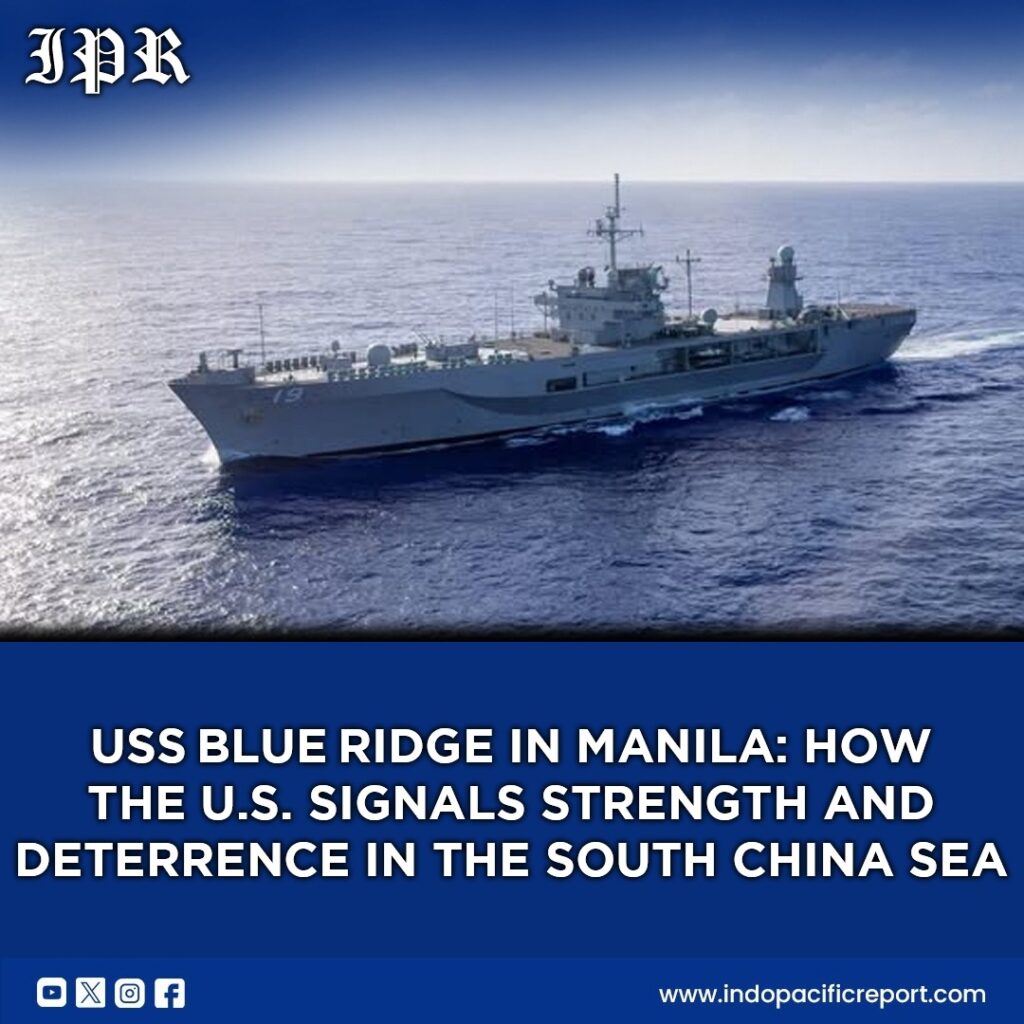
The visit of USS Blue Ridge (LCC 19) to Manila highlights ongoing U.S.-Philippine naval cooperation at a time of rising tensions in the South China Sea. As the 7th Fleet flagship, the vessel is more than a warship—it is a mobile command platform, capable of coordinating complex maritime operations and supporting allies across the region. Its presence reassures Manila that Washington remains engaged and prepared to uphold freedom of navigation in contested waters. From a great-power competition perspective, the port call sends a clear signal to Beijing. China has increased patrols, deployed coast guard and militia vessels, and conducted “clearing operations” in Philippine waters. The USS Blue Ridge demonstrates that the U.S. can maintain forward-deployed command and control, project influence, and respond rapidly without escalating to direct conflict. It also underlines the cost of aggressive actions for any state considering coercion in Philippine maritime zones. In terms of regional security architecture, this visit strengthens alliance networks and interoperability. Philippine naval and coast guard units gain opportunities to practice joint surveillance, crisis management, and operational coordination with the 7th Fleet. Such exercises improve the resilience of regional defense structures and reduce the risk of miscalculation in high-tension areas. The visit also reinforces alliance dynamics. By hosting a high-profile U.S. platform, the Philippines signals that the Mutual Defense Treaty remains operational, while the U.S. strengthens trust and influence without permanent basing. It reassures regional partners—including Japan and Australia—that Washington is actively committed to collective security and a rules-based maritime order. From a maritime strategy standpoint, the USS Blue Ridge enables advanced command-and-control operations, integrating allied ships, aircraft, and surveillance assets across critical sea lanes. Its continued patrols contribute to deterrence and operational readiness, ensuring that adversaries must account for U.S. presence in any calculations over contested waters. Strategic takeaway: The port visit is more than symbolic. It signals the U.S. commitment to deterring aggression, supporting allies, and maintaining regional stability in the Indo-Pacific. For Manila, it offers operational support, security reassurance, and evidence of alliance credibility. Forward-deployed command platforms like the USS Blue Ridge will remain key tools for sustaining stability amid great-power rivalry. Can symbolic port visits and command ships alone deter China in the South China Sea, or does the region need a more permanent U.S. presence?

USS Blue Ridge in Manila: A Signal of U.S. Commitment in the Indo-Pacific