US Troops Conduct Humanitarian Training in Cagayan de Oro: Strategic Implications
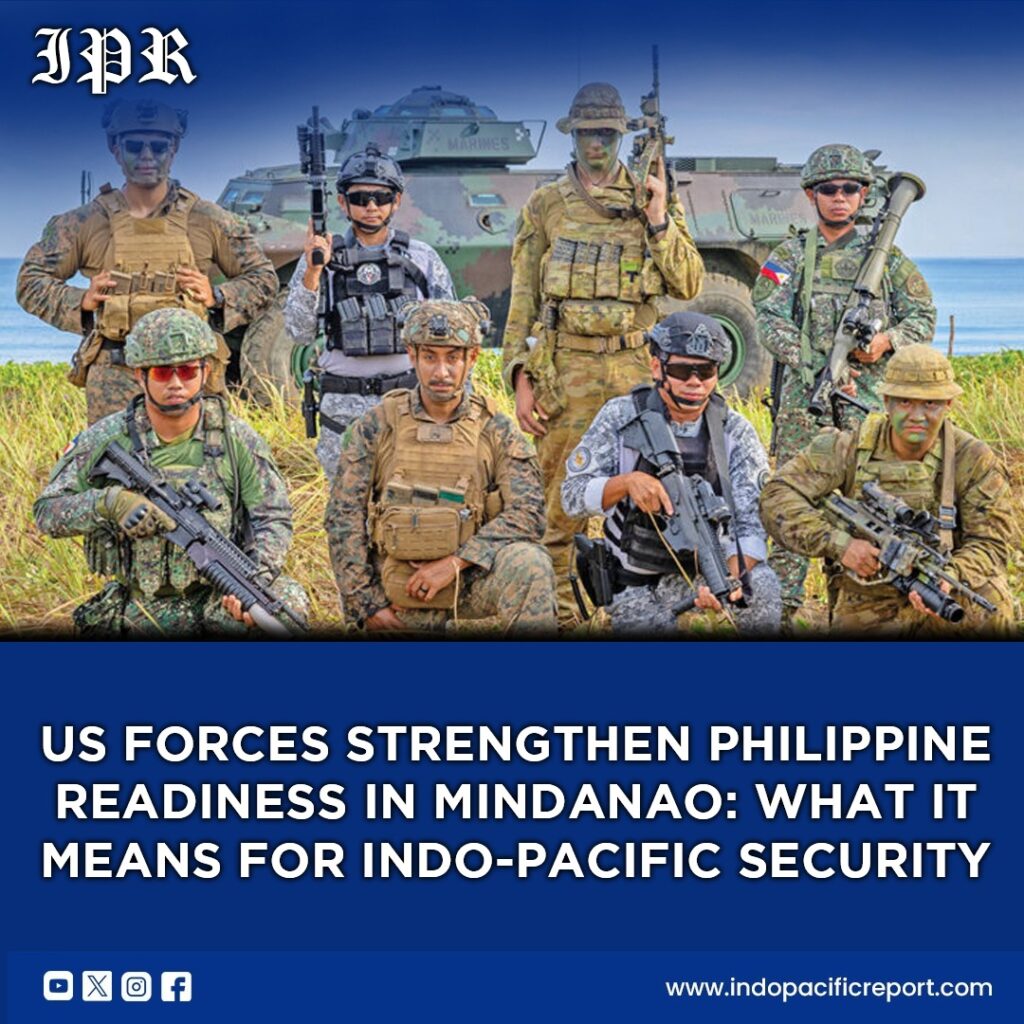
On March 15, 2026, additional U.S. forces arrived in Cagayan de Oro City aboard the USNS Seay, a U.S. Navy roll-on/roll-off cargo ship. Roughly 100 troops joined Philippine forces at Lumbia Air Base to conduct a two-week joint humanitarian assistance and disaster relief (HADR) exercise. This training, coordinated under the Enhanced Defense Cooperation Agreement (EDCA), runs from March 8 to March 28 and involves close coordination with local government authorities.
Lumbia Air Base, formerly Cagayan de Oro’s civilian airport, now serves as a joint-use EDCA site focused on HADR operations. The base supplements other regional facilities designed for U.S.-Philippine interoperability. Officials emphasized that these activities are strictly training-focused and unrelated to ongoing geopolitical tensions in the Middle East or the West Philippine Sea. Nevertheless, the arrival of U.S. forces has drawn public attention, reflecting the sensitive optics of foreign military presence amid global uncertainty.
From a regional security perspective, the exercise highlights the U.S.-Philippine alliance’s dual-use strategy. Beyond traditional deterrence missions, EDCA sites like Lumbia enable capacity-building in disaster response, logistics, and joint operational planning. These exercises reinforce the Philippines’ civil-military readiness while simultaneously sustaining U.S. operational familiarity in strategic Philippine locations. In a broader sense, such deployments maintain the U.S. footprint in Southeast Asia without escalating conventional military tensions in contested maritime areas.
In alliance dynamics, the joint training strengthens trust and interoperability between the U.S. and Philippine forces. Regular HADR exercises build confidence among local and national authorities, enhance rapid deployment skills, and improve command-and-control coordination. They also signal U.S. commitment to regional partners in a manner that balances presence with restraint, particularly in a period marked by heightened competition among global powers.
From a maritime and strategic logistics standpoint, Lumbia’s location in Mindanao provides rapid access to northern Mindanao and nearby maritime corridors. While the current focus is humanitarian, EDCA sites remain adaptable for multiple mission sets, including maritime security support and disaster contingency operations, underscoring the flexibility of forward-deployed forces in the Indo-Pacific.
Strategic implications: These exercises demonstrate a nuanced U.S. approach to sustaining influence in Southeast Asia. By prioritizing joint disaster preparedness while retaining strategic presence, the U.S. reinforces the credibility of its alliances without unnecessarily provoking regional actors. For Manila, such collaboration enhances domestic capability while signaling alignment with a major power amid the Indo-Pacific’s complex security environment.
Audience Question:
In a region with rising strategic competition, should EDCA exercises focus more on disaster relief or expand to broader deterrence missions?