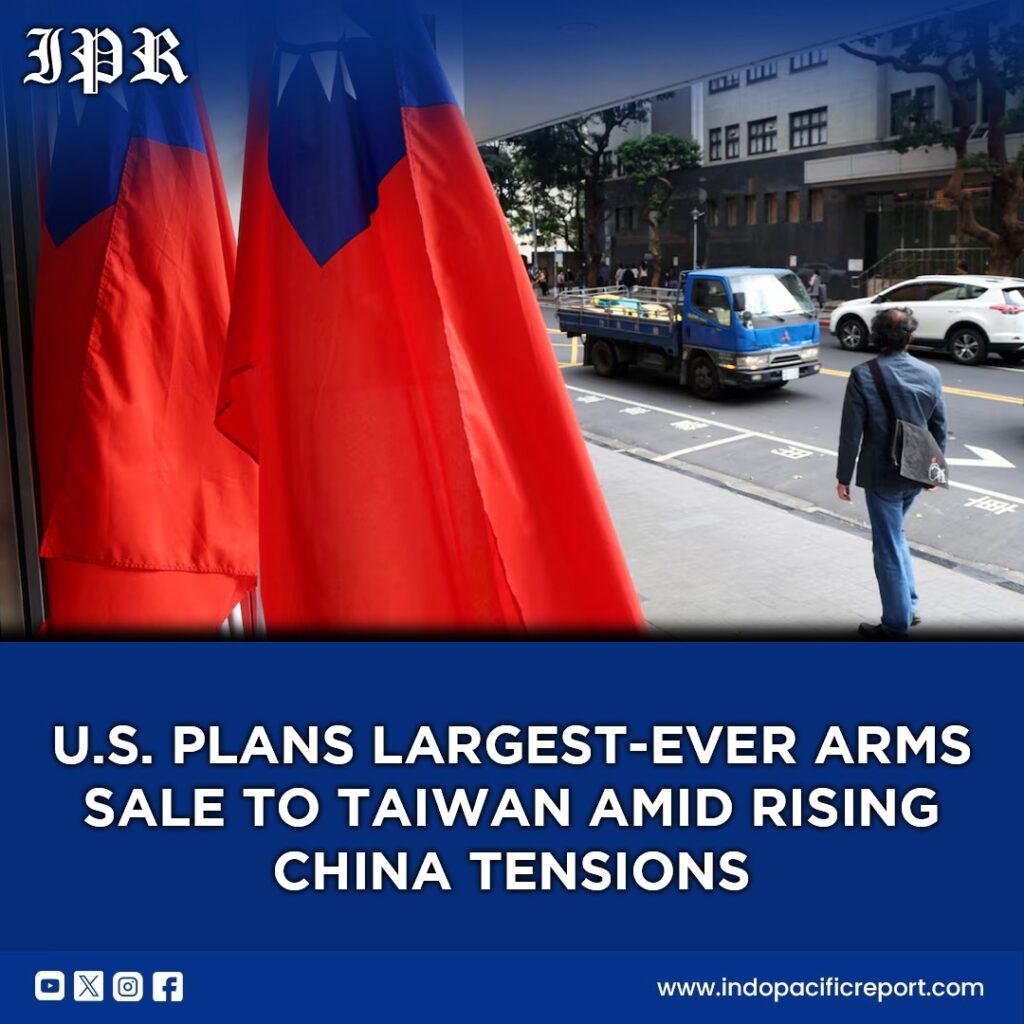
U.S. Plans Largest-Ever Arms Sale to Taiwan Amid Rising China Tensions
The United States is preparing its largest-ever arms package for Taiwan, including advanced air defense systems and enhanced missile capabilities. This comes at a time of escalating military pressure from China, which continues to conduct drills and fly incursions near Taiwanese airspace and waters. The deal signals a major step in Washington’s effort to strengthen Taiwan’s defense and maintain strategic influence in the Indo-Pacific.
From a great-power competition perspective, this move is a clear signal to Beijing: the U.S. is committed to maintaining Taiwan’s security. By providing advanced systems, Washington increases the cost for China if it attempts coercion or military action, thereby reinforcing deterrence. This also demonstrates U.S. readiness to prioritize the first island chain, a critical line of defense in East Asia.
The deal affects regional security architecture as well. Taiwan sits at a strategic chokepoint for global trade and semiconductor supply chains. Strengthening its defenses helps safeguard not only the island but also regional maritime commerce. It also reinforces norms of self-defense, sending a message to neighbors that the U.S. will support regional stability against unilateral military threats.
Alliance dynamics are highlighted too. This sale reassures allies like Japan, South Korea, and Australia of U.S. commitment, encouraging coordination in defense planning. At the same time, it may put pressure on other regional actors to bolster their own defenses. The challenge lies in balancing deterrence with diplomacy to avoid escalating tensions unnecessarily.
From a maritime and economic strategy lens, enhanced air and missile defenses improve the security of the Taiwan Strait, one of the busiest maritime corridors in the world. By raising the costs of military action, the U.S. indirectly protects energy and trade flows, a vital element of Indo-Pacific economic stability.
Finally, the Indo-Pacific balance of power is shifting. Taiwan’s stronger defense increases the risk for China but also reinforces U.S. strategic leverage. However, the move may prompt Beijing to accelerate investments in asymmetric capabilities, including missiles, cyber warfare, and anti-access systems. This could trigger a regional arms competition with long-term consequences.
Forward-looking assessment: The U.S. arms deal strengthens Taiwan’s deterrence and reassures allies, but it also increases tensions with China. Managing escalation while preserving credible defense commitments will be critical for regional stability.
Audience Debate Question: Will the U.S. arms sale to Taiwan prevent conflict or make war in the Taiwan Strait more likely?