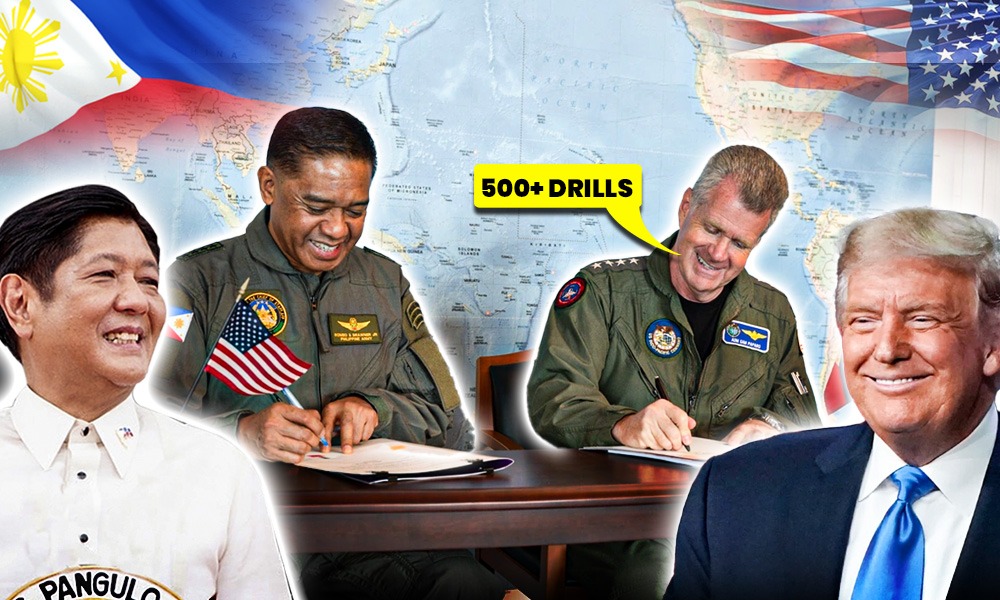
In a region already on edge, from the rising tension in the South China Sea to China’s creeping military muscle, the United States and the Philippines just made a bold move. They’ve approved more than 500 joint military activities for 2026, the most ambitious defense cooperation in our history, and a clear message that Manila and Washington are shoulder to shoulder in the face of rising threats. The big announcement came out of Hawaii, where Philippine Chief of Staff General Romeo Brawner and U.S. Indo-Pacific Commander Admiral Samuel Paparo signed the “8-Star Memo,” locking in an unprecedented number of drills ranging from massive war games to cyber defense, special operations, and maritime patrols. To understand how we reached this point, we need to look back at the foundation of the alliance itself, anchored in the 1951 Mutual Defense Treaty, reinforced by the Visiting Forces Agreement of 1998, and supercharged by the Enhanced Defense Cooperation Agreement of 2014. These agreements created the legal and operational backbone that makes today’s expansion possible. And if the number 500 sounds abstract, look no further than the case studies. Balikatan, now Southeast Asia’s largest combat rehearsal, has grown into a full battle test, simulating the defense of key maritime terrain near Taiwan and the West Philippine Sea. Maritime Cooperative Activities, meanwhile, have already proven their worth, forcing the Chinese Coast Guard and Navy to literally change their behavior whenever allied patrols appear. So what does it all mean in real terms? The immediate impact is deterrence: a stronger, united front committed to freedom of navigation and a rules-based international order. For the Philippines, it accelerates modernization, backed by more than $1.14 billion in U.S. military assistance since 2015 and a 15-year, $40 billion defense program. And for the wider region, it signals the rise of “minilateralism”, alliances that now include partners like Australia, Japan, and Canada, building a network to counter Beijing’s influence. And so we bring it full circle: what began as a modest alliance of convenience is now a strategic declaration of strength, one built on treaties, tested in drills, and sharpened by urgency. It is preparation, yes, but also presence. It is power, but also responsibility. And it may well shape the future of peace and stability in the Indo-Pacific.
The Announcement: Facts, Figures, and Key Details
The announcement itself came straight out of Hawaii, during the Mutual Defense Board–Security Engagement Board meeting, where the Philippines and the United States meet every year to decide the future of their military partnership. But this time was different. This time, it wasn’t just another round of coordination. It was historic. Philippine Armed Forces Chief of Staff General Romeo Brawner, Jr., and U.S. Indo-Pacific Commander Admiral Samuel Paparo sat down, signed the “8-Star Memo,” and revealed the figure that stunned many: more than 500 joint military activities approved for 2026. To put that in perspective, that’s the highest number of cooperative drills, trainings, and exchanges ever lined up between the two allies. It’s not just a step up from previous years, it’s a leap, one that signals a much deeper and much stronger defense alliance, at a time when the South China Sea is growing more dangerous by the day.
So what do these 500 activities actually include? They cover the full spectrum of military readiness. At the top of the list is the annual Balikatan exercise, literally translated as “shoulder-to-shoulder” which has evolved from a symbolic gesture of friendship into the single biggest combat rehearsal in Southeast Asia. This isn’t just soldiers marching or ships patrolling anymore. It’s full-scale battle tests, simulating real war conditions. We’re talking amphibious assaults, live-fire drills, and combined arms operations on land, sea, air, and even cyberspace. It’s also about cutting-edge technology: the NMESIS anti-ship missile system, capable of striking warships over the horizon, and the HIMARS rocket launchers, famous for their precision and mobility. These systems aren’t just for show, they demonstrate to any rival that U.S. and Philippine forces can integrate advanced weapons and fight as one. Alongside Balikatan are countless other engagements: naval patrols, tactical air drills, humanitarian and disaster-response exercises, and subject-matter expert exchanges in fields like cyber defense, logistics, and maritime domain awareness. In short, it’s a military playbook designed to cover every possible scenario, from natural disasters to full-blown conflict.
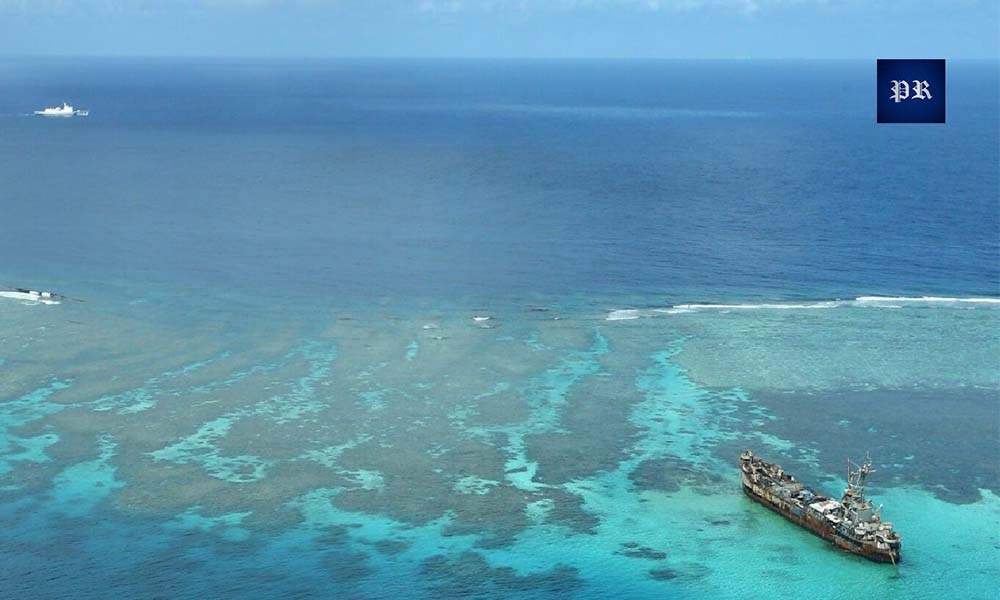
And why now? The strategic rationale is simple, but powerful. Both Manila and Washington have been watching the rising sea tensions with increasing alarm. China’s coast guard and maritime militia are pressing harder in the West Philippine Sea, while its navy continues to project power across the Indo-Pacific. By expanding the alliance to over 500 activities, the U.S. and the Philippines are sending a message: we’re not standing by, we’re preparing. Every exercise, every drill, every patrol adds to deterrence, making it harder for adversaries to escalate without consequences. As officials describe it, the goal is to achieve “peace through strength.” That phrase may sound old-fashioned, but in today’s Indo-Pacific, it’s the core of strategy. A Philippines backed by a U.S. alliance network, armed with training, tech, and interoperability, becomes far harder to intimidate. This isn’t just about practicing together, it’s about building a shield that protects sovereignty, ensures freedom of navigation, and keeps the region stable.
The Foundation of the Alliance: Historical Context and Legal Frameworks
To understand how we reached today’s unprecedented level of cooperation, we need to look back at the foundation of the U.S.–Philippines alliance. It all started in 1951 with the signing of the Mutual Defense Treaty, the cornerstone agreement that binds both nations to come to each other’s aid if either one is attacked. It was born in the early Cold War, when Asia was already a battleground of influence, but its words still carry force today. For decades, American leaders have reaffirmed this commitment, none more powerfully than former U.S. Secretary of State Hillary Clinton, who declared: “The United States will always be in the corner of the Philippines. We will always stand and fight with you to achieve the future we seek.” That wasn’t just rhetoric, it was a promise that continues to shape strategy in the Indo-Pacific.
But treaties alone don’t keep alliances alive, they need mechanisms, updates, and flexibility to meet the challenges of each era. That’s where agreements like the Visiting Forces Agreement (VFA), signed in 1998, come in. The VFA created the legal framework that allows U.S. troops to operate in the Philippines for training and exercises, while also granting them specific protections under Philippine law. Then, in 2014, the alliance took another leap forward with the Enhanced Defense Cooperation Agreement (EDCA). EDCA allows U.S. forces rotational access to agreed-upon Philippine military bases, bringing not just personnel but also logistics, aircraft, and advanced equipment closer to the frontline of regional tensions. Under President Ferdinand Marcos Jr., EDCA has expanded even further, new sites have been added, including critical locations near Taiwan and the South China Sea, areas that sit at the heart of today’s strategic flashpoints. And it’s not just access; it’s investment. The United States has already allocated more than $82 million to build infrastructure at these sites, turning them into hubs of cooperation, readiness, and deterrence.
Australia-Philippines Alliance Deepens as Tensions Flare with China
Taken together, the MDT, the VFA, and EDCA form the legal and operational backbone of the alliance. They are the scaffolding that supports those 500 joint military activities planned for 2026. They are the agreements that transform words into action, promises into presence, and friendship into firepower. Without them, the drills, the bases, and the deployments we see today would not even be possible. With them, the Philippines and the United States are bound together not just by history, but by law, by infrastructure, and by a shared vision of defending sovereignty and securing peace in the Indo-Pacific.
Case Studies: Recent Military Exercises and Their Implications
If the approval of 500 joint activities sounds abstract, let’s ground it in real examples, because we’ve already seen what these drills look like, and the message they send. Take Balikatan 2025. It was one of the biggest in history, bringing together about 14,000 troops, 9,000 Americans and 5,000 Filipinos, for what commanders described as a “full battle test.” This wasn’t symbolic flag-waving. The exercise simulated the defense of key maritime terrain in areas directly facing both the South China Sea and Taiwan, showing beyond any doubt where the focus really is: countering external threats. And yet, the Philippines made the framing clear. As Maj. Gen. Francisco Lorenzo Jr., Balikatan’s exercise director, explained: “Balikatan is not against any nation. It is joint training with the U.S. to increase our capability to secure our territory. It enhances our responsiveness and deters possible incursions or invasions.” In other words, the point isn’t provocation, it’s preparation. Preparation that doubles as deterrence.
Then there are the Maritime Cooperative Activities, or MCAs, a newer but fast-growing part of the alliance. These are coordinated patrols and operations at sea with foreign navies, and Manila is now looking to make them a regular, standing feature. Just this year alone, the Philippines has already carried out 10 to 11 MCAs, each one bigger and more complex than the last. And the impact? It’s tangible. Philippine Navy spokesman Rear Admiral Roy Vincent T. Trinidad observed: “For every MCA, there has been a noted change in the actions of the Chinese Coast Guard and the People’s Liberation Army Navy.” Think about that for a second. Every time these joint patrols happen, Chinese ships respond differently, slower, less aggressive, more cautious. That’s deterrence in real time. That’s proof that these activities don’t just train our troops; they actually shift the behavior of adversaries at sea.
Together, Balikatan and the MCAs show the practical power of alliance cooperation. One is a massive joint war game, a rehearsal for scenarios nobody wants but everyone needs to be ready for. The other is steady, day-to-day presence at sea, testing the waters, setting the tone, and sending signals. And both carry the same implication: the Philippines is no longer operating alone. It is backed, trained, and reinforced by some of the most capable forces in the world. And that makes a difference not just on paper, but in the behavior of rival navies and coast guards we face every single day.
The Immediate and Future Impact of the Alliance
So what does all of this mean, not just in exercises, but in real-world impact? Right now, the expanded cooperation acts as a shield of deterrence. Every joint drill, every naval patrol, every multinational exercise makes it harder for China to act unchallenged in the West Philippine Sea. It’s not just the Philippines standing watch; it’s the Philippines and the United States presenting a united front, committed to protecting “freedom of navigation” and defending a “rules-based international order.” As the U.S. Indo-Pacific Command put it, the Philippines’ decision to hold joint naval drills with allies “is essential in ensuring freedom of navigation and improving interoperability.” In other words, these activities aren’t symbolic, they are the living proof of a coalition ready to act, ready to respond, and ready to defend.
For the Philippines itself, the alliance is also transforming the military from within. For decades, our armed forces focused mainly on internal security, counter-insurgencies, domestic law enforcement, and disaster response. But today, the pivot is clear: a new national security strategy is emerging, one that prioritizes external threats and maritime defense. The U.S. has been instrumental in this shift. Since 2015, the Philippines has received more than $1.14 billion in American military assistance, the largest amount of any U.S. partner in the Indo-Pacific. And it doesn’t stop there. Manila has launched an ambitious 15-year, $40 billion modernization program, one that will deliver new warships, fighter jets, missiles, and radar systems to match the alliance’s growing commitments. For a nation that once fielded one of Asia’s weakest militaries, this is nothing short of a generational transformation.
Trump Sparks Global Trade War with Sweeping Tariffs on Canada, China, and Mexico
But here’s the flip side: greater strength also brings greater friction. These expanded drills will almost certainly be viewed by China as provocative, and Beijing could answer with more aggressive maneuvers, tighter blockades, or ramped-up patrols. Escalation is a risk, and one that Manila and Washington both acknowledge. Yet that risk is counterbalanced by a powerful trend, the rise of what analysts call “minilateralism.” It’s no longer just the Philippines and the U.S.; countries like Australia, Japan, and Canada are joining these exercises, forming a network of like-minded partners. Each new partner makes the alliance more resilient, more credible, and more difficult for Beijing to isolate or intimidate. And looking to the future, the trajectory is clear: the alliance is only going to deepen. Expect more integrated operations, land, sea, and air working together, more U.S. access to EDCA sites, and more American military aid flowing into Philippine modernization.
The message is simple: the Philippines is no longer a weak link, it’s becoming a central player in the Indo-Pacific security architecture. From a military once focused on insurgencies in the jungle to one preparing to defend maritime territory against the world’s second-largest navy, the shift is historic. The immediate impact is deterrence. The future impact? A stronger, more connected, and more capable Philippines standing firm at the heart of a network built to balance China’s growing power.
Conclusion
So let’s bring this to a close. The approval of over 500 joint military activities for 2026 is not just a number on a page, it’s a strategic declaration. It’s the United States and the Philippines saying together: our alliance is stronger, our commitment is deeper, and our resolve to deter aggression is unshakable. This expansion didn’t appear out of thin air. It is the direct response to rising tensions in the South China Sea, built on the bedrock of the Mutual Defense Treaty of 1951, reinforced by the Visiting Forces Agreement, and supercharged by the Enhanced Defense Cooperation Agreement. From the massive combat rehearsals of Balikatan to the steady drumbeat of Maritime Cooperative Activities, we’ve already seen the impact: Chinese behavior shifting at sea, Filipino forces gaining confidence, and modernization accelerating at a pace unseen in generations.
But here’s the challenge, the balance between deterrence and diplomacy. More power at sea means more risk of incidents, and every close encounter carries the danger of escalation. That’s why this alliance must not only grow stronger but also remain steady, using channels of communication as wisely as it uses warships and missiles. Because the truth is simple: the future of peace and stability in the Indo-Pacific may well rest on how this expanded partnership succeeds. For Filipinos, it’s about defending sovereignty. For Americans, it’s about ensuring a free and open Indo-Pacific. And for the world, it’s about showing that alliances, when renewed, tested, and strengthened, can still hold the line against aggression. Shoulder to shoulder, the U.S. and the Philippines are stepping into a new era, and the eyes of the world will be watching.