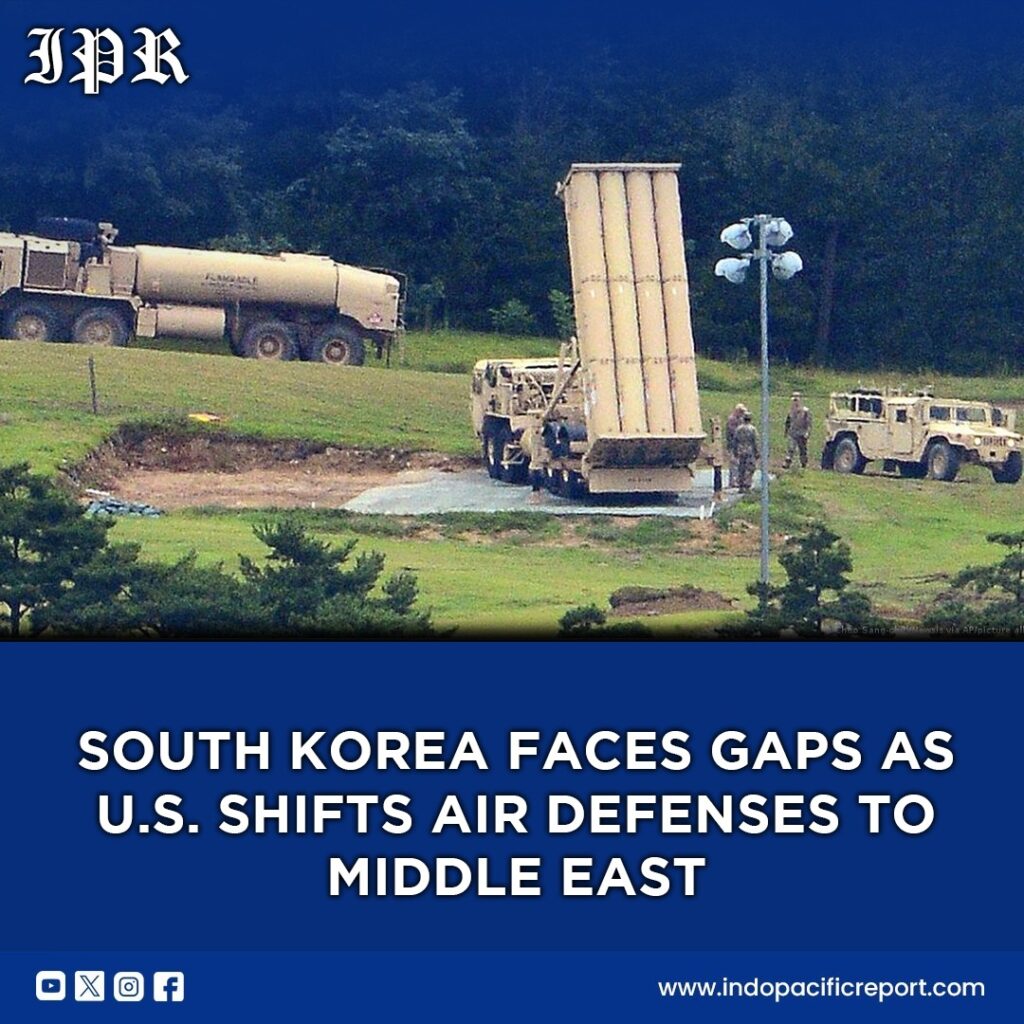
The U.S. decision to redeploy some Patriot and THAAD missile defense batteries from South Korea to the Middle East is raising concern in Seoul. While Washington frames the move as a response to Iranian threats in the Strait of Hormuz, it coincides with North Korea’s recent missile launches, including a salvo of 10 ballistic missiles over the Sea of Japan. For South Korea, this creates a temporary gap in layered missile defense and heightens public anxiety about the country’s security.
From a great-power perspective, the move highlights the limits of U.S. global commitments. Washington is juggling multiple theaters—Indo-Pacific and Middle East—simultaneously. This shows allies that U.S. protection is situational and can be adjusted according to immediate strategic needs. North Korea is likely to perceive this as an opportunity to test South Korea’s defenses, while Beijing and Moscow watch how the U.S. balances its commitments.
The redeployment also exposes weaknesses in regional security architecture. South Korea’s missile shield relies on redundancy: domestic systems like the Cheongung-II complement U.S. batteries. The temporary absence of American systems thins the defense layer, reducing early-warning capabilities and multi-layer intercept options. While Cheongung-II provides some coverage, the gap highlights the limits of local capabilities against North Korea’s growing missile arsenal, including large-caliber KN-25 systems.
Alliance dynamics are under stress. U.S. actions demonstrate a transactional approach where allies are expected to bear more responsibility. Seoul must now accelerate indigenous missile defense development to maintain credibility. Temporarily reduced U.S. coverage could strain confidence in the U.S.-ROK alliance and create uncertainty in crisis signaling, potentially emboldening Pyongyang to escalate provocations.
Maritime and economic factors are also affected. Northeast Asia relies on secure shipping and energy routes. A temporary thinning of missile defense can increase perceived risk in maritime trade, insurance, and regional stability. At the same time, the U.S. prioritization of the Middle East highlights the interconnected nature of global energy and security concerns, showing that Indo-Pacific security cannot be separated from broader U.S. strategic priorities.
Looking forward, the redeployment underscores the importance of South Korea building self-reliant missile defense while staying interoperable with U.S. systems. Gaps created by global force shifts should motivate accelerated modernization and domestic capability. For the Indo-Pacific, this episode shows that deterrence will increasingly depend on a mix of local defense capability and allied support, with North Korea serving as a constant stress test.
Question for Readers:
If the U.S. can shift key defenses overseas, should South Korea prioritize building independent missile defense or rely on its alliance with Washington?