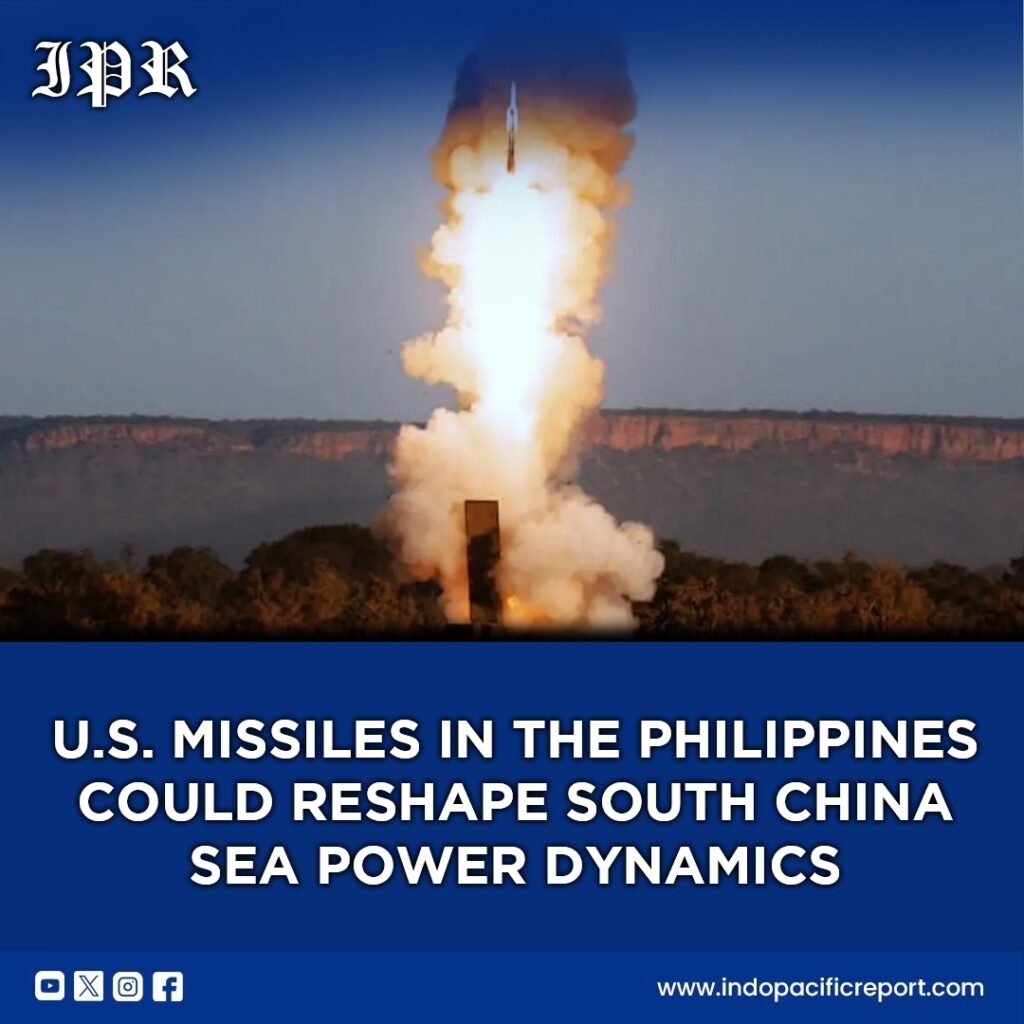
The recent U.S. plan to expand missile deployments in the Philippines signals a deliberate recalibration of Indo-Pacific deterrence in response to Beijing’s growing maritime assertiveness. Building on the 2024 installation of the Typhon mid-range missile system in northern Philippines and last year’s anti-ship launcher, Washington intends to increase the forward presence of advanced missile and unmanned systems. These deployments, conducted in close consultation with Manila, are framed as defensive measures to preserve freedom of navigation, secure regional sea lanes, and counter what U.S. and Philippine officials describe as China’s “illegal, coercive, aggressive, and deceptive activities” in the South China
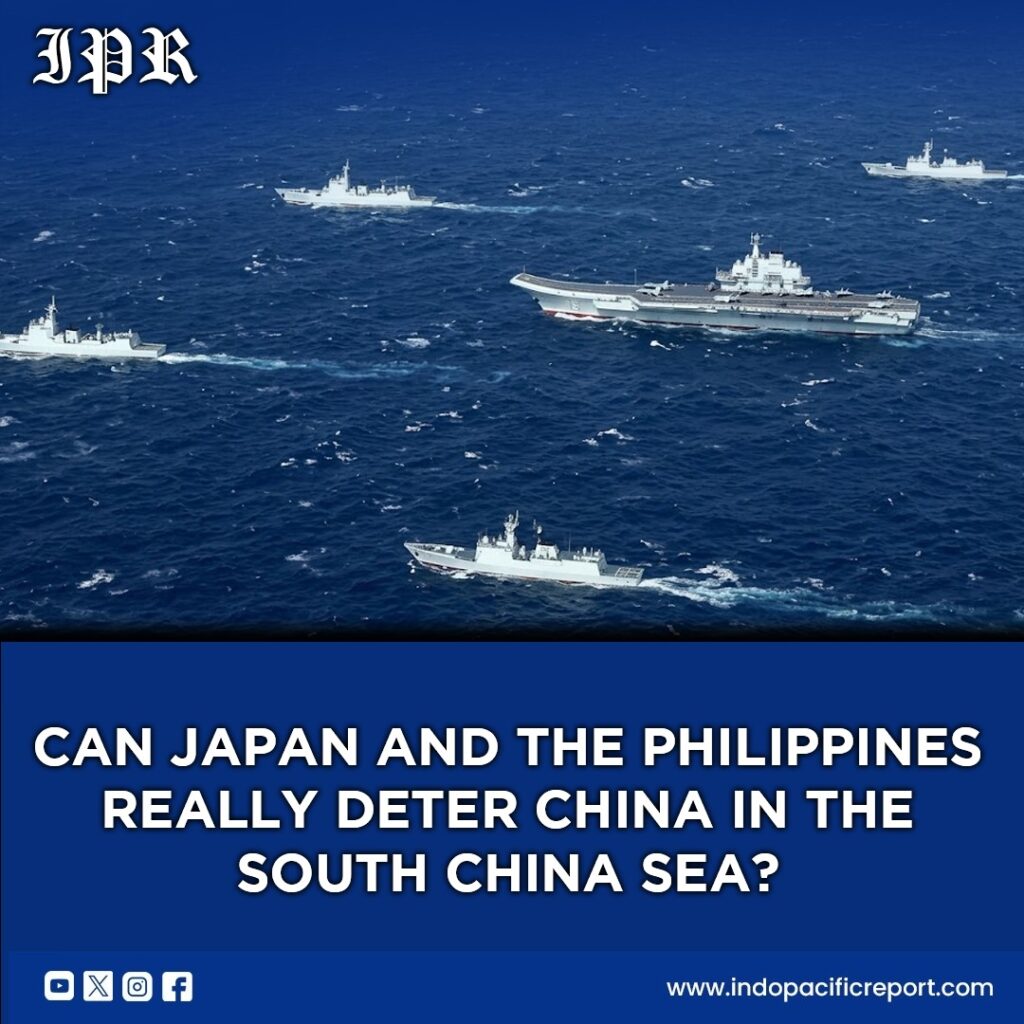
Sea. From a great-power competition perspective, these moves represent a tangible manifestation of U.S. strategy to contain and counterbalance China’s maritime expansion. Beijing’s repeated objections—ranging from formal complaints to public warnings—underscore the sensitivity of its perception of U.S. capabilities in its near seas. By positioning long-range missile systems on Philippine territory, the United States is effectively extending the reach of its deterrence network, ensuring that potential Chinese naval and missile operations can be challenged or neutralized from multiple strategic axes. This forward-deployed posture complicates Chinese operational planning and increases the cost of coercive maneuvers in disputed waters.
These deployments also have significant implications for the regional security architecture. By deepening the U.S.-Philippines defense relationship, Washington signals the enduring value of formal alliances in the Indo-Pacific. The annual talks between U.S. and Philippine officials, which included plans for joint exercises and modernization programs, illustrate an integrated approach that combines hardware, training, and interoperability. Such measures strengthen regional norms around freedom of navigation and maritime security while providing smaller regional states with credible reassurance in the face of China’s coercive behavior.
Philippines not in position to support U.S. efforts to secure the Strait of Hormuz
Alliance dynamics are particularly important in this context. Manila’s refusal to yield to Beijing’s demands demonstrates both political autonomy and the robustness of its treaty relationship with Washington. This reinforces the credibility of U.S. security guarantees and sends a clear message to other regional partners that forward-deployed capabilities, when coupled with local cooperation, enhance deterrence without requiring a permanent U.S. garrison. Moreover, it signals to U.S. allies such as Japan and Australia that the United States remains committed to a networked approach to Indo-Pacific security, in which partner nations serve as key nodes in a broader regional defense architecture.
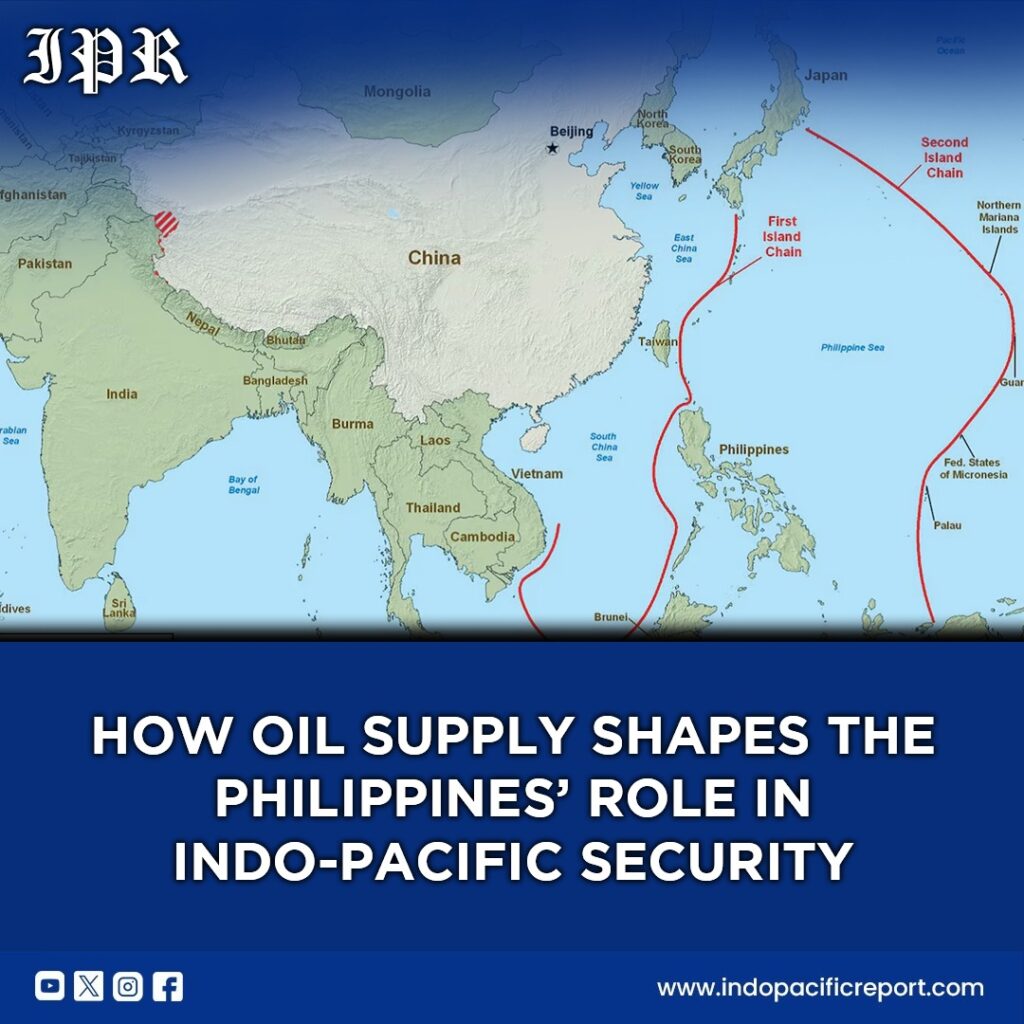
From a maritime and economic perspective, these deployments underscore the critical link between military posture and global trade security. The South China Sea carries an estimated one-third of global shipping, making its stability essential for both regional and global economies. By forward-deploying precision missile systems capable of deterring or engaging hostile forces, the U.S. and the Philippines help secure critical sea lanes against coercive interference. This strengthens not only the defense of sovereign maritime zones but also the broader principle of unimpeded lawful commerce, which underpins economic stability in the Indo-Pacific.
The implications for the Indo-Pacific balance of power are significant. Forward-deployed U.S. missile systems increase the risk calculus for China’s maritime planners and reinforce the credibility of extended deterrence. Yet, they also contribute to a gradual intensification of regional military competition. While these deployments are defensive in principle, they are likely to prompt Beijing to accelerate countermeasures, whether through expanded missile inventories, naval modernization, or asymmetric tactics aimed at challenging U.S. and allied positions. The strategic equilibrium in the South China Sea will increasingly hinge on the ability of forward-deployed forces, alliances, and integrated deterrence systems to maintain credible threats without triggering uncontrolled escalation.
Philippines Orders $550M Warships Navy Frigate Expansion
Looking forward, the U.S.-Philippines missile deployments reflect a long-term strategic vision that leverages geography, alliance networks, and technological superiority to shape regional behavior. For policymakers, the lesson is clear: maintaining credible deterrence in the Indo-Pacific requires not only advanced weapons systems but also sustained partnership, coordinated exercises, and political resolve. These deployments are more than hardware; they are a signal of enduring U.S. commitment, a platform for regional cooperation, and a hedge against unchecked Chinese coercion in the maritime domain.