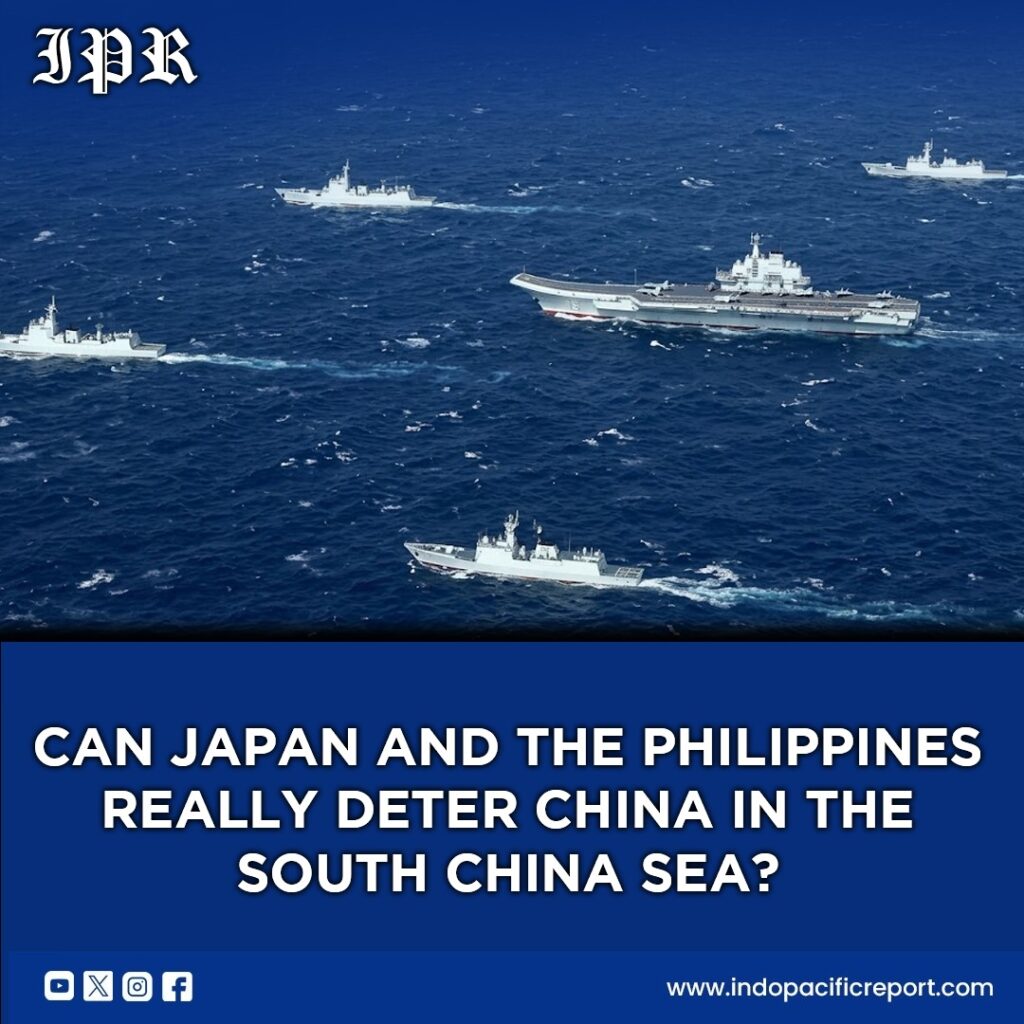
The competition between the United States and China in the Indo-Pacific is no longer just about who has more ships or missiles. The real contest is industrial: which nation can sustain its fleet under pressure. China has built a massive, integrated shipbuilding ecosystem that combines military and civilian resources. This allows Beijing to repair, replace, and surge ships quickly during conflict. The U.S., by contrast, relies on a handful of specialized yards controlled by Huntington Ingalls Industries and General Dynamics. Even with more funding, the U.S. cannot match China’s industrial endurance alone. In a war over Taiwan, the bigger risk may be the U.S. inability to regenerate ships as fast as they are lost.
From a strategic competition perspective, this gap gives China flexibility. Its navy can operate close to home, supported by auxiliary vessels, merchant ships, and repair facilities. The U.S. fleet, with fewer auxiliary ships and concentrated production, is vulnerable to attrition. Deterrence is not just winning a battle—it’s surviving sustained pressure. Without the industrial capacity to regenerate forces quickly, American naval power risks being declarative rather than operational.
Alliances matter more than ever. South Korea and Japan have advanced shipbuilding capabilities and logistic networks that could help the U.S. sustain operations across the Indo-Pacific. Limiting their role to investing in U.S. shipyards is not enough. A durable deterrent requires a fully integrated, multinational shipbuilding network, capable of distributed production, repair, and wartime surge. Without this, even a technologically advanced U.S. fleet may fail to withstand China’s cumulative pressure.
Economic and maritime strategy are intertwined. China’s dual-use shipbuilding demonstrates how economic strength supports military power. Its ability to produce thousands of auxiliary hulls and maintain them close to home gives the PLA Navy an operational edge. The U.S. focus on domestic production alone—through policies like the Maritime Action Plan—is insufficient. A credible deterrent depends on leveraging allied capacity in a politically sustainable way.
Legal and policy frameworks also shape strategy. Laws like the Jones Act restrict U.S. shipbuilding to domestic yards, limiting flexibility. Reforming these frameworks to allow meaningful allied participation, while maintaining domestic industrial revitalization, is essential. Without it, the U.S. risks turning alliance potential into a paper promise rather than operational reality.
The balance of power in the Indo-Pacific depends on endurance, not just initial strength. Deterrence works when a fleet can absorb losses, regenerate, and continue operations. Integrating allied shipbuilding into a resilient, distributed network is the key to sustaining this endurance. The question is not just how many ships the U.S. can build—but whether it can survive and fight over the long term in a conflict with China.
Debate-Triggering Question:
If the U.S. cannot build enough ships fast enough, should the strategy shift from “overmatch” to “alliances-driven endurance”?