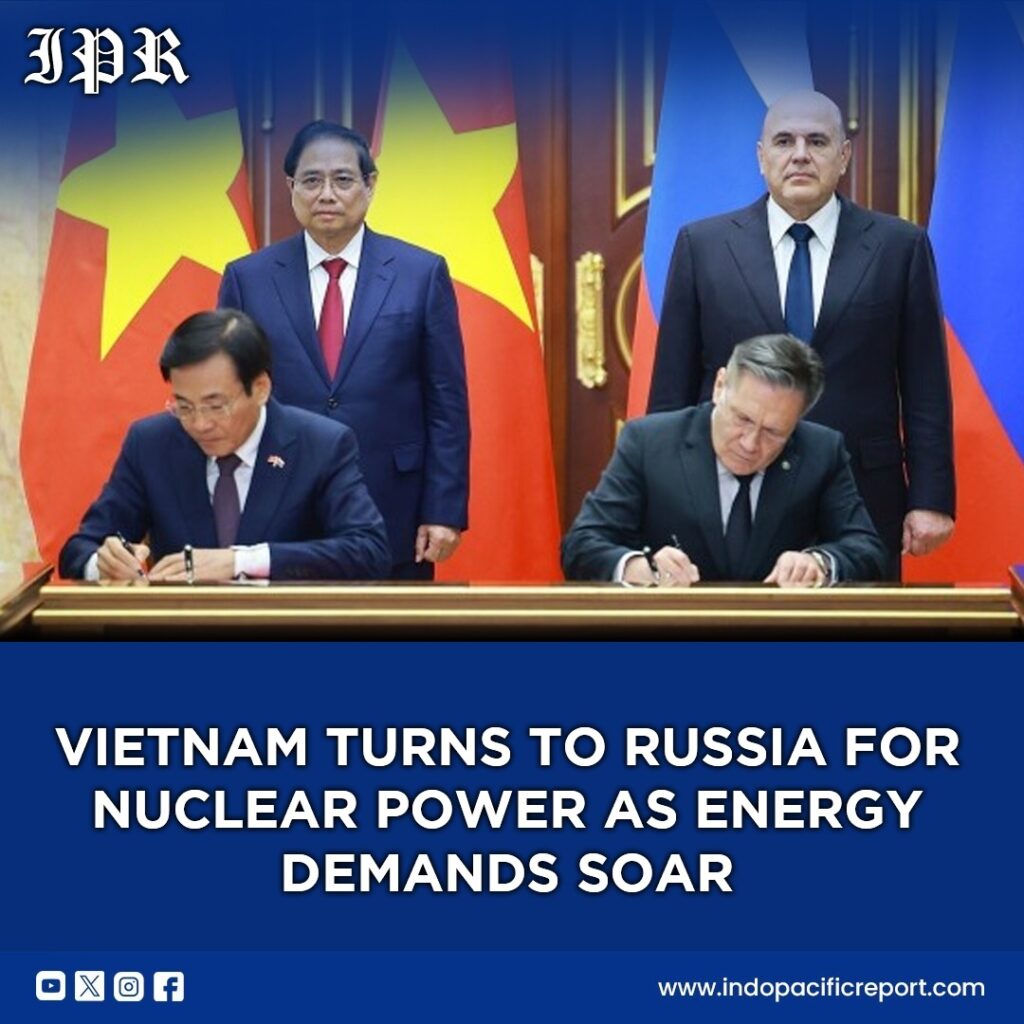
Russia and Vietnam formalized an intergovernmental agreement for the construction of the Ninh Thuan 1 nuclear power plant, with Russia’s state nuclear company Rosatom spearheading the project. The deal covers two Russian-designed reactors with a combined capacity of 2,400 megawatts, marking a significant step in Vietnam’s long-term strategy to expand its power generation capabilities. Japan, previously involved in Vietnam’s nuclear plans, withdrew from the project in December 2025, leaving Russia as the primary partner.
Vietnam’s renewed focus on nuclear energy reflects the growing energy pressures in Southeast Asia. Industrial expansion, urbanization, and an emerging middle class are straining the national grid, compounded by more frequent extreme weather events like droughts and typhoons. Blackouts and power shortages have become increasingly costly, threatening both economic growth and social stability. Nuclear energy offers Hanoi a pathway to reliable, high-capacity electricity that can stabilize supply and reduce dependence on fossil fuels.
From a geostrategic perspective, the deal highlights Vietnam’s longstanding alignment with Russia, rooted in historical ties and military-technical cooperation. Beyond energy, this partnership strengthens Hanoi’s strategic autonomy in a region where major powers, including China, the United States, and Japan, are competing for influence. By deepening energy cooperation with Moscow, Vietnam hedges against over-reliance on regional supply chains dominated by China or Japan, while signaling its willingness to diversify strategic partnerships.
The agreement also carries regional security and economic implications. Energy security is inseparable from national resilience, and large-scale nuclear infrastructure increases Hanoi’s leverage in Southeast Asian energy markets. It also positions Vietnam as a future node in the broader Indo-Pacific energy landscape, where states are increasingly integrating nuclear and renewable energy strategies to support industrial growth and strengthen deterrence against potential disruptions.
Economically, Russia gains a foothold in a market that could expand to additional nuclear plants, while Vietnam secures advanced technology capable of supporting decades of industrial demand. The timing is critical: as global energy markets face volatility from Middle East conflicts and shifting supply chains, having a domestic nuclear capacity offers a strategic buffer against energy shocks.
Looking ahead, Vietnam’s nuclear revival is part of a broader Southeast Asian trend toward resilient energy planning, balancing conventional fuels, renewables, and nuclear power. The Ninh Thuan 1 project is likely to influence regional infrastructure investment, industrial strategy, and the security calculus of neighboring powers, particularly China, which closely monitors developments in Vietnam’s strategic sectors.
Could Vietnam’s renewed nuclear energy program shift the regional energy balance and alter how Southeast Asian states manage dependence on China and Japan?