Philippines vs Indonesia The Race for Dominance in Southeast Asia
Something interesting is happening in Southeast Asia right now. You might not notice it at first. It doesn’t always show up as a big headline or breaking news alert. But if you follow the economy, politics, or even the shifting alliances in Asia, you start seeing a pattern. Two countries keep appearing in the conversation. The Philippines. And Indonesia. Different histories. Different strengths. Different personalities as nations. But somehow, they’re now moving toward the same question. Who will lead Southeast Asia in the future?
Just recently, economists discussing the future of the Association of Southeast Asian Nations said something that caught a lot of attention: Southeast Asia could become one of the most powerful economic regions in the world within the next two decades. Think about that for a second. A region of more than 680 million people. Young populations. Massive trade routes. Some of the busiest shipping lanes on Earth. In other words, this part of the world is no longer just “developing.” It’s becoming a center of gravity. And when a region rises like that, one thing always happens. Countries start competing for leadership.
For a long time, most people assumed that role belonged to Indonesia. It’s easy to see why. Indonesia is huge. The population alone is massive. The country sits on enormous reserves of coal, nickel, palm oil, and other resources that the world desperately needs. Walk through Jakarta, and the scale hits you immediately. Endless traffic, skyscrapers under construction, ports shipping out resources day and night. It feels like a country that’s constantly moving. For decades, analysts looked at Indonesia and said, “Yeah, that’s the giant of Southeast Asia.” Simple. Case closed.
But over the last few years, something else has been quietly building momentum. The Philippines. And honestly, the speed of its rise has surprised a lot of people. Cities like Manila and Cebu City are buzzing with call centers, tech startups, outsourcing companies, and young professionals working with clients from New York to London. You walk through those business districts and it almost feels like a global hub. English everywhere. Laptops open in cafés. Young workers plugged into the digital economy. It’s a very different kind of power. Not factories. Not mines. But people.

And that’s where the real story begins. Because the Philippines and Indonesia aren’t just competing in size. They’re competing with two completely different economic models. Indonesia built its strength on resources, industry, and manufacturing. The Philippines built its growth around services, talent, and global connectivity. Both models are working. Both economies are growing. And now, slowly but surely, the gap between them is becoming, a lot more interesting than people expected. But here’s the thing many people outside the region don’t always realize. This isn’t just an economic race. It’s also about influence. Leadership inside the Association of Southeast Asian Nations. Security partnerships with powers like the United States. Regional tensions in places like the South China Sea. Trade routes. Military cooperation. Political weight. All of these things shape who really leads Southeast Asia in the long run.https://www.youtube.com/watch?v=E5AB3JSkkno

And if you asked experts ten years ago who would dominate the region, the answer would have come instantly. Indonesia. No debate. But today? The conversation feels different. The Philippines is growing faster than many expected. Its young population is entering the workforce. Its economy keeps surprising analysts year after year. And suddenly the question isn’t so obvious anymore. So now the real question hanging over Southeast Asia is this: In the decades ahead, when this region becomes one of the most powerful economic zones on Earth, Will it be Indonesia that leads the way? Or the Philippines? Because the race has already started. And honestly, it’s getting a lot more interesting than anyone predicted.
PART I — The Philippines
There’s something about the Philippines that surprises people the first time they really look at it. On the map, it almost looks fragile, a scattered chain of islands floating between the South China Sea and the vast Pacific Ocean. More than 7,600 islands, stretched across some of the most strategic waters in the world. At first glance it feels like geography that would make a country difficult to manage. But strangely, that same geography has always been part of its strength.
Ships pass nearby every day carrying energy, electronics, and trade between Asia and the rest of the world. Militaries monitor these waters carefully. Diplomats talk about them constantly. In a region where sea lanes are everything, the Philippines sits right in the middle of the action. And then there’s the people.
The country now has around 115 million citizens, and what really stands out isn’t just the number, it’s the age. The median age is only about 25 years old. Walk through the streets of Manila, or even smaller cities, and you immediately notice the energy. Students rushing between universities. Young workers filling office towers. Cafés full of people with laptops open late into the evening. Demographers have a name for this kind of advantage. They call it a demographic dividend.https://youtu.be/ciSNHLochbs?si=75lOwoddEoOQsSHC
Basically, when a country has a large young population entering the workforce at the same time, the economy can expand very quickly. And in the Philippines, nearly two-thirds of the population is under 35. That’s a massive wave of workers, entrepreneurs, and consumers all arriving at once. It’s like the country is constantly renewing its own economic energy.
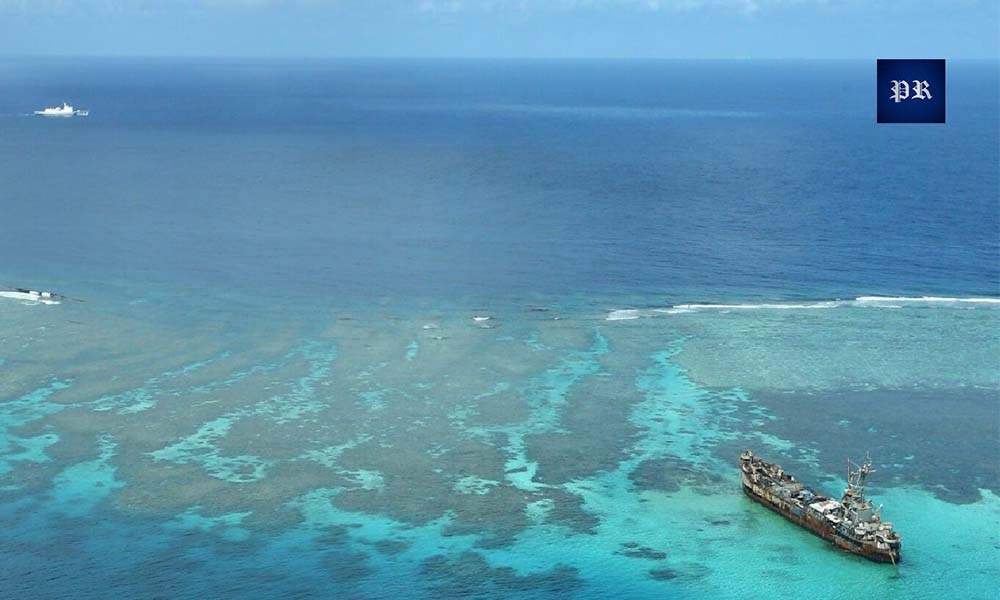
How China Took Over Mischief Reef – Can the Philippines Stop It?
But what really makes the Philippines stand out in Southeast Asia is how its economy works. Most countries in the region built their rise on factories and heavy industry. Places like Vietnam or Thailand became manufacturing hubs first. The Philippines took a different route. Instead of becoming the factory floor of Asia, it quietly became something else: the service center of the global economy. The best example of this is the Business Process Outsourcing industry, usually just called BPO.https://www.youtube.com/watch?v=FtAsmbFy7tE
Over the past two decades, companies from the United States, Europe, and Australia started moving customer service, technical support, accounting, and even legal work overseas. And somehow, the Philippines ended up becoming the perfect place for it.
Today the industry employs more than 1.7 million Filipinos and generates roughly $35 billion every year. Cities like Manila, Cebu City, and Davao City are filled with glass office towers where thousands of people work night shifts, answering calls from customers thousands of miles away. If you walk through these business districts at midnight, the lights are still on. The world is sleeping somewhere else, but the Philippines is working. That’s why someone in the industry once said something that stuck: “The Philippines became the back office of the global economy.” And honestly, it’s hard to argue with that.
https://indopacificreport.com/whats-the-endgame-plan-for-brp-sierra-madre-philippines-rusting-warship-blocking-china-in-scs/
But services aren’t the whole story. Another huge pillar of the economy is electronics manufacturing. About 55 to 60 percent of the country’s exports come from electronics and semiconductors. That means parts built in Philippine factories often end up inside the phones, computers, and devices people use every day. Some of the biggest technology companies in the world operate facilities there, firms like Texas Instruments, Samsung Electronics, Intel, and ON Semiconductor. It’s not always visible to the outside world, but the Philippines has quietly inserted itself into global technology supply chains. So while the country may not dominate headlines about chip manufacturing, it still plays an important role behind the scenes.
Then there’s another economic force that people sometimes underestimate. Overseas Filipino workers. More than 10 million Filipinos live and work abroad, in the Middle East, North America, Europe, and across Asia. Nurses, engineers, construction workers, seafarers, teachers. You’ll find them everywhere. And every year, they send money home. A lot of money.
Remittances flowing back into the Philippines now exceed $36 to $38 billion annually. That money supports families, pays for education, builds homes, and fuels everyday spending across the country. Economists sometimes describe remittances as a kind of economic stabilizer. Even when global markets become uncertain, that steady flow of income helps keep domestic consumption strong. It’s almost like the Filipino economy has millions of ambassadors working abroad, all connected back home.
Put all these pieces together and you start to see why the Philippines has been growing so quickly. Over the past decade, the economy has expanded at an average rate of around 5 to 6 percent per year, making it one of the faster-growing economies in Asia.
The momentum comes from several directions at once: a young workforce, strong domestic spending, expanding services, and global connections through both technology and labor migration. It’s not a perfect system, no country is. But there’s a sense of forward motion. The kind where every year the country feels just a little more confident about its future.
And beyond economics, the Philippines also holds a very important position on the geopolitical chessboard. Its location places it close to some of the most sensitive strategic areas in Asia including the waters near Taiwan and the contested zones of the South China Sea. Because of that, it has long maintained a defense partnership with the United States. In recent years, that relationship has grown even closer through agreements like the Enhanced Defense Cooperation Agreement, which allows American forces to access several military sites across the country.https://www.youtube.com/watch?v=pbZenHMmzCw
For Washington, the Philippines is a key strategic partner. For Manila, the alliance provides security support in an increasingly tense region. And in the broader competition between the United States and China, the Philippines has become something of a frontline state. Which means its rise isn’t just an economic story. It’s also a geopolitical one. And that’s exactly why the country is drawing more attention now than it did just a decade ago.
PART II — Indonesia
If the Philippines feels energetic and fast-moving, Indonesia feels… massive. Not just big on a map. Massive in scale, population, resources, everything. With around 280 million people, Indonesia is the fourth-most populous country in the world. That alone changes the way its economy behaves. When you have that many people, your domestic market becomes a powerhouse by itself. Businesses don’t just build for export, they build for the millions of customers right at home. And like the Philippines, Indonesia is also an island nation. But the scale is on another level.
More than 17,000 islands stretch across the equator, forming a vast archipelago that connects the Indian Ocean to the Pacific Ocean. For centuries, ships carrying spices, silk, and later oil and electronics have passed through these waters.
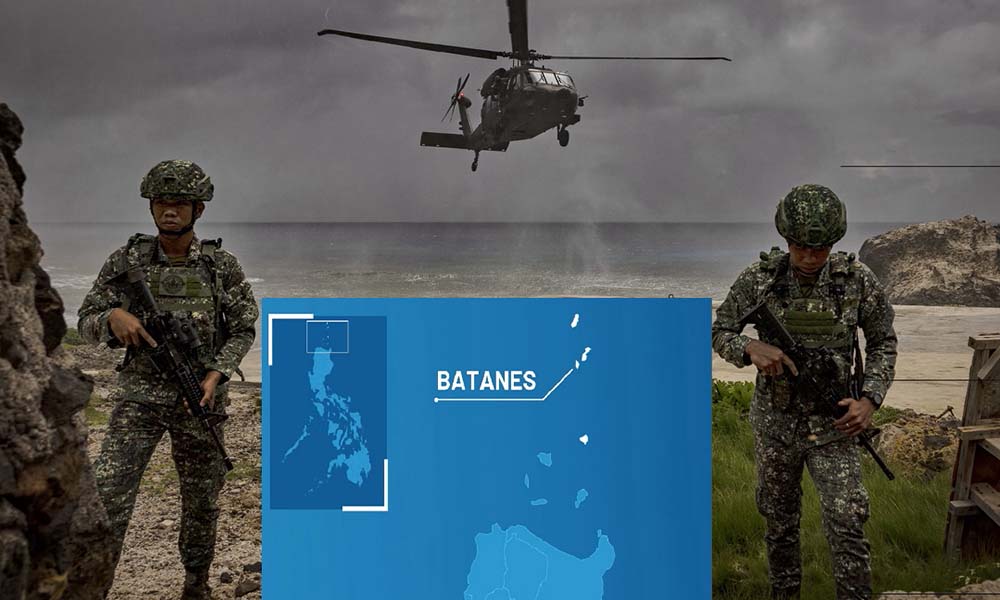
Philippines–US–Japan Military Drills Over the Bashi Channel (Feb 2026)
One of the most important routes in the world, the Strait of Malacca, runs right alongside Indonesia. Every day, thousands of vessels pass through this narrow corridor linking East Asia to Europe, the Middle East, and beyond. That means Indonesia doesn’t just sit in Southeast Asia. In many ways, it controls one of the gateways of global trade.
For years, the political and economic heart of the country has been Jakarta. But even that is about to change. Indonesia is currently building a completely new capital city called Nusantara, deep in the forests of Borneo. It’s one of the most ambitious urban projects in the modern world, an attempt to create a greener, smarter administrative center while easing the immense pressure on Jakarta. Whether it fully succeeds is still an open question. But the very idea shows something important about Indonesia: it thinks on a grand scale.
Economically, Indonesia operates on a very different model from the Philippines. Where the Philippines leans heavily on services, Indonesia’s strength lies in resources, manufacturing, and its enormous domestic market. Today the country’s GDP sits around $1.7 trillion, making it the largest economy in Southeast Asia by a wide margin.https://www.youtube.com/watch?v=wHFsyAtQIgg
Walk through industrial zones outside Jakarta or Surabaya and you’ll see factories, container yards, logistics hubs, the kind of infrastructure that powers a manufacturing economy. But beneath that industrial layer lies something even more valuable. Natural resources. And Indonesia has them in abundance.
The country is one of the world’s biggest exporters of palm oil, a product used in everything from cooking oil to cosmetics and packaged foods. It’s also a major supplier of coal, natural gas, rubber, and other raw materials that fuel global industries. But in recent years, one resource has pushed Indonesia into the center of a completely new global race. Nickel.
Nickel is a crucial component in modern batteries, especially the ones used in electric vehicles. As the world begins shifting toward EVs, demand for battery minerals has exploded and Indonesia happens to hold one of the largest nickel reserves on Earth. The government realized something important a few years ago.
If Indonesia simply exported raw nickel, other countries would capture most of the profits by processing it into batteries and advanced materials. So President Joko Widodo pushed a bold policy. Indonesia banned the export of raw nickel, forcing companies to build smelters and processing facilities inside the country instead. His message was simple but powerful: “Indonesia must not only export raw materials, we must build the industries of the future.” And that decision triggered a wave of investment.https://www.youtube.com/watch?v=6U3f_7DmeMs
Now global manufacturers are pouring money into Indonesian industrial zones. Companies like Hyundai Motor Company are building electric vehicle factories. LG Energy Solution is investing heavily in battery production. And suppliers connected to Tesla are exploring partnerships to secure long-term access to battery minerals.
Slowly but surely, Indonesia is trying to move up the value chain, from raw resources to high-tech manufacturing. It’s a huge transition. And if it works, the country could become a central hub in the global EV supply chain.
At the same time, Indonesia has been pouring enormous amounts of money into infrastructure. For decades, poor logistics and underdeveloped transportation networks slowed economic growth across the archipelago. Moving goods between islands was often expensive and inefficient. So the government started building.
New ports, modern highways, expanded rail networks, and large energy projects began appearing across the country. Airports were upgraded. Industrial parks expanded. Logistics corridors improved.https://www.youtube.com/watch?v=6U3f_7DmeMs
And of course, there’s the massive Nusantara capital project, a symbol of Indonesia’s long-term ambitions. These investments are gradually changing the investment environment. Companies that once hesitated to enter Indonesia are now finding it easier to operate, ship products, and connect supply chains. It’s not a transformation that happens overnight. But step by step, Indonesia is reshaping itself into something bigger than just a resource exporter. It’s trying to become an industrial and technological power in its own right. And that’s exactly why its rivalry with the Philippines is becoming such a fascinating story in Southeast Asia.
PART III — Comparative Analysis
When you place the Philippines and Indonesia side by side, the contrast becomes really interesting. On paper, Indonesia clearly looks like the heavyweight. Its economy is currently worth about $1.7 trillion, making it the largest in Southeast Asia. The Philippines, by comparison, sits closer to $680 billion. Population numbers tell a similar story. Indonesia has roughly 280 million people, while the Philippines has about 115 million.
In simple terms, Indonesia’s economy is more than twice the size. But numbers alone don’t always tell the whole story. Economies aren’t just about size, they’re about how they grow, what they produce, and where their momentum is heading. And that’s where the comparison starts getting a lot more nuanced.
Growth Potential
The Philippines carries a few advantages that economists often talk about with a lot of excitement. First is demographics. The population is significantly younger, which means millions of new workers are entering the labor force every year. In economic terms, that’s powerful fuel for long-term growth.
Second is the country’s strong service sector. The Philippines has built a massive outsourcing industry that connects it directly to global companies, especially in places like the United States and Europe. And then there’s language. English proficiency across the workforce makes it easier for international firms to operate there. Indonesia, however, holds its own set of powerful advantages.https://www.youtube.com/watch?v=6U3f_7DmeMs
The domestic market alone is enormous. With hundreds of millions of consumers, businesses entering Indonesia gain access to one of the largest markets in the world. Add to that the country’s huge reserves of natural resources and a steadily expanding industrial base, and you get a very different kind of growth engine. So in many ways, the competition between these two economies reflects two completely different development paths.
Trade Structure
The difference becomes even clearer when you look at what each country exports. Indonesia’s export economy is built largely on commodities and energy. Resources like palm oil, coal, nickel, and natural gas remain major drivers of trade. That means Indonesia tends to benefit when global commodity prices rise. The Philippines, on the other hand, exports something quite different.https://www.youtube.com/watch?v=VC31TJyIDmg
Electronics, semiconductors, and IT services dominate its export portfolio. Products and services linked to technology now account for a large share of the country’s international trade. In other words, while Indonesia rides the cycles of global resource demand, the Philippines often benefits from growth in the technology sector and digital services. Two very different engines powering two rising economies.
Foreign Investment
Foreign investors have historically leaned more toward Indonesia. The reasons are fairly straightforward. The country offers a massive domestic market, access to key natural resources, and growing manufacturing capacity. For multinational companies looking to build factories or tap into Southeast Asia’s consumer base, Indonesia often feels like the obvious choice.https://www.youtube.com/watch?v=lsiZCcD5Hlo
But the Philippines has been making quiet progress here as well. Over the past few years, the government has introduced reforms aimed at making it easier for foreign companies to invest. Restrictions on foreign ownership have been eased in certain sectors, and the country is actively trying to position itself as a more competitive investment destination. It’s not catching up overnight. But the gap is slowly narrowing.
Political Stability
Political systems also shape economic confidence. Indonesia has enjoyed a relatively stable democratic trajectory since the fall of the Suharto in 1998. Since then, transitions of power have generally been peaceful, and economic policies have remained fairly predictable.
That consistency has helped reassure investors. The Philippines also operates as a democratic system, but its political landscape has historically been a bit more turbulent, with frequent shifts in policy direction depending on leadership.
Even so, reforms and economic management in recent years have improved the business environment and strengthened investor confidence. In other words, both systems have their strengths but stability has often worked slightly more in Indonesia’s favor.
PART IV — Who Will Lead Southeast Asia?
So when people ask which country might lead Southeast Asia in the coming decades, the answer isn’t simple. Right now, Indonesia clearly holds the stronger position. It has the largest economy in the region, immense natural resource wealth, a growing manufacturing base, and massive infrastructure investments transforming the country. These factors give Indonesia real economic gravity within Southeast Asia.
But the Philippines shouldn’t be underestimated. Its workforce is younger. Its service sector is deeply integrated into the global economy. English proficiency gives it a natural advantage in industries tied to technology and international business. And its long-standing alliance with the United States also adds an important strategic dimension. In other words, the two countries represent two different models of power. Indonesia: resources, industry, and scale. The Philippines: talent, services, and global connectivity.
Right now, Indonesia remains the dominant economic force in Southeast Asia. But the long-term race is far from decided. If the Philippines continues expanding its technology, outsourcing, and electronics sectors, it could easily become one of the fastest-rising economies in Asia. And that leaves Southeast Asia with a fascinating question for the decades ahead.
Will industrial power and natural resources ultimately dominate the region, or will human capital and services reshape the economic hierarchy? The answer will likely shape the future of Southeast Asia itself.https://youtu.be/ciSNHLochbs?si=bXsXddaRR1uvqEtN