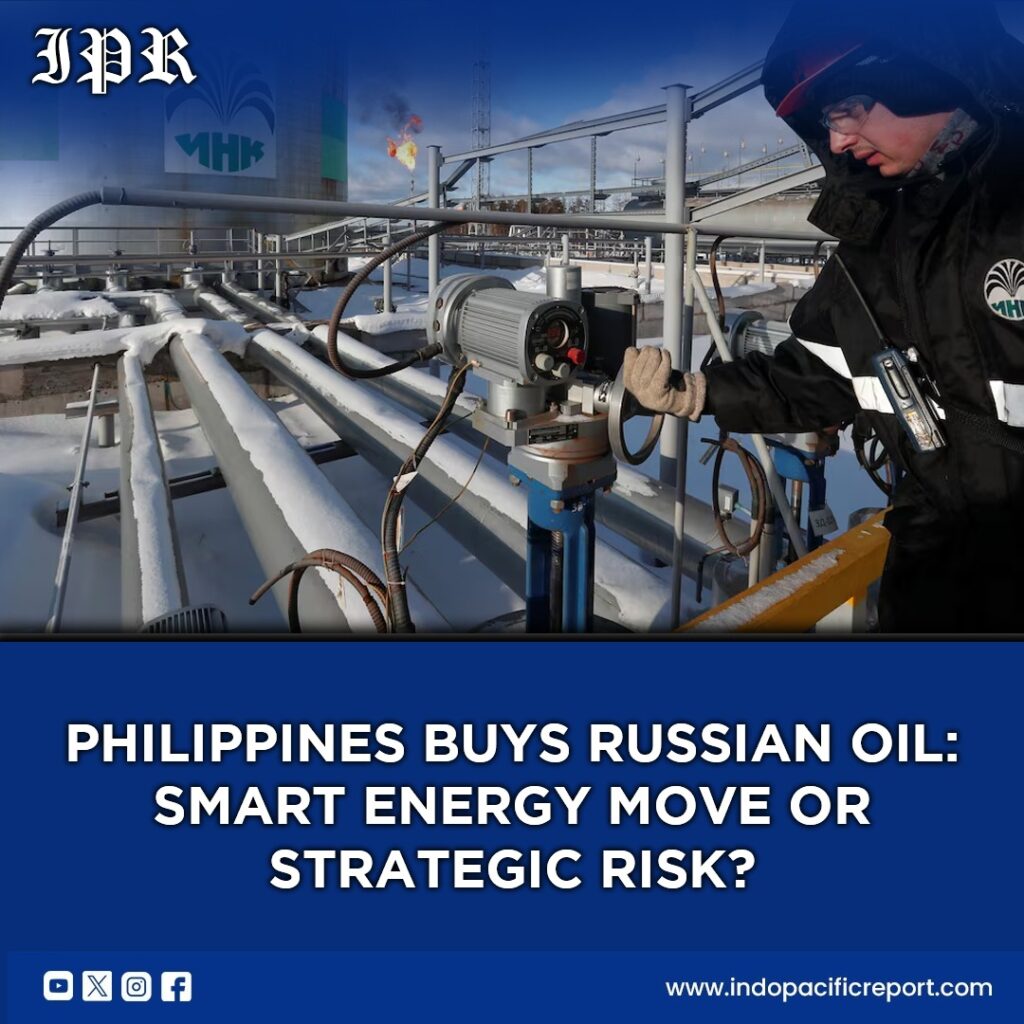
The Philippines is set to import 100,000 tonnes of Russian crude oil for the first time in five years. A tanker carrying around 750,000 barrels of ESPO Blend crude is already on its way to Petron’s Batangas terminal. This move comes at a time when global oil markets are unstable, largely due to tensions in the Middle East.
This is not just a commercial deal. It reflects a deeper energy security strategy. Manila is trying to diversify its oil supply and reduce vulnerability to price shocks. By tapping Russian crude—reportedly under a U.S. sanctions waiver—the Philippines is showing that energy needs can sometimes override geopolitical alignment.
From a great-power competition perspective, this decision sits in a grey zone. The Philippines remains a key U.S. ally in the Indo-Pacific, especially in the South China Sea. But importing Russian oil signals a pragmatic, multi-vector foreign policy. It shows that smaller states are not choosing sides completely—they are hedging. They align with the U.S. for security, but keep options open for energy and economic stability.
This also highlights a shift in the regional energy architecture. Southeast Asian economies are under pressure from rising fuel prices and supply disruptions. Countries are now looking for flexible sourcing strategies, even if it means engaging with politically sensitive suppliers like Russia. For Manila, the priority is clear: stabilize domestic fuel prices and avoid economic slowdown.
There are also important alliance implications. While Washington has allowed some flexibility through sanctions waivers, repeated moves like this could test the limits of strategic trust. However, the reality is that the U.S. itself understands the pressure on its partners. Energy security has become a shared vulnerability, not just a national issue.
From a maritime and economic lens, this shipment is equally significant. The Philippines is a major importer of fuel, and high electricity and transport costs directly affect economic growth. The government is even considering emergency powers to cut fuel excise taxes if global prices stay above $80 per barrel. This shows how energy policy is now directly linked to political stability and public sentiment.
In terms of the Indo-Pacific balance of power, this move reflects a broader trend: energy is becoming a strategic tool. Countries are no longer just competing militarily—they are competing through supply chains, resources, and economic resilience. By securing alternative oil supplies, the Philippines is strengthening its internal stability, which is just as important as military capability in long-term strategic competition.
Looking ahead, this may not be a one-off deal. If global tensions continue, more countries in the region could quietly expand ties with non-traditional suppliers. The Indo-Pacific is entering an era where energy geopolitics and security alliances are increasingly intertwined, and not always aligned.
Should U.S. allies like the Philippines prioritize energy security even if it means engaging with rivals like Russia?