During South Korean President Lee Jae Myung’s state visit to the Philippines, the South China Sea emerged as a prominent topic of discussion with President Ferdinand Marcos Jr. Both leaders emphasized the need to uphold a rules-based order, particularly in the maritime domain, and acknowledged the growing uncertainty in regional and global geopolitics. While the visit produced agreements on technology, digital cooperation, and innovation, the joint statements on the South China Sea underscore the strategic convergence of Manila and Seoul on principles of international law.
From a great-power competition perspective, this engagement illustrates the broader contest between the United States-led rules-based coalition and China’s assertive maritime claims. South Korea, traditionally more economically and diplomatically oriented toward China, is signaling that maritime norms and freedom of navigation in the South China Sea matter to its broader Indo-Pacific strategy. For Manila, such alignment with a middle power reinforces the credibility of norm-based deterrence without escalating militarization, complementing its ongoing alliance commitments with the United States and trilateral cooperation with Japan.
In terms of regional security architecture, this dialogue represents incremental multilateralization of the maritime dispute. ASEAN alone has struggled to assert influence over the South China Sea, hindered by differing national interests and China’s leverage over individual members. The Philippines’ outreach to South Korea signals a strategic diversification of partnerships, expanding the normative framework beyond traditional Western alliances. It also hints at the possibility of South Korea contributing naval, surveillance, or technological support to regional maritime security, enhancing operational redundancy for smaller claimants like the Philippines.
Alliance dynamics are particularly relevant here. South Korea’s growing interest in South China Sea security complements U.S. presence and Philippine initiatives, such as the Enhanced Defense Cooperation Agreement sites and joint exercises with Japan and the U.S. While not a formal treaty partner in the region, Seoul’s participation underscores the potential for a networked coalition of likeminded states, extending influence and surveillance capabilities across critical maritime chokepoints, including the Luzon Strait and Bashi Channel.
From a maritime and economic strategy lens, the collaboration has tangible significance. The South China Sea is a key artery for global trade, fisheries, and energy routes. By emphasizing adherence to international law and rules-based norms, Manila and Seoul aim to protect trade corridors, secure fisheries, and support economic stability in Southeast Asia. It also sends a signal to Beijing that attempts to consolidate control over disputed waters will be observed and monitored by a wider, technically capable coalition, even if direct confrontation is avoided.
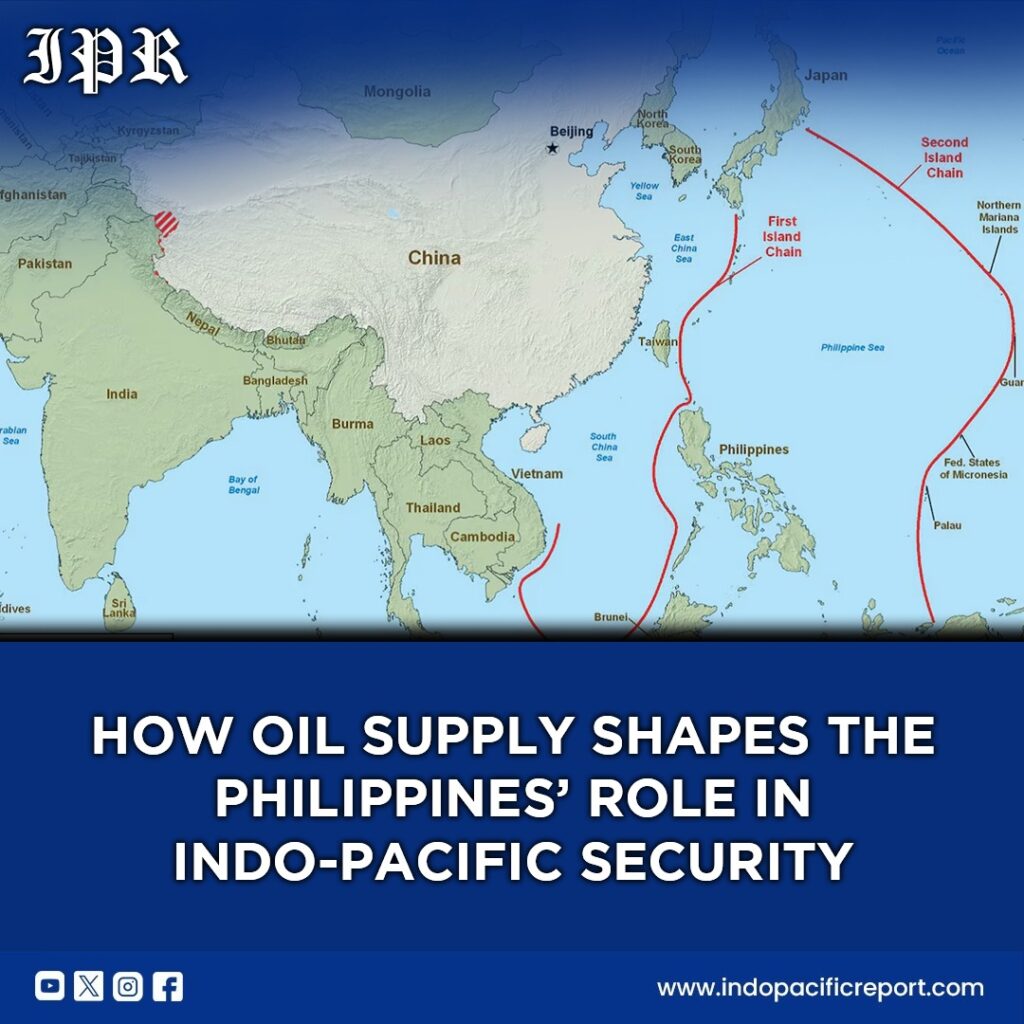
The implications for the Indo-Pacific balance of power are subtle but consequential. While this is not a military alliance, the normative and operational convergence between the Philippines and South Korea adds multidimensional pressure on China to behave within international expectations. Combined with U.S. freedom-of-navigation operations and Philippine-Japanese initiatives, this approach enhances deterrence through visibility and partnership, reinforcing the integrity of the first-island-chain strategy and constraining unchallenged maritime expansion.
Forward-looking assessment: The Philippines–South Korea alignment is an example of strategic diplomacy serving operational ends. By codifying adherence to rules and norms, Manila and Seoul can enhance maritime governance without overtly provoking Beijing. In the longer term, such partnerships may evolve into coordinated surveillance, intelligence-sharing, or even combined humanitarian or environmental operations, creating a framework for networked, multilateral maritime security. For regional policymakers, this development highlights the increasing importance of middle powers in shaping the Indo-Pacific order alongside traditional security guarantors.