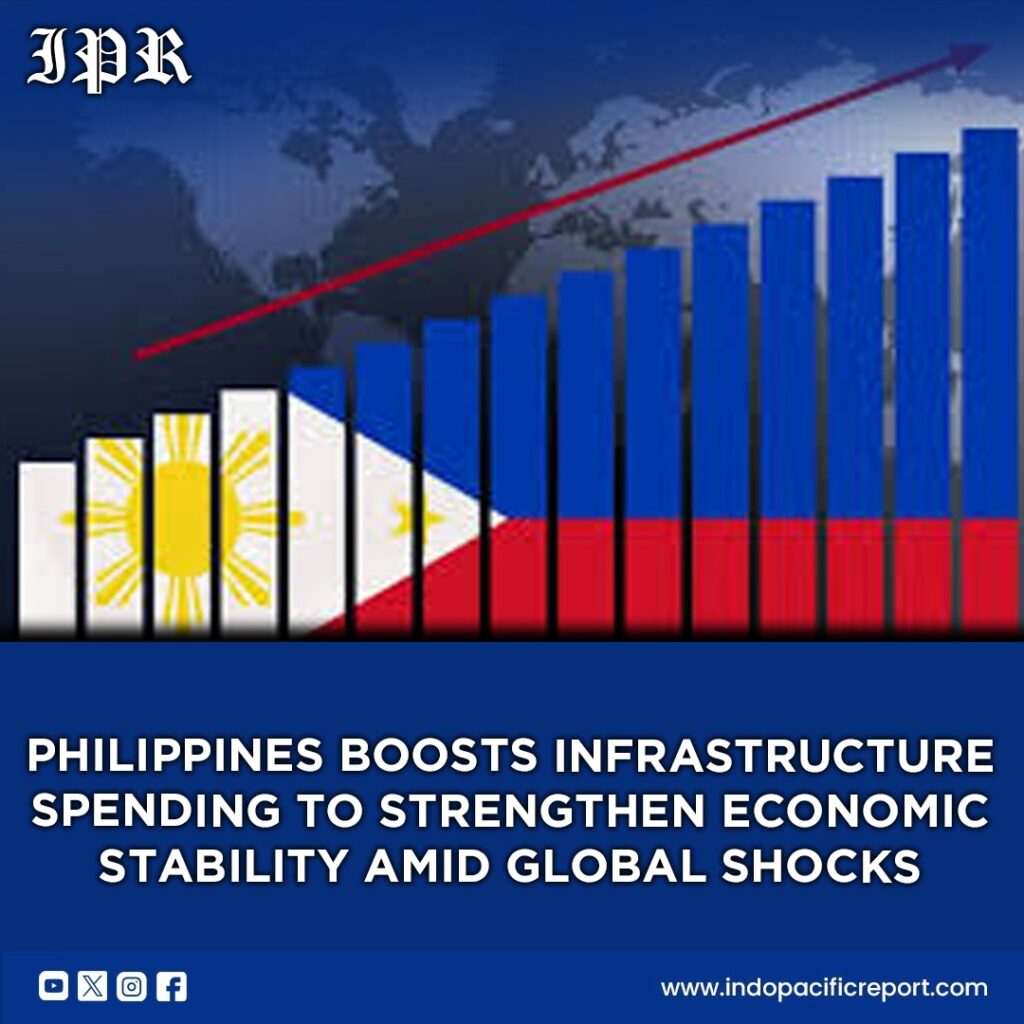
President Ferdinand R. Marcos Jr. has approved the immediate release of PHP21.47 billion to keep infrastructure projects moving, protect jobs, and reduce the impact of global shocks on the Philippine economy. On the surface, this is a fiscal decision aimed at maintaining growth and stability. But in geopolitical terms, it reflects a deeper strategic priority: building domestic resilience in an increasingly unstable Indo-Pacific environment.
From the perspective of great-power competition, economic stability has become part of national security. The Philippines is located in a highly contested region shaped by U.S.–China strategic rivalry. In such an environment, external shocks—whether from conflicts, trade disruptions, or supply chain pressures—can quickly affect domestic growth and employment. By ensuring infrastructure projects continue without delay, Manila is strengthening state capacity. A stable economy reduces internal pressure and increases a country’s ability to maintain independent foreign policy decisions during external tension.
In the regional security architecture of the Indo-Pacific, infrastructure is not just development—it is strategic infrastructure. Roads, ports, energy systems, and logistics networks directly affect how a country connects its territory and supports its population. For an archipelagic state like the Philippines, this is especially important. Strong infrastructure improves internal mobility and strengthens the country’s ability to operate across multiple islands. In strategic terms, this enhances national cohesion and indirectly supports defense readiness in a maritime environment.
Alliance dynamics also play an indirect role in this decision. The Philippines is deepening security cooperation with partners such as the United States, Japan, and Australia. While these alliances are often discussed in military terms, their effectiveness depends on domestic economic stability. If infrastructure projects slow down or unemployment rises, political pressure can weaken long-term strategic commitments. By sustaining public investment, the government is reinforcing internal stability, which in turn strengthens the credibility of its external partnerships.
From a maritime and economic strategy point of view, infrastructure spending is closely tied to the Philippines’ geographic reality. As a maritime nation, it depends heavily on ports, inter-island transport, and coastal logistics systems. These systems are essential for trade, supply chains, and national integration. Continued investment ensures that the country remains connected internally while also staying competitive in regional maritime trade routes. In the wider Indo-Pacific, where sea lanes are under growing strategic pressure, strong domestic logistics systems improve both economic resilience and strategic positioning.
At the level of Indo-Pacific balance of power, this move reflects a broader trend among middle powers: strengthening internal resilience to navigate great-power competition. Countries like the Philippines are not only responding to external security challenges but also preparing their economies for long-term uncertainty. Infrastructure investment becomes a tool of strategic stability. It helps maintain growth, supports employment, and reduces vulnerability to external shocks that could otherwise destabilize the state.
In the long run, the key issue is whether such fiscal actions can evolve into a consistent strategy of economic resilience. The Indo-Pacific is becoming more volatile, with frequent disruptions from geopolitical tensions and global economic shifts. Countries that maintain steady infrastructure investment will be better positioned to absorb these shocks. However, the challenge remains whether this approach can be sustained over time without creating fiscal strain.
Should infrastructure spending in countries like the Philippines be treated as economic policy—or as a core part of national security strategy?