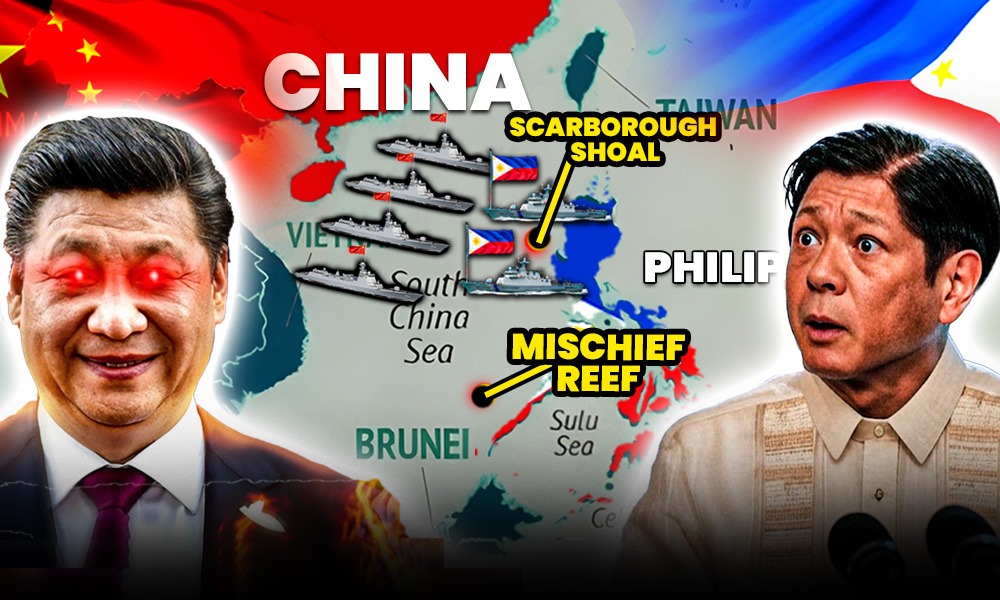
When China proposed creating a “marine nature reserve” at Scarborough Shoal, it sounded like an environmental initiative. But in Manila, alarm bells rang. Filipino defense officials, veterans of the South China Sea dispute, recognized the familiar pattern—one that began with vague promises and ended in military outposts.
They had seen it before at Mischief Reef, where China’s so-called “fishermen’s shelters” transformed into a heavily militarized island. The lesson was clear: what Beijing calls “environmental protection” could be the prelude to occupation. This time, the Philippines was determined not to let history repeat itself.
“We Will Not Allow a Repeat of Mischief Reef”
Armed Forces of the Philippines Chief of Staff General Romeo Brawner Jr. issued a stern warning:
“Once they build a structure there, that would be a different story. We are watching closely so that we will not have a repeat of Mischief Reef.”
His words carried the weight of past mistakes. In 1995, Filipino forces discovered Chinese structures on Mischief Reef—initially dismissed by Beijing as temporary shelters for fishermen. Over time, those huts became concrete military bases, equipped with radar, missile systems, and a 3-kilometer runway. By the time the international community reacted, China had already transformed the reef into one of its strongest military outposts in the South China Sea.
Despite a 2016 ruling by the Permanent Court of Arbitration (PCA) in The Hague declaring Mischief Reef part of the Philippines’ Exclusive Economic Zone (EEZ), China refused to withdraw. The lesson was unmistakable: legal victories mean little without the power to enforce them.
The 2016 Hague Ruling: A Victory Without Enforcement
The Philippines’ legal battle against China began in 2013 under President Benigno Aquino III. Arguing that Beijing’s expansive “nine-dash line” claim violated international law, Manila brought its case to the Permanent Court of Arbitration (PCA) in The Hague.
In 2016, the tribunal delivered a sweeping victory:
- The nine-dash line was declared invalid.
- Mischief Reef was ruled part of the Philippines’ EEZ.
- China’s island-building activities were deemed unlawful.
For a moment, justice seemed served. However, China rejected the ruling, and with no enforcement mechanism, Manila had no means to reclaim Mischief Reef. Chinese warships continued patrolling the area, solidifying their presence.
The ruling exposed a harsh reality: international law alone cannot deter a determined superpower. This experience shaped the Philippines’ cautious approach to Scarborough Shoal—avoiding confrontation while seeking diplomatic solutions.
Scarborough Shoal: The Next Flashpoint?
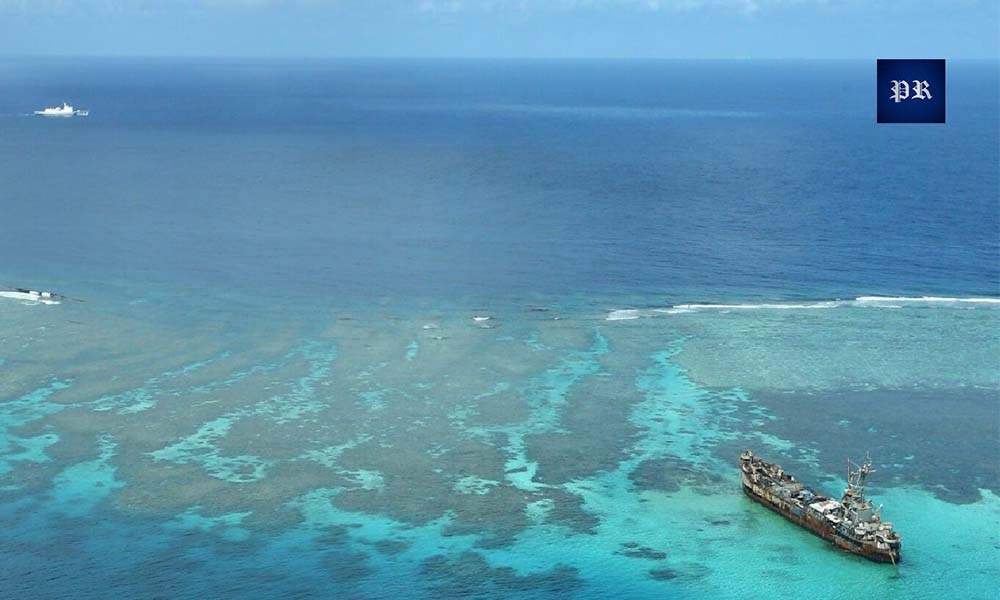
Located just 120 nautical miles from Zambales, Scarborough Shoal has been a flashpoint since a 2012 standoff between Philippine and Chinese vessels ended with Beijing taking control. Since then, Chinese coast guard ships have blocked Filipino fishermen from accessing their traditional fishing grounds, enforcing an effective blockade under the guise of “marine conservation.”
Now, with China proposing a “marine nature reserve,” fears are resurfacing. Filipino officials suspect that this move could be a cover for another territorial grab, just as it was at Mischief Reef.
“This is a clear pretext for occupation,” said General Brawner. “We have several options. Diplomatically, we could file protests, but we are watching closely.”
A Delicate Balancing Act
For the Philippines, responding to China’s moves is a high-stakes balancing act. Under President Ferdinand Marcos Jr., Manila has shifted from the previous administration’s strategy of engagement to a more transparent and defense-focused approach.
- Strategic Transparency – The Philippines is exposing China’s territorial tactics to the international community rather than downplaying them.
- Enhanced Defense Cooperation with the U.S. – Under the Enhanced Defense Cooperation Agreement (EDCA), the Philippines has expanded U.S. access to nine military bases, several strategically located near the South China Sea.
- Military Modernization – The Philippines is accelerating its defense capabilities, acquiring missile systems, naval vessels, and surveillance technology.
- Strengthening Regional Alliances – Manila is deepening security partnerships with Japan, Australia, and Vietnam to counterbalance China’s dominance.
Despite these efforts, any direct confrontation carries the risk of escalation. The Philippines must deter aggression without provoking open conflict.
https://www.youtube.com/watch?v=aov-TwOG-04
A Test of International Law and Global Credibility
Scarborough Shoal is no longer just about territorial sovereignty; it is a test of whether international law still holds weight in the face of power politics.
Although the PCA ruled that Scarborough Shoal lies within the Philippines’ EEZ, Chinese forces remain in control. If Beijing proceeds with construction under the guise of environmental protection, it will signal yet another defeat for the rules-based international order.
For the Philippines, the stakes are immense. Losing Scarborough would mean more than losing territory—it would mean losing faith in the global system designed to protect smaller nations.
As Manila remains vigilant, the world watches. Can alliances and legal victories stop territorial expansion, or will Scarborough become another monument to unchecked power?
The answer will not just define the Philippines’ future—it will send a clear message about how the world responds to aggression in the 21st century.
https://indopacificreport.com/upgrade-luzon-fiber-optic-cable-philippines/