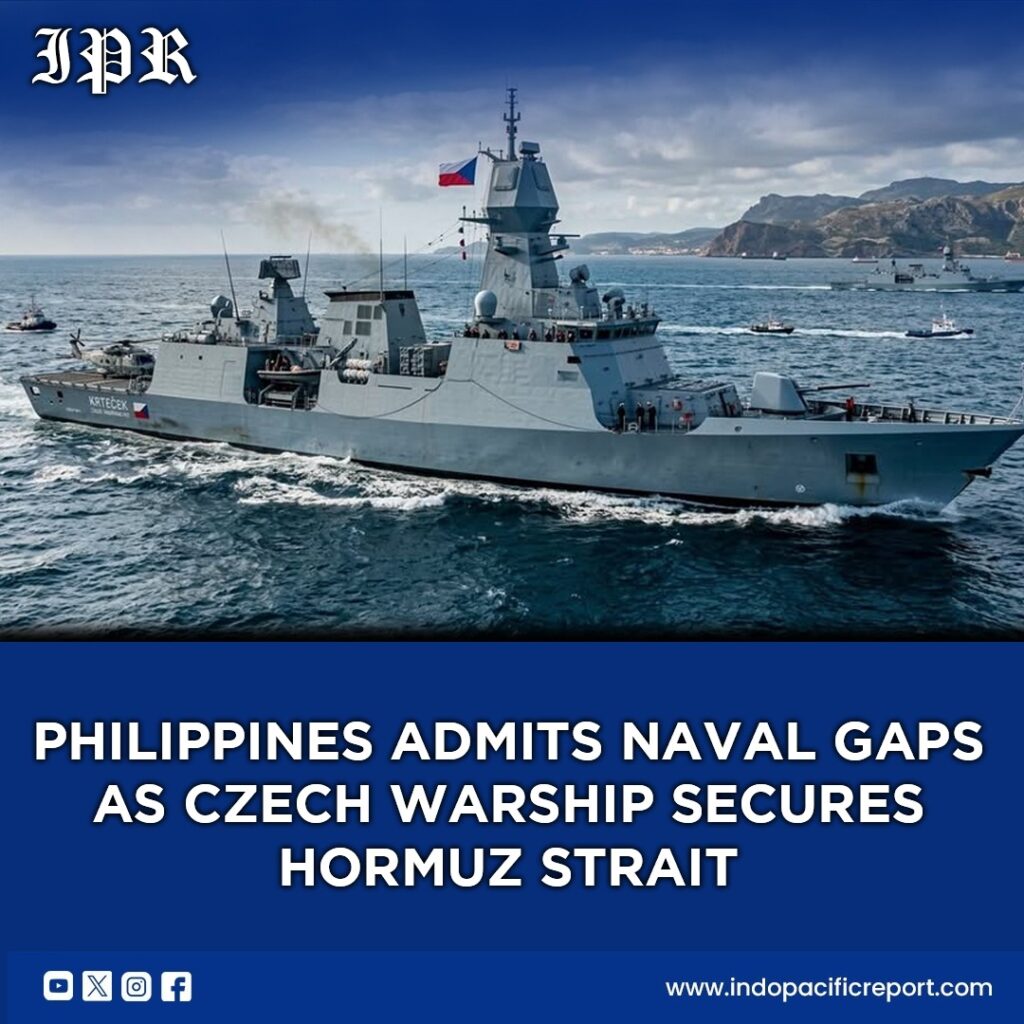
The Philippines has openly acknowledged that it currently cannot provide maritime escort operations in the Straits of Hormuz, a critical international chokepoint for global energy flows. Meanwhile, the Czech Republic has deployed its cruiser Krteček to the region, becoming the first EU nation to actively join the U.S.-led coalition ensuring safe navigation through these strategic waters.
From a great-power competition perspective, this situation highlights the asymmetric capabilities among allied states. The Straits of Hormuz handle nearly 20% of global oil shipments, making their security vital not only to regional actors but also to global markets. The Czech deployment demonstrates how middle-tier powers can project influence and share operational risks, even at great distances, while nations like the Philippines remain constrained by fleet limitations and logistical reach.
The development underscores regional security architecture gaps. While the Philippines continues its military modernization, its naval and escort capabilities remain limited, particularly for operations beyond the Western Pacific. In contrast, coalition-integrated deployments—like that of the Czech Navy—show how partnerships enable smaller navies to participate in high-end security operations without maintaining permanent high-readiness forces in distant theaters.
Alliance dynamics are also evident. The Czech deployment strengthens EU-U.S. maritime cooperation, while highlighting the strategic reliance of Southeast Asian states on allied powers for critical sea-lane security. For Manila, the inability to escort shipping could accelerate bilateral agreements, joint exercises, and capacity-building initiatives with partners like the U.S., Japan, and Australia, ensuring that vital trade and energy routes remain protected.
From a maritime and economic strategy angle, securing Hormuz is as much about protecting energy supply chains as it is about deterrence. Disruptions could spike fuel prices and destabilize regional economies. The Czech deployment signals a model where coalition-based patrols can stabilize chokepoints, providing operational assurance while smaller states upgrade domestic capabilities over time.
The Indo-Pacific implications are significant. The Philippines’ gaps illustrate the limits of current naval modernization and the need for long-range, multi-role ships capable of independent operations. Conversely, coalition operations like this suggest a roadmap: smaller navies can complement larger powers’ deployments, gain operational experience, and gradually expand their strategic reach. For the region, it’s a lesson in balancing national capability development with multilateral security cooperation.
Forward-looking assessment: Manila’s acknowledgment of its limitations should be a strategic wake-up call. Reliance on coalition partners offers immediate security but also reinforces the urgency of modernizing fleets, investing in missile defenses, and enhancing air-sea integration. Meanwhile, the Czech Republic’s move demonstrates how middle powers can gain strategic visibility and influence by actively supporting critical global missions, setting a model for other mid-tier nations in the Indo-Pacific.
Audience Question: Should smaller Indo-Pacific nations focus on developing independent naval power, or rely on coalition support for critical maritime security?