Philippines KF-21 Boramae Acquisition: A Strategic Shift in South China Sea Air Power
The Philippines is currently in advanced negotiations to acquire South Korea’s KF-21 Boramae, a move that represents the largest leap in Philippine airpower in 20 years and a significant shift in the military balance of the South China Sea. After decades of operating without a true air-superiority fighter, Manila is finally positioned to transform its air force into a proactive, deterrence-ready combat arm, just as China’s gray-zone pressure reaches its most aggressive phase yet.
This turning point comes at a time when Chinese forces are intensifying coercion at unprecedented levels, from the 19 PLA Navy ships spotted in the Philippine EEZ in November 2025 to the record surge in air incursions over the Luzon Strait. Across the region, other middle powers have already upgraded: Indonesia is acquiring Rafales, Malaysia is purchasing FA-50 Block 20s, and Japan is fielding F-35s and developing its own sixth-generation fighter. The Philippines, long seen as the region’s most vulnerable airpower, is finally stepping onto the same tier of capability.
For Manila, the KF-21 is not “just another aircraft” it is the first platform that gives the country credible BVR combat capability, semi-stealth performance, and seamless integration with U.S., Japanese, Australian, and South Korean forces. It marks a strategic pivot from symbolic modernization to hard-power doctrine, matching the pace set by neighbors who have already embraced advanced fighters to defend their maritime zones.
The negotiations also highlight a deeper geopolitical movement: Asian countries building defense capacity with other Asian partners, bypassing traditional Western procurement cycles. South Korea’s willingness to provide financing, MRO opportunities, and long-term industrial cooperation mirrors similar dynamics in Indonesia’s KF-21 program, and positions Manila to anchor a new Southeast Asian aerospace hub.
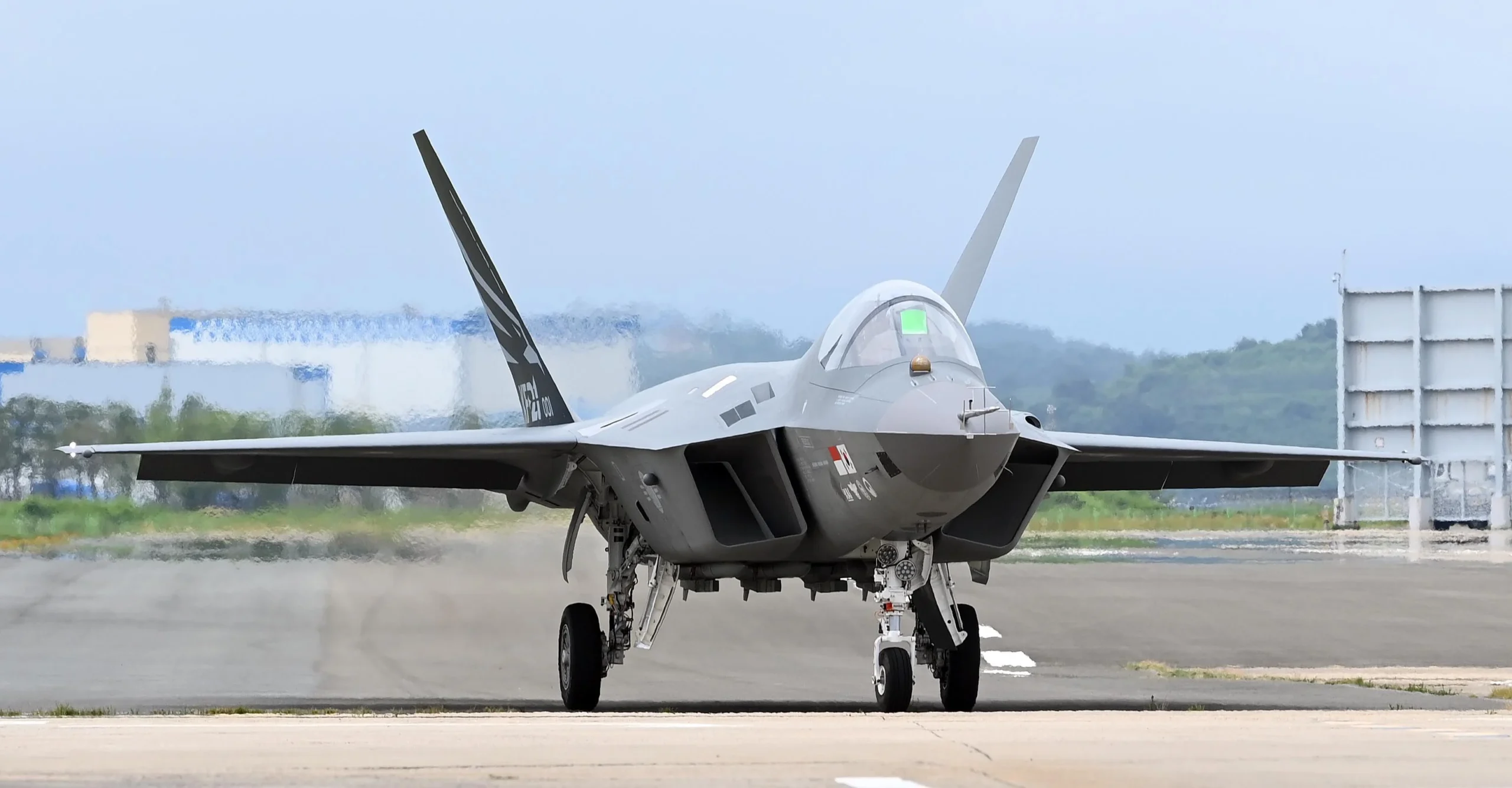
Regionally, the potential Philippine acquisition forces China to rethink its escalation ladder. A Philippine Air Force equipped with Meteor-armed KF-21s shifts the deterrence landscape in a way similar to how Vietnam’s Su-30MK2s elevated Hanoi’s posture in the 2010s or how Taiwan’s F-16V fleet now pressures the PLA to commit more resources around the Taiwan Strait.
This is a watershed moment. The KF-21 doesn’t just strengthen the Philippine Air Force; it signals that Manila intends to join the ranks of Indo-Pacific states capable of shaping the region’s future, not merely reacting to it.
THE STRATEGIC SETTING — WHY MANILA NEEDS A TRUE MULTIROLE FIGHTER NOW
For nearly two decades, the Philippines has operated with a critical capability gap at the heart of its national defense: the absence of a true multirole, air-superiority fighter. Since the retirement of the F-5 fleet in 2005, the country has relied on light-attack aircraft and, later, the FA-50PH to restore a minimal level of airpower. While the FA-50 has proven valuable for training and limited patrol missions, its range, sensors, payload, and survivability fall far short of what is required to deter a modern, well-equipped adversary. It was a stopgap, not a solution. The gap between Philippine air capabilities and regional realities has widened each year.
The urgency of modernizing airpower has become impossible to ignore as China intensifies military activity across the West Philippine Sea and Philippine airspace. Chinese J-10C and J-16 fighters, both equipped with AESA radars and long-range PL-15 missiles, now routinely patrol contested air and maritime zones. Between 2024 and 2025 alone, Philippine defense sources recorded over 200 Chinese incursions, including aircraft shadowing, aggressive electronic probing, and coordinated air-sea patrols designed to test Philippine and allied responses. In this environment, airpower is no longer a supporting asset; it is the frontline of national defense.
This reality shows a warning from RAND defense analyst Derek Grossman, who observed that “air denial is now the first line of deterrence in the Indo-Pacific.” For a country facing daily harassment in its own Exclusive Economic Zone, the ability to deny hostile aircraft the freedom to operate is not optional; it is central to maintaining sovereignty, credibility, and deterrence. Without a modern fighter fleet, Manila risks ceding control of its skies and seas to foreign pressure.
Air superiority matters because it shapes everything else: the ability to protect the EEZ, respond to gray-zone intrusions, support naval operations, and maintain maritime domain awareness across vast, contested waters. It also determines how effectively the Philippines can integrate into joint operations with allies such as the United States, Japan, Australia, and South Korea, a core component of the country’s evolving defense posture. Simply put, without a real multirole fighter, Manila cannot fully participate in the deterrence architecture forming across the Indo-Pacific. The KF-21 offers the first credible pathway to close that gap.
THE KF-21 BORAMAE — DESIGN, CAPABILITIES, AND WHY IT FITS THE PHILIPPINE REQUIREMENT
The KF-21 Boramae represents South Korea’s most ambitious defense program to date, a fighter designed to bridge the growing gap between aging 4th-generation fleets and prohibitively expensive 5th-generation platforms like the F-35. Developed by Korean Aerospace Industries (KAI), the KF-21 reflects Seoul’s determination to achieve strategic autonomy while offering partner nations a modern fighter that is both advanced and financially attainable. For the Philippines, which has long been constrained by budget limitations and procurement delays, the KF-21 arrives at precisely the moment a new class of flexible, high-performance aircraft is needed.

Although not a full stealth fighter, the KF-21 incorporates reduced radar cross-section shaping, giving it a lower signature than legacy 4th-generation jets. This makes it harder to detect and target, a key advantage in a region where Chinese radars, missiles, and surveillance networks are expanding rapidly. Future Block upgrades are even more transformative: internal weapons bays, enhanced sensors, and new EW capabilities will bring later versions closer to 5th-generation performance without the extreme price tag or political constraints of the F-35. The result is an aircraft with a long, predictable modernization path that aligns perfectly with the Philippines’ gradual but accelerating military transformation.
The KF-21 is well-suited to Manila’s needs, balancing capability and cost effectively, which has hindered past fighter acquisitions. The Boramae features advanced technology while remaining within budget for Horizon 3 modernization, ensuring early variants can be upgraded through Blocks 1 to 3 without obsolescence. Built for interoperability with U.S. and Asian allies, it supports coordinated air operations in the Indo-Pacific, making it a strategic choice for the Philippines as it strengthens its role as a security partner in the region.
INSIDE THE NEGOTIATIONS — PHASED ACQUISITION, COST, AND DELIVERY TIMELINE
The emerging KF-21 deal between Manila and Seoul is structured as a phased, scalable acquisition that reflects both the Philippines’ budget realities and its long-term modernization goals. Current negotiations center on an initial tranche of up to 12 KF-21 Boramae fighters, providing the Philippine Air Force with its first credible multirole capability since the F-5 era. Importantly, the agreement is designed to expand over time. If the initial batch proves successful, Manila could procure a total of 24 to 36 aircraft in subsequent phases, enough to field two fully operational fighter squadrons, drastically raising the country’s airpower profile in the South China Sea. Is the Philippines Ready for the Cyber Battlefield?
Cost is a central factor in this negotiation, and the KF-21 offers a rare balance of advanced capability and affordability. Estimates place the price at USD 70–85 million per aircraft, depending on the chosen configuration, weapons integration, training systems, and logistics support. This makes the KF-21 significantly cheaper than fifth-generation platforms like the F-35 while still delivering high-end performance. For Manila, the initial package is projected at USD 1.0–1.5 billion, a figure that fits within Horizon 3 modernization allocations without displacing naval or missile investments.
Financing is expected to follow a Government-to-Government credit model, similar to the arrangement used in the successful FA-50 procurement. This structure reduces financial strain on the Philippines and reflects Seoul’s willingness to treat Manila not just as a customer, but as a strategic defense partner. The credit terms allow phased payments aligned with delivery milestones, making long-term acquisition sustainable even under fluctuating budgets.
The projected timeline further shows the seriousness of the negotiations. A Memorandum of Understanding (MoU) is anticipated as early as 2026, setting the foundation for a formal contract. If finalized, the Philippines could receive its first KF-21 units between 2029 and 2030, aligning with the aircraft’s Block 2 maturity and giving Manila early access to advanced radar, BVR, and EW capabilities. This timeline also intersects with major regional shifts, China’s naval expansion, Japan’s new command-and-control exports to Manila, and a broader Indo-Pacific alignment against coercive activities.
One of the most striking signals came from a Korean Aerospace Industries (KAI) official involved in the outreach who remarked, “The Philippines must be stronger than before.” This comment captures Seoul’s broader strategic intent: South Korea sees Manila not merely as a buyer, but as a rising security partner whose airpower must be elevated to maintain regional balance. In essence, the KF-21 negotiation is as much about geopolitics as it is about procurement.
OPERATIONAL IMPACT — HOW THE KF-21 TRANSFORMS PHILIPPINE AIRPOWER
The arrival of the KF-21 would fundamentally shift the Philippine Air Force from a reactive, limited-response organization into a genuinely proactive airpower force capable of shaping events in the West Philippine Sea rather than merely responding to them. With its high speed, long-range sensors, and advanced radar, the KF-21 enables faster interceptions, allowing the Philippines to meet Chinese aircraft at greater distances and on favorable terms. Its extended combat radius supports persistent maritime air patrols across strategic chokepoints like the Bashi Channel and Reed Bank.
Combined with its AESA radar, IRST, and advanced datalinks, the KF-21 dramatically enhances real-time situational awareness, giving Manila the ability to build a more accurate and timely picture of unfolding threats, something the FA-50 simply cannot achieve.
The deterrence value of the KF-21 cannot be overstated. By fielding an aircraft that can go toe-to-toe with China’s J-10C and J-16, the Philippines boosts the “cost of coercion” for Beijing. For the first time in two decades, Manila would possess a platform capable of executing air superiority missions, something long missing from its defense posture. In deterrence theory, perception matters as much as capability and the Boramae signals a country no longer content to accept violations of its EEZ as inevitable. Instead, it introduces a credible layer of air denial, forcing China to calculate risk more carefully before escalating encounters.
Operationally, the KF-21 also amplifies alliance integration. As the Philippines deepens its cooperation with the United States under the Mutual Defense Treaty, the KF-21’s modern seeker systems, datalink compatibility, and BVR loadouts improve combined operations, whether in air defense, maritime strike, or ISR missions. The aircraft also enhances trilateral and quadrilateral exercises with Japan, Australia, and South Korea, allowing the Philippines to plug into the rapidly developing Indo-Pacific airpower network. Manila, once considered the weakest link in regional air operations, becomes a more dependable and interoperable partner.
A quote from former ROK Air Force Colonel Park shows this operational promise: “We can keep operational readiness above 85% anytime.” For a country like the Philippines, whose fighter inventory is small and must remain reliably available, this level of readiness is transformative. High uptime means more patrol hours, faster scramble rates, and greater presence, all crucial in a theater where adversaries test boundaries daily.
INDUSTRIAL & ECONOMIC DIMENSION — MRO FACILITIES & DEFENSE INDUSTRIALIZATION
One of the most overlooked but strategically important aspects of the KF-21 negotiations is the industrial and economic dimension, particularly the proposal to establish a Maintenance, Repair, and Overhaul (MRO) facility in the Philippines. Such a facility would dramatically reduce the long-term ownership costs of the aircraft, cutting lifecycle spending by an estimated 20–30%, according to industry benchmarks. Instead of sending aircraft overseas for major servicing, an expensive and time-consuming process, the Philippines would gain the ability to maintain its FA-50 and future KF-21 fleets domestically. This shift strengthens operational readiness while building national self-reliance in high-tech aerospace maintenance.
Beyond cost savings, the MRO proposal unlocks broader industrial benefits. South Korea’s defense sector is among the fastest-growing in the world, and partnering with KAI on an MRO hub would bring technology transfer, supply-chain integration, and the development of a skilled aerospace workforce inside the Philippines. Engineers and technicians would gain exposure to advanced composite manufacturing, avionics maintenance, and systems integration, skills that currently exist only in small pockets within the local industry.
Over time, Filipino aerospace companies could become subcontractors within KAI’s regional supply chain, elevating the Philippines from a buyer of defense systems to a contributor within a wider Indo-Pacific industrial ecosystem.
The long-term vision extends far beyond supporting the KF-21. A fully developed MRO hub could service not only the Philippines’ own FA-50 and Boramae fleets, but also those of other Southeast Asian operators. As more countries consider acquiring Korean platforms, Manila is strategically positioned to become a regional maintenance center, generating revenue, jobs, and industrial prestige. This trajectory aligns perfectly with the Philippines’ Defense Industrialization Act, which seeks to strengthen local manufacturing, reduce foreign dependency, and cultivate a sustainable defense sector capable of contributing to national resilience.
Regionally, this model mirrors Indonesia’s industrial participation in the KF-21 program, where Jakarta negotiated local component production and partial co-development benefits. While Manila’s approach is more focused on sustainment than manufacturing, the principle is similar: leveraging procurement not merely for capability, but to stimulate long-term industrial growth. In this light, the KF-21 is not just an aircraft acquisition; it is a catalyst for the Philippines’ entry into the Indo-Pacific aerospace economy.
REGIONAL & STRATEGIC CONSEQUENCES — HOW THE DEAL SHIFTS BALANCE IN THE SOUTH CHINA SEA
The Philippines’ move toward acquiring the KF-21 Boramae carries consequences far beyond its own airbases. At the regional level, the presence of a modern, BVR-capable Filipino fighter substantially alters China’s risk calculus in the South China Sea. For years, Beijing has operated under the assumption that Manila could not contest the air domain, allowing PLA aircraft and drones to patrol aggressively and support gray-zone coercion with minimal resistance.
The KF-21 changes that equation: Chinese pilots and commanders now face a higher operational risk whenever they enter contested spaces. A Philippine Air Force equipped with Meteor-armed KF-21s can impose costs, challenge overflights, and complicate Beijing’s confidence in using intimidation as a low-risk tool.
The deal also strengthens the web of Indo-Pacific partnerships now shaping regional security. South Korea’s “Global Pivotal State” strategy, which seeks to expand Seoul’s defense footprint and diplomatic influence, finds a practical expression in the KF-21 negotiations. At the same time, the Philippines evolves from being perceived as the weakest airpower in the region to becoming a credible contributor to allied operations alongside the U.S., Japan, Australia, and South Korea. This elevates Manila’s strategic value inside the emerging coalition of maritime democracies, counterbalancing China’s assertiveness.
Another major consequence is the acceleration of a broader trend: Southeast Asian nations are diversifying away from Western suppliers and increasingly tapping into Asian defense-industrial ecosystems. Korea, Japan, and even Indonesia are becoming major players in regional arms markets, reshaping an industry long dominated by the U.S. and Europe.
The KF-21 deal symbolizes this shift: Asian-produced, technologically sophisticated platforms being adopted by Asian militaries to address Asian security challenges. This interconnected network creates new supply chains, shared training programs, joint MRO hubs, and multilateral exercises, tightening the region’s defense cohesion.
As geopolitical strategist Hal Brands said, “The Indo-Pacific is becoming the cockpit of 21st-century geopolitics.” The Philippines’ potential acquisition of the KF-21 is a vivid demonstration of this reality. It is not merely a military upgrade; it is a signal that Manila intends to shape, not simply endure, the future balance of power in the South China Sea.
CONCLUSION — THE YOUNG HAWK AS A SYMBOL OF A NEW PHILIPPINE STRATEGIC POSTURE
The Philippines’ pursuit of the KF-21 Boramae represents far more than a procurement decision; it marks a foundational shift in the country’s national defense mindset. After decades of operating with limited airpower and enduring constant pressure in the West Philippine Sea, Manila is finally making the transition from symbolic air policing to credible air denial, a capability essential for defending its territory, its citizens, and its maritime rights. The “Young Hawk” signals a turning point: a recognition that modern threats require modern tools, and that sovereignty must be backed by real, deployable strength.
Strategically, the KF-21 restores the Philippines’ long-lost air-combat credibility while simultaneously deepening connections with key allies. It strengthens the U.S.–Philippines alliance, enhances trilateral and quadrilateral links with Japan, Australia, and South Korea, and gives Manila a meaningful role in the emerging Indo-Pacific security architecture. Just as importantly, it reshapes deterrence dynamics in the South China Sea by raising the costs of coercion and forcing Beijing to reassess its assumptions about Philippine vulnerability.
In the end, the KF-21 Boramae is more than an aircraft; it is a symbol of the Philippines’ new strategic posture, a cornerstone of its evolving defense architecture, and a declaration that Manila intends not merely to endure the Indo-Pacific’s turbulence but to help shape its future.