Philippines Joins Australia as Defence Ties Grow
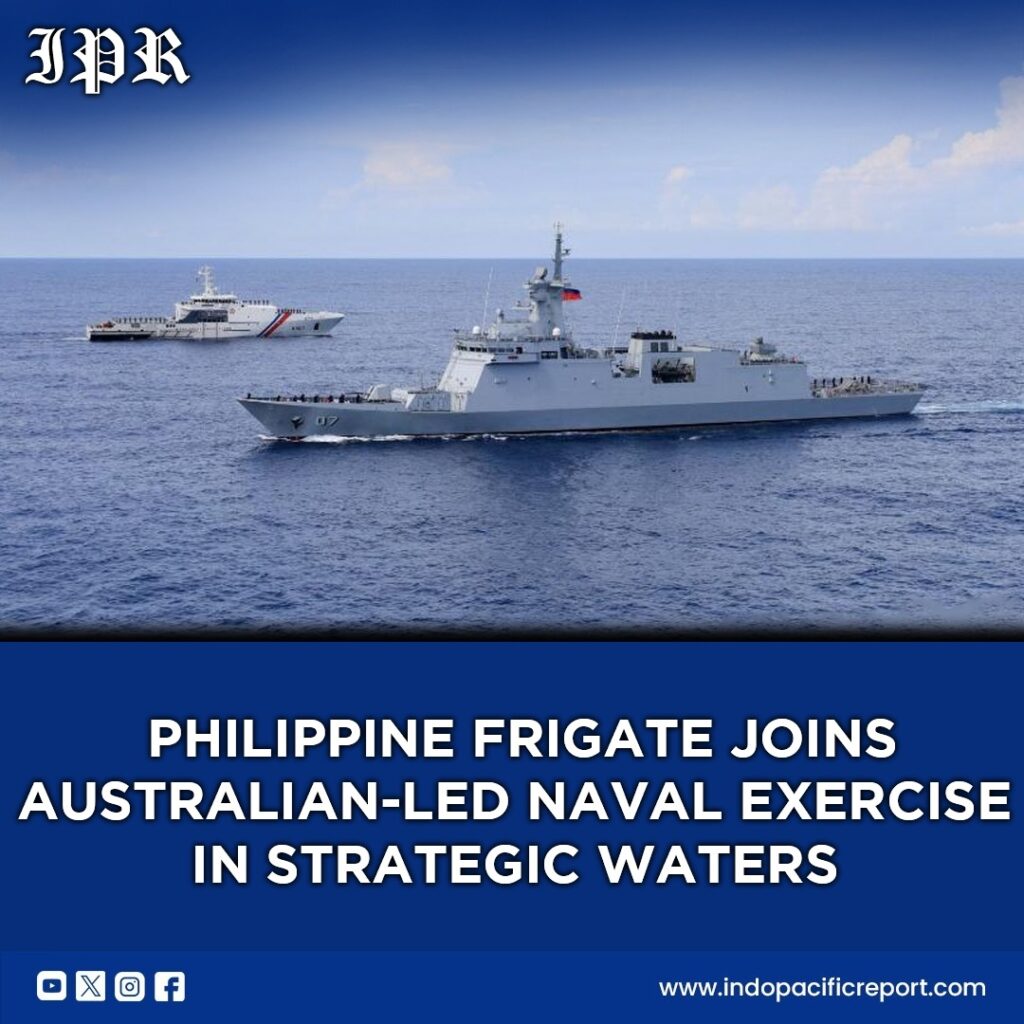
The sighting of dolphins alongside the Philippine Navy guided-missile frigate BRP Diego Silang and the Royal Australian Navy landing ship HMAS Choules during Exercise KAKADU 2026 may appear symbolic or even incidental. But in geopolitical terms, it reflects something more structural: the steady normalization of multinational naval interoperability in the Indo-Pacific maritime commons, particularly under Australian-led exercise frameworks.
From a great-power competition perspective, Exercise KAKADU sits within a wider pattern of coalition maritime activity aimed at maintaining a stable balance in the Indo-Pacific. While not explicitly directed at any single actor, such exercises are shaped by the underlying strategic environment—where China’s expanding naval presence and sustained operations across the Western Pacific are redefining maritime expectations. The participation of the Philippine Navy alongside the Royal Australian Navy signals a gradual tightening of operational familiarity among U.S.-aligned regional partners. These interactions build habits of coordination, shared situational awareness, and tactical interoperability that are essential in any high-end maritime contingency.
In terms of the regional security architecture, KAKADU is part of a broader lattice of exercises that connect Southeast Asian and Pacific naval forces into a more coherent training ecosystem. The presence of the BRP Diego Silang, a guided-missile frigate, highlights the Philippines’ ongoing transition from a coastal defense posture toward a more capable blue-water oriented force structure. Meanwhile, Australia’s role as host underscores its function as a regional security anchor in the southern Indo-Pacific. The inclusion of multiple partners in a single operational environment reflects a shift from bilateral defense ties to multilateral maritime coordination frameworks, where interoperability is tested in realistic, shared operating conditions.
From the standpoint of alliance dynamics, the exercise reflects deepening defense alignment between Australia and the Philippines, both of which are increasingly embedded in a wider U.S.-linked security architecture. While the Philippines is not a treaty ally of Australia, their growing naval cooperation demonstrates how Indo-Pacific partnerships are becoming more flexible and networked. These are not rigid alliance blocs, but functional security groupings built around shared operational needs—maritime domain awareness, logistics coordination, and crisis response capability. Exercises like KAKADU help translate political alignment into operational readiness.
On the maritime strategy dimension, the significance lies in the operational theater itself. The Indo-Pacific is fundamentally a maritime system, where sea lanes, chokepoints, and archipelagic geography shape both commerce and security. The participation of surface combatants like the BRP Diego Silang and amphibious platforms like HMAS Choules reflects the dual-use nature of modern naval operations—ranging from high-end warfare preparation to humanitarian assistance and disaster response (HADR). In Southeast Asia, where natural disasters are frequent and maritime disputes persistent, navies must be capable of both deterrence and relief operations. Exercises like KAKADU train for exactly this blended operational reality.
At the level of the Indo-Pacific balance of power, these exercises represent incremental but important shifts in regional cohesion. No single exercise changes the balance of power, but repeated participation builds strategic familiarity among partner navies. Over time, this reduces coordination barriers in real-world scenarios, whether humanitarian crises or security contingencies. The Philippines’ increasing presence in such exercises signals its gradual integration into broader maritime security networks, reinforcing its position as a frontline state in the Western Pacific’s evolving strategic geography.
In a forward-looking sense, Exercise KAKADU illustrates a key trend: the Indo-Pacific is becoming a trained and networked maritime environment, where operational relationships are being built long before any crisis emerges. Even small moments—like dolphins moving through a multinational formation—take place against a backdrop of increasingly serious strategic convergence. The deeper question is whether this growing interoperability will act as a stabilizer through deterrence, or whether it will contribute to a more continuously militarized maritime commons.
Philippines Joins Australia Naval Drill as Defence Ties Grow