How the Philippines Is Building a Missile Wall Against China — From BrahMos to Chu-SAM
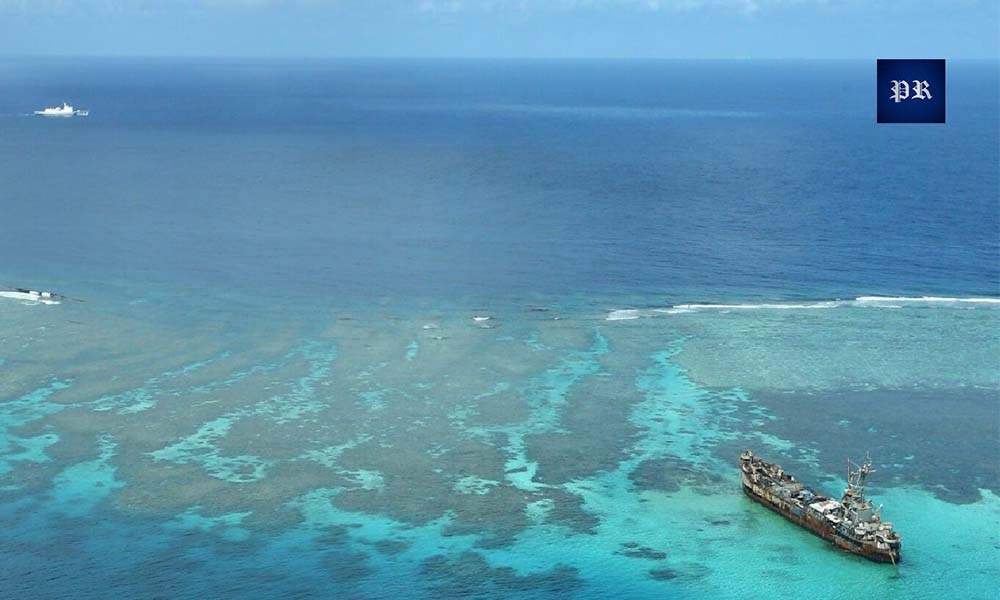
The Philippines is undergoing the fastest military transformation in Southeast Asia, evolving from a lightly equipped archipelago into a missile-armed frontline power at the heart of the West Philippine Sea. This shift comes at a moment when China has intensified its coercive campaign with over 230 hostile maritime incidents in 2024–25, including 70-psi water cannon blasts at Ayungin Shoal strong enough to shatter steel and injure sailors. New BBC Verify satellite images released in late 2025 revealed Chinese flotillas conducting at-sea replenishment operations far from any home port, an unmistakable sign that Beijing is preparing for sustained blue-water operations rather than simple patrols.
At the same time, China accelerated the construction of its fourth aircraft carrier and expanded missile emplacements on the fortified reefs of Mischief, Subi, and Fiery Cross, signaling a capability shift that Manila can no longer afford to ignore.
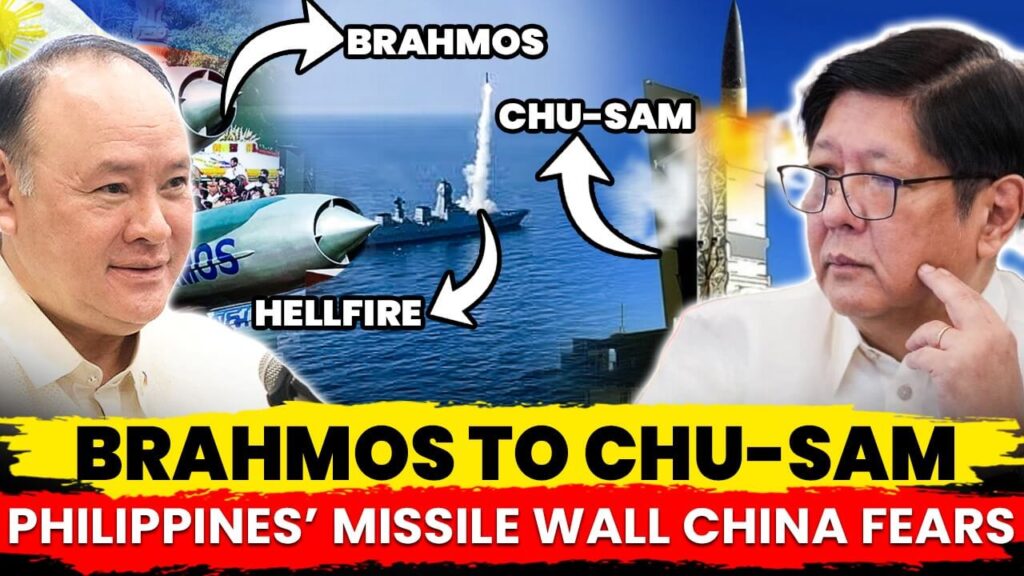
Against this rapidly evolving threat environment, the Philippines has moved decisively away from its former strategy of relying on diplomacy and lightly armed constabulary forces. Instead, it is assembling a historic four-nation missile architecture with India, Japan, the United States, and South Korea, forming what analysts now describe as a vertically integrated missile wall across Luzon, Palawan, and the Batanes corridor. This integrated system, combining India’s supersonic BrahMos strike capability, Japan’s Chu-SAM air-defense shield, U.S. radar and satellite-linked targeting networks, and South Korea’s naval and aerial platforms, gives the Philippines a level of deterrent power unmatched by any other Southeast Asian state.
What makes this transformation even more striking is how it now positions the Philippines relative to its neighbors. Vietnam is expanding its missile defenses but lacks the multi-layered integration Manila is building. Indonesia is improving its air force but has no long-range strike capability. Malaysia and Brunei remain diplomatically cautious and militarily limited. Even Taiwan, though far better armed, does not possess a four-country combined surveillance and targeting ecosystem. The Philippines has, in effect, leapfrogged its regional peers by constructing an Indo-Pacific anti-access/area-denial grid that aligns with the most advanced doctrines of modern warfare.
As Hal Brands noted, “Missiles, not ships, will decide the next conflict in the first island chain,” and Manila has firmly positioned itself on this cutting edge. Admiral Samuel Paparo reinforced this shift, stating that the Philippines is now aligning with the future fight: long-range, precision-guided, and fully networked.
The result is a strategic metamorphosis. The Philippines is no longer merely reacting to China’s aggression; it is becoming a regional disruptor capable of imposing costs, reshaping naval behavior, and complicating Beijing’s calculus across the South China Sea. With its new missile wall, the country has entered a new era, one defined not by vulnerability but by deterrence, confidence, and an emerging ability to defend its rightful waters with precision and power.
STRATEGIC BACKDROP — WHY A MISSILE WALL IS NECESSARY
China’s expanding military footprint has reshaped the strategic balance in the West Philippine Sea and left littoral states with shrinking room to maneuver. By 2025, the PLA Navy had grown to more than 370 warships, becoming the world’s largest fleet by hull count, while Beijing fortified seven artificial islands with runways, radar arrays, barracks, and missile batteries capable of projecting force deep into Southeast Asian waters. Its newly strengthened “megacoastguard” law even authorizes the use of deadly force in disputed maritime zones, giving China legal cover for escalatory behavior at sea.
Against this backdrop, the Philippines has undergone a dramatic doctrinal shift. The 2025 AFP budget hit a record ₱288 billion, with nearly 80% now allocated to external defense, a historic reversal from decades of prioritizing counterinsurgency. Under revised AFP operational rules, the mission is no longer simply to respond to foreign encroachment but to prevent it through credible deterrence. This transition was accelerated by real-world confrontations: in March 2025, two China Coast Guard vessels rammed a Philippine resupply boat en route to Ayungin Shoal, injuring four Filipino crewmen and prompting Manila to fast-track its air-defense and coastal missile acquisitions. Philippines-France Maritime Drills Strengthen Indo-Pacific Security
As CSIS maritime expert Gregory Poling warned, “China escalates because it can. The Philippines is now making sure it can’t.” This is the strategic logic behind the missile wall, an evolving defense architecture built not out of ambition, but necessity.
COUNTRY CONTRIBUTION 1 — 🇮🇳 INDIA: THE OFFENSIVE STRIKE LAYER (BRAHMOS)
India supplies the Philippines with the BrahMos supersonic cruise missile, enhancing its maritime strike and coastal defense capabilities. With a range of 290-450 kilometers and speeds of Mach 2.8 to 3.0, the BrahMos enables the Armed Forces of the Philippines (AFP) to target hostile warships before they threaten its waters. Deployed from mobile coastal batteries, this system allows Philippine forces to control access to vital chokepoints in the Indo-Pacific, compelling Chinese naval vessels to operate outside their usual patrol areas and beyond the Philippine Exclusive Economic Zone (EEZ).
Actual deployment locations highlight the strategic intent. BrahMos units positioned in Northern Luzon can monitor and interdict activity near Taiwan’s southern approach, while potential placements at EDCA sites in Cagayan and Ilocos give operators a commanding view of the Bashi Channel. On the western front, Palawan-based batteries can hold Chinese ships at risk near Mischief Reef, Second Thomas Shoal, and the broader Spratly arc.
For the Philippines, this is not simply an arms purchase; it is a new offensive layer of deterrence. As Indian Defense Minister Rajnath Singh put it, “BrahMos in the Philippines is not just a sale. It is a stabilizing factor in the Indo-Pacific.” And Manila has treated it as such, committing ₱18.9 billion, the largest missile acquisition in its history, to secure a capability that can fundamentally reshape Chinese naval behavior.
COUNTRY CONTRIBUTION 2 — 🇯🇵 JAPAN: THE AIR DEFENSE & INTERCEPTOR SHIELD (CHU-SAM)
Japan provides the Philippines with the critical air-defense and interceptor layer of its emerging missile wall through the proposed transfer of the Type 03 Chu-SAM, a modern surface-to-air system designed to shoot down enemy aircraft, drones, and cruise missiles. With an effective range of 30–50 kilometers, and up to 70 kilometers for the upgraded Type 03 Kai, Chu-SAM uses phased-array radar capable of tracking and engaging multiple high-speed threats simultaneously, exactly the kind of protection needed against China’s YJ-83 anti-ship missiles, CJ-10 land-attack systems, and massed drone swarms.
This offer comes at a pivotal moment: Japan’s 2024 defense export reforms now allow full weapon system transfers for the first time in decades, and the Philippines has become the first potential Southeast Asian recipient of a Japanese air-defense package under the new policy, symbolizing a strategic shift in Tokyo’s regional engagement.
For Manila, Chu-SAM is not simply a defensive tool; it is the shield that makes the offensive strike layer survivable. Stationed around BrahMos batteries, EDCA sites, and key airbases across Luzon and Palawan, the system creates a protective dome over critical nodes that China would likely target in the first minutes of a conflict. In realistic scenarios, if the PLA were to launch drone swarms or precision cruise missiles against Philippine radar stations or coastal missile units, Chu-SAM would serve as the first line of interception, denying Beijing the ability to degrade Philippine sensors or destroy its missile force on the ground.
As Japanese Prime Minister Fumio Kishida emphasized, “We stand with nations defending a free and open Indo-Pacific. The Philippines is vital to that vision.” This commitment is backed by deepening financial and security cooperation: Japanese ODA and defense support to Manila have now reached $4.5 billion, the highest level among ASEAN states except Vietnam.
COUNTRY CONTRIBUTION 3 — 🇺🇸 UNITED STATES: RADARS, NETWORKING & LONG-RANGE FIRE SUPPORT
The United States provides the digital nervous system of the Philippines’ emerging missile wall, linking together sensors, shooters, and allied commands into a single, networked defense grid. Washington has already deployed AN/TPS-77 long-range radars across key Philippine locations, offering persistent coverage over the Luzon Strait, Bashi Channel, and large swaths of the West Philippine Sea.
Additional support, including NASAMS air-defense systems (pending), Javelin and Harpoon training, and prepositioned equipment at five EDCA bases, forms the backbone of a U.S.–Philippine integrated fire network. What makes the U.S. contribution decisive is its unparalleled expertise in ISR, satellite tracking, data fusion, and joint command-and-control doctrine, capabilities that transform the Philippines’ new missiles from isolated systems into a coherent, precise, and instantly responsive strike architecture.
In a realistic operational scenario, if a Chinese J-16 fighter were to intrude near Batanes, a U.S.-linked radar would detect it first, feeding data into a Philippine air-defense node. The Chu-SAM system would automatically track the aircraft, while Filipino commanders, using U.S.-supported C2 networks, could rapidly assess the threat, classify intent, and authorize engagement if required.
This interconnected approach reflects what INDOPACOM commander Admiral Samuel Paparo emphasized in 2025: “The Philippines is the geographic lynchpin of Indo-Pacific defense.” Washington’s financial commitment shows this reality, with the U.S. now investing $100 million per year to upgrade infrastructure across EDCA sites, turning them into forward hubs for surveillance, logistics, and rapid response throughout the first island chain.
COUNTRY CONTRIBUTION 4 — 🇰🇷 SOUTH KOREA: NAVAL MISSILE PLATFORMS & THE AIR-DEFENSE FUTURE
South Korea provides the Philippines with a diverse mix of air, naval, and artillery platforms that strengthen the mobility and flexibility of its growing missile wall. Manila already operates Korean-built FA-50PH light fighters, K136 and K239 multiple-launch rocket systems, and an expanding fleet of offshore patrol vessels (OPVs) from HD Hyundai, including the Jose Rizal–class frigates and new-generation patrol ships designed for long-range operations.
These assets give the Philippines the ability to pair surveillance, targeting, and strike capabilities in ways it could not before. Looking ahead, the possibility of acquiring advanced systems such as L-SAM, South Korea’s high-altitude interceptor comparable to THAAD, signals the long-term potential for a tiered air-defense architecture capable of complementing Japan’s Chu-SAM and U.S. NASAMS networks.
In real-world maritime operations, South Korean vessels have become crucial enablers for missile-era defense. OPVs like the BRP Jose Rizal and newly delivered HD Hyundai ships enhance maritime domain awareness, perform anti-submarine patrols, and provide targeting support for systems like BrahMos by extending radar coverage deeper into contested waters. This makes South Korea not just an equipment supplier but a builder of platforms that allow the Philippines’ missile grid to function across air, sea, and littoral environments.
As RAND analyst Soo Kim puts it, “Seoul sees Manila as a future missile partner, not just a buyer,” a sentiment reflected in South Korea’s expanding strategic posture in the Indo-Pacific. With more than $1 billion in military equipment supplied since 2010, Seoul has become one of Manila’s most reliable defense partners, shaping the next generation of Philippine naval and air-defense capability.
THE COMPLETE MISSILE WALL — HOW ALL LAYERS WORK TOGETHER
The Philippines’ emerging missile wall is a fully interlocking defense architecture built from four complementary layers working in unison to deny China the ability to operate freely in the West Philippine Sea. At the outer edge sits India’s BrahMos, a long-range maritime strike weapon capable of hitting hostile ships up to 450 kilometers away, effectively pushing PLA naval forces back from Philippine waters and key chokepoints. Covering these strike units is Japan’s Chu-SAM air-and-missile defense shield, designed to intercept aircraft, drones, and incoming cruise missiles, protecting airbases, coastal batteries, and EDCA sites from a first-strike attempt.
Feeding these systems with real-time awareness is the United States’ radar, networking, and fire-control layer, which provides early warning through long-range sensors, joint-targeting doctrine, and satellite-based tracking that ties Philippine and allied forces into a common operating picture. Supporting all of this from the sea is South Korea’s fleet of OPVs and modern frigates, which extend surveillance range, assist in target detection, and secure the maritime battlespace that enables missile operations to function without interruption.
Together, these four layers form a multi-domain denial system that makes any Chinese operation in or near Philippine waters riskier, more expensive, strategically unpredictable, and politically explosive, a deterrence architecture designed to stop conflict not by fighting war, but by making war too costly to start.
GEOPOLITICAL IMPACT — HOW THIS REDEFINES THE POWER BALANCE
The Philippines’ missile wall is already reshaping the geopolitical landscape of the Indo-Pacific, triggering reactions from Beijing and recalibrations across Southeast Asia and allied capitals. China has sharply criticized the deployment of BrahMos, with its Ministry of Defense labeling the system “a dangerous provocation encouraged by external forces,” a statement that shows Beijing’s discomfort with Manila’s new ability to threaten PLA naval movements at extended ranges. Philippine Air Force Receives 5 New Black Hawks in a Major Upgrade
But the ripple effects extend far beyond China’s protests. Vietnam has begun exploring options for acquiring its own cruise missiles, Indonesia is accelerating improvements to its air-defense network, and Japan and Australia have expanded joint maritime patrols to reinforce the regional security architecture. As Australian strategist Rory Medcalf notes, “A missile-armed Philippines complicates China’s entire strategy in the South China Sea.” In other words, Manila’s shift from vulnerability to deterrence is influencing the strategic calculations of every major power in the region.
CONCLUSION — THE PHILIPPINES IS NO LONGER DEFENSELESS
The Philippines has assembled a historic four-nation defensive coalition that fundamentally alters the power dynamics in the West Philippine Sea. From India’s BrahMos providing long-range punch, to Japan’s Chu-SAM shielding critical bases, to the United States’ radar networks and joint targeting doctrine, and South Korea’s naval and aerial platforms extending maritime awareness, Manila has built a layered shield that protects its sovereignty, raises the cost of Chinese coercion, and strengthens alliances across the Indo-Pacific. This transformation is not theoretical; it is already altering Chinese behavior and elevating the Philippines from a vulnerable outpost to a strategically indispensable partner in the first island chain.
China’s Growing Flotilla: Satellite Images Reveal New Flashpoints in the West Philippine Sea
As AFP Chief Gen. Romeo Brawner Jr. declared, “We are no longer the small, quiet country China can push around. We are building the capability to fight back.” Ultimately, the missile wall represents far more than a military upgrade. It is the rebirth of Philippine deterrence, a clear signal that the era of helplessness is over, and a new era of strategic confidence has begun.