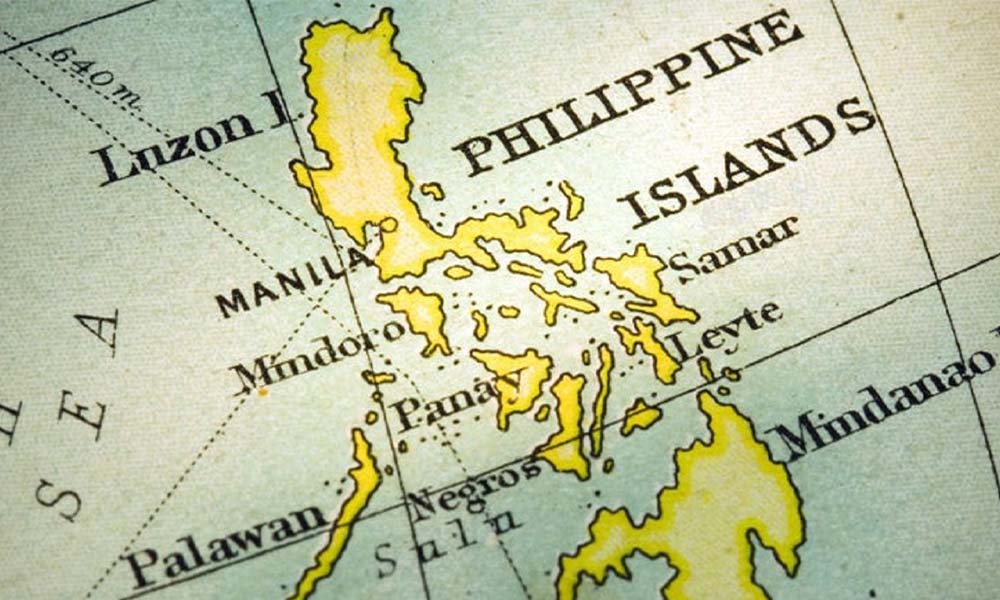
Philippines Eyes Submarines from Korea Amid Rising Sea Tensions
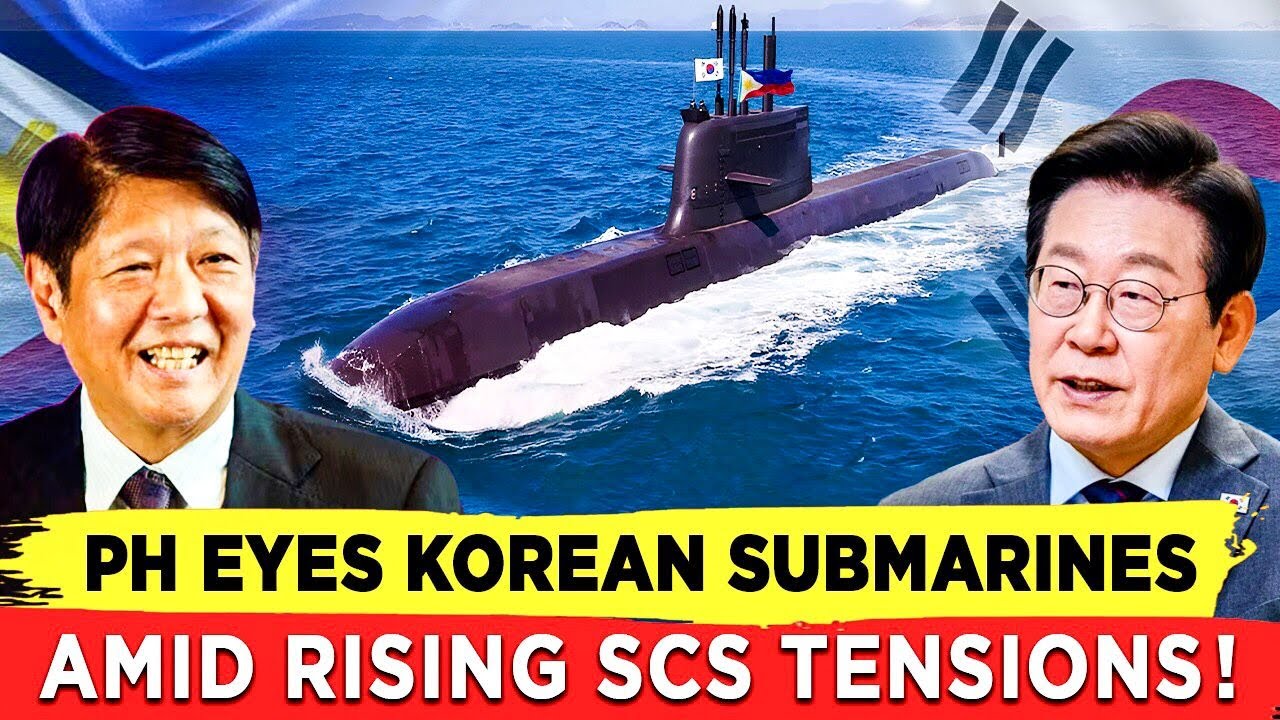
“What if the next silent giant in the South China Sea isn’t seen until it’s already changed the game?” That’s exactly the question buzzing in strategic circles today as the Philippines eyes submarines from South Korea amid rising sea tensions. The tension, decades of surface patrols and littoral skirmishes suddenly faced something that can’t be spotted on radar until it chooses to be. This isn’t just another weapons purchase, it’s a tectonic shift
Think about it like this: for generations, the Philippines has guarded its archipelago with patrol boats and frigates, proud, visible, traditional tools of seafaring defense that echo the proud history of the nation’s naval heritage. But in today’s contested waters, where disputes flare and drones hover, there’s a growing sense that seeing the enemy before they see you isn’t enough, sometimes you’ve gotta disappear to be powerful. South Korea’s submarines could give the Philippines that game-changing edge, a silent shark in seas full of noisy ships.
https://youtu.be/8wgvw5OzgkI?si=74PXWh45bL6IOBXr
And if you want a real-world snapshot of why this matters? Look at how surface fleets have struggled to deter encroachments and aerial harassment. History teaches us that real deterrence is as much about perception as it is about presence. Submarines, hidden, unpredictable, and respected, can force any rival to think twice. This isn’t just hardware; it’s a psychological pivot rooted in both old-school naval doctrine and fresh strategic thinking.
Let’s be real: this moment marries the wisdom of the past with the urgency of the present. It’s dramatic, it’s bold, and it might just redefine Manila’s role in this century’s fiercest maritime flashpoint.
Core Drivers of the Submarine Initiative
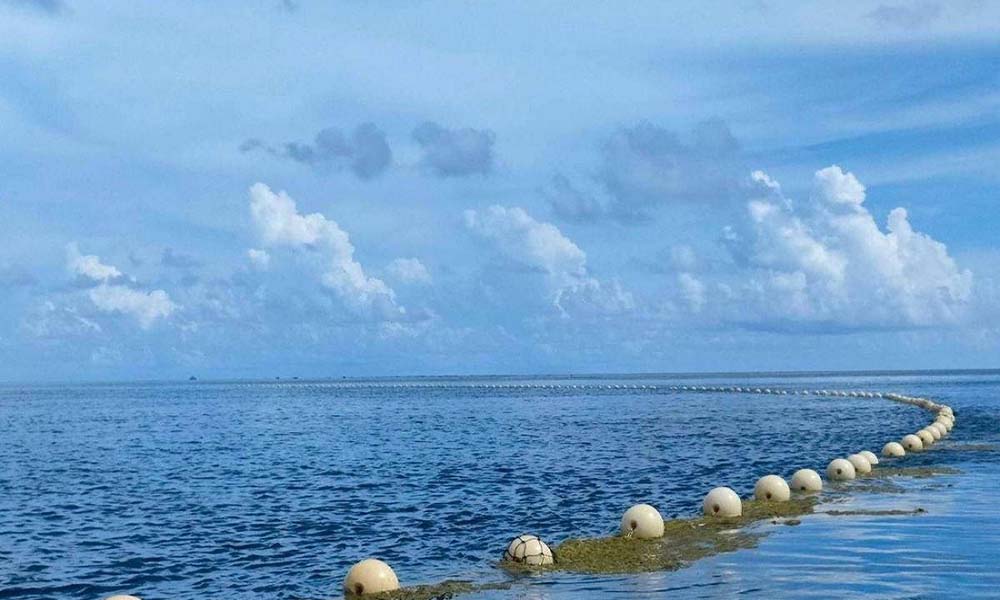
At the heart of the Philippines’ submarine push lies a rapidly hardening external threat environment, one that operates in the shadows rather than open conflict. In the West Philippine Sea, pressure is no longer applied through outright naval battles but through grey-zone tactics: constant shadowing by maritime militia, water-cannon incidents, dangerous maneuvering, and the quiet normalization of presence. China’s strategy stays deliberately below the threshold of war, exploiting legal ambiguity and Manila’s restraint. For the Philippines, this creates a daily dilemma, respond forcefully and risk escalation, or hold back and risk erosion of sovereignty. Submarines, by design, disrupt this calculus. Their invisibility introduces uncertainty, making persistent pressure far more costly and risky for an adversary that thrives on dominance through presence.
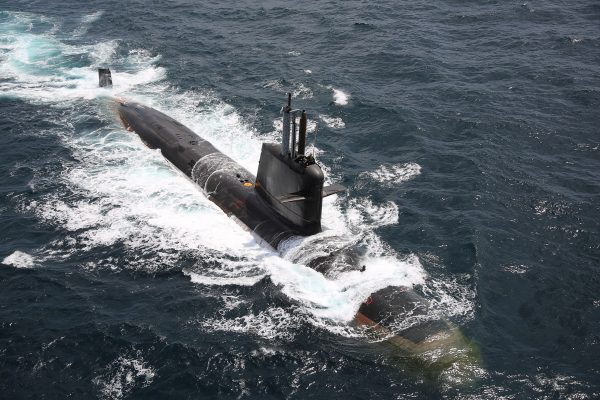
This threat environment is further sharpened by a stark asymmetry at sea. Philippine naval forces operate in full view, every patrol ship tracked, every movement predictable, while China fields an overwhelming mix of coast guard vessels, maritime militia, and blue-water combatants backed by air and missile coverage. In such conditions, surface fleets alone struggle to deter a superior force. Worse, modern contested waters increasingly expose surface combatants to surveillance drones, satellites, and long-range precision weapons. Visibility, once a symbol of control, has become a liability. Submarines flip this imbalance. They restore strategic ambiguity, forcing even a stronger navy to assume unseen risks beneath the waves.
Equally important is the Philippines’ internal strategic recalibration. For decades, the Armed Forces of the Philippines were oriented toward internal security and constabulary missions, counterinsurgency, disaster response, and maritime law enforcement. That era is decisively ending. Recent defense planning documents signal a doctrinal shift toward external territorial defense, particularly maritime domain protection. In this new framework, submarines are not conceived as tools of power projection or aggression. Instead, they are viewed as deterrence-by-denial assets, platforms that make hostile actions harder, costlier, and less predictable without firing the first shot. This approach aligns with a traditionally defensive posture while acknowledging modern realities.
Regional precedent reinforces this logic. Vietnam’s Kilo-class submarines, Indonesia’s steady undersea expansion, and Singapore’s advanced submarine fleet all point to the same conclusion: in Southeast Asia’s crowded and contested maritime spaces, undersea capability is no longer optional, it is foundational. These states have not pursued submarines to dominate others, but to ensure survival and strategic relevance. Manila is absorbing that lesson, albeit later than its neighbors. In this sense, the Philippine submarine initiative is not radical, it is overdue. It reflects a quiet acceptance that in today’s seas, true security is often achieved not by being seen everywhere, but by being felt nowhere and feared everywhere.
Why South Korea Has Emerged as the Leading Partner
In the unfolding submarine conversation, South Korea’s name doesn’t surface by accident, it rises naturally from a convergence of trust, timing, and strategic alignment. Over the past decade, Manila and Seoul have quietly but steadily deepened their defense relationship, moving from transactional procurement toward something closer to a strategic partnership. From naval assets to aerospace cooperation, South Korea has positioned itself not as a distant arms vendor, but as a capable peer that understands the security pressures facing middle powers in contested regions. That shared strategic experience, living in the shadow of a stronger adversary, gives Seoul unique credibility in Manila’s eyes.

Politically, South Korea occupies a sweet spot that few suppliers can match. It carries no colonial baggage in the Philippines, avoids the heavy political conditionalities often attached to Western arms exports, and is widely viewed as a low-friction, reliable partner. This matters in a region where defense deals are never purely technical, they are signals. By leaning toward Korea, the Philippines diversifies its defense relationships without appearing confrontational or overly aligned with any single bloc. It reduces overdependence on traditional Western suppliers while still acquiring proven, NATO-compatible systems. In short, Seoul offers capability without the geopolitical drama.
The appeal deepens when industrial realities enter the picture. European submarines remain technologically advanced, but their price tags, long production queues, and complex sustainment requirements pose challenges for a navy building undersea capacity from scratch. South Korea, by contrast, offers a more competitive cost structure without sacrificing operational credibility. Its submarine designs are modern, export-tested, and tailored for littoral and archipelagic environments, precisely the operating conditions of the Philippine Navy. For a force seeking value and viability rather than prestige, this balance is critical.
Why the U.S. Wants Taiwan to Fund Philippines EDCA Military Bases?
Equally decisive is Korea’s willingness to go beyond the platform itself. Submarines are not standalone weapons; they are ecosystems. Seoul has signaled openness to comprehensive packages that include training pipelines for crews and maintainers, long-term sustainment support, and even assistance in building the infrastructure needed to operate and maintain an undersea fleet. This holistic approach aligns with Manila’s urgency. The Philippines does not have the luxury of a decade-long learning curve, it needs capability that can be absorbed, sustained, and fielded quickly. South Korea’s faster delivery timelines and practical support model speak directly to that reality.
Korea’s rise as the leading submarine partner reflects more than procurement logic, it reflects strategic comfort. For the Philippines, the choice is not about chasing the most advanced submarine on paper, but about selecting a partner who can deliver capability, continuity, and confidence in an increasingly unforgiving maritime environment. And right now, South Korea checks all the boxes, quietly, efficiently, and at exactly the right moment.
Submarine Capability: What Manila Is Actually Buying
Despite the hype surrounding submarines, what the Philippines is pursuing is not a symbol of prestige or an attempt to mirror blue-water naval powers. Manila is looking at diesel-electric submarines purpose-built for its geography and threat environment, quiet, compact, and lethal in the shallow, crowded waters of an archipelagic state. These platforms are optimized for operating between islands, along chokepoints, and near contested features where stealth matters more than speed or firepower. In such environments, the submarine’s greatest weapon is not its torpedoes, but its ability to remain unseen while watching everything.
Operationally, the concept is clear and conservative. These submarines would prioritize littoral stealth missions and intelligence, surveillance, and reconnaissance. They would listen, track, and report, mapping adversary movements, identifying patterns, and feeding real-time maritime awareness into the broader defense network. This focus reflects a deliberate choice: sea denial over strike dominance. The goal is not to sink fleets or project power far from home waters, but to make Philippine seas increasingly hostile and uncertain for any force attempting coercive operations.
That uncertainty is where the real strategic utility lies. A single submarine forces an adversary to assume it might be present anywhere, beneath every patrol route, near every reef, behind every exercise. This uncertainty complicates planning, slows operations, and diverts resources into anti-submarine warfare. In strategic terms, it raises the cost of aggression without requiring Manila to match an adversary ship-for-ship. Few assets punch above their weight like submarines, especially in confined maritime spaces. https://youtu.be/iSO66NJpefM?si=izSqJSqs2yMDezCP
Beyond deterrence, submarines quietly strengthen early warning and maritime domain awareness. By operating covertly, they extend the Philippines’ sensing reach far beyond what surface ships and aircraft can safely sustain. They provide persistence in areas where visible patrols invite harassment or escalation. Over time, this undersea presence helps Manila move from reactive crisis management toward anticipatory defense, seeing tensions build before they erupt.
Ultimately, what the Philippines is buying is not dominance, but leverage. A small submarine fleet will not control the seas but it can deny them. It can inject doubt, restore balance, and create a deterrent effect far disproportionate to its size. In today’s West Philippine Sea, where power is often measured by who controls the narrative of presence, the ability to operate silently beneath it may be the most powerful statement Manila can make.
Comparative Submarine Options: Korea vs Europe vs Others
When the Philippines evaluates submarine options, it is not shopping for the most sophisticated platform on the global market, it is searching for the best strategic fit. Cost, timelines, political friction, and absorptive capacity matter just as much as technology. In that context, South Korea, Europe, and a handful of other suppliers each bring distinct strengths, but also clear trade-offs. The question for Manila is not who builds the “best” submarine in absolute terms, but who can deliver usable undersea capability fast, sustainably, and without strategic overhang.
South Korea stands out for its pragmatism. Korean submarine platforms are cost-effective without being barebones, offering modern sensors, credible stealth, and designs well-suited for littoral and archipelagic operations. More importantly, Seoul pairs hardware with flexibility, financing arrangements, integrated training pipelines, and long-term sustainment packages designed for navies entering the submarine domain for the first time. Korea’s growing export track record, from Southeast Asia to beyond, demonstrates an ability to deliver on schedule and adapt systems to partner needs. That said, Korean submarines lack the deep global combat pedigree of some European designs, and the ecosystem of overseas operators remains smaller. Still, for a navy prioritizing readiness over reputation, these limitations are manageable rather than decisive.
European suppliers, particularly Germany, France, and Italy, represent the gold standard of conventional submarine design. Their platforms benefit from decades of operational experience, cutting-edge propulsion technologies, and highly refined sensor suites. These submarines are battle-tested in multiple theaters and supported by mature industrial ecosystems. However, excellence comes at a price. Acquisition and lifecycle costs are significantly higher, delivery timelines often stretch across many years, and export frameworks tend to be rigid. Financing is less flexible, and political conditions can complicate long-term sustainment. For a Philippines facing urgent maritime pressure, time and affordability are not secondary concerns, they are strategic variables.
https://indopacificreport.com/the-philippines-evolving-defense-posture-new-naval-bases-us-alliance-and-south-china-sea-dynamics/
Other potential suppliers offer intriguing but limited alternatives. Japan fields some of the world’s most advanced conventional submarines, but its export experience remains narrow and politically constrained. While technologically impressive, Japanese platforms come with uncertainty in terms of transfer, customization, and long-term support. India, meanwhile, is emerging as a defense exporter with growing ambition, but its credibility as a submarine supplier is still unproven. For Manila, adopting such options would introduce additional risk at a moment when reliability is paramount.
The comparative picture becomes clear. Europe offers unmatched maturity but at a premium the Philippines can ill afford in time and cost. Other suppliers bring promise but lack depth. South Korea, by contrast, occupies the middle ground, not the most advanced, but the most balanced. It offers speed, affordability, political feasibility, and a willingness to build capability rather than simply sell platforms. In a strategic environment where delay equals vulnerability, that balance may be the decisive factor.
Strategic Impact on Philippine Defense Posture
The introduction of submarines would fundamentally reshape the Philippine defense posture by opening an entirely new domain of warfare, the undersea realm. For the first time, Manila would possess a capability that operates beyond constant visibility, surveillance, and harassment. This alone alters the strategic equation. An adversary can ignore patrol boats and shadow frigates, but it cannot dismiss what it cannot see. Even a modest submarine presence compels rival forces to divert attention, assets, and planning toward anti-submarine warfare, stretching resources and slowing operations. Crucially, this deterrent effect is achieved without dramatic shows of force. There are no carrier deployments, no missile tests, just quiet uncertainty beneath contested waters.https://youtu.be/iSO66NJpefM?si=Fd9BPcjCmDIE5jsK
Yet the military benefits come with serious institutional challenges. The Philippine Navy does not possess a submarine culture, no legacy crews, no inherited doctrine, no ingrained command structures built around undersea operations. Building this capability will require patience and discipline. Submarines demand long-term investment in personnel, from officers trained years in advance to specialized technicians who understand systems few ever see. Dedicated basing, maintenance infrastructure, and logistics chains must be developed almost from scratch. Even command-and-control thinking must evolve, as submarines operate independently, silently, and often beyond immediate oversight. This is not a quick win, it is a generational project.
Regional and Geopolitical Implications
From Beijing’s perspective, a Philippine submarine capability would not be viewed as routine modernization. It would be seen as a qualitative escalation, not in numbers, but in nature. Submarines undermine confidence in control, particularly in near seas where China relies on layered presence and predictability. A likely response would not be open confrontation, but increased surveillance, more frequent anti-submarine patrols, and heightened intelligence activity near Philippine waters. In other words, tension would move downward, below the surface, rather than outward into public confrontation.
At the alliance level, submarines quietly reinforce Manila’s strategic signaling. They complement, rather than complicate, deepening security ties with the United States and Japan by adding a survivable, credible national capability to the collective security equation. Allies value partners who can hold their own, not just host exercises or provide access. An undersea force strengthens Manila’s credibility as a frontline maritime state, one that contributes to deterrence rather than merely benefiting from it.
Within ASEAN, the ripple effects would be subtle but real. Other regional states are already moving underwater, and a Philippine entry into the submarine domain may quietly validate that trend. This does not necessarily trigger an overt arms race, but it could accelerate a low-visibility competition beneath the waves. The irony is that such competition may actually stabilize behavior above water, as uncertainty discourages reckless posturing.
Policy Brief for Decision-Makers
At its core, the Philippine submarine initiative should pursue a single strategic objective: to establish a credible, survivable maritime deterrent without provoking overt escalation. This is not about dominance, symbolism, or prestige. It is about denying coercion and preserving freedom of action in Philippine waters.
Policymakers face three broad paths. The first is to proceed with a limited acquisition of two to three submarines as a pilot force, enough to build doctrine, train crews, and generate deterrence without overwhelming budgets or institutions. The second is to delay acquisition entirely and focus instead on surface and air anti-submarine capabilities, accepting continued vulnerability in the near term. The third is to pursue joint training, basing exposure, and institutional preparation before committing to procurement, reducing risk but also postponing capability.
Each option carries risks. Submarines are expensive to sustain, and cost overruns are a real danger. Crew proficiency cannot be rushed, and insufficient training would hollow out the capability. Political discontinuity across administrations could also derail long-term programs before they mature, a familiar problem in defense planning.https://youtu.be/w6jxq23f0Go?si=bl4rrr9iVFklHBXi
Mitigation lies in discipline. A phased acquisition approach spreads cost and learning over time. Long-term training partnerships with the supplier navy ensure institutional memory and standards. Most importantly, doctrine, logistics, and personnel pipelines must be funded and built before hulls arrive, not after.
The most balanced course is clear: proceed with a South Korean partnership under a phased, capability-first framework. Prioritize training, sustainment, and institutional depth over fleet size. Get the foundations right before expanding numbers.
Conclusion: A Defining Choice, Not a Symbolic One
The decision to acquire submarines marks a strategic coming-of-age for Philippine defense policy. It signals a shift from reactive maritime posture to deliberate deterrence, from being present to being prepared. But submarines are unforgiving instruments. They reward seriousness and punish shortcuts.
In the end, success will depend less on the platform than on execution, discipline, and continuity. Done poorly, submarines become expensive liabilities. Done right, they transform the Philippines into a credible coastal deterrent, quiet, resilient, and far harder to coerce. This is not about looking strong. It is about being secure. And in today’s West Philippine Sea, that difference matters more than ever.
https://youtu.be/8wgvw5OzgkI?si=2oY7fhjaX-2Hd4QK