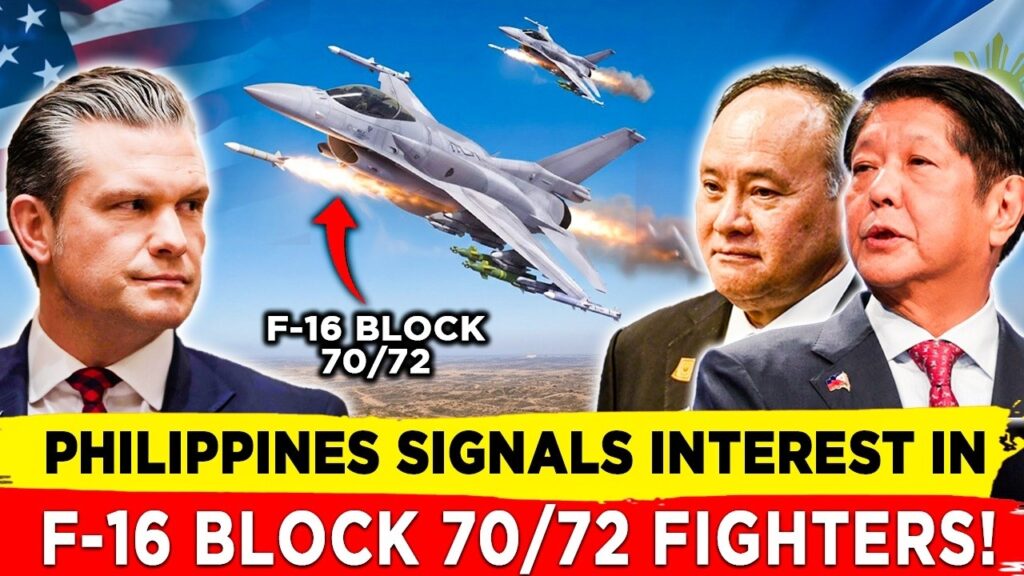
Philippines Continues to Signal Interest in Acquiring F-16 Block 70/72 Fighters
“The Philippines remains interested in acquiring the F-16 Block 70/72.” That was the line that quietly slipped into defense reporting this week, almost casual, almost routine. But if you pause for a second and really think about it, it’s not routine at all. Because here’s the real question: What does it mean when a country that once mothballed its air force is now openly talking about one of the most advanced Western fighters in production? That’s not a shopping decision. That’s a signal. And Manila knows exactly who’s listening.
A few days ago, defense officials reiterated that the Philippines is still open to acquiring the F-16 Fighting Falcon Block 70/72, the most modern variant of a jet that has defined Western airpower for decades. Not second-hand surplus. Not hand-me-downs. The real thing. Brand new. It’s hard not to pause at that.
I remember when the Philippine Air Force barely had credible fighter coverage. In 2005, the last F-5s were retired. For years, the country had no true supersonic intercept capability. Imagine being an archipelagic state sitting astride one of the busiest and most contested maritime corridors in the world and having no fighters. That wasn’t ancient history. That was this century.
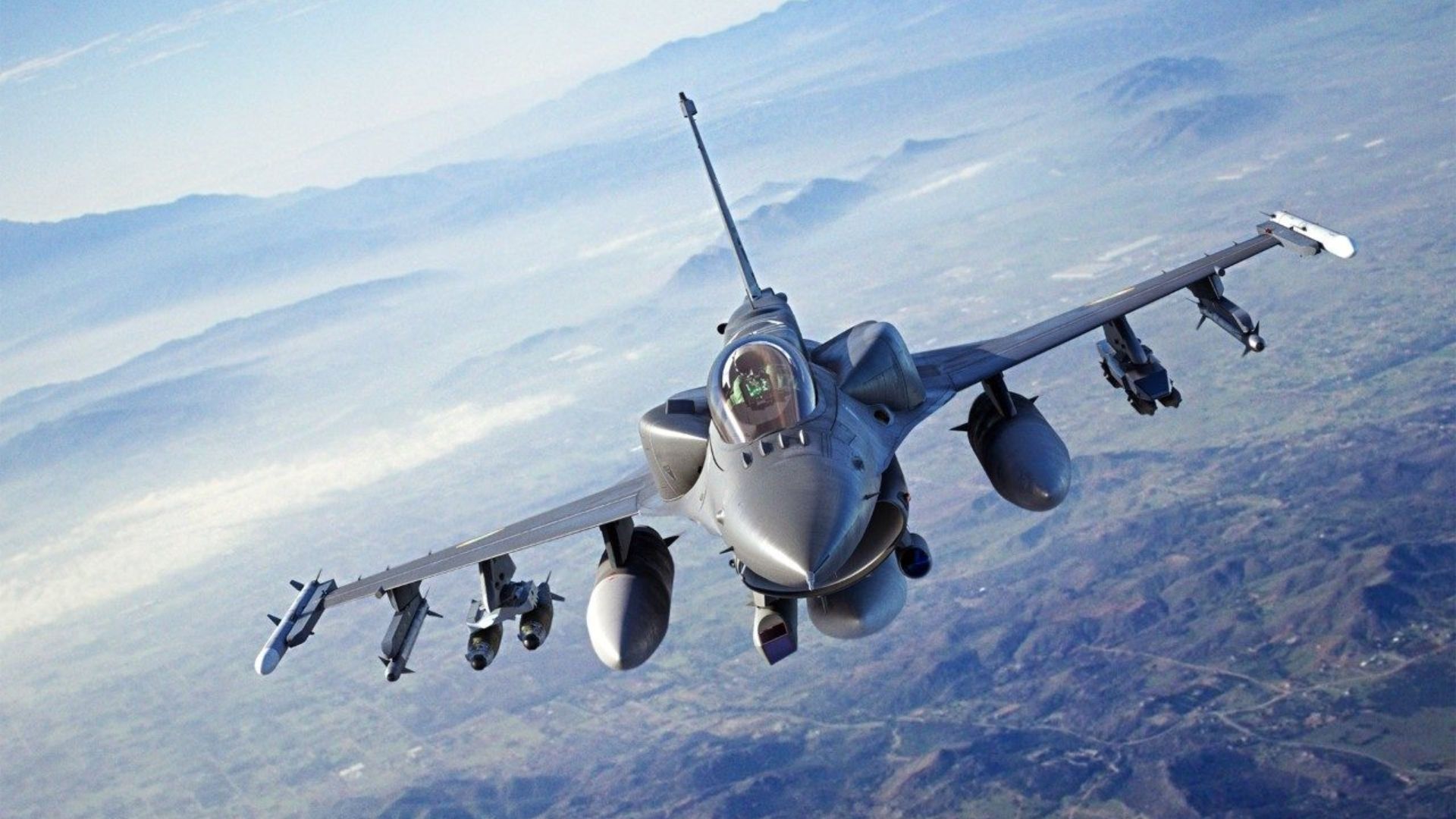
Fast forward to today. The conversation has shifted from “Can we patrol our skies?” to “Should we field a 4.5-generation multirole platform with AESA radar and advanced beyond-visual-range missiles?” That’s a different era. But here’s where it gets complicated, and honestly, a little tense. This isn’t about whether Manila wants the F-16. Of course it does. Any serious air force planner would. The Block 70/72 comes with the APG-83 AESA radar, upgraded mission computers, improved electronic warfare suites, it’s not stealth, but it’s highly lethal and interoperable with U.S. systems. For a treaty ally operating under the Mutual Defense Treaty, that matters. A lot.https://www.youtube.com/watch?v=01mGHsLIiM8
The real issue is money. Modern fighters are not just aircraft. They are ecosystems. Acquisition cost. Sustainment. Training. Weapons packages. Infrastructure. Lifecycle maintenance. When you buy something like this, you’re signing up for decades of financial commitment. And for the Philippines, still balancing development needs, disaster response, and social spending, that’s not a small political task. So what we’re really watching isn’t a procurement story. It’s a test.

A test of how far Manila is willing to stretch financially to match its strategic anxiety. A test of how serious deterrence has become in the South China Sea. A test of alliance credibility, not in speeches, but in hardware. Because here’s the uncomfortable truth: deterrence that exists only on paper doesn’t deter anyone.
If you’re facing gray-zone pressure, maritime coercion, and an expanding regional military footprint across the water, you eventually reach a moment where patrol aircraft and coast guard cutters aren’t enough. You need air superiority. Or at least the credible ability to contest it. And that’s where the F-16 enters the story.
It’s not about prestige. It’s not about symbolism. It’s about whether Philippine airspace remains something others can probe, or something they have to respect. Still, the domestic debate is real. The price tag will invite criticism. Some will argue the funds are better spent on ships, or drones, or disaster resilience. And they’re not wrong to ask those questions. Fighter jets don’t fill potholes. They don’t lower food prices.
New FA-50PH Jets Are Arriving in the Philippines – Here’s Why This Is a Big Deal
But national security is one of those things you only truly value when it’s tested. And Manila seems increasingly aware that the regional environment is not getting calmer. It’s getting sharper. More structured. Less forgiving. So when officials say they remain “open” to acquiring the F-16 Block 70/72, that phrasing is careful, almost understated. But beneath it is something louder: The Philippines is no longer thinking like a country hoping to stay out of great-power competition. It’s thinking like a country preparing to survive inside it. And that shift? That’s the real headline.
Strategic Rationale Behind Renewed Interest
Let’s call it what it is, this renewed interest is rooted in unfinished business. When the Philippine Air Force retired its last Northrop F-5 in 2005, it wasn’t just retiring aging jets. It was closing a chapter and stepping into a long, uncomfortable gap. For years after that, the country had no real supersonic air defense capability. None. That’s not a minor technical detail. That’s a strategic vulnerability.
The arrival of the KAI FA-50 Fighting Eagle helped. It restored a measure of speed, training proficiency, and limited air policing capacity. And honestly, it was a necessary step, you rebuild in phases. But the FA-50 is a light combat aircraft. It’s not designed to dominate contested airspace. It doesn’t offer the full-spectrum multirole capability you’d want if things escalate. It trains pilots well. It can defend in a limited scenario. But it’s not the aircraft you rely on if you’re serious about credible airspace control in a high-threat environment.
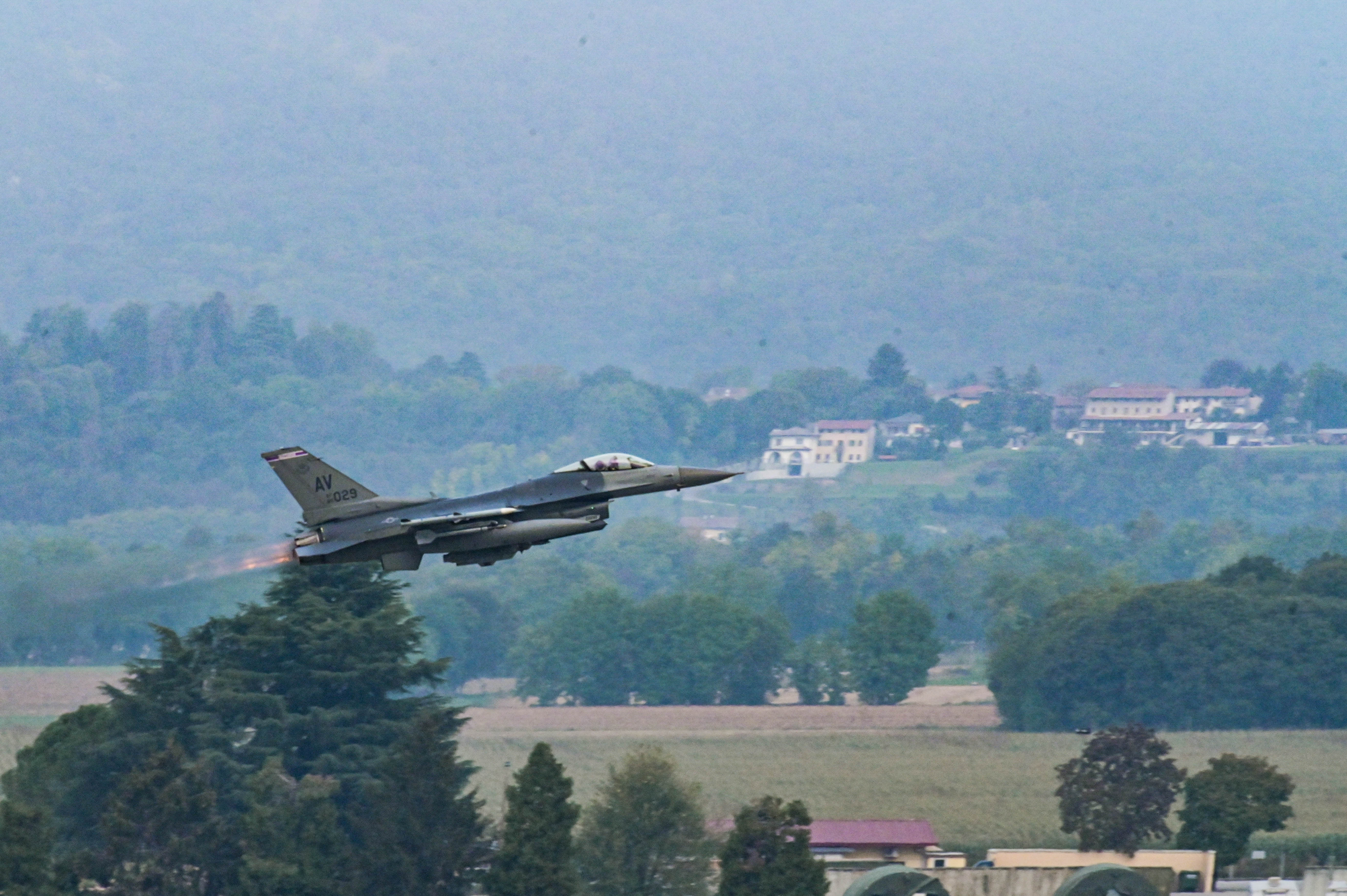
And that’s the core of the issue. If you’re facing an increasingly complex regional air picture, longer-range sensors, advanced fighters, layered air defense systems, you eventually need a 4th or 4.5-generation platform. Not for prestige. For survivability. For deterrence that looks believable from the other side of the radar screen.
Then there’s the West Philippine Sea. And this is where the conversation stops being theoretical. Tensions there aren’t abstract policy debates. They’re real-world standoffs. Maritime pressure. Close encounters. Constant testing of boundaries. In gray-zone competition, airpower becomes more than combat power, it becomes messaging. Presence. A signal.
Aircraft can show up fast. They can patrol. They can escort. They can complicate calculations without firing a shot. And that matters. Because deterrence isn’t just about what you can destroy. It’s about what you can credibly contest. Right now, the Philippines is strengthening its maritime posture. But airpower is the missing layer that ties it together. A stronger aerial deterrent posture doesn’t guarantee stability, nothing does, but it shifts perception. And perception drives behavior in contested spaces.
Philippines Vs. China: Is the Philippines Ready to Deter China Over the West Philippine Sea?
There’s also the alliance dimension. Security cooperation with the United States isn’t what it was twenty years ago. It’s deeper. More structured. More operational. Exercises are expanding. Access arrangements are growing. Interoperability is no longer just a buzzword, it’s a practical requirement.
Choosing a platform like the F-16 Fighting Falcon Block 70/72 aligns directly with U.S. doctrine, logistics chains, maintenance infrastructure, and training systems. That reduces friction. It simplifies joint operations. It embeds the Philippine Air Force more firmly within an existing ecosystem rather than forcing it to build one from scratch.
And then there’s financing. Potential access to U.S. Foreign Military Financing or other security assistance mechanisms could soften, not eliminate, but soften, the fiscal blow. That changes the political calculus in Manila. It turns an aspirational purchase into something slightly more attainable.
So when officials say they remain open to acquiring the F-16 Block 70/72, it isn’t impulsive. It’s layered. It’s about closing a long-standing capability deficit. It’s about signaling seriousness in contested waters. And it’s about aligning strategy with alliance architecture. At some point, a country has to decide whether it wants to merely patrol its airspace, or truly control it. That’s the crossroads Manila is standing at now.
The F-16 Block 70/72 Offer: What’s on the Table
So what exactly is Manila looking at here? What’s actually on the table? Because when people hear “F-16,” they sometimes picture an old Cold War jet screaming over the desert in grainy footage. That’s not this version. The F-16 Fighting Falcon Block 70/72 is essentially the most evolved form of a platform that has been refined for nearly five decades. It’s not experimental. It’s not theoretical. It’s mature but modernized in ways that make it very relevant in today’s battlespace.
Start with the radar. The AN/APG-83 AESA radar fundamentally changes how the aircraft sees and fights. Active Electronically Scanned Array systems provide greater detection range, improved tracking of multiple targets, better resistance to jamming, and higher reliability than legacy mechanically scanned radars. In plain terms? The pilot sees more, sooner, and more clearly and that often determines who survives.
Then there’s the electronic warfare suite. In an era where airspace is saturated with sensors and missiles, survivability depends on your ability to detect, jam, decoy, and outmaneuver threats. The Block 70/72 configuration integrates modern defensive systems designed for contested environments, not just air policing missions.
And connectivity matters just as much as raw performance. With Link 16 data links, the aircraft can plug directly into allied networks. That means real-time data sharing with other aircraft, ships, and ground stations. It’s not just about flying fast, it’s about fighting as part of a networked force. For a treaty ally operating alongside U.S. forces, that interoperability isn’t optional. It’s fundamental.
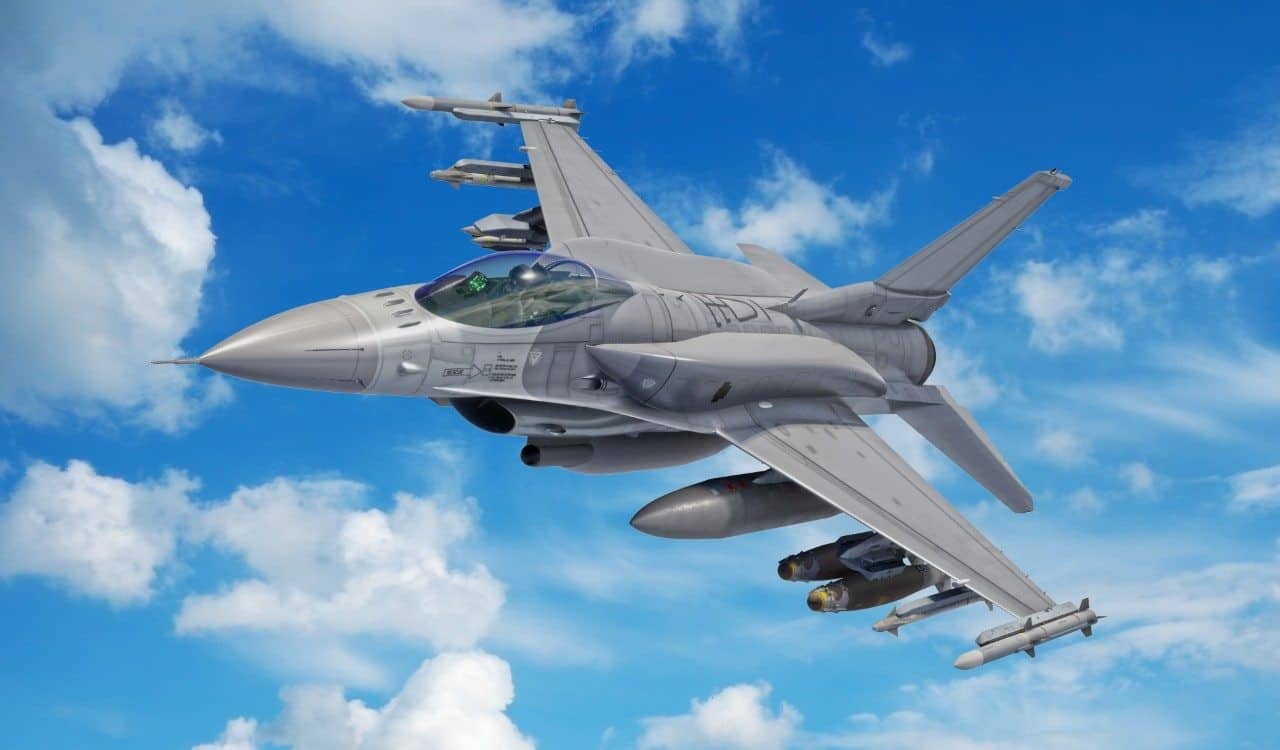
There’s also the service life factor. The Block 70/72 airframe is rated for up to 12,000 flight hours. That’s decades of operational use if managed properly. For a country making a major capital investment, longevity matters. You’re not buying something for a short window. You’re building a generation of airpower around it.
Now look at the package reportedly discussed: 20 aircraft. That’s not symbolic. That’s a squadron-level capability with real operational weight. Enough to sustain rotations, training cycles, and maintenance downtime without collapsing readiness.
China’s Quiet Buildup in the West Philippine Sea: Capability, Intent, and the Real Threat
But the aircraft themselves are only part of it. Any serious acquisition includes pilot training, ground crew development, logistics pipelines, spare parts, and long-term sustainment support. Infrastructure upgrades would be required. Hangars. Maintenance facilities. Simulator systems. Possibly even the development of technical or research components tied to the program. It becomes an ecosystem, not just a delivery of jets on a runway.
And here’s where the comparative edge becomes clear. The F-16 is not a prototype. It’s one of the most combat-tested fighters in modern history. It has flown in multiple theaters, under different operators, across decades of evolving threat environments. There’s institutional knowledge baked into it. Tactics, maintenance procedures, upgrade pathways, they already exist.
The global user base is massive. That matters more than people think. When dozens of air forces operate the same platform, supply chains stabilize. Spare parts availability improves. Training exchanges become easier. Lessons learned circulate faster. You’re not alone in figuring it out.
And perhaps most importantly, delivery timelines. Developmental aircraft often promise future capability but require years of testing, refinement, and budget adjustments. The Block 70/72 is in production. It’s real. It can be delivered on a defined schedule. For a country trying to close a capability gap, time is not a small variable.https://www.youtube.com/watch?v=TbL_sgUuei8
So when Manila signals interest, it’s not browsing casually. It’s evaluating a platform that checks multiple boxes at once: credible deterrence, alliance integration, logistical sustainability, and relatively predictable timelines. The question isn’t whether the aircraft is capable. It is. The real question, as always, is whether the Philippines is ready to commit to what that capability truly requires over the long term.
The Fiscal Impasse
Here’s where the conversation gets uncomfortable. Everyone talks about capability. Radar range. Missile envelopes. Deterrence theory. But eventually, it all hits the same wall. Money. The proposed acquisition of the F-16 Fighting Falcon Block 70/72 isn’t a modest purchase. We’re talking multi-billion dollars once you factor in aircraft, weapons packages, training, sustainment, infrastructure, and lifecycle support. Not just the sticker price, the full ecosystem. And that number? It reportedly exceeds the current modernization ceiling. So defense leadership has had to do something very unglamorous: send proposals back for revision. Not because they don’t want the jets. But because spreadsheets don’t bend just because strategy demands it.
That’s the fiscal impasse in plain terms. Yes, the overall defense budget has grown in recent years. But modernization funds are still structurally capped. Personnel costs rise. Operations and maintenance consume predictable chunks. Disaster response requirements never disappear in a country hit regularly by typhoons and earthquakes. The money that’s left for big-ticket capital acquisitions is tighter than headlines suggest.
And then there’s domestic politics. Fighter jets are easy to criticize. They don’t lower food prices. They don’t fix infrastructure. They don’t directly solve poverty. So when lawmakers look at a multi-billion dollar commitment that stretches across decades, hesitation isn’t irrational, it’s political reality.
Long-term debt exposure is particularly sensitive. Locking in extended financial obligations for a single program can limit flexibility for future administrations. Congress knows that once you sign a contract of this magnitude, you’re married to it. Backing out later is costly, diplomatically and financially. So what options are actually on the table?https://indopacificreport.com/the-philippines-has-a-new-ally-and-china-wont-like-it/
Extended payment terms are one possibility, spreading costs across more years to reduce annual pressure. That doesn’t make it cheaper. It just makes it more manageable in cash-flow terms.
Government-to-government financing structures could soften the upfront burden. Loans, security assistance frameworks, creative structuring, these mechanisms exist precisely because not every partner can write a check immediately.
A phased acquisition strategy is another path. Instead of 20 aircraft delivered in one tranche, the purchase could be staggered. Start smaller. Build gradually. That lowers immediate fiscal shock, though it may dilute near-term capability.
There’s also the possibility of leveraging unprogrammed or supplemental funding, essentially tapping into revenue streams or appropriations that weren’t originally earmarked but become available due to economic shifts or legislative adjustments.
None of these options eliminate the core issue. They simply shift the timing and structure of payment. And that’s the tension Manila is navigating right now. Strategically, the rationale is increasingly clear. The security environment isn’t stabilizing. Alliance integration is deepening. The capability gap is real.
But strategy doesn’t write checks. So the real battle isn’t happening in the sky. It’s happening in budget committees, finance departments, and congressional corridors. Quiet rooms. Long tables. Hard trade-offs.
In the end, the question isn’t whether the Philippines understands the stakes. It’s whether it can afford to act on them, without compromising everything else it’s trying to build at home. That’s not a military dilemma. That’s a national one.
Competitive Alternatives
Let’s not pretend this is a one-horse race. Manila may be signaling continued interest in the F-16 Fighting Falcon Block 70/72, but defense procurement at this level is never emotional. It’s comparative. It’s calculated. It’s strategic chess. The Saab JAS 39 Gripen remains a serious alternative. Lower lifecycle cost. Lean operating model. Flexible financing structures that tend to appeal to countries managing tight modernization envelopes. The Gripen was built with sustainability in mind, quick turnaround, smaller logistical footprint, and cost-conscious doctrine. For a country that has to justify every peso spent, that efficiency argument carries weight.
Then there’s the Eurofighter Typhoon. High-end capability. Strong air-to-air dominance credentials. NATO pedigree. But capability at that level comes with higher sustainment demands. It’s a powerful aircraft, no debate there, yet the long-term maintenance and operational cost profile is heavier. Manila would have to decide whether that upper-tier performance aligns with its threat environment, or stretches its budget beyond comfort.
‘If a Filipino servicemen killed by China, it will be an “Act of War”‘ Ferdinand Marcos Jr.
And then the forward-looking option: the KAI KF-21 Boramae. Still emerging, still maturing, but strategically interesting. There’s industrial partnership potential here. Technology exposure. The possibility of deeper defense-industrial cooperation with South Korea. It’s less battle-proven than the F-16 or Typhoon, which introduces developmental risk, but it also offers future-facing architecture that may evolve significantly over time. So yes, the F-16 is viable. But it’s not automatic. Manila is weighing cost curves, delivery timelines, sustainment realities, and geopolitical alignment, all at once.
Strategic Implications
Time is not neutral in defense planning. Continued delays in acquiring a full-spectrum multirole fighter erode signaling capacity. Not dramatically. Not overnight. But steadily. Air superiority or at least credible air denial, remains central to any maritime security strategy. You cannot secure sea lanes if you cannot secure the skies above them. The West Philippine Sea environment is dynamic and layered. Without a modern 4th or 4.5-generation platform, the Philippines’ airpower posture remains transitional. Deterrence is psychological as much as technical. Capability must be visible enough to shape calculations.
Selecting the F-16 would do more than fill an airpower gap. It would anchor long-term U.S.–Philippines integration in hardware and logistics architecture. Training pipelines. Maintenance ecosystems. Shared data links. Doctrinal alignment. Over time, that compounds into structural interoperability.
Choosing an alternative platform would not weaken the alliance. But it would diversify procurement relationships. It would signal strategic flexibility, perhaps even autonomy, in sourcing. That decision would carry diplomatic weight, whether intended or not.
Large-scale fighter acquisition can seed more than operational capability. It can create technical training hubs. Expand maintenance infrastructure. Expose local engineers and technicians to advanced systems integration. Over decades, that builds institutional competence. The structure of the deal, offsets, technology transfer provisions, sustainment localization will matter just as much as the aircraft selected.
Key Variables to Watch
First, congressional modernization appropriations. If funding trajectories shift upward in a sustained way, procurement momentum becomes real. If they remain capped, the debate stays theoretical.
Second, U.S. flexibility on pricing and financing. Adjusted structures, phased payments, or expanded assistance could recalibrate feasibility.
Third, Philippine debt sustainability assessments. Macroeconomic stability cannot be sacrificed for deterrence; both must coexist.
Fourth, delivery timelines relative to regional threat acceleration. If the security environment sharpens faster than procurement cycles allow, urgency increases.
Fifth, scale. Whether the acquisition proceeds as a 20-aircraft package or is implemented incrementally will shape both operational impact and fiscal pressure.
Conclusion
The Philippines’ continued signaling toward F-16 acquisition reflects strategic clarity, paired with fiscal hesitation. This is not a debate about whether modern fighters are capable. They are. Nor is it confusion about the airpower gap. That gap is well understood. The real issue is political will, financing innovation, and long-term defense prioritization. In the end, Manila is not choosing between aircraft. It is choosing how boldly it wants to position itself in a security environment that is becoming less forgiving by the year. And that decision, more than any radar specification, will define the next chapter of Philippine airpower.
https://youtu.be/WA9zZ9TnXMs?si=JZsSWIoVDodvUPSk