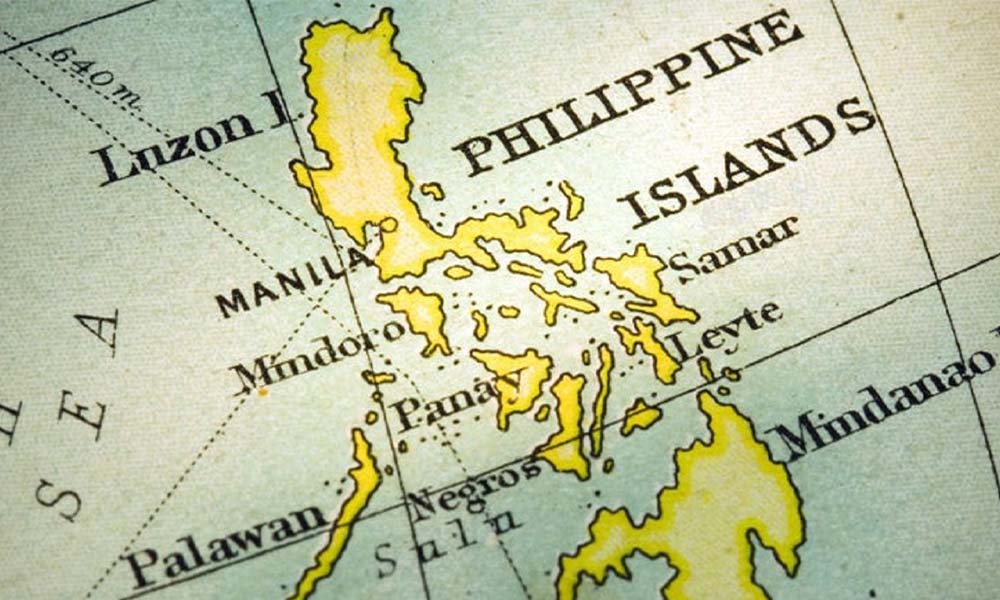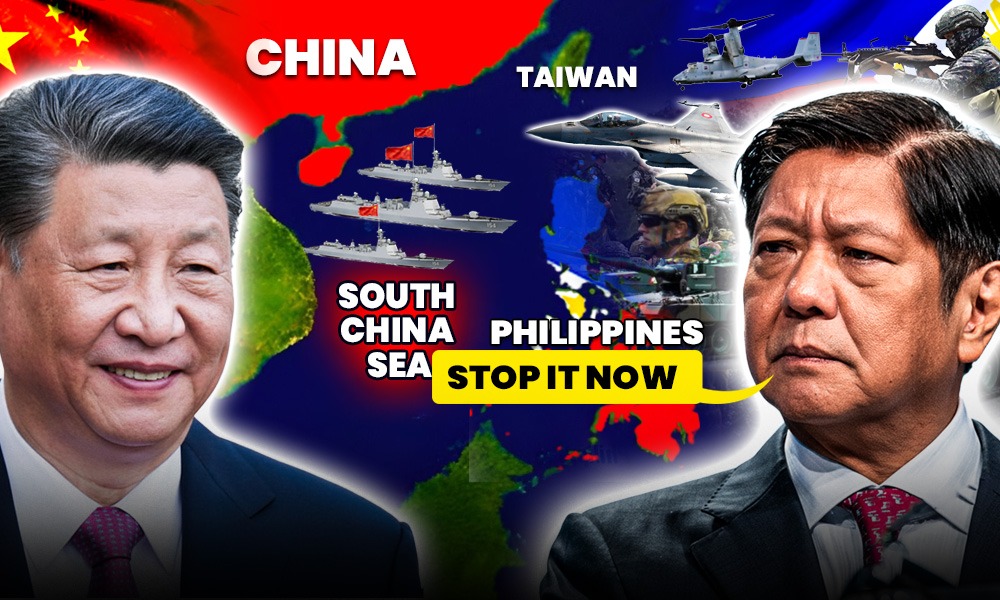
The Philippines is raising its voice like never before, urging the world to stop what it calls China’s “seizure” of the South China Sea. The South China Sea is one of the planet’s busiest economic lifelines, carrying an estimated US $3.36 trillion in trade every year, which explains why both Manila and Beijing see it as vital to their security and prosperity. Around these same waters lie overlapping claims from Vietnam, Malaysia, Brunei, Taiwan, and Indonesia, but it is China’s sweeping ten-dash-line “historical rights” claim, rejected by the 2016 Hague ruling, that drives the most dangerous confrontations. Within the Philippines’ own Exclusive Economic Zone, Chinese ships now enter by the dozens each year, from research vessels to coast-guard cutters, and they have tightened their hold on Scarborough Shoal, even intercepting a Philippine patrol plane at close range.
The takeover of Scarborough Shoal just over 100 nautical miles from Subic Bay and China’s rapid development of Anti-Access/Area-Denial (A2/AD) weaponry put a hostile outpost almost on the Philippines’ doorstep. Yet Manila remains defiant: despite a defense budget tiny compared to China’s, it wields “radical transparency,” broadcasts Chinese incursions, and has adopted a Comprehensive Archipelagic Defense Concept to safeguard every corner of its maritime domain. The supply runs to the grounded BRP Sierra Madre, where Philippine marines endure water-cannon blasts, rammings, and even boarding by Chinese coast-guard personnel, show the peril and persistence behind this stand.
Looking forward, the Philippines is determined to keep strengthening its CADC modernization program, to practice careful diplomatic balancing, and to explore de-escalation mechanisms like the brief 2024 provisional resupply agreement with Beijing. In doing so, Manila has turned its struggle into a global test case for the credibility of international law and the rules-based order, warning that every new act of aggression raises the chance of a clash that could trigger the U.S.–Philippines Mutual Defense Treaty.
SCS Significance for China and the Philippines
The South China Sea (SCS) is far more than a regional waterway, it is one of the planet’s most important economic and strategic lifelines. Every year, about US $3.36 trillion worth of goods, roughly one-third of all global maritime trade, passes through its shipping lanes. From oil and liquefied natural gas bound for energy-hungry East Asia to manufactured goods traveling to Europe and North America, the SCS functions like a giant maritime superhighway. Any disruption, whether from military conflict, blockades, or even heightened tensions, could spike global shipping costs, delay supply chains, and send energy prices soaring.
For China, the stakes go well beyond the safe passage of trade. Geologists and energy analysts estimate that the seabed of the South China Sea may hold as much as 11 billion barrels of untapped oil and around 190 trillion cubic feet of natural gas. Securing access to these potential reserves is a core element of Beijing’s long-term energy strategy, reducing reliance on foreign suppliers and safeguarding its growth against external shocks. Strategically, control over these waters allows China to push its naval presence deeper into the Pacific, breaking through the “First Island Chain” of U.S. allies that currently hems in its navy.
For the Philippines, the South China Sea is equally critical but for different reasons. Its Exclusive Economic Zone (EEZ), recognized under the United Nations Convention on the Law of the Sea (UNCLOS) and extending 200 nautical miles from its coastlines, contains some of the country’s richest fishing grounds. These fisheries are not just a source of export revenue but a cornerstone of national food security, supporting millions of Filipino fishermen and coastal communities. Yet Chinese incursions, ranging from large-scale fishing by maritime militia to the use of water cannons against local boats, have repeatedly disrupted traditional fishing activities, threatening livelihoods and undermining the Philippines’ ability to sustainably manage its marine resources.
The South China Sea represents energy security for China, food and economic security for the Philippines, and global trade security for the world at large. This convergence of interests explains why disputes over its waters are so persistent and so potentially explosive.
SCS Littoral States and China’s Baseline Claims
The South China Sea (SCS) dispute is a complex web of overlapping claims involving a host of littoral states. The Philippines, Vietnam, Malaysia, Brunei, Taiwan, and even Indonesia (through its Natuna Islands area) all assert rights over different reefs, shoals, and maritime zones, each citing provisions of the United Nations Convention on the Law of the Sea (UNCLOS) to define their Exclusive Economic Zones (EEZs). These EEZs extend 200 nautical miles from national coastlines and guarantee sovereign rights to fishing, energy exploration, and resource management.
China, however, lays claim to nearly the entire South China Sea using what was once the nine-dash line and is now a ten-dash line, adding a new dash east of Taiwan. Beijing asserts “historical rights” to these waters, an argument the 2016 Permanent Court of Arbitration ruling flatly rejected, declaring that such claims have “no legal basis” under UNCLOS. Despite this, China has continued to press its expansive position, insisting that ancient maps and centuries-old fishing practices validate its modern-day sovereignty claims.
The reality on the water reflects how aggressively China has moved to solidify these claims. Between 2014 and 2016, China’s island-building program outpaced that of all other claimants combined, and by 2023 it had reclaimed roughly five square miles of land across key locations like the Spratly and Paracel Islands. Many of these features have been heavily militarized, with airstrips, radar systems, missile batteries, and deep-water harbors capable of supporting warships and long-range patrol aircraft.
This combination of sweeping legal assertions and physical transformation of reefs into fortified outposts has reshaped the strategic landscape of the South China Sea. For littoral states like the Philippines and Vietnam, China’s baselines are more than cartographic lines on a map, they are encroaching facts on the water that threaten sovereign rights, marine resources, and the stability of one of the world’s busiest maritime corridors.
Philippines’ EEZ and China’s South China Sea Incursion
The Philippines faces persistent, intensifying intrusions inside its Exclusive Economic Zone (EEZ), a 200-nautical-mile maritime area guaranteed under the United Nations Convention on the Law of the Sea (UNCLOS). In 2025 alone, Philippine authorities documented between 20 and 22 Chinese research ships operating inside its EEZ, a sharp increase over previous years and a clear sign of Beijing’s stepped-up presence. These scientific vessels, often accompanied by China Coast Guard (CCG) cutters and maritime militia boats, are suspected of conducting resource surveys and hydrographic mapping that could lay the groundwork for future energy exploitation or even construction of artificial islands.
One of the most visible and volatile flashpoints is Scarborough Shoal (Bajo de Masinloc), a rich fishing ground only about 120 nautical miles from Luzon. Although it lies well within the Philippines’ EEZ, China has exercised de facto control since a 2012 naval standoff, using coast guard and militia ships to bar Filipino fishermen and shadow Philippine patrols. The situation has only worsened in recent months. In one high-risk encounter in 2025, a Chinese fighter jet intercepted a Philippine maritime patrol aircraft near the shoal, flying as close as 200 feet, a distance so tight that aviation experts described it as a serious risk of mid-air collision.
These incursions underscore a strategic pattern of escalation. By flooding Philippine waters with research vessels, coast guard cutters, militia fleets, and now even military aircraft, Beijing is effectively redrawing the map at sea, challenging Manila’s legally recognized rights and the very notion of international maritime law. For the Philippines, each incursion represents not only an immediate threat to food security and fishing livelihoods, but also a direct challenge to its sovereignty, testing how far it and its allies are willing to go to defend a rules-based order in the South China Sea.
USS Ohio Submarine Deployment in Philippines Leaves China Furious
China’s Takeover of Scarborough Shoal and A2/AD Strategy for the Philippines
The 2012 loss of Scarborough Shoal stands as one of the most consequential moments in recent Philippine maritime history. This triangle-shaped reef and lagoon, located just over 100 nautical miles from Subic Bay, a critical deep-water port and former U.S. naval base, was once a lifeline for Filipino fishing communities and a forward outpost for maritime patrols. After a tense two-month standoff, Chinese coast guard and maritime militia vessels forced a Philippine withdrawal, establishing de facto Chinese control that persists to this day. What began as a single confrontation has effectively placed a hostile military outpost on the Philippines’ doorstep, allowing China to monitor activity in Luzon’s key shipping and naval corridors and to pressure Manila at will.
This takeover feeds directly into China’s Anti-Access/Area Denial (A2/AD) strategy, a doctrine designed to block U.S. and allied forces from intervening in the South China Sea. Over the past decade, the People’s Liberation Army (PLA) has deployed a layered A2/AD network of long-range precision missiles, integrated radar and sensor systems, and powerful naval and air assets across its occupied features, including the Paracel and Spratly Islands. These capabilities are intended to detect, track, and, if necessary, destroy enemy ships and aircraft well before they approach Chinese-claimed waters, fundamentally altering the regional military balance.
For the Philippines, this means that Scarborough Shoal is not merely a fishing dispute. It has become a forward surveillance and pressure point, tightening China’s control over critical sea lanes and amplifying the risk to U.S. forces operating under the Mutual Defense Treaty. By embedding Scarborough into its wider A2/AD shield, Beijing can both deter rapid American intervention in a crisis and constrain the Philippines’ ability to defend its own maritime territory, illustrating how a seemingly local seizure fits into a grand strategy of regional dominance.
Philippines, Though a Smaller State, Remains Defiant on its South China Sea Claims
Despite facing one of the world’s starkest military mismatches, with China’s 2024 defense budget exceeding the Philippines’ by roughly 50 times, Manila has chosen not to back down. Instead, it has embraced a strategy of “radical transparency,” making each Chinese incursion public and documenting every harassment incident at sea. By releasing photos, videos, and detailed reports of encounters with Chinese coast guard and maritime militia vessels, the Philippine government ensures that every act of aggression is immediately visible to its citizens, allies, and international forums. This proactive exposure denies Beijing the fog of ambiguity it often relies on in its gray-zone tactics and builds global diplomatic pressure for a rules-based resolution.
The Philippines’ defiance has resonated on the world stage. At the prestigious Shangri-La Dialogue security summit, Defense Secretary Gilberto Teodoro earned applause for calling out China’s “propaganda spiel disguised as questions,” a remark that symbolized Manila’s sharpened rhetoric and refusal to be intimidated. Such public rebukes are more than symbolism; they signal to allies and adversaries alike that the Philippines will contest every illegal claim not only at sea but also in the court of international opinion.
Backing these words with action, the Marcos administration has adopted the Comprehensive Archipelagic Defense Concept (CADC), a whole-of-government plan to secure the country’s entire territory and Exclusive Economic Zone (EEZ). CADC integrates the military, coast guard, and civilian agencies to improve maritime domain awareness, coordinate rapid responses to incursions, and strengthen partnerships with treaty allies such as the United States, Japan, and Australia.
Through radical transparency, fearless diplomacy, and a sweeping national defense concept, the Philippines is demonstrating that even a smaller state can stand firm against a much larger power. In doing so, it protects not just its own maritime rights but also the broader principle that international law, not brute force, must govern the world’s oceans.
1 Philippine Navy Vessel Against 22 Chinese Ships at Scarborough Shoal
The Case of BRP Sierra Madre Resupply Missions and China’s Furious Reactions
The BRP Sierra Madre, a rusting World War II, era landing ship deliberately grounded by the Philippines in 1999 on Second Thomas Shoal (Ayungin Shoal), has become the most dangerous flashpoint in the West Philippine Sea. Permanently stationed there as a makeshift military outpost, the hulk hosts a small team of Filipino marines who maintain the country’s claim to this shallow reef well inside its Exclusive Economic Zone (EEZ). Every few weeks, Philippine Navy or Coast Guard boats must brave the shoal’s shallow waters to bring food, water, and essential supplies to the marines, a routine mission that has turned into a recurring confrontation with China.
Chinese resistance to these resupply runs has escalated sharply. The China Coast Guard (CCG) has repeatedly used water cannons powerful enough to smash windows and injure crew members, as documented in a March 2024 mission. Chinese ships have also deployed military-grade lasers that can cause temporary blindness, while employing high-risk maneuvers such as ramming and dangerous blocking to keep Philippine boats from reaching the outpost. In perhaps the most alarming incident to date, in June 2024, CCG personnel allegedly boarded a Philippine resupply boat, assaulted Armed Forces of the Philippines (AFP) marines, and used knives and axes to damage equipment. One Philippine marine even lost a thumb in the violent encounter, underscoring the growing physical danger of these missions.
China defends these aggressive tactics with strong rhetoric. Beijing consistently accuses Manila of “courting external forces” , a thinly veiled reference to U.S. support and of acting as “a genuine troublemaker” in the South China Sea. Chinese officials insist that Philippine resupply missions are a cover for bringing in construction materials to permanently reinforce the grounded ship, something they claim violates past “gentlemen’s agreements,” even as the Philippines maintains that it is simply sustaining its troops.
This collision of sovereignty, survival, and strategy makes every Sierra Madre resupply a geopolitical tinderbox. For the Philippines, these missions are non-negotiable lifelines to a critical outpost; for China, they are provocations that must be stopped. The result is a cycle of confrontation that tests the limits of international law and risks a miscalculation capable of igniting a larger regional crisis.
Philippines Rocked by ₱545B Corruption Scandal as West Philippine Sea Crisis Grows
Way Forward for the Philippines
The Philippines’ path ahead in the South China Sea (SCS) dispute demands a careful blend of military preparedness, diplomatic agility, and global engagement. Central to this strategy is the Comprehensive Archipelagic Defense Concept (CADC), a long-term modernization and deterrence plan designed to protect the country’s full maritime domain. By steadily implementing CADC and related investments, including a US $5.4 billion military modernization program spanning 2013–2028, Manila aims to enhance surveillance, improve rapid-response capabilities, and harden its coastal defenses. This not only strengthens day-to-day protection of fishermen and outposts like the BRP Sierra Madre but also sends a clear signal that the country intends to control and defend its Exclusive Economic Zone (EEZ).
Yet military strength alone cannot secure peace. Manila continues to pursue diplomatic balancing, asserting its rights under the 2016 Hague arbitral ruling and the United Nations Convention on the Law of the Sea (UNCLOS), while working to de-escalate tensions and rally international backing. Philippine officials maintain open channels with Beijing even as they deepen security ties with allies like the United States, Japan, and Australia. A brief provisional arrangement with China in July 2024, which sought to manage BRP Sierra Madre resupply missions, showed that limited cooperation is possible, even if disagreements over its terms quickly re-emerged. Such temporary accords underscore that communication and crisis-management mechanisms can at least slow escalation when political will exists.
Marco Rubio Wants to Turn the Philippines Into China’s Worst Nightmare
Endnote
Ultimately, the Philippines’ unwavering stand in defense of its SCS rights has become a global test of international law and the rules-based order. By combining CADC-driven modernization with agile diplomacy, Manila is demonstrating that even a mid-sized state can marshal alliances and legal norms to resist coercion. But the stakes are rising: each Chinese incursion, whether by coast guard, maritime militia, or naval forces, heightens the risk of a miscalculation that could invoke the U.S.–Philippines Mutual Defense Treaty, drawing major powers into conflict. How this struggle unfolds will help determine whether the Indo-Pacific remains governed by shared rules or succumbs to force and unilateral claims.