Tensions in the South China Sea: A Critical Analysis of the Philippines’ Accusation Against China
The South China Sea, a region of immense geopolitical significance, has long been a source of contention between neighboring nations. As tensions escalate, recent developments highlight the precarious balance of power in the region. On Friday, the Philippines accused Chinese maritime officials of committing an “unjustified assault” on Vietnamese fishermen, an incident that underscores the ongoing and often dangerous rivalry over control of these contested waters.
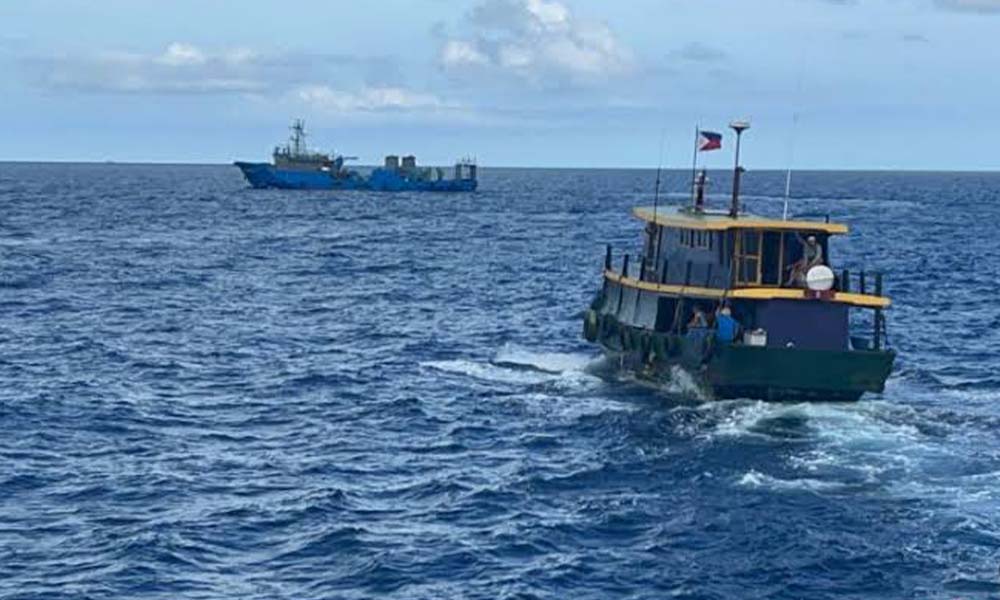
At the heart of this new confrontation lies the Paracel Islands, an area claimed by both China and Vietnam. According to Vietnamese reports, 10 fishermen were allegedly beaten by Chinese law enforcement officers and had their gear seized. The incident reportedly took place on Sunday while these fishermen were working near the Paracel Islands, which Vietnam calls Hoang Sa.
China, however, disputes Vietnam’s account. On Tuesday, Beijing stated that the Vietnamese fishermen were operating illegally in waters under its control. It claims that its actions were justified, as they were protecting China’s territorial rights. This divergence in narratives, where one country sees itself as enforcing sovereignty and the other as the victim of aggression, typifies the complex web of claims and counterclaims that dominate South China Sea disputes.
The Philippines, while not directly involved in this particular incident, felt compelled to weigh in. Philippine National Security Adviser Eduardo Ano expressed strong support for Vietnam, condemning the actions of the Chinese maritime officials. In his statement, Ano did not mince words: he described the use of force against civilians as a clear violation of international law and basic human decency. His remarks reflect the broader concerns shared by multiple countries about China’s growing assertiveness in the South China Sea.
This incident is not isolated but rather part of a broader pattern of confrontations in the region. The South China Sea has become a flashpoint for potential conflicts involving China and its neighbors, including the Philippines, Vietnam, and Malaysia, all of whom have overlapping territorial claims. These nations see China’s actions not just as individual incidents, but as part of a broader strategy to establish de facto control over the region.
One of the primary instruments China uses to assert its claims is the so-called “nine-dash line.” This demarcation encompasses nearly 90% of the South China Sea, giving China a legal basis, in its view, for controlling most of the waterway. The problem with this claim is that it conflicts with the United Nations Convention on the Law of the Sea (UNCLOS), which grants nations exclusive economic zones extending 200 nautical miles from their coastlines. China’s expansive interpretation of its territorial rights is seen by many in the international community as both aggressive and illegal.
As China continues to press its claims, countries like the Philippines and Vietnam are refusing to back down. Over the past year, encounters between Chinese vessels and those from rival claimant nations have become more frequent. China regularly sends its coast guard to patrol disputed waters, often in large numbers, as part of its effort to establish control over areas claimed by other nations. These patrols are described by Beijing as lawful measures to protect its sovereignty, yet they are seen by its neighbors as acts of intimidation.
The Philippines, a U.S. treaty ally, has been particularly vocal in resisting Chinese pressure. The Philippine government has repeatedly stated that it will not cease fishing or resupply missions for its military personnel stationed at contested shoals. One of these shoals is the Second Thomas Shoal, where a small group of Filipino soldiers is stationed on a grounded ship. Resupply missions to the shoal have often been intercepted by Chinese vessels, sparking confrontations at sea.
The broader implications of these encounters go beyond the immediate region. The South China Sea is one of the busiest waterways in the world, through which trillions of dollars in trade pass every year. The United States, with its strategic interests in maintaining open sea lanes and protecting its regional allies, has also been drawn into the fray. Under a mutual defense treaty signed in 1951, the U.S. is obligated to come to the defense of the Philippines if its armed forces or coast guard are attacked. Washington has repeatedly stated that any aggression against the Philippines in the South China Sea would trigger this treaty, making the region a potential flashpoint for U.S.-China tensions.
This latest incident involving Vietnamese fishermen is a sobering reminder of just how volatile the situation in the South China Sea remains. While the Philippines and Vietnam have their own competing claims in the region, both nations have recognized the importance of cooperation in addressing the challenge posed by China’s growing influence. In August, the two countries agreed to strengthen their ties and resolve disputes peacefully. That same month, their coast guards held joint exercises, signaling a willingness to work together in the face of shared concerns about China’s actions.
Yet, despite these efforts at regional cooperation, the fundamental issue remains unresolved. China’s ambitions in the South China Sea are vast, and its actions show little sign of abating. Its use of paramilitary forces, fishing vessels, and coast guard ships to assert control over disputed areas is part of a broader strategy known as “gray zone” operations. These are actions that fall below the threshold of war but are intended to gradually establish control over contested territories.
One of the key challenges for countries like the Philippines and Vietnam is how to respond to these gray zone tactics without escalating tensions to the point of open conflict. Both nations, as well as other claimants in the region, are wary of pushing back too hard against China, given its military and economic might. At the same time, they cannot afford to allow Beijing to establish a new status quo in which Chinese control over the South China Sea is a fait accompli.
The role of international law in resolving these disputes is critical, yet it remains uncertain how effective legal mechanisms can be in curbing China’s ambitions. In 2016, the Philippines won a landmark case at the Permanent Court of Arbitration in The Hague, which ruled that China’s claims to most of the South China Sea had no legal basis. China, however, rejected the ruling and has continued to build artificial islands, deploy military assets, and conduct patrols in the disputed waters.
For Vietnam, the legal route has also proven challenging. While Hanoi has consistently called for peaceful resolutions to disputes based on international law, it has not been able to stop Chinese incursions into its claimed waters. The recent incident with its fishermen only highlights the difficulty Vietnam faces in defending its territorial claims without escalating the situation.
In conclusion, the recent accusation by the Philippines against China for assaulting Vietnamese fishermen is just one chapter in a long-running saga of tension, conflict, and power dynamics in the South China Sea. It reflects the broader regional struggle over territorial control, where national sovereignty, international law, and geopolitical ambitions collide. For countries like the Philippines and Vietnam, finding a path forward will require a delicate balance of cooperation, legal action, and strategic resistance. Meanwhile, the involvement of global powers like the United States ensures that the South China Sea will remain one of the most closely watched regions in the world, where any incident could potentially spark a larger, more dangerous conflict.
Click here to learn more!