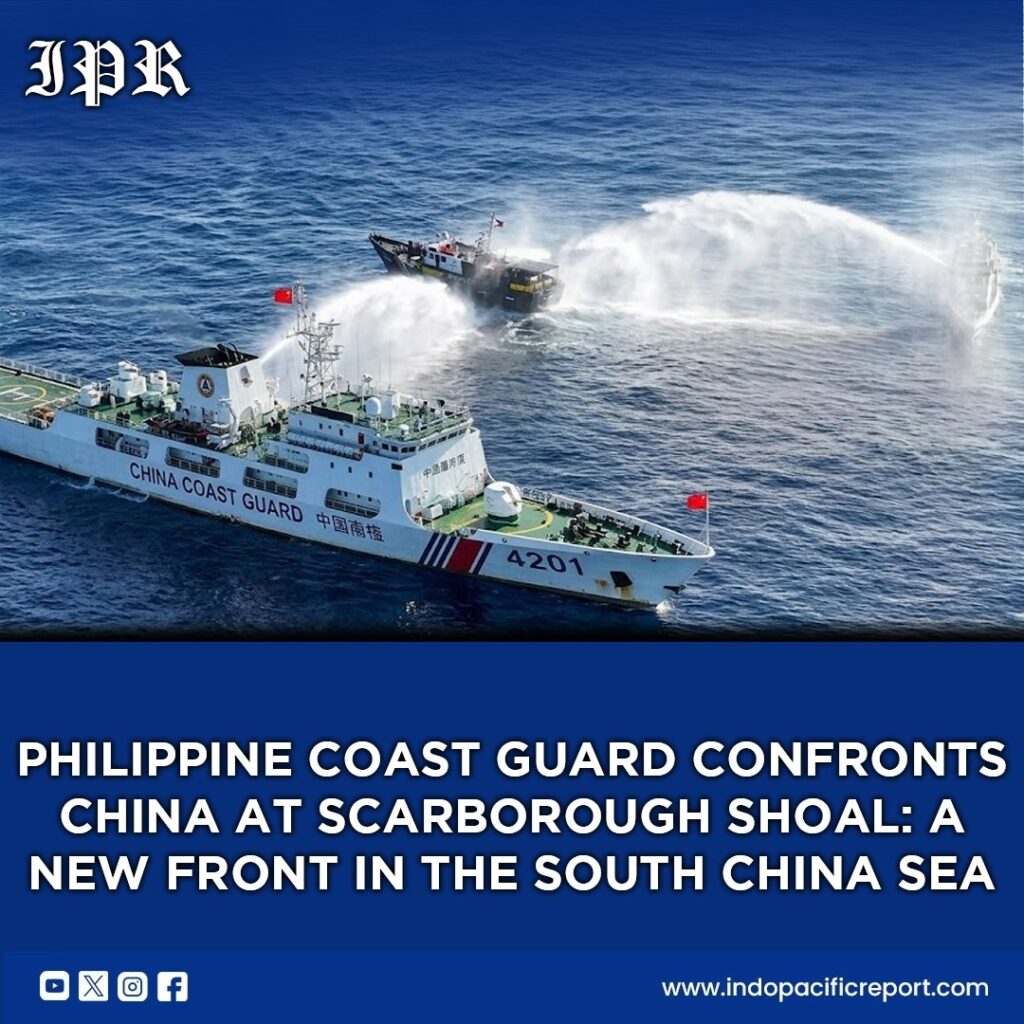
The Philippine Coast Guard’s recent deployment of vessels and aircraft to Bajo de Masinloc underscores the persistent friction between Manila and Beijing in the West Philippine Sea. According to official reports, Chinese Coast Guard (CCG) ships, maritime militia, and even PLAN assets engaged in maneuvers to displace Filipino fishers. In response, the PCG coordinated surface patrols and aerial surveillance to document the presence of both Chinese and Filipino vessels, reinforcing Manila’s claims within its 200-nautical-mile exclusive economic zone (EEZ). This incident is emblematic of the incremental, low-intensity coercion China has applied across the South China Sea while testing the resolve of regional claimants.
From a great-power competition lens, Bajo de Masinloc illustrates the strategic interplay between coercion and deterrence. China’s use of maritime militia alongside formal coast guard and naval units is part of a broader strategy to assert control without triggering outright military escalation. For the Philippines, the PCG’s deployment reflects a calibrated deterrent posture—leveraging visibility, law enforcement assets, and international legal claims, including the 2016 Permanent Court of Arbitration ruling, to assert rights without provoking full-scale conflict.
In terms of regional security architecture, these developments highlight the limitations of current frameworks. ASEAN has struggled to enforce collective maritime norms, leaving individual states to defend their EEZs against persistent harassment. The Philippine actions at Bajo de Masinloc demonstrate nationalized enforcement measures, but also the increasing need for cooperative monitoring and multilateral mechanisms, whether through joint patrols, surveillance coordination, or engagement with external partners such as the U.S. and Japan.
Alliance dynamics are equally relevant. Manila’s recent coordination with U.S. forces, Japanese defense initiatives, and even discussions with South Korea show a trend toward multinational alignment around maritime security norms. While the PCG remains a law enforcement body rather than a military actor, its operations in contested areas effectively serve as a frontline component of alliances by proxy, signaling that external partners can leverage Philippine presence to observe, report, and deter Chinese assertiveness without direct confrontation.
From a maritime and economic strategy perspective, Bajo de Masinloc is significant. The South China Sea remains a conduit for over $3 trillion in annual maritime commerce, and fisheries resources are vital to the Philippines’ food security and rural economy. By asserting operational control, the PCG not only protects local livelihoods but also reinforces the broader principle of freedom of navigation and resource access, which underpins the maritime balance in the Indo-Pacific. Chinese installation of yellow buoys, alongside PLAN and CCG activity, demonstrates Beijing’s intent to normalize presence and control, a challenge to both law and regional trade stability.
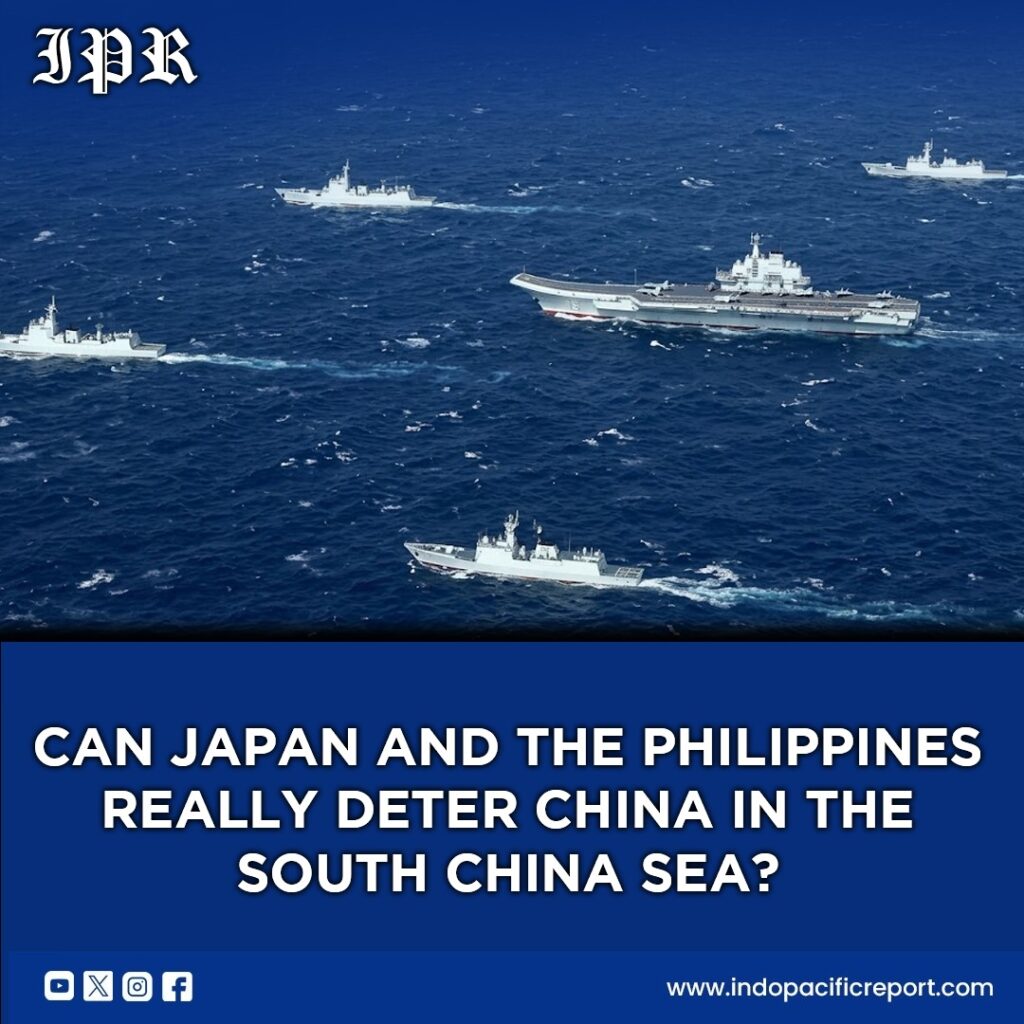
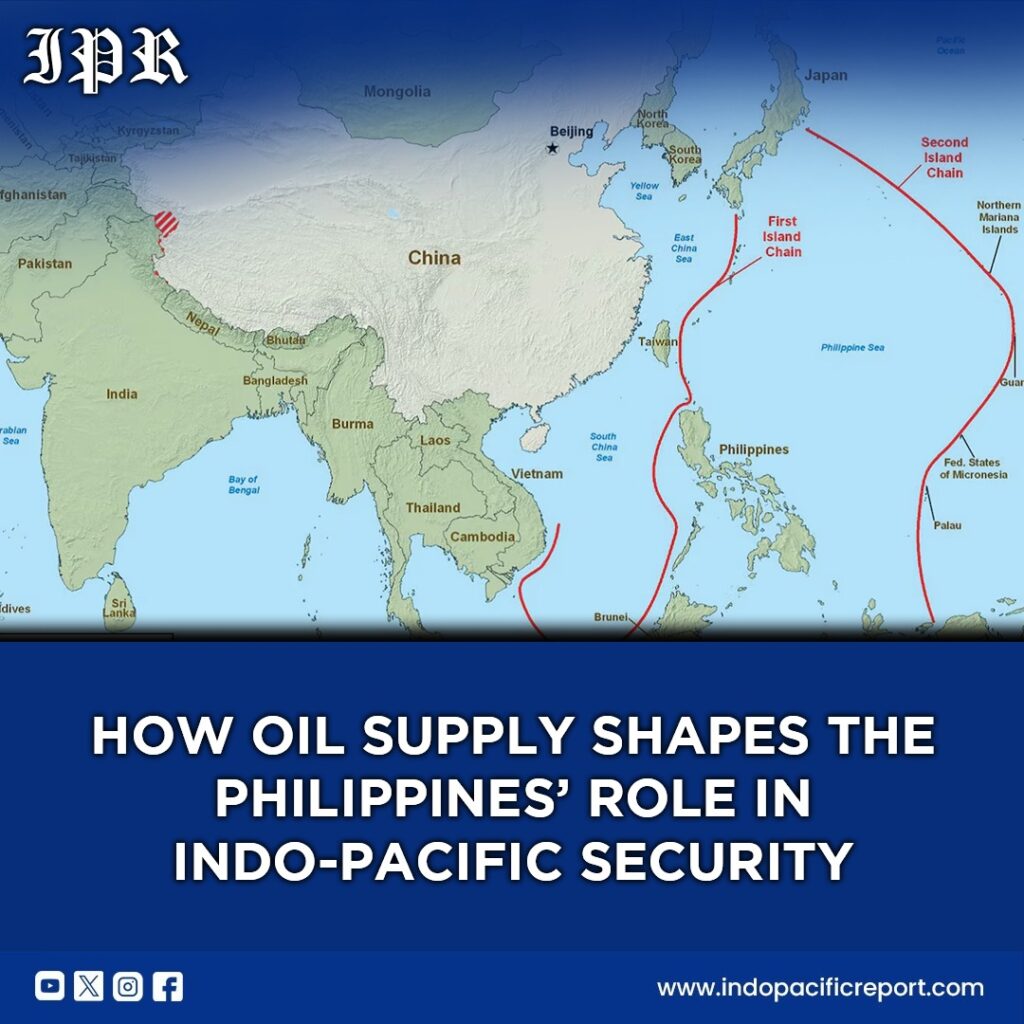
The strategic implications for the Indo-Pacific balance of power are clear. Even minor, law enforcement-level engagements contribute to shaping perceptions of deterrence credibility. By maintaining operational visibility and legally grounded patrols, the Philippines enhances the effectiveness of the U.S.-led first island chain strategy and reinforces the concept of networked maritime security, where small states, backed by international law and allied support, can complicate Chinese coercive strategies. However, the risk of escalation remains, as China increasingly integrates coast guard, naval, and air assets in contested zones, blurring the line between policing and military action.
Forward-looking assessment: Bajo de Masinloc is a microcosm of the broader Indo-Pacific maritime contest. For Manila, sustaining constant surveillance, maritime law enforcement, and allied coordination will be critical to defending its EEZ without provoking escalation. For Beijing, these incidents provide lessons in coercion and influence projection. For external actors, including the U.S., Japan, and South Korea, reinforcing visibility, diplomatic backing, and technical support for the Philippines can amplify deterrence while avoiding direct confrontation. The incident demonstrates that small-state resilience, combined with multilateral norms, remains a key stabilizing factor in the contested waters of the South China Sea.
#SouthChinaSea #WestPhilippineSea #Philippines #China #MaritimeSecurity #IndoPacificStrategy #ASEAN #FreedomOfNavigation