Philippine Army Strengthens Littoral Defense Amid Rising Indo-Pacific Tensions
The Philippine Army recently demonstrated its growing capability to defend its northern coastline in the Littoral Defense Live-Fire Exercise in Burgos, Pangasinan. The exercise simulated a coastal assault, integrating armor, artillery, infantry, and drone units to repel an advancing enemy. Over 4,200 soldiers participated across multiple sites in Pangasinan and Ilocos Norte, employing armored infantry fighting vehicles with remote-controlled weapon stations and 105mm towed howitzers. Reservists deployed combat drones to engage shoreline targets, testing integration of conventional and digital systems. This drill reflects Manila’s effort to modernize and operationalize its coastal defense in a region facing growing maritime security threats.
Viewed through the lens of great-power competition, the exercise signals the Philippines’ recognition of the strategic pressures posed by China’s maritime assertiveness in the South China Sea. By practicing distributed, layered defense, Manila is demonstrating the ability to complicate any attempt by an adversary to project power onto Philippine territory. Integration of drones and digital targeting systems aligns with broader regional trends, where mid-tier states seek to offset conventional disadvantages through technological augmentation. The exercise is as much a signal to potential aggressors as it is a test of domestic combat readiness.
From a regional security architecture perspective, these drills reinforce the Philippines’ role as a frontline state in the Indo-Pacific. Its northern coastline lies near critical maritime chokepoints, including the Luzon Strait and the approaches to the South China Sea. Effective littoral defense ensures that Manila can secure key sea lines of communication, which are essential not only for trade but also for joint operations with allied navies. By combining artillery, mechanized infantry, and drones, the Philippine Army is improving its ability to contribute meaningfully to regional deterrence frameworks, including potential U.S.-led coalition responses.
Alliance dynamics are also at play. Exercises like these increase the strategic value of Philippine bases for rotational U.S. forces under the Enhanced Defense Cooperation Agreement (EDCA). A Philippine military capable of robust littoral defense enhances combined deterrence credibility. It signals to Washington, Tokyo, and Canberra that Manila can operate alongside allies under contested conditions, reinforcing the alliance’s credibility without creating permanent U.S. footprints. This alignment strengthens Manila’s bargaining position while projecting stability in the Western Pacific.
The drill also reflects a shift toward multi-domain defense strategy, combining kinetic and cyber readiness. Manila recently conducted a Multi-Sectoral Cyber Exercise involving military, government, and private actors to counter digital threats to critical infrastructure. This dual focus—maritime defense and cyber resilience—addresses modern warfare’s hybrid nature, where adversaries may combine conventional, cyber, and gray-zone tactics to weaken a frontline state. By integrating these capabilities, the Philippines improves operational resilience while signaling to regional competitors that any coercive action will meet a coordinated, multi-domain response.
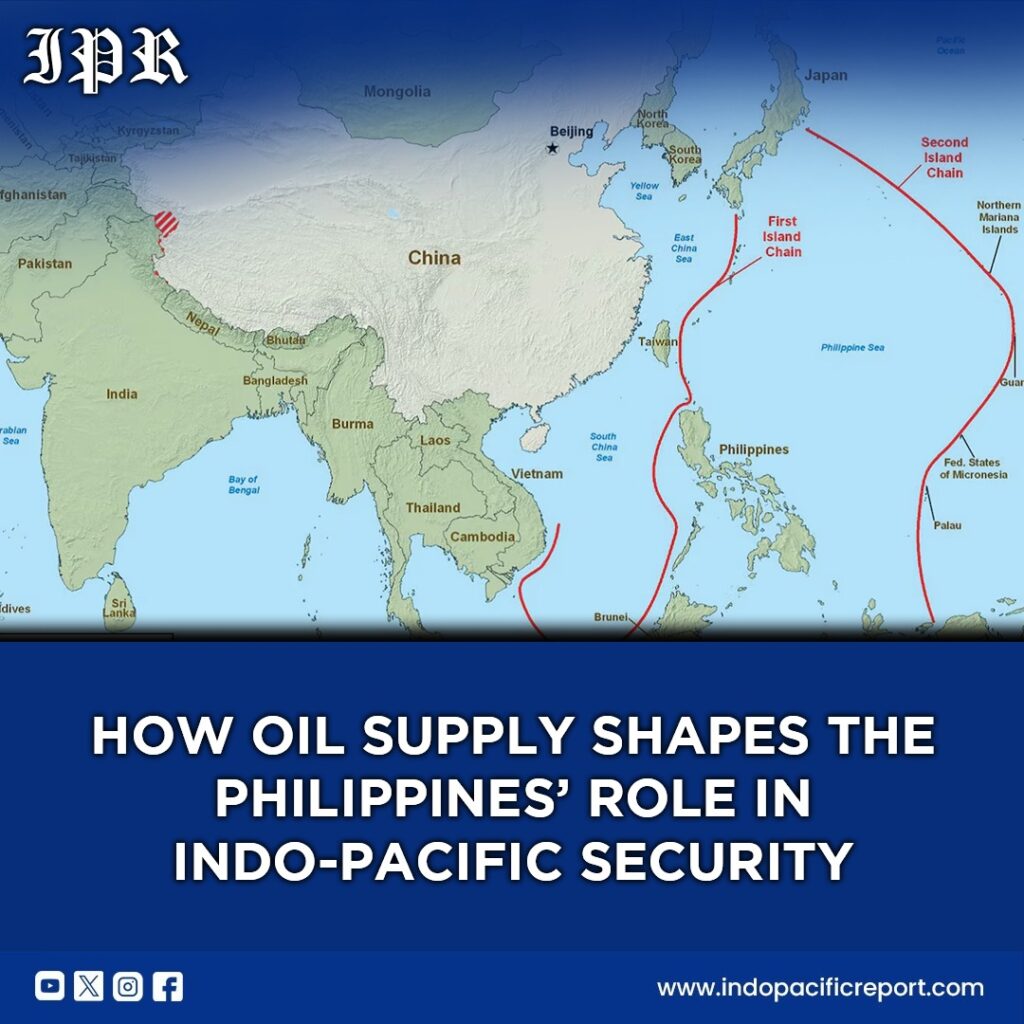
Strategically, these developments have implications for the Indo-Pacific balance of power. A Philippine military capable of defending its littoral areas complicates Chinese calculus in the South China Sea. Distributed defensive capabilities, layered with drones, artillery, and cyber integration, create uncertainty for any aggressor and increase the political and operational cost of coercion. Manila’s investments in training, technology, and alliances contribute to deterrence by denial, supporting the broader U.S. strategy along the First Island Chain.
Looking forward, the Philippines’ emphasis on littoral and multi-domain defense positions it as a more credible frontline state. Future drills and capability development—particularly in rapid repair, coastal mobility, and integrated surveillance—will determine whether Manila can sustain operational readiness under pressure. The combination of geography, technology, and alliance leverage ensures the Philippines remains central to Indo-Pacific security. The key question for policymakers is whether these advances will continue to strengthen deterrence or whether regional tensions will compel Manila to adapt further to evolving threats.
Audience question:
Can the Philippines maintain credible littoral defense without deepening its dependence on allies, or is integrated alliance support now essential for regional deterrence?